
In a study spearheaded by Rand Fishkin and SparkToro in collaboration with Datos, an Semrush company, researchers have unlocked fascinating insights into how people interact with Google, the world’s dominant search engine.
Over a staggering 21-month period, 332 million Google searches were analyzed across 130,000 U.S. devices, revealing the hidden mechanics of online behavior.
How We Got Here: 332 Million Queries, 21 Months of Data
Researchers analyzed search data from 130,000 U.S. devices, ensuring a representative and statistically robust sample. Covering searches from January 2023 to September 2024, the study excluded Google App searches, Google’s specialized platforms (e.g., Shopping, Maps), and AI tool queries like Gemini AI. The result is an unfiltered glimpse into the core of Google’s web search engine.
NEW research: https://t.co/WvBHZoR7aO
We looked at:
– 332 million searches
– Over 21 months
– From ~130K mobile & desktop, Google searchersAnd published:
– 13 charts & graphs
– including data on many never-before-answered Qs about how people use GoogleA sample 👇 pic.twitter.com/WQAoIf4cOf
— Rand Fishkin (follow @randderuiter on Threads) (@randfish) December 3, 2024
The study’s findings redefine long-held assumptions about branded versus generic queries, search intent distribution, and what topics dominate Google searches.
Breaking Down the Data
Let’s decode the search behavior in detail:
Navigational Queries Dominate Search
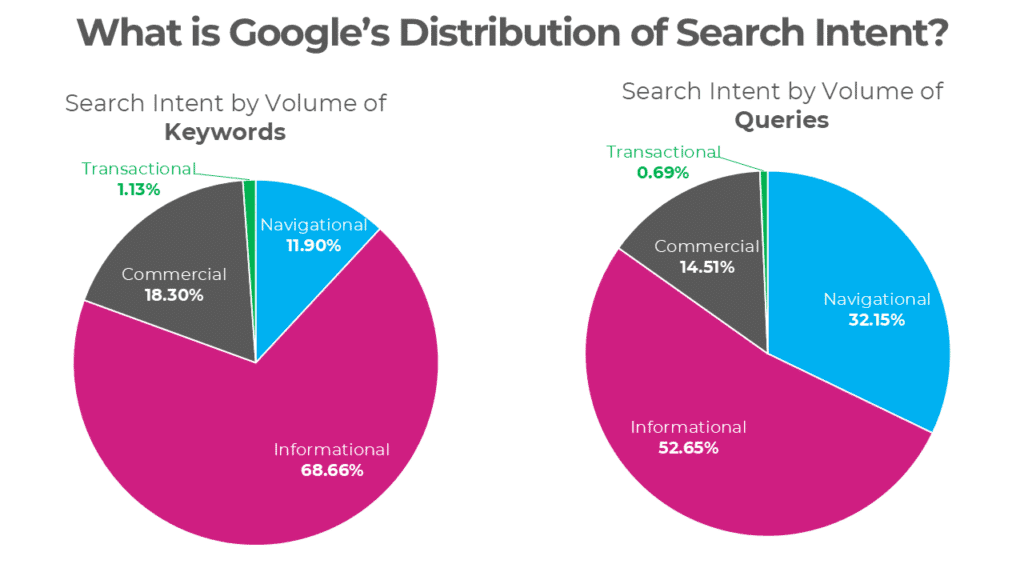
The study revealed that one-third of Google’s search traffic is navigational—users typing in specific website names or destinations like “YouTube” or “Facebook” to get there directly.
This highlights Google’s evolving role as an intermediary, functioning less as a discovery tool and more as the internet’s homepage.
For businesses, this underscores the importance of owning branded search results; these first impressions often determine user perception.
Informational Searches Take the Lead
Informational queries make up over 50% of searches, signaling a universal thirst for knowledge. From looking up historical events to finding painting techniques or weather updates, these searches showcase Google’s role as the ultimate reference tool.
Commercial and Transactional Searches Remain Niche
Contrary to popular belief, only 14.5% of searches were classified as commercial—queries exploring products or services without immediate intent to purchase.
Meanwhile, transactional searches, those signaling a readiness to buy or sign up for services, accounted for just 0.69% of all Google searches. This low proportion highlights the challenges businesses face in targeting high-value consumers.
The Surprising Shrinkage of the Long Tail
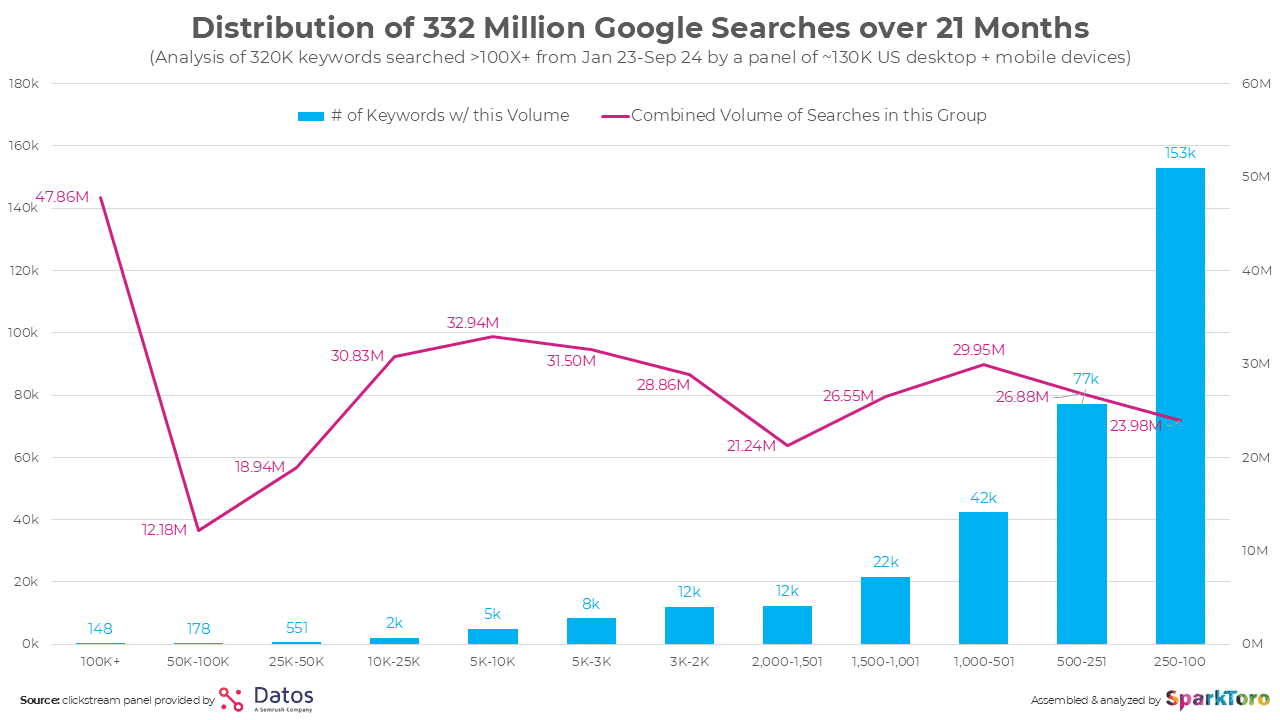
Google’s “long tail”—unique, low-frequency search terms—has shrunk in influence. Just 3.6% of search demand comes from queries searched fewer than 11 times monthly.
In contrast, 148 high-frequency terms, such as “Netflix,” “Instagram,” and “Speed Test,” accounted for nearly 15% of the total search volume.
This narrowing concentration of demand raises questions about digital monopolies and declining content diversity.
Branded Searches: A 44% Share
Branded queries accounted for 44% of all searches, a higher-than-expected proportion. Terms like “Amazon” and “Google Translate” reflect users’ strong reliance on established brands. Interestingly, branded queries tended to have significantly higher search volumes than their generic counterparts.
The Entertainment Factor: Topics That Dominate Google
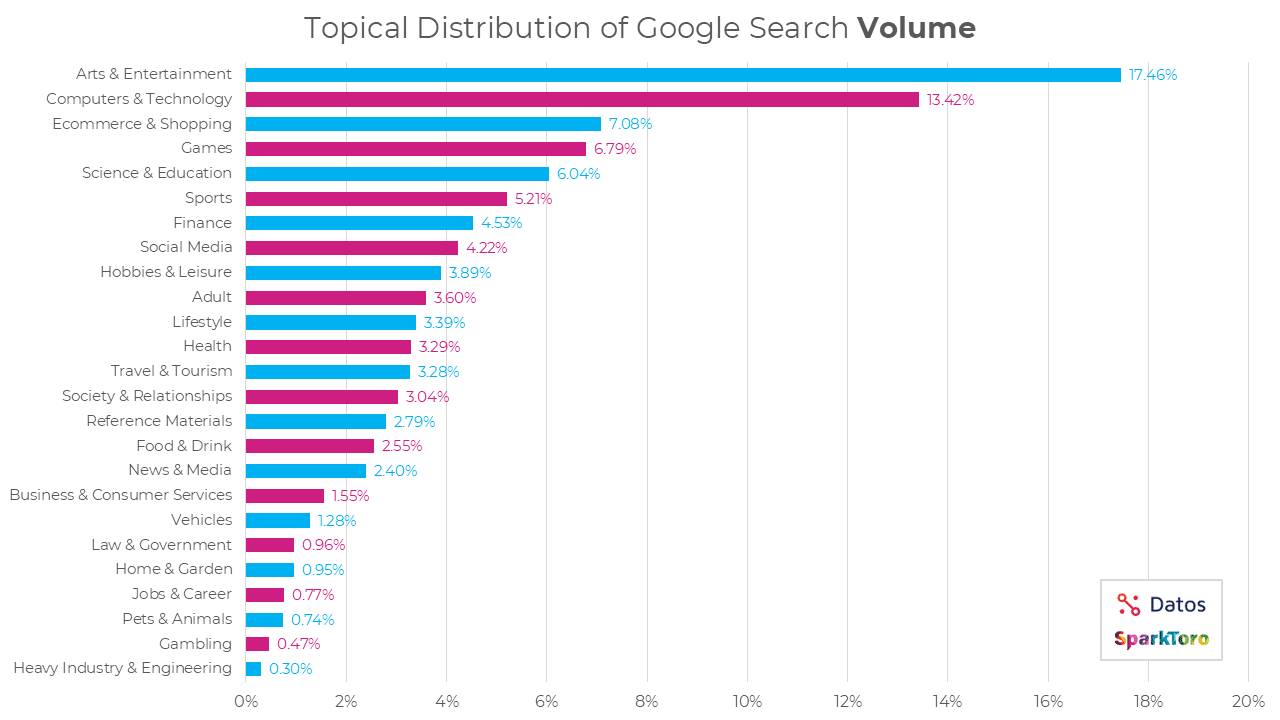
A surprising revelation was the overwhelming popularity of entertainment-related queries. Topics like movies, actors, TV shows, and video games accounted for 25% of search volume. This explains Google’s investment in creating portal-like experiences for these queries, making it a one-stop shop for entertainment fans.
Meanwhile, adult content—once thought to dominate online searches—accounted for only 3.6% of total volume. This marks a notable departure from past assumptions about internet usage trends.
The Human Touch: Why Paul Rudd Still Matters
In a lighter moment, the study revealed that Paul Rudd appears in 0.00184% of searches—proof of the actor’s enduring charm. Meanwhile, Taylor Swift topped the charts as the most-searched individual, reflecting her cultural ubiquity.
Implications for Businesses, Marketers, and Consumers
This data offers profound implications for a range of stakeholders:
For Businesses:
- Dominate Your Branded Search Results: Google is often the first impression users have of your brand. Negative reviews or outdated information in search results can erode trust.
- Adapt to Shrinking Opportunities in Generic Search: With Google favoring zero-click answers and AI snippets for informational queries, businesses should invest in visibility across diverse platforms.
For Marketers:
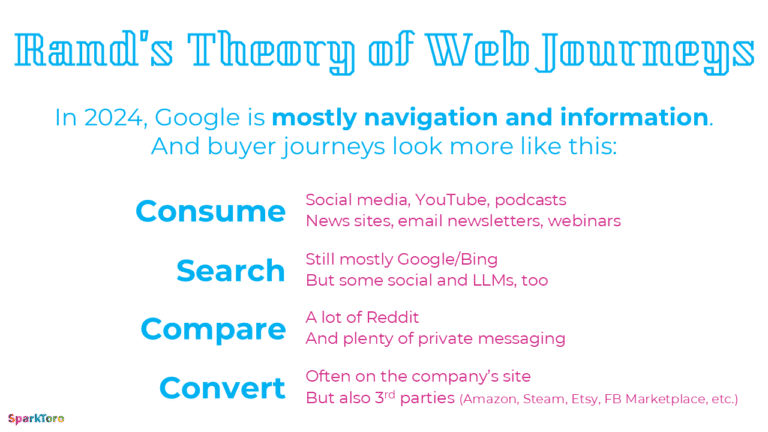
- Leverage Social Platforms for Discovery: The shrinking role of generic search indicates that discovery now starts on platforms like TikTok, Instagram, or YouTube.
- Diversify Content Formats: Optimize for AI tools and visual media as they increasingly dominate Google’s informational queries.
For Consumers:
- Expect Fewer Choices: As searches become concentrated on a smaller number of high-volume terms, the internet may feel less diverse.
Predictions for the Search Landscape
The study provides valuable foresight into how Google might evolve:
AI Integration Will Redefine Search: Google’s reliance on zero-click answers and AI-driven tools like Gemini could reduce traffic to external sites, forcing businesses to innovate their engagement strategies.
Increased Scrutiny from Regulators: As Google’s monopoly tightens, legal and regulatory pressures may disrupt its dominance, creating openings for competitors.
Dwindling Long Tail Opportunities: The narrowing focus of search demand will make it harder for niche players to compete.
Practical Advice for Staying Ahead
Here are actionable steps to help businesses adapt to these shifts, ensuring they remain competitive and connected to their audiences.
Reputation Management is Critical: Ensure your branded search results convey a strong, positive image.
Expand Marketing Channels: Avoid over-reliance on Google. Use social media, email campaigns, and influencer partnerships to reach audiences directly.
Invest in AI Optimization: As AI-driven search evolves, businesses must create content tailored to these tools.
Focus on Brand Building: Branded searches represent almost half of Google’s volume, making reputation and visibility crucial.
Monitor Emerging Trends: Stay informed about shifts in search intent and adapt quickly to capitalize on new opportunities.
Key Takeaways
- One-third of searches aim to take users to a known site.
- Informational searches dominate, while commercial and transactional queries are a small but valuable segment.
- High-frequency terms are consuming more of the search landscape
- Zero-click searches and AI overviews are reshaping traffic flows.

Dileep Thekkethil
AuthorDileep Thekkethil is the Director of Marketing at Stan Ventures, where he applies over 15 years of SEO and digital marketing expertise to drive growth and authority. A former journalist with six years of experience, he combines strategic storytelling with technical know-how to help brands navigate the shift toward AI-driven search and generative engines. Dileep is a strong advocate for Google’s EEAT standards, regularly sharing real-world use cases and scenarios to demystify complex marketing trends. He is an avid gardener of tropical fruits, a motor enthusiast, and a dedicated caretaker of his pair of cockatiels.
