
Google Search, something billions of us use every day, is about to get a major upgrade. According to Sundar Pichai, Google’s CEO, the changes coming in 2025 will blow our minds.
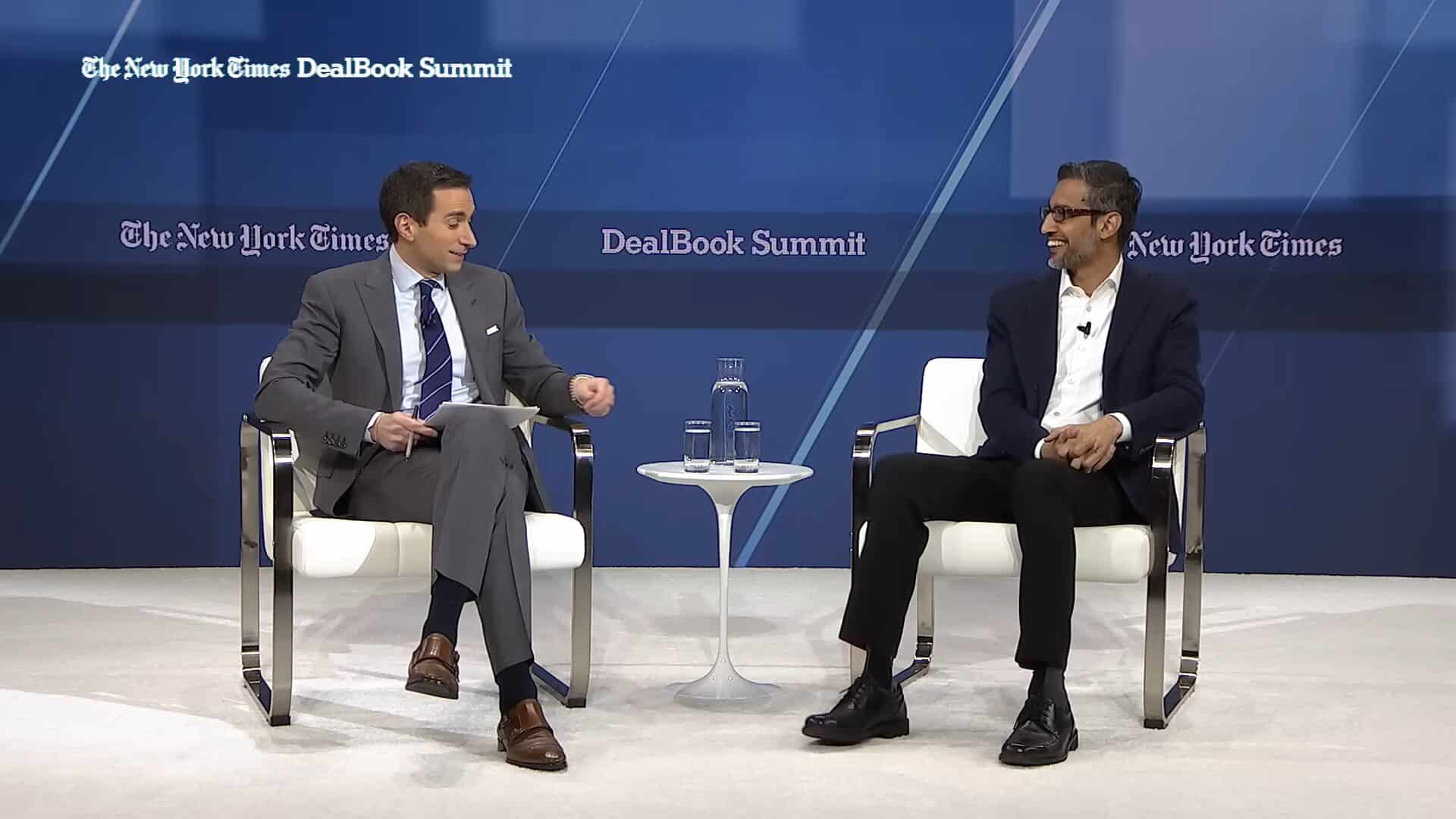
He shared this during a recent talk at the New York Times DealBook Summit, teasing big things on the horizon.
“Search itself will continue to change profoundly,” Pichai said. “I think you’ll be surprised, even early in [2025], by the kind of new things search can do compared to where it is today.”
What’s the Big Change?
Pichai explained that Google has been using artificial intelligence (AI) in search for years. Tools like BERT and MUM have already made search smarter, helping it understand complex questions and provide better results.
And now, their new AI system, called Gemini, is taking things even further. Already used by over a billion people in Google Search, Gemini shows just how powerful AI can be.
But here’s the kicker: Pichai says they’re just getting started. In 2025, Google Search will tackle even tougher questions, making it easier to find exactly what you’re looking for, no matter how tricky your query might be.
Why It Matters More Than Ever
We live in a world overloaded with information. Social media, news sites, and countless online platforms all compete for attention. With so much content out there, finding reliable information can feel like searching for a needle in a haystack. That’s where Google Search steps in.
“Search becomes even more valuable in a world where you’re inundated with content,” Pichai said. The goal is to help people find trustworthy, easy-to-understand information quickly.
But What About Content Creators?
While the updates to Google Search sound great for users, what about the people creating the content? During the talk, Pichai faced tough questions about whether Google gives enough credit—and payment—to the writers, publishers, and creators whose work fuels its search engine.
Pichai highlighted that Google already pays to license content from major organizations like The New York Times and the Associated Press.
However, the vast majority of content on the internet doesn’t come with such deals. Critics argue that creators deserve more recognition and compensation for their work, especially as Google’s AI learns from their content.
Pichai hinted at a future where there could be a “marketplace” for content creators. In this model, people who produce valuable information could get paid directly when their work is used by AI systems.
A Balancing Act
This issue of fair use—the idea of how much content Google can legally use without paying for it—is a tricky one. Pichai acknowledged that it’s a debate happening around the world. While lawmakers and courts may eventually set new rules, for now, it’s up to companies like Google to strike a balance.
“We spend a lot of time thinking about the traffic we send to the ecosystem,” Pichai said, referring to how Google drives visitors to websites. Still, some argue this isn’t enough, especially in the age of AI, where information is reused in ways creators never imagined.
What’s Next for Search?
Looking back, Google has always been about evolution. In the early days, search was simple: type in a question, and you’d get a list of links. Over time, Google added features like voice search, image recognition, and AI-generated summaries.
In 2025, this evolution is set to reach new heights. Google wants to make the search even more interactive and intuitive.
Imagine a search engine that feels more like having a conversation with a knowledgeable friend. It won’t just give you answers—it’ll help you understand complex topics, predict what you might need next, and even suggest solutions tailored to you.
How It Could Change Our Lives
For everyday users, these updates mean search will become faster, smarter, and more helpful. Whether you’re planning a trip, researching a tough topic, or troubleshooting a problem, Google aims to make the experience seamless.
For creators, it could open new doors. If Google develops the “marketplace” Pichai mentioned, writers, artists, and other content producers might have new ways to earn money. However, much depends on how quickly these ideas turn into reality—and whether they truly benefit everyone.
For Google’s competitors, these advancements raise the stakes. Companies like Microsoft and Apple, which are also investing in AI, will need to step up their game to keep up with Google’s innovations.
What Can You Do?
To stay ahead of these changes, here are some practical tips:
Learn about AI tools: Understanding how AI works can help you make the most of the new search features.
Create trustworthy content: If you’re a writer or business owner, focus on producing high-quality, reliable information. This will make your content stand out.
Stay informed: Keep an eye on how policies around AI and fair use evolve. These could impact how your work is used online.
Experiment with search: Try out Google’s latest features as they roll out. Getting familiar with them early could give you an edge.
Key Takeaways
- By 2025, Google Search will tackle even more complex queries using advanced AI, making it smarter and more interactive.
- In a world overloaded with content, Google is doubling down on delivering trustworthy, relevant, and user-friendly information.
- As AI relies on human-made content, discussions about fair compensation and licensing for creators are becoming increasingly critical.
- Sundar Pichai hinted at a future system where creators could monetize their contributions directly within AI ecosystems.
- Google’s advancements challenge competitors and signal a new era of AI-enhanced tools shaping how we interact with the internet.

Dileep Thekkethil
AuthorDileep Thekkethil is the Director of Marketing at Stan Ventures, where he applies over 15 years of SEO and digital marketing expertise to drive growth and authority. A former journalist with six years of experience, he combines strategic storytelling with technical know-how to help brands navigate the shift toward AI-driven search and generative engines. Dileep is a strong advocate for Google’s EEAT standards, regularly sharing real-world use cases and scenarios to demystify complex marketing trends. He is an avid gardener of tropical fruits, a motor enthusiast, and a dedicated caretaker of his pair of cockatiels.
