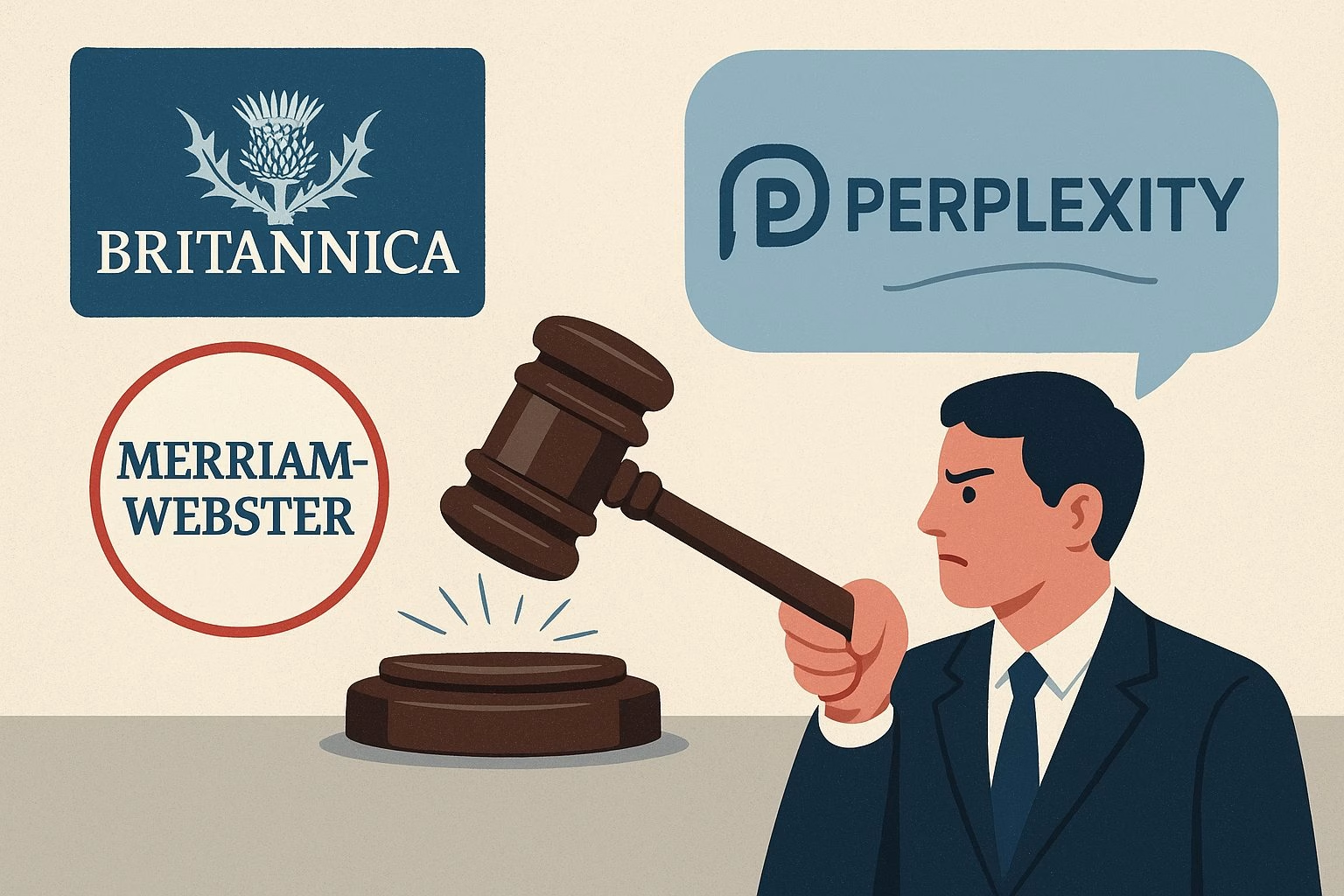
Encyclopedia Britannica and Merriam-Webster filed a lawsuit against Perplexity AI on September 11, 2025, in federal court in Manhattan, accusing the fast-growing startup of copying their work and misusing their brands.
The suit claims Perplexity’s “answer engine” lifted material directly from Britannica and Merriam-Webster sites, displayed it without proper credit, and even attached their names to false information created by the system.
The publishers say this practice cuts into traffic and revenue, and they are asking the court for damages and an order stopping the company from using their work in this way.
Why the Lawsuit Landed Now
Britannica and Merriam-Webster argue that Perplexity’s crawler scraped their sites, pulled content into its database, and repackaged it into AI-generated answers.
Users receive quick summaries instead of visiting the original sources, which the publishers say strips them of advertising and subscription income.
The complaint highlights examples of near-identical text and instances where Perplexity outputs were tagged with Britannica or Merriam-Webster’s names, even though the statements were fabricated. To the plaintiffs, this is both copyright infringement and trademark misuse.
The lawsuit comes after months of rising tension between publishers and AI firms.
News outlets, book authors, and media companies have filed similar cases, but this marks one of the clearest challenges from reference publishers whose content is widely considered authoritative.
How Perplexity’s system works
Perplexity promotes itself as an “answer engine.” Instead of a list of links, it delivers a short response generated by a language model. The system retrieves information from multiple sources, then condenses it into one screen for the user.
The lawsuit claims that in practice, Perplexity often lifts sentences directly, displaying material that is almost word-for-word.
In some cases, it reportedly cites Britannica or Merriam-Webster even when the output was invented by the AI model, raising concerns that users might trust inaccurate information because of the attached brand names.
A Possible Way Forward Through Really Simple Licensing
This case also highlights a new push for clearer rules between content owners and AI firms. A system called Really Simple Licensing (RSL) lets websites set terms and even prices for AI companies that scrape their material.The effort is backed by Reddit, Yahoo, Medium, Quora, wikiHow, and others, giving it significant weight.
For years, AI firms have pulled articles, posts, images, and guides from the open web, often assuming that anything published online was free to use. That assumption is now under fire. RSL sets out an open standard for how automated crawlers should treat web content, giving publishers more control and giving AI developers clear guidance on what they can and cannot use.
Supporters say it could change the balance of power, making it harder for model builders to exploit content without consent and easier for publishers to demand fair terms.
Why This Case Matters
The fight goes beyond one lawsuit. Courts are being asked to decide whether AI companies can use publicly available text to fuel their products without permission.
For publishers, the risk is clear: if readers get full answers from AI tools, they no longer need to click through to the original sites, putting revenue models in jeopardy.
For AI companies, the danger is that a ruling against Perplexity could force major changes in how these systems are built and presented. Clearer attribution, licensing deals, and design changes may become mandatory.
For readers, the concern is accuracy. Quick AI answers are convenient, but when those answers include mistakes or misrepresent the source, trust suffers.
The legal questions judges will focus on
Every copyright case turns on details, and this one is no different. Judges will ask:
- How much was copied? Courts will look at whether Perplexity’s outputs lifted large sections of Britannica or Merriam-Webster text, or whether they transformed it enough to be considered new.
- Does it replace the market? If Perplexity’s summaries substitute for visiting the original sites, that weighs heavily against fair use. The plaintiffs argue this is exactly what is happening.
- Were trademarks misused? By attributing false or AI-generated statements to Britannica and Merriam-Webster, Perplexity may have created confusion about the origin of information. That opens the door to trademark liability, not just copyright infringement.
- Was there fair attribution? If Perplexity failed to link clearly back to the sources, or gave the impression that Britannica endorsed AI-written text, that could strengthen the plaintiffs’ claims.
These questions will guide how the case develops. They also show why this lawsuit could become a benchmark for others.
Why Trust is Central
What makes this case resonate is not just money. It is trust. Britannica and Merriam-Webster have built reputations over decades as careful curators of information. Teachers assign Britannica articles because they are vetted. Students use Merriam-Webster because its definitions are precise.
If AI tools put words in those publishers’ mouths that they never wrote, it threatens that trust. The complaint highlights this point, showing examples where Perplexity invented statements but cited the plaintiffs’ brands. Even if those mistakes are rare, they risk damaging reputations built over centuries.
As someone who grew up with a Merriam-Webster dictionary on the shelf, I see the issue clearly. These names carry weight because they stand for reliability. The lawsuit is as much about protecting that trust as it is about protecting revenue.
What Each Side Should Do Now
Publishers
- Make terms of use explicit about how crawlers can interact with their sites.
- Consider technical blocks, such as robots.txt, to stop unwanted scraping.
- Explore licensing models that give AI companies a legal path to use their material while compensating the publisher.
AI companies
- Ensure attribution is prominent and accurate. Readers should see clearly where information comes from.
- Redesign interfaces to drive users toward original sources instead of holding them inside the AI window.
- Initiate conversations with publishers about revenue sharing before lawsuits escalate.
Readers
- Treat AI answers as a quick reference, not the final authority.
- Always click through to original sources if accuracy matters.
- Be alert when you see a brand name attached to AI output, and check whether it actually matches the source.
What Comes Next In Court
The lawsuit is still in its earliest stage. Perplexity has not yet filed its response, but it is expected to argue that its outputs are transformative, fall under fair use, and that it links to sources. The company may also highlight that it has pursued licensing discussions with other publishers and intends to build partnerships.
The process could take years. Discovery will likely involve technical evidence about how Perplexity’s crawler works, how much text it stores, and how outputs are generated. Both sides will bring expert witnesses. Appeals are almost certain, no matter the initial ruling.
Meanwhile, other lawsuits will continue to move through the system. Courts may eventually reach different conclusions, and the Supreme Court could be asked to resolve the conflicts.
Why This Case is a Turning Point
This lawsuit marks a turning point because it reduces the dispute to a direct claim that reference publishers are pointing to visible outputs and saying, “That is our work, and you are taking it.”
If they win, AI companies may be forced to strike licensing deals much like music platforms did with record labels. If they lose, publishers may need to rethink their strategies and accept that their content will be reused freely in AI tools.
Either way, the relationship between AI companies and traditional publishers will never look the same again.
Key Takeaways
- Britannica and Merriam-Webster filed a lawsuit against Perplexity in Manhattan on September 11, 2025.
- They accuse Perplexity of scraping and reproducing their content without permission.
- The suit also claims Perplexity misused their trademarks by attaching their names to AI-generated text.
- The case could set a precedent for how AI tools use and display online content.
- Publishers, AI companies, and readers all have much to gain or lose depending on the outcome.

Dileep Thekkethil
AuthorDileep Thekkethil is the Director of Marketing at Stan Ventures, where he applies over 15 years of SEO and digital marketing expertise to drive growth and authority. A former journalist with six years of experience, he combines strategic storytelling with technical know-how to help brands navigate the shift toward AI-driven search and generative engines. Dileep is a strong advocate for Google’s EEAT standards, regularly sharing real-world use cases and scenarios to demystify complex marketing trends. He is an avid gardener of tropical fruits, a motor enthusiast, and a dedicated caretaker of his pair of cockatiels.