Google offered its most transparent look yet at how AI Overviews are generated, confirming that the system relies on “fan-out” queries, core ranking signals, and ongoing experimentation to improve user satisfaction. This means the search giant is moving toward an intent-clustered, user-first model. Here is what we understood from the images shared on X by SEO expert Aleyda Solis from Search Central Live, Zurich.
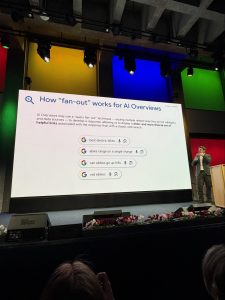
Google confirmed that AI Overviews don’t depend on a single query. Instead, they trigger multiple related micro-searches to understand a topic more fully.
For example, a search like “best electric bikes” prompts the AI to explore sub-queries such as battery range, uphill capability, and color variations.
This broader query spread allows Google to pull in a more diverse set of sources than traditional rankings.
For SEOs, this signals a clear shift: ranking for one keyword isn’t enough; brands need to build deep topical coverage across an entire intent cluster.
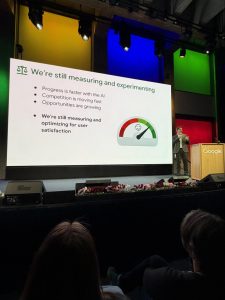
Google Admits It’s Still Testing, Measuring, and Moving Fast
Another slide emphasized that Google is still experimenting aggressively with AI Overviews. Progress is accelerating, competition is heating up, and user expectations are rising,all contributing to rapid product evolution.
The takeaway here is simple: AI search is not settling down anytime soon. Brands should expect ongoing fluctuations as Google tunes the system based on real user feedback.
“Focus on Users, Not Algorithms,” Google Reiterates
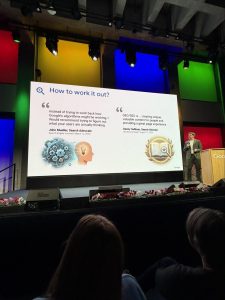
Google spotlighted messaging from John Mueller and Danny Sullivan, reinforcing a long-running theme:
- Understand what users actually want
- Create unique, valuable content
- Deliver a strong page experience
Instead of reverse-engineering the algorithm, Google wants brands thinking like their audience. This aligns directly with the direction AI search is taking — intent-led discovery over isolated keyword targeting.
AI Overviews Still Use Core Ranking Systems
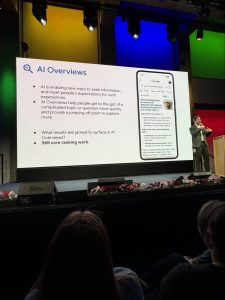
Despite the AI enhancements, Google clarified that the sources appearing inside AI Overviews still depend on its traditional ranking framework. That means:
- Authority
- Backlinks
- Content depth
- Entity signals
- Page experience
… continue to play a major role in visibility. AI Overviews are layered on top of these systems, not replacing them.
For brands, this means the fundamentals still matter, but now they must be amplified with stronger entity clarity, structured data, and topic coverage.
Key Takeaways
- AI Overviews work through “query fan-out,” pulling data from multiple subtopics instead of a single question.
- Google is rapidly iterating based on user satisfaction, meaning volatility will continue.
- User-first content and strong page experience remain central to ranking success.
- Traditional SEO signals such as links, authority, entities, and helpful content still determine which pages surface in AI Overviews.
- Brands should prioritize topic clusters, structured data, and authority building to stay visible in an AI-driven search environment.

Dileep Thekkethil
AuthorDileep Thekkethil is the Director of Marketing at Stan Ventures, where he applies over 15 years of SEO and digital marketing expertise to drive growth and authority. A former journalist with six years of experience, he combines strategic storytelling with technical know-how to help brands navigate the shift toward AI-driven search and generative engines. Dileep is a strong advocate for Google’s EEAT standards, regularly sharing real-world use cases and scenarios to demystify complex marketing trends. He is an avid gardener of tropical fruits, a motor enthusiast, and a dedicated caretaker of his pair of cockatiels.
