Starting this week, Google Search Console will officially show data for Discussion Forum rich results in the Performance report.
That means if you run a forum-style website or community platform that shares user-generated discussions and have implemented the proper DiscussionForumPosting structured data, you can now track impressions, clicks and rankings of your forum threads as rich results in search.
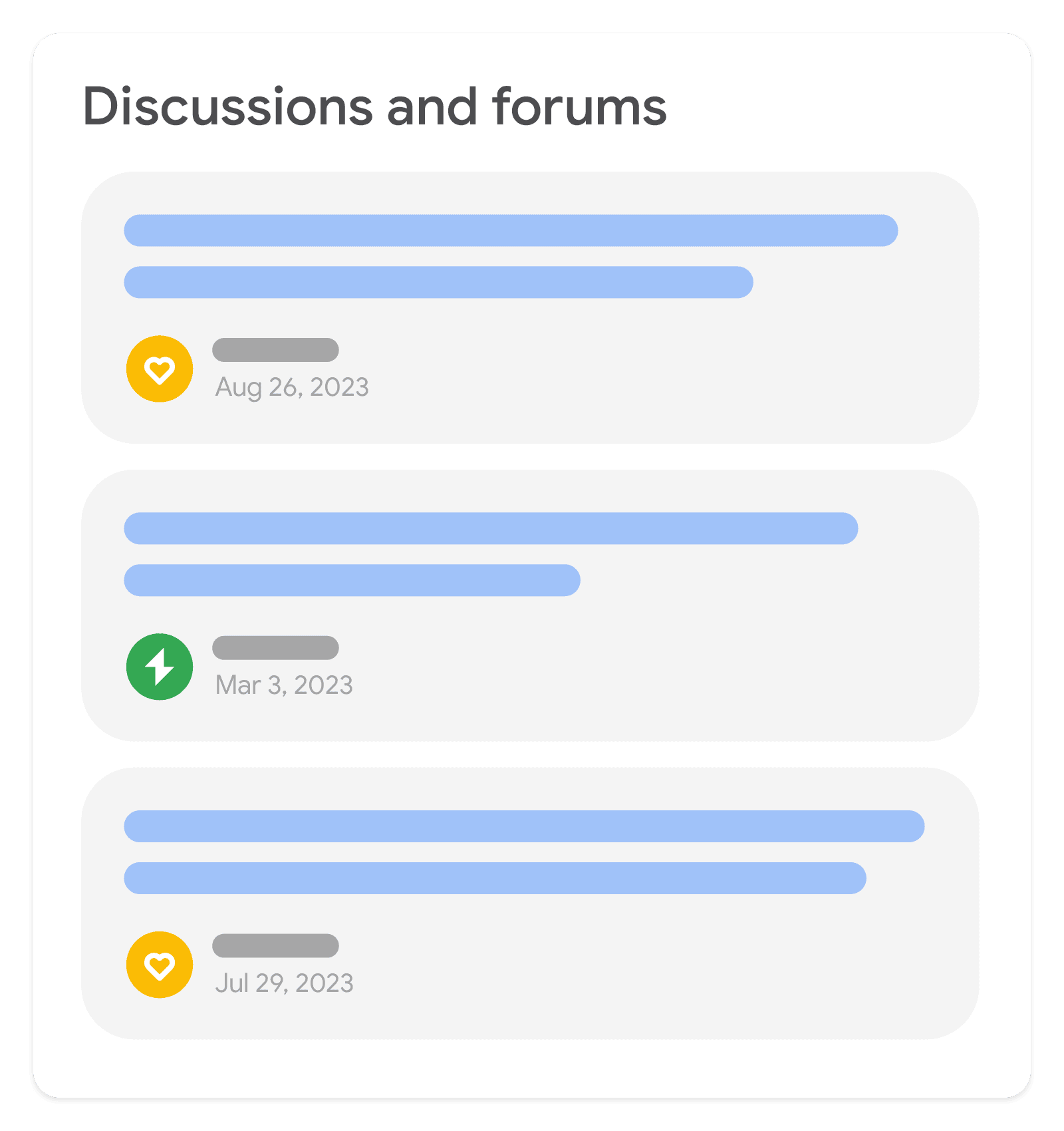
To many, this might seem like just another quiet update from Google but if you manage online communities, run niche forums or handle SEO for discussion-heavy websites, this could be a pretty big deal.
What exactly does this mean? And how can you get your own forum content to qualify for this new reporting?
So, What’s Actually Changing?
Google has now integrated a new appearance filter in Search Console under the Performance report, labeled “Discussion Forum”.
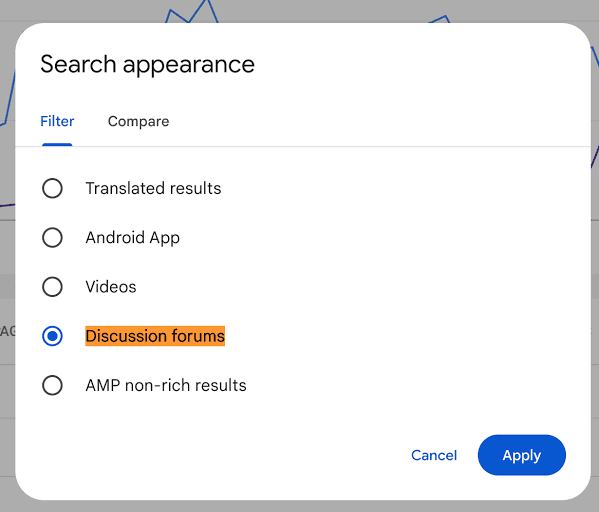
This new addition allows webmasters and SEOs to see how often their forum threads are being surfaced as rich results in Google Search and how users are interacting with them.
Until now, you had no way of knowing whether Google was treating your forum content as rich results.
You could add the structured data, test it in the Rich Results Test tool and hope it helped with visibility but the impact remained invisible in analytics.
Now, that changes. With this update, you get clarity. You can analyze:
- How many clicks your forum discussions are getting from rich results.
- How many impressions they receive.
- Their average position.
- Which topics or URLs perform best with the rich format.
In short, you can measure and optimize your forum SEO with far more confidence.
What Is DiscussionForumPosting Structured Data?
At the core of this update is a structured data format called DiscussionForumPosting which is a part of Schema.org’s vocabulary designed specifically for forum-style conversations.
This is not for general blog posts or product reviews. It is for websites where users gather to post opinions, share perspectives and respond in threaded conversations.
Think Reddit-like forums, hobby groups, fan communities, tech support boards or even niche discussion sections within e-commerce sites.
With proper implementation, this structured data helps Google:
- Understand the forum layout (posts, comments, authors).
- Identify which parts of the page are user-generated content.
- Distinguish forum content from Q&A or article-style formats.
- Display that content more meaningfully in Search.
Google says:
“When forum sites add this markup, Google Search can better identify online discussions across the web and make use of this markup in features such as Discussions and Forums.”
How Should You Implement It?
If you have never touched structured data before, this may sound intimidating. But it’s actually manageable once you understand the basics.
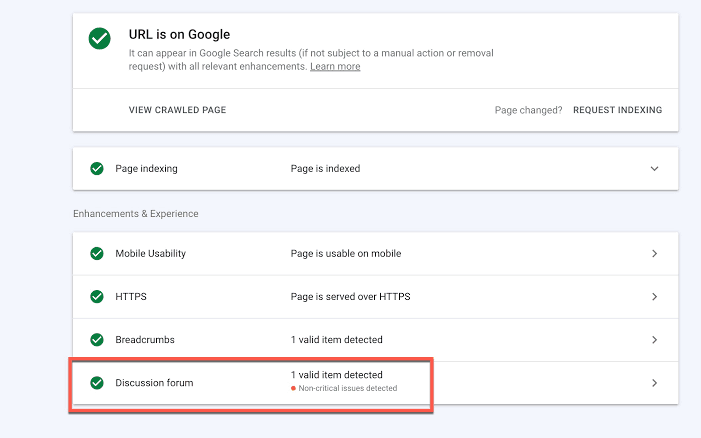
Here is what Google recommends:
- Use the DiscussionForumPosting schema on pages that represent a discussion thread.
- Nest comments under the original post using the comment property.
- If the thread is paginated, make sure each page references the original thread URL.
- Include essential properties like author, headline, datePublished, and text (or image/video if it’s a media-based post).
- Use the Rich Results Test to validate your structured data.
Also, do not misuse the markup. Google explicitly says:
Do not use DiscussionForumPosting for blogs or product reviews. If your forum is primarily question-answer based then consider using Q&A markup instead.
Lastly, make sure each post includes the full content of the thread and its comments if they appear on the same page.
Need help? CMS users can rely on plugins or developer support. JavaScript-based rendering is also supported if done correctly.
Why This Update Matters
This change aligns with a bigger trend in how Google is treating user-generated content and forums.
In 2023 and 2024, we saw the launch of “Perspectives”, a feature that surfaces first-hand experiences and opinions in search results. Then, Discussions & Forums started getting more visibility often from Reddit, Quora and Stack Overflow.
Now, with this new update to Search Console, Google is showing that it values community knowledge—and it’s giving site owners the tools to optimize for it.
So, if you run any kind of UGC platform, this is a clear signal:
Structure your data properly and you will be rewarded with more visibility—and more insight.
SEO Implications: What Should You Do Now?
If you already run a forum, this is your sign to implement structured data today. If you have already implemented it then go check your Search Console.
The new Discussion Forum appearance should now be live in your Performance report filters. You might start seeing data for your rich results right away.
With this you should also audit your structured data using the Rich Results Test. Monitor clicks and impressions weekly to spot growth opportunities and lastly compare how threads with images or videos perform versus text-only threads.
Even small tweaks like clearer headlines or better author markup can boost your visibility in Search.
A Note on Crawling and Indexing
Google also focused that structured data does not guarantee rich results. If your pages are blocked from crawling or not indexed properly, they won’t show up.
Make sure:
- Your robots.txt isn’t blocking discussion threads.
- Pages are indexable (no noindex tags).
- They are linked from your main site navigation.
- You have submitted updated sitemaps via Search Console.
Rich results depend on quality and accessibility. Do not overlook the technical SEO basics.
A Step Forward for Community-Driven Content
Google’s move to add Discussion Forum appearance tracking in Search Console is a part of a larger shift in how the search engine sees value.
It is recognizing that not all knowledge lives in blog posts or official pages.
Sometimes the best advice, the most detailed help or the most human perspective comes from a comment in a thread. From a forum user answering a stranger’s question.
This update gives those voices more visibility and gives webmasters more tools to make sure they are heard.

Dileep Thekkethil
AuthorDileep Thekkethil is the Director of Marketing at Stan Ventures, where he applies over 15 years of SEO and digital marketing expertise to drive growth and authority. A former journalist with six years of experience, he combines strategic storytelling with technical know-how to help brands navigate the shift toward AI-driven search and generative engines. Dileep is a strong advocate for Google’s EEAT standards, regularly sharing real-world use cases and scenarios to demystify complex marketing trends. He is an avid gardener of tropical fruits, a motor enthusiast, and a dedicated caretaker of his pair of cockatiels.
