Google is testing a new shopping feature inside Chrome’s AI Mode, surfacing brief descriptions when users click on individual product listings. The test, visible only intermittently, hints at Google’s ambitions to make shopping faster and more self-contained within search.
Open Chrome’s AI Mode, search for a product, and you might notice something unusual. Instead of clicking on a product and being whisked away to a retailer’s page, some users are seeing a slim panel slide in from the right. Inside that panel, Google’s artificial intelligence assembles a brief product description.
The text materializes in real time, with a small animation hinting that a summary is being generated just for you. Seconds later, the panel fills with a concise overview of the product’s key features.
Early reports suggest it appears in roughly one out of every four attempts, a sign that Google is still tinkering under the hood. However, even in this limited state, the feature highlights that Google is testing whether it can directly reshape the shopping process within search, eliminating the need to visit external websites.
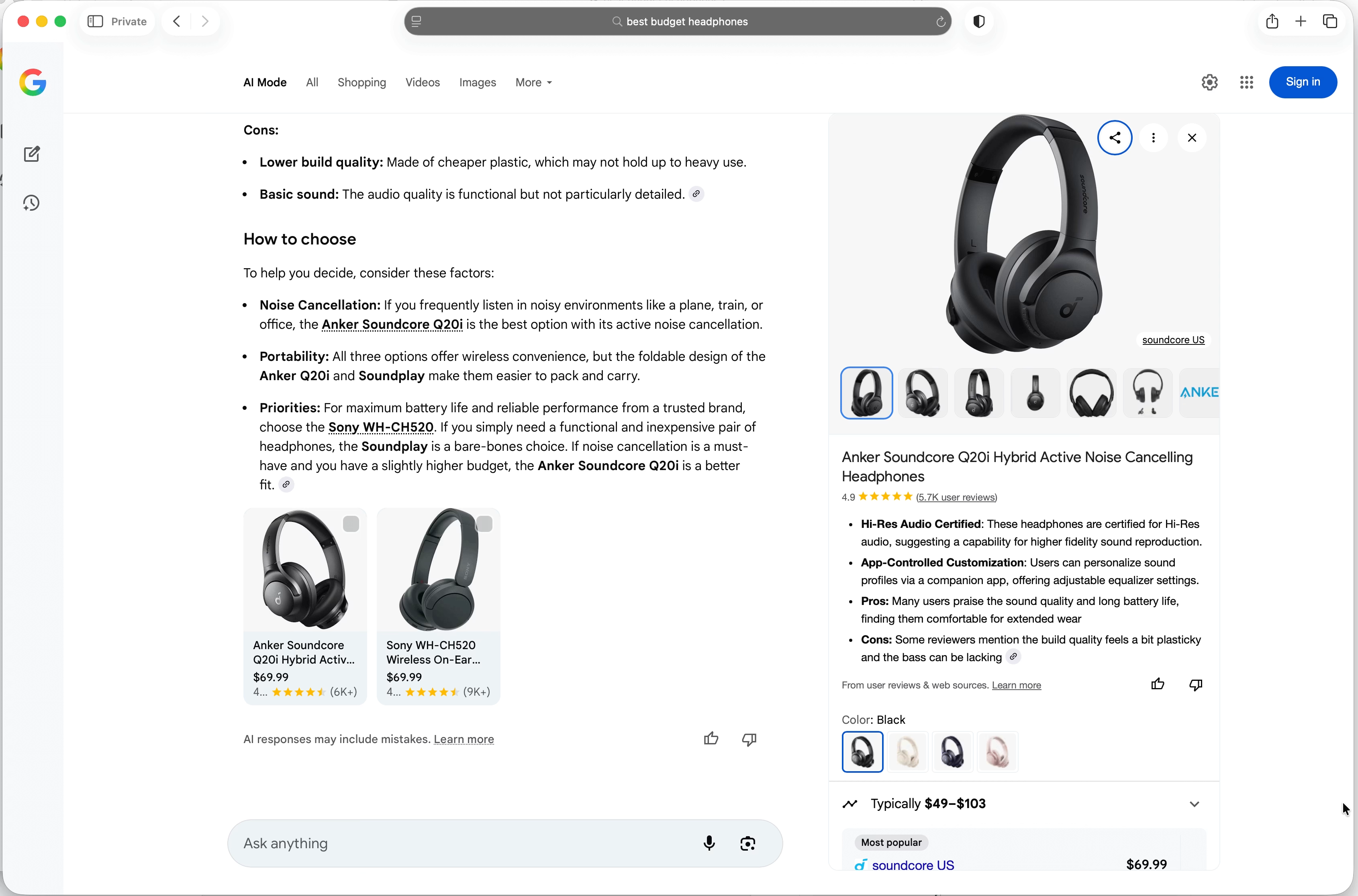
How the Feature Works in Action
Testers describe a straightforward process:
- Search for a product with AI Mode enabled.
- Browse the product cards that appear.
- Click one.
- Instead of being redirected, a panel slides open on the right.
- An AI-generated description loads after a brief animation.
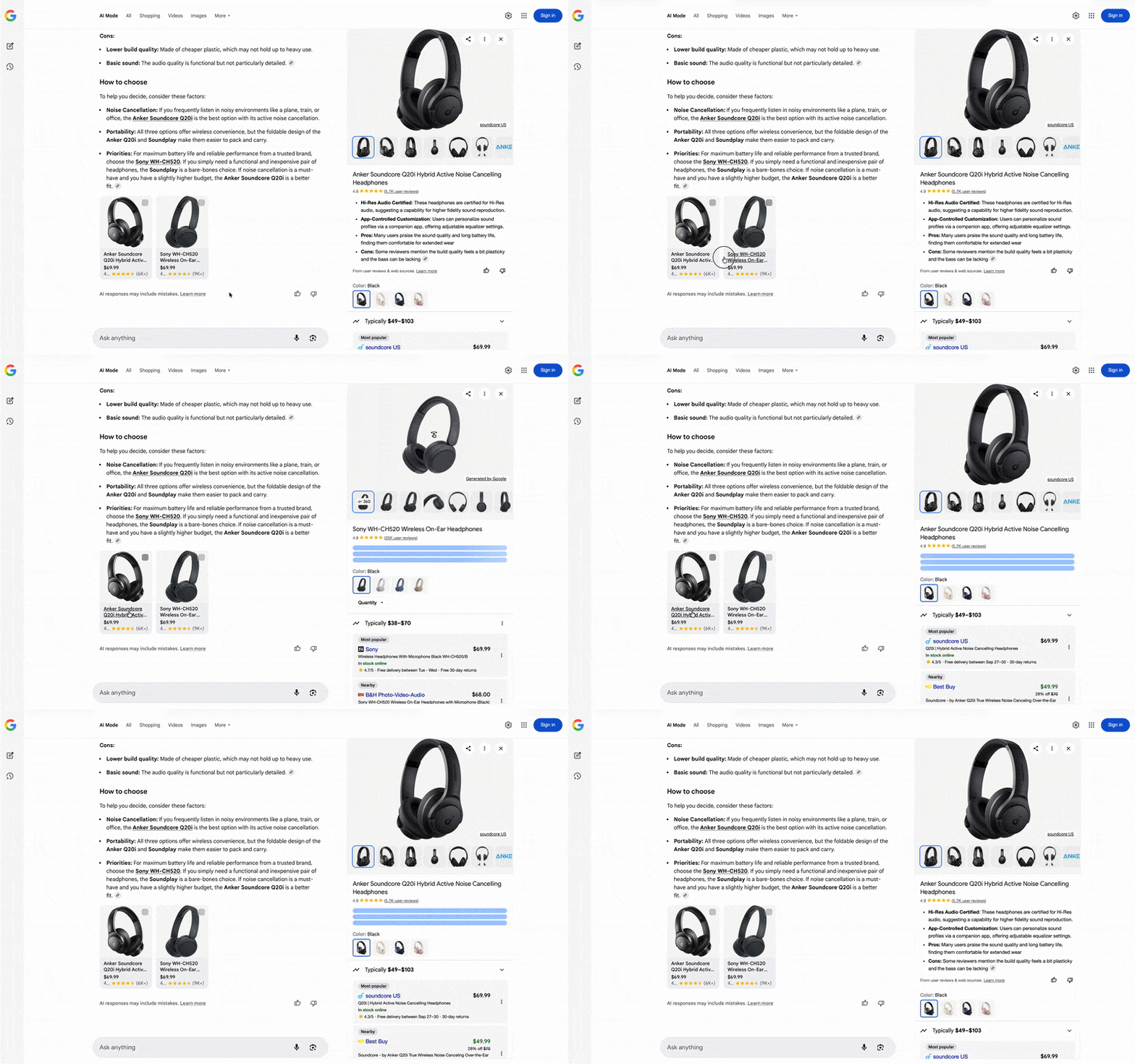
Screenshots, GIFs, and videos shared on social media show the summaries in action. They aren’t flashy, and they don’t read like persuasive ad copy.
Instead, they provide plain descriptions—enough to help a shopper decide whether to keep exploring that product or move on.
Google is now testing out AI-generated product summaries within free listing results in AI Mode.
The format for the summary includes pros and cons, along with other relevant descriptors at the top of the listing.
Details: https://t.co/B9aOS5Paha
—
📧 Stay on top of… pic.twitter.com/l5kltyHn09
— SERP Alert ⚡️ (@SERPalerts) September 21, 2025
What Shoppers Stand to Gain
If expanded, the feature could streamline online shopping in meaningful ways.
Imagine searching for a blender. Instead of juggling ten tabs filled with technical specs and marketing slogans, you’d get a short, clean summary of its power, size, and main functions.
That kind of shortcut could be valuable for making quick decisions or for people who want to compare several items without getting bogged down in details.
It may also help users who struggle with dense product pages or industry jargon.
But What About the Sellers?
The same qualities that make AI summaries appealing to shoppers may unsettle retailers and publishers.
Every summary shown in the panel represents one fewer click to an external site. For businesses that rely heavily on Google referrals, that’s a problem.
This echoes concerns about AI Overviews, where website owners complained that Google was answering questions directly in search results instead of sending traffic their way.
If product summaries gain traction, smaller retailers and affiliates could feel the squeeze hardest.
And then there’s the issue of nuance as well. A machine summary might strip a product of its personality. A boutique brand that prides itself on storytelling could find its carefully crafted descriptions reduced to a generic, functional list.
Accuracy and Trust: The Core Questions
One of the biggest unknowns is where these summaries are coming from. Are they drawn from manufacturer write-ups, scraped from retailer pages, or stitched together from customer reviews?
Without clear attribution, shoppers may wonder whether the information is complete or reliable.
In online commerce, even a small mistake can create problems. A mismatched size, a missing compatibility note, or an overlooked feature can lead to returns and erode confidence. Trust is fragile, and summaries that cut corners could damage it quickly.
Google has already faced criticism for being vague about how its models collect and combine information.
If the company expects shoppers to lean on AI summaries when making purchases, it will need to show more openness about how the system works.
Part of a Larger AI Push
Seen in context, this test isn’t an isolated experiment. It’s one step in Google’s broader plan to weave AI into everyday browsing. AI Mode itself is an ongoing effort to reimagine search as more interactive, less about lists of links and more about immediate answers.
By extending AI to product search, Google signals that shopping is a central pillar of that strategy. The potential is vast: AI-generated comparisons, side-by-side feature breakdowns, even personalized recommendations drawn from browsing history.
Whether users welcome such deep integration will depend on execution. If it saves time without sacrificing trust, adoption could be swift. If it feels intrusive or unreliable, it may face pushback.
Preparing for What’s Ahead
Even while the test is small, businesses can take proactive steps:
- Use structured data: Ensure product pages are marked up with accurate schema so AI has reliable material to draw from.
- Simplify descriptions: Write clear, factual copy. AI works better when the source is straightforward.
- Build stronger brands: If fewer shoppers click through, brand familiarity becomes even more important.
- Spread risk: Diversify traffic sources through newsletters, social media, and direct engagement rather than leaning solely on Google.
- Track metrics: Watch closely for changes in referral traffic as AI features expand.
What Comes Next
Google rarely pushes a new feature out broadly on the first try. The company experiments in small pockets, studies how people respond, and only then decides whether to keep building or quietly shut it down. These AI product summaries could develop into a regular part of search, or they might fade if they don’t add enough value.
For shoppers, the benefit is clear enough. A quick summary saves time and reduces the need to jump between endless product tabs. For retailers, the challenge is tougher. If Google does the explaining, sellers have fewer chances to tell their story or persuade a buyer.
Shoppers may welcome the change since it cuts down the time spent jumping between product pages. Retailers, on the other hand, face a tougher situation because Google’s summaries limit their chance to shape the message and connect with buyers directly.
Either way, the experiment offers a glimpse of what online shopping could look like in the near future: fewer clicks, less noise, and more information surfaced in one place.
Key Takeaways
- Google is testing AI-generated product summaries in Chrome’s AI Mode.
- The feature shows up sporadically and appears in a right-hand panel.
- Shoppers could benefit from quicker, clearer insights.
- Retailers risk losing traffic and brand voice if summaries dominate.
- Businesses should adapt now by optimizing structured data and broadening outreach.

Dileep Thekkethil
AuthorDileep Thekkethil is the Director of Marketing at Stan Ventures, where he applies over 15 years of SEO and digital marketing expertise to drive growth and authority. A former journalist with six years of experience, he combines strategic storytelling with technical know-how to help brands navigate the shift toward AI-driven search and generative engines. Dileep is a strong advocate for Google’s EEAT standards, regularly sharing real-world use cases and scenarios to demystify complex marketing trends. He is an avid gardener of tropical fruits, a motor enthusiast, and a dedicated caretaker of his pair of cockatiels.
