
In a major update for website owners and SEO professionals, Google has officially confirmed that data from AI Mode, its generative AI-powered search experience, will soon be included in Google Search Console reports.
But here is a twist: Instead of creating a separate reporting category, AI Mode data will be lumped under the traditional “Web” search type.
Yes, even though AI Mode is displayed in its own distinct interface in the search results often in a separate tab and different context but it won’t be tracked separately from your standard organic web traffic in Google Search Console.
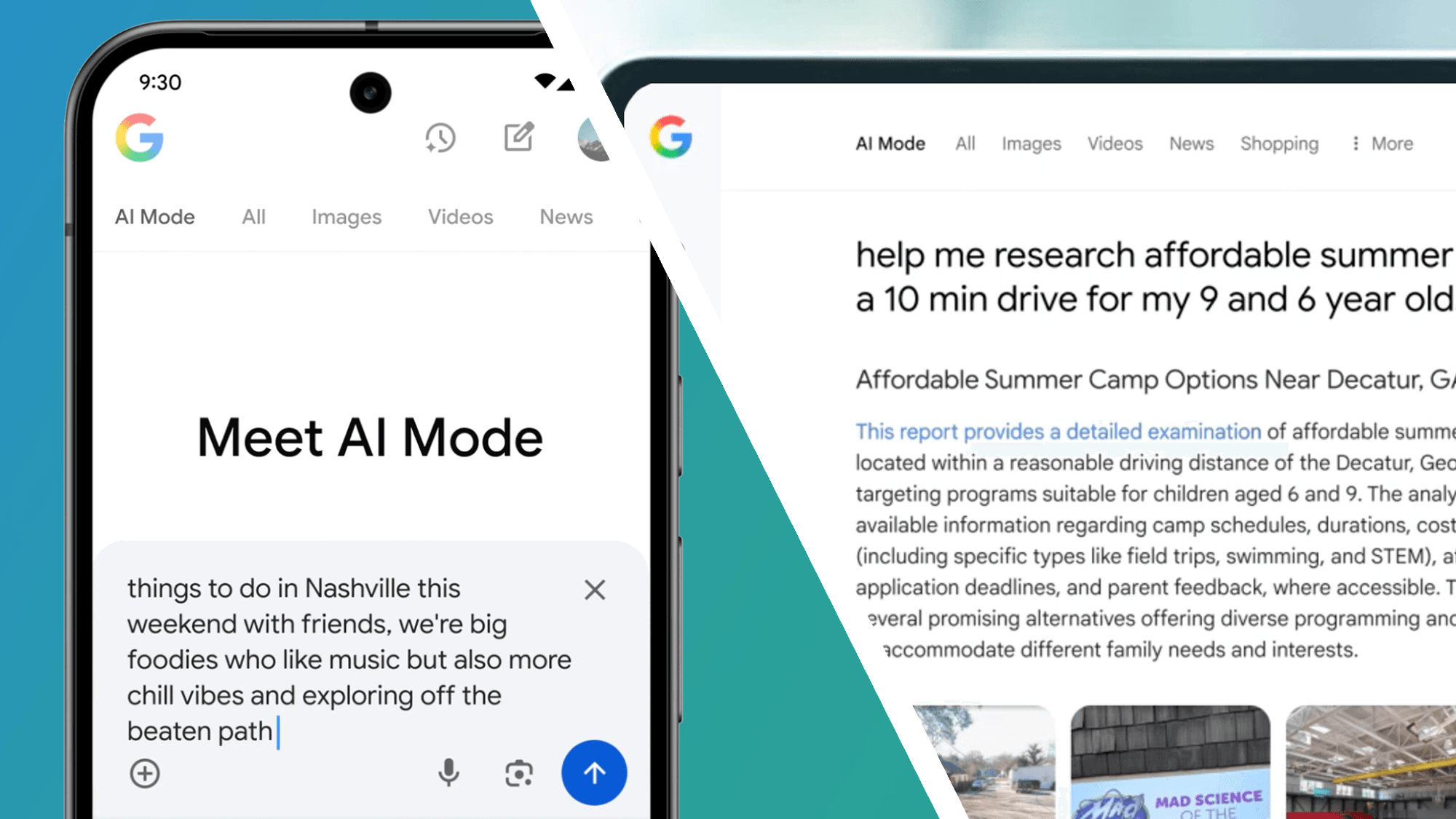
Let us break down exactly what is happening and what it means.
What Is Google AI Mode and Why Should You Care?
Google AI Mode is part of the company’s broader effort to redefine search using artificial intelligence. Unlike traditional search results that return a list of blue links, AI Mode provides generative, conversational answers to queries which use a mix of Google’s search index and generative AI models.
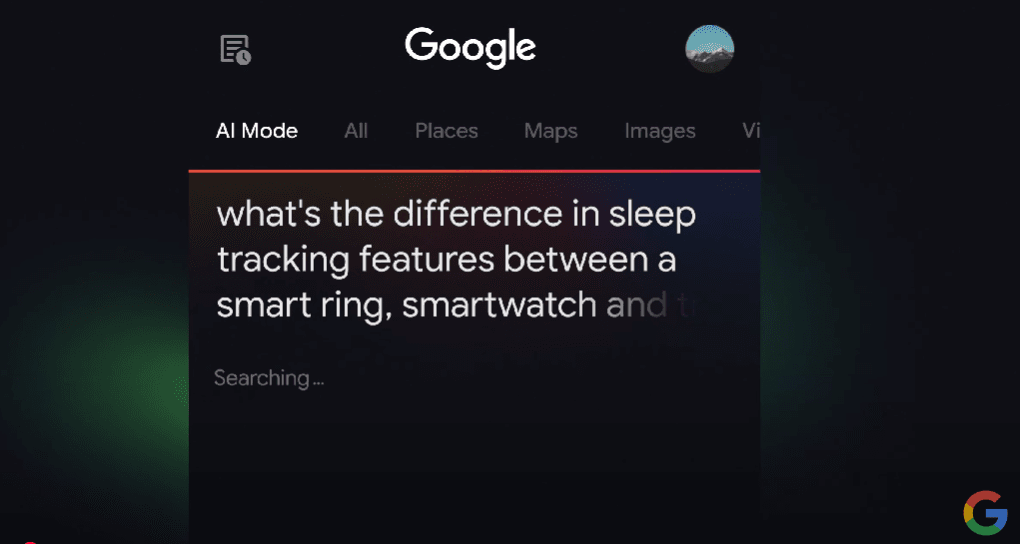
This feature builds upon what started as AI Overviews (previously known as Search Generative Experience or SGE) but AI Mode takes it a step further by offering a fully AI-centric experience, often featured in a separate tab labeled something like “AI Overview,” “Ask with AI,” or “AI Results.”
AI Mode usually includes:
- A conversational answer box generated by AI
- Key takeaways or summaries of content
- Citations from multiple sources (sometimes)
- Follow-up questions or conversational prompts
For example:
Search for “best ways to reduce anxiety without medication” and instead of only a list of health blogs, AI Mode might provide a synthesized response such as:
“There are several proven techniques to reduce anxiety without medication which includes deep breathing, progressive muscle relaxation, mindfulness, regular exercise and cognitive behavioral techniques. Would you like tips for daily practice?”
With links to sources like Mayo Clinic, Psychology Today and selected YouTube videos, AI Mode offers a conversational gateway to content but one that doesn’t always encourage traditional click-through behavior.
Google Confirms AI Mode Reporting Will Be in Search Console
Now coming back to the news. In response to growing confusion from webmasters and marketers, Google’s John Mueller posted on LinkedIn confirming that AI Mode reporting is not yet live in Google Search Console but it is coming soon as part of the broader AI Mode rollout.
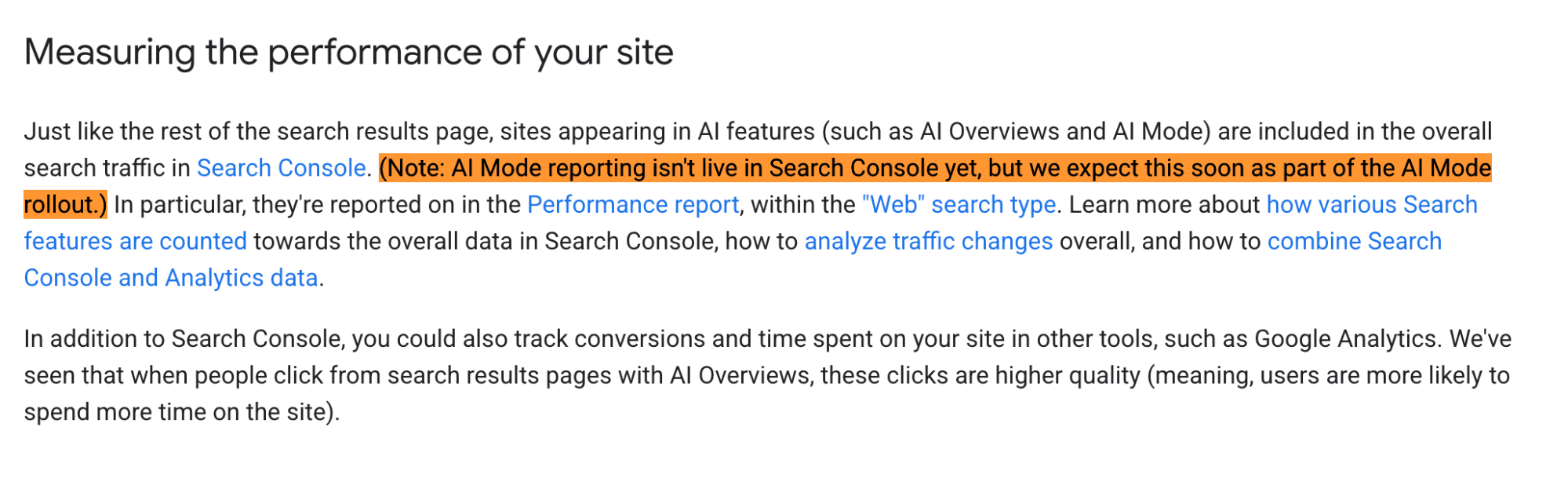
He emphasized:
“We’re updating our documentation to reflect this will be showing soon as part of the AI Mode rollout.”
Shortly after that, Google quietly updated its Search documentation on AI Features (see here) to confirm the data from AI Mode will appear under the “Web” search type in the Performance Report.
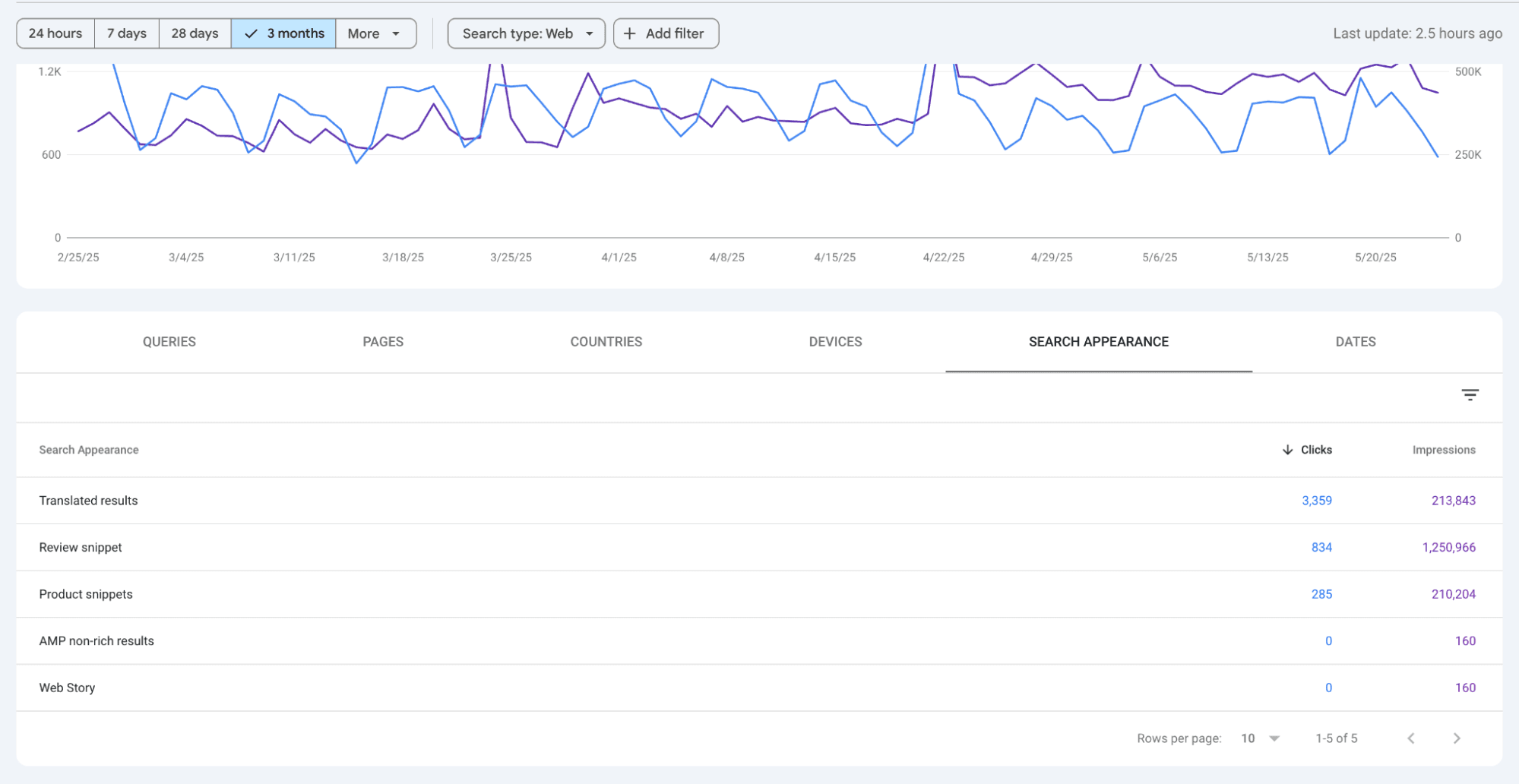
This confirmation came after weeks of uncertainty. Initially , Google’s documentation only mentioned AI Overviews, leaving site owners unsure whether traffic from the newer AI Mode was being captured and if so were.
Why the SEO Community Is Concerned About This Change
From a user interface standpoint, AI Mode operates very differently from traditional web search. It appears on a separate tab or section, it is conversational and users may never interact with your site directly even if your content is referenced in an AI answer.
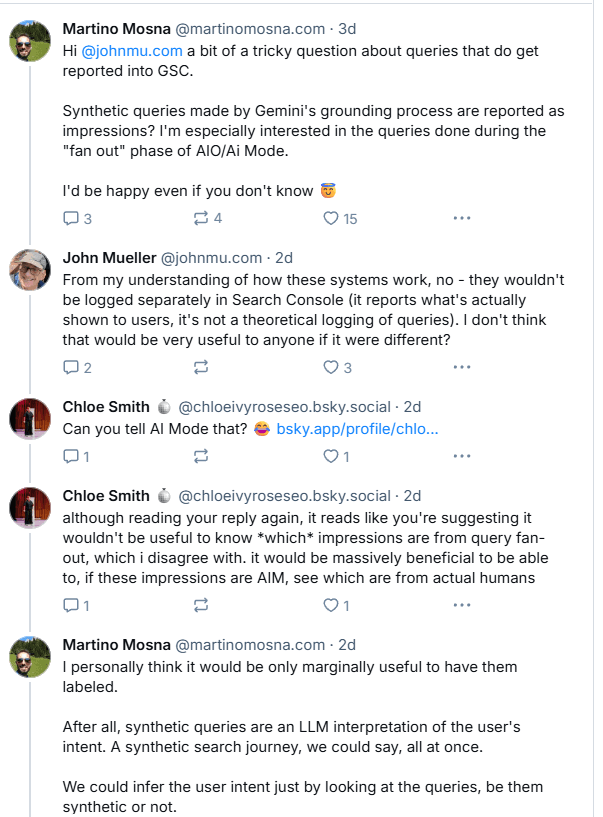
Forum discussion at Bluesky:
So, lumping AI Mode data into the generic “Web” search type in Search Console makes it impossible to:
- Isolate AI Mode impressions, clicks or CTRs.
- Determine which queries triggered AI-generated answers using your content
- Measure engagement specific to the AI Mode interface
This lack of granularity can have serious implications for how website owners interpret performance data. Let’s take an example.
Your blog post on “5 Ways to Sleep Better Without Medication” starts showing a sudden rise in impressions but your CTR and clicks remain stagnant or drop.
Under traditional analytics logic, you might assume your title tag is not sufficiently compelling or your position dropped.
But in reality your post might have been cited heavily in AI Mode responses— providing users with enough information upfront that they don’t click through. Without separate AI Mode reporting, you would not know the true reason behind the performance shift.
The Call for a Dedicated “AI Search Type” in Search Console
Prominent voices in the SEO community such as Glane Gave, who posted on X have expressed disappointment over this bundling of data.
Just a reminder that Google’s documentation says AI Mode data will show up in the performance reporting under the Web search type. We’ll see if that’s the case when it arrives soon. I’m still hoping for a new search type… although I know that probably will not happen. But this… pic.twitter.com/G0SfieCNCe
— Glenn Gabe (@glenngabe) May 24, 2025
“Just a reminder that Google’s documentation says AI Mode data will show up in the performance reporting under the Web search type. I’m still hoping for a new search type… although I know that probably will not happen.”
What marketers are really asking for is a dedicated “Search Type: AI Mode” in Google Search Console similar to how we currently have:
- Web
- Image
- Video
- News
Such a classification would allow SEOs to:
- Understand how AI-generated summaries impact user behavior
- Determine which content is getting referenced or cited in AI answers
- Optimize specifically for AI-powered interfaces
It’s Time to Rethink How We Do SEO
Google’s move to include AI Mode data in the Search Console under the “Web” search type might feel confusing, especially since we can’t filter it out easily. But it is also a clear sign that search is changing and fast.
Even without a separate tab or filter, this update shows how important AI-driven search has become. As marketers and SEO professionals, we need to shift our focus. It is no longer just about ranking in traditional search results; it is about making sure our content is helpful, clear and easy for AI to understand.
In short, AI Mode is here to stay and the way we create and track content needs to evolve with it. Keep your strategy flexible, stay informed and make your content work for both users and AI

Dileep Thekkethil
AuthorDileep Thekkethil is the Director of Marketing at Stan Ventures, where he applies over 15 years of SEO and digital marketing expertise to drive growth and authority. A former journalist with six years of experience, he combines strategic storytelling with technical know-how to help brands navigate the shift toward AI-driven search and generative engines. Dileep is a strong advocate for Google’s EEAT standards, regularly sharing real-world use cases and scenarios to demystify complex marketing trends. He is an avid gardener of tropical fruits, a motor enthusiast, and a dedicated caretaker of his pair of cockatiels.
