Google recently rolled out a significant update to its classic “Do you need an SEO?” documentation. For years, this page has served as Google’s official advice to business owners considering hiring an SEO agency or consultant.
The core message that SEO is valuable remains the same, but Google says be careful who you hire. Also, the specific warnings and recommendations have been given a massive modernization overhaul.
Here is a breakdown of exactly what Google changed, and the hidden meaning behind why they likely made these shifts.
1. The Addition of Generative AI (AEO/GEO)
What Changed: Google officially added “Optimizing for generative AI” to the list of useful services an SEO can provide. Furthermore, they added a new warning: if an agency offers AI experiences (AEO/GEO) optimization, business owners must check if that advice actually aligns with Google Search’s official guidance.
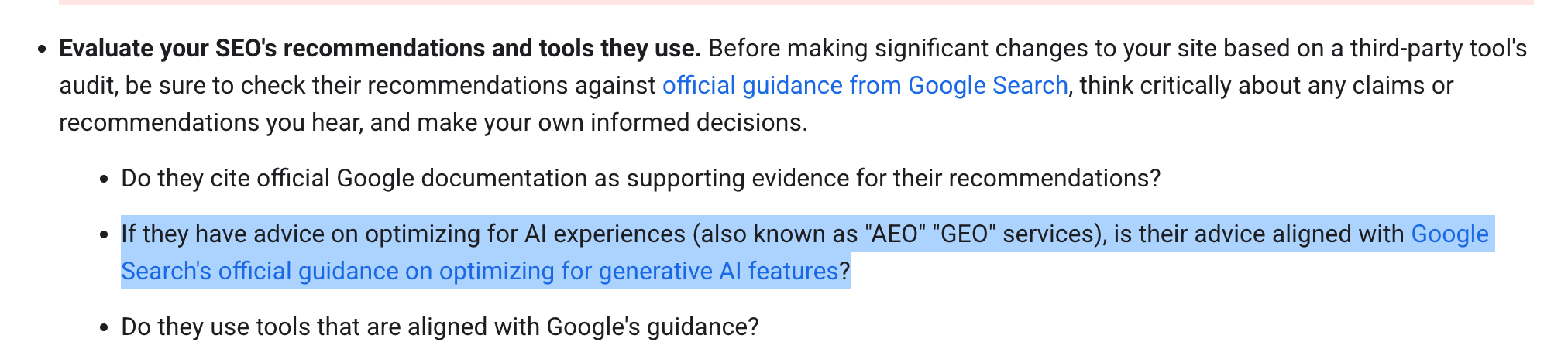
Why Google Did It: Google is acknowledging the elephant in the room: AI Overviews and Generative Search are changing the landscape. However, because AEO (Answer Engine Optimization) and GEO (Generative Engine Optimization) are still the “Wild West,” many rogue agencies are likely selling snake-oil “AI optimization” packages. Google is validating that AI optimization is a real service, but explicitly warning site owners to cross-reference agency promises with actual Google documentation. They want to nip AI-SEO scams in the bud before they get out of hand.
2. A Hard Stance on Third-Party SEO Tools
What Changed: A massive new section was added warning business owners about third-party SEO tools. Google explicitly states that they do not endorse these tools, that these tools lack access to Google’s internal ranking data, and that site owners should be highly skeptical of tools claiming to be “Google approved.” Additionally, Google has also created a new page to offer guidance on using third-party SEO tools, services, and advice.
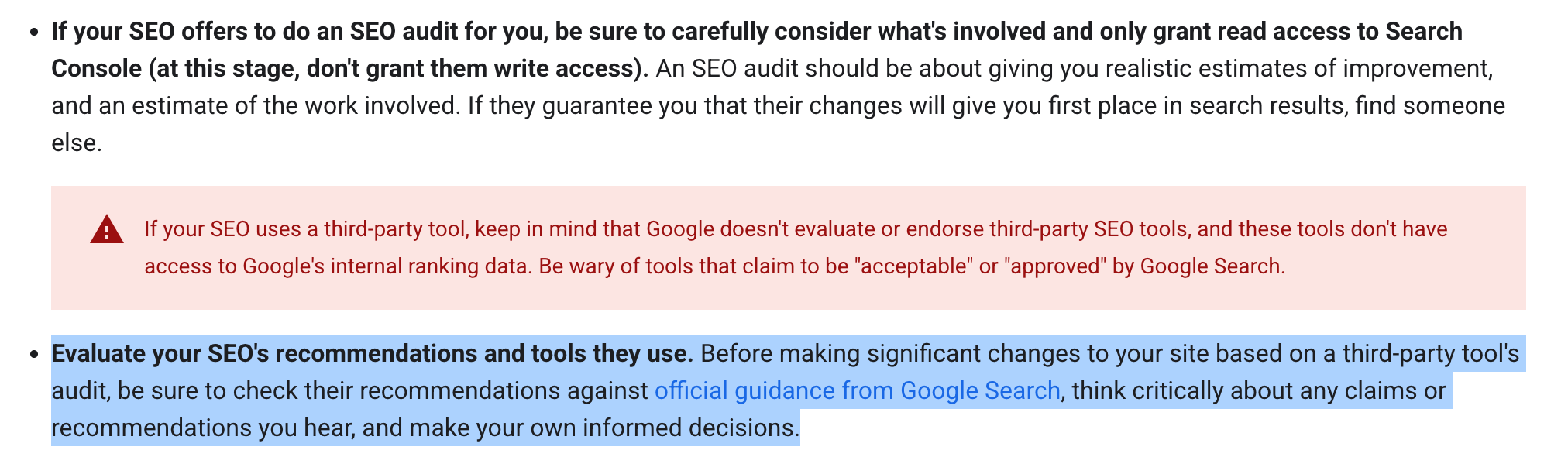
Why Google Did It: Business owners are constantly bombarded by automated, often AI-generated “SEO Audit” emails from agencies using third-party tools (like Semrush, Ahrefs, or white-labeled site crawlers). These tools often flag hundreds of minor “errors” (like a missing meta description or a low text-to-HTML ratio) as catastrophic red flags to scare clients into paying for retainers. Google is stepping in to remind business owners that a red error in a third-party tool does not necessarily equate to a penalty in Google’s actual algorithm.
3. The Deletion of Outdated “Scams” and FTC Links
What Changed: Google completely gutted the section detailing specific SEO scams. Gone are the mentions of “doorway pages,” “shadow domains,” “selling keywords in the address bar,” and “scumware.” Furthermore, Google removed all links, phone numbers, and instructions for reporting deceptive SEO agencies to the FTC (Federal Trade Commission).
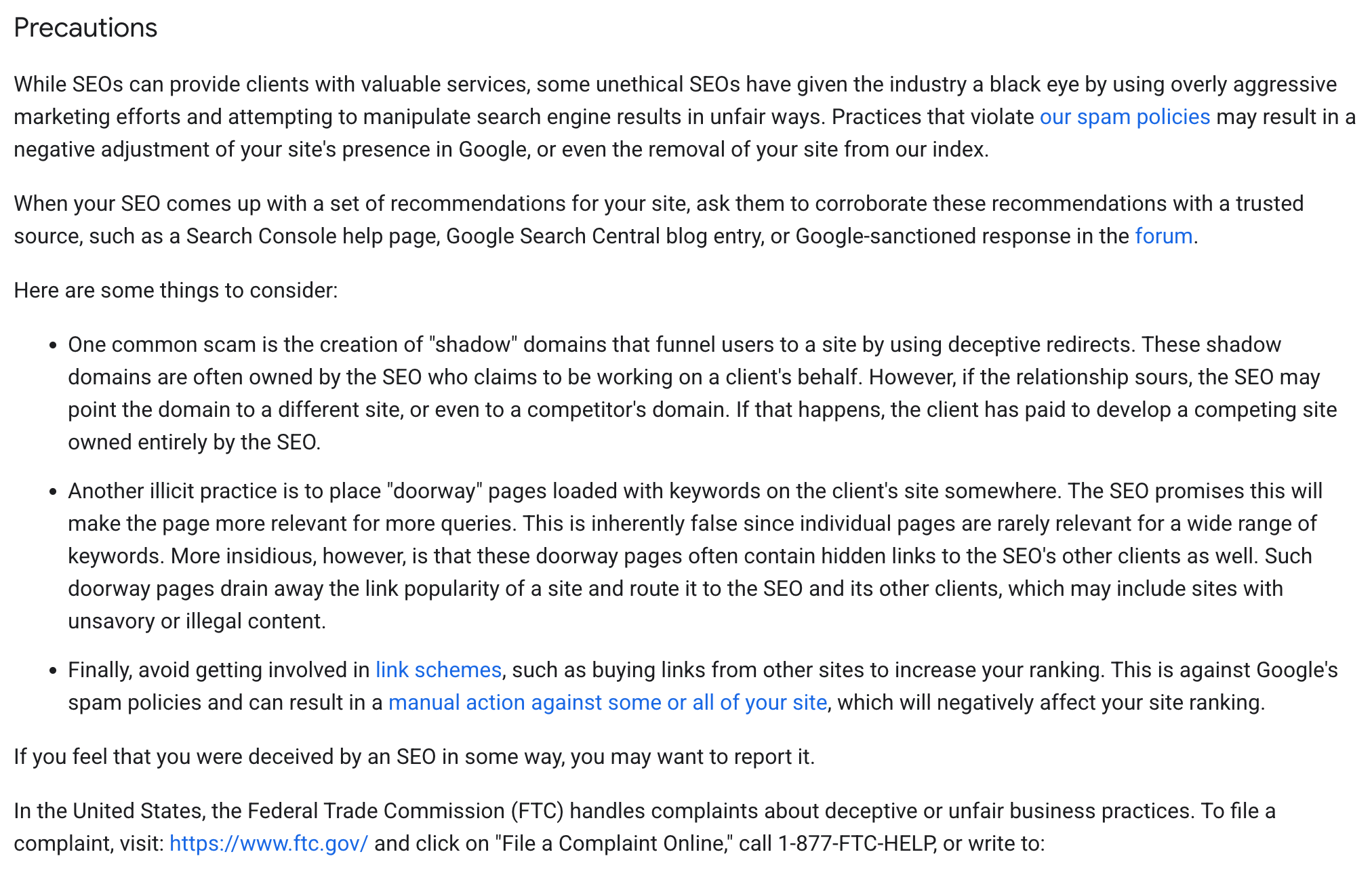
Why Google Did It: Simply put, the document was showing its age. “Shadow domains” and “doorway pages” are relics of early-2000s black-hat SEO. Today, Google’s automated spam systems (like SpamBrain) neutralize these tactics so efficiently that they aren’t the primary threat to business owners anymore. As for removing the FTC reporting links? Google likely wants to streamline its documentation to focus strictly on search engine guidelines, rather than acting as a legal arbiter or customer service desk for business disputes between agencies and their clients.
4. Stripping Away the Fluff
What Changed: Google removed several old bullet points, including the warning that business owners must “be committed to implementing the recommended changes,” and trimmed down their links to older video series.
Why Google Did It : This is a move toward concise, user-centric documentation. Business owners don’t have time to read a textbook; they want a quick checklist. By pointing users directly to the newly refreshed “SEO Starter Guide” instead of older fragmented resources, Google is creating a more streamlined, less intimidating funnel for beginners.
Key Takeaway
Google’s updated guide reflects the modern reality of search. As generative AI becomes a core component of how users find information, SEOs must adapt. But as the industry evolves, Google is making sure business owners are equipped to separate the agencies relying on genuine, Google-aligned strategies from those relying on scare tactics, proprietary tool metrics, and outdated tricks.

Dileep Thekkethil
AuthorDileep Thekkethil is the Director of Marketing at Stan Ventures, where he applies over 15 years of SEO and digital marketing expertise to drive growth and authority. A former journalist with six years of experience, he combines strategic storytelling with technical know-how to help brands navigate the shift toward AI-driven search and generative engines. Dileep is a strong advocate for Google’s EEAT standards, regularly sharing real-world use cases and scenarios to demystify complex marketing trends. He is an avid gardener of tropical fruits, a motor enthusiast, and a dedicated caretaker of his pair of cockatiels.
