A 10-week study by Evergrow Marketing has shattered the deeply held belief that geotagging photos improves local search rankings on Google.
The research, involving 27 businesses, found that embedding location data in images had little to no positive effect— and in many cases, it hurt rankings for city-based searches.
How the Study Was Conducted
To uncover the truth about geotagging, SEO experts conducted an extensive test involving local lawn care businesses.
The goal was to determine whether uploading photos with GPS coordinates to Google Business Profiles (GBPs) could improve rankings for different types of searches.
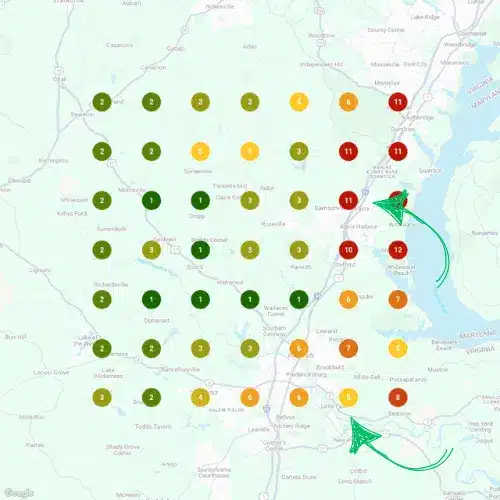
The study focused on three critical search queries:
- Service + City Name (e.g., “Lawn care Salt Lake City”)
- Service + Near Me (e.g., “Lawn care near me”)
- Service + Business Address (evaluating rankings directly at the business’s location)
Over five weeks, researchers uploaded two geotagged images per week to each GBP. A control period, where only non-geotagged images were used, ensured reliable comparisons. The results defied expectations.
What Happened When Businesses Used Geotagging?
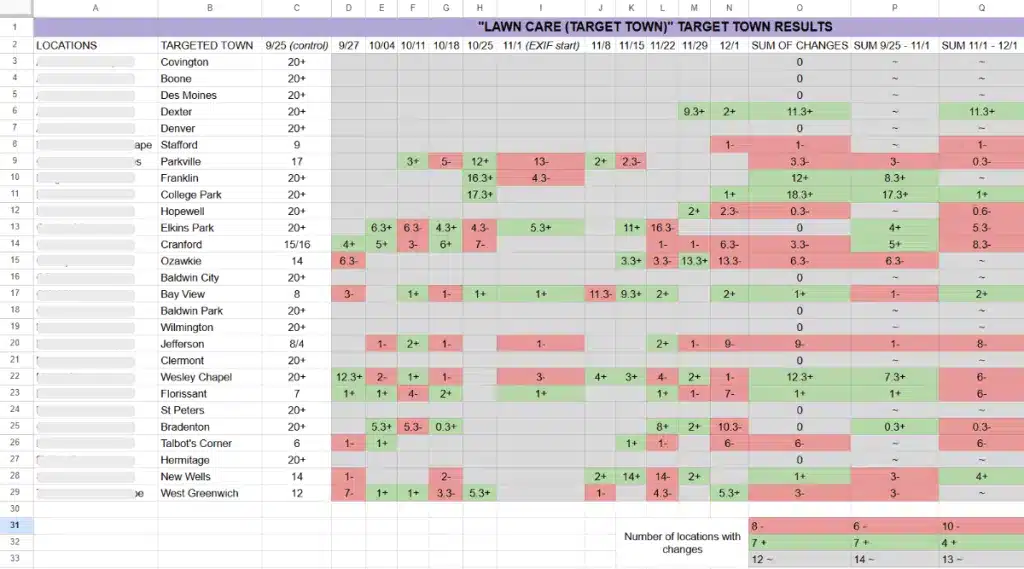
Slight boost for ‘near me’ searches—but only in precise areas: Geotagged images provided minor ranking improvements for searches tied to the exact embedded location. However, the effect was inconsistent and not widespread.
City-based rankings dropped: Businesses using geotagging actually saw a decline in search rankings for queries that included the city name (e.g., “Lawn care [City]”).
No impact at the business address: If a company hoped that geotagging images with their official address would improve local rankings, the study proved otherwise—there was no change.
More harm than good: Overall, geotagging images resulted in more ranking declines than gains, suggesting that Google does not prioritize EXIF data (the metadata stored in image files) when determining search rankings.
Better SEO practices matter more: Factors like profile completeness, customer engagement, and local keyword optimization played a much greater role in improving rankings.
Why This Matters: The End of a Common SEO Strategy
These findings are a wake-up call for businesses that have been relying on geotagging as part of their local SEO strategy. Here’s what companies should do instead:
- Prioritize high-quality images. Image relevance and clarity matter far more than embedded metadata.
- Optimize Google Business Profiles. Regularly update business details, post new content, and actively manage customer reviews to stay competitive.
- Use strong local keyword strategies. Incorporate relevant keywords into GBP descriptions and website content.
- Test before committing. Businesses tempted to continue geotagging should experiment on a small scale before rolling it out fully.
The Bottom Line
This study confirms what many SEO experts have suspected, that is, geotagging is not the silver bullet for local rankings.
While it can offer slight benefits for hyper-local searches, its negative impact on broader city-based rankings makes it a risky strategy.
Instead, businesses should focus on tried-and-true SEO techniques that consistently deliver results.
Key Takeaways
- The study found no significant SEO benefits from geotagged images.
- Businesses saw ranking drops for searches with city names.
- Some improvements were noted, but only in precise locations.
- Profile optimization, engagement, and keywords matter more.
- Skip geotagging and invest in strategies that actually improve rankings.

Dileep Thekkethil
AuthorDileep Thekkethil is the Director of Marketing at Stan Ventures, where he applies over 15 years of SEO and digital marketing expertise to drive growth and authority. A former journalist with six years of experience, he combines strategic storytelling with technical know-how to help brands navigate the shift toward AI-driven search and generative engines. Dileep is a strong advocate for Google’s EEAT standards, regularly sharing real-world use cases and scenarios to demystify complex marketing trends. He is an avid gardener of tropical fruits, a motor enthusiast, and a dedicated caretaker of his pair of cockatiels.