
Social media platforms are built to keep us hooked, and the easiest way to do that is by showing us content that stirs strong emotions. Outrage travels fastest, which is why so much of what goes viral makes us angry or divided. Some governments are trying to change this, but most countries still don’t know how to handle it.
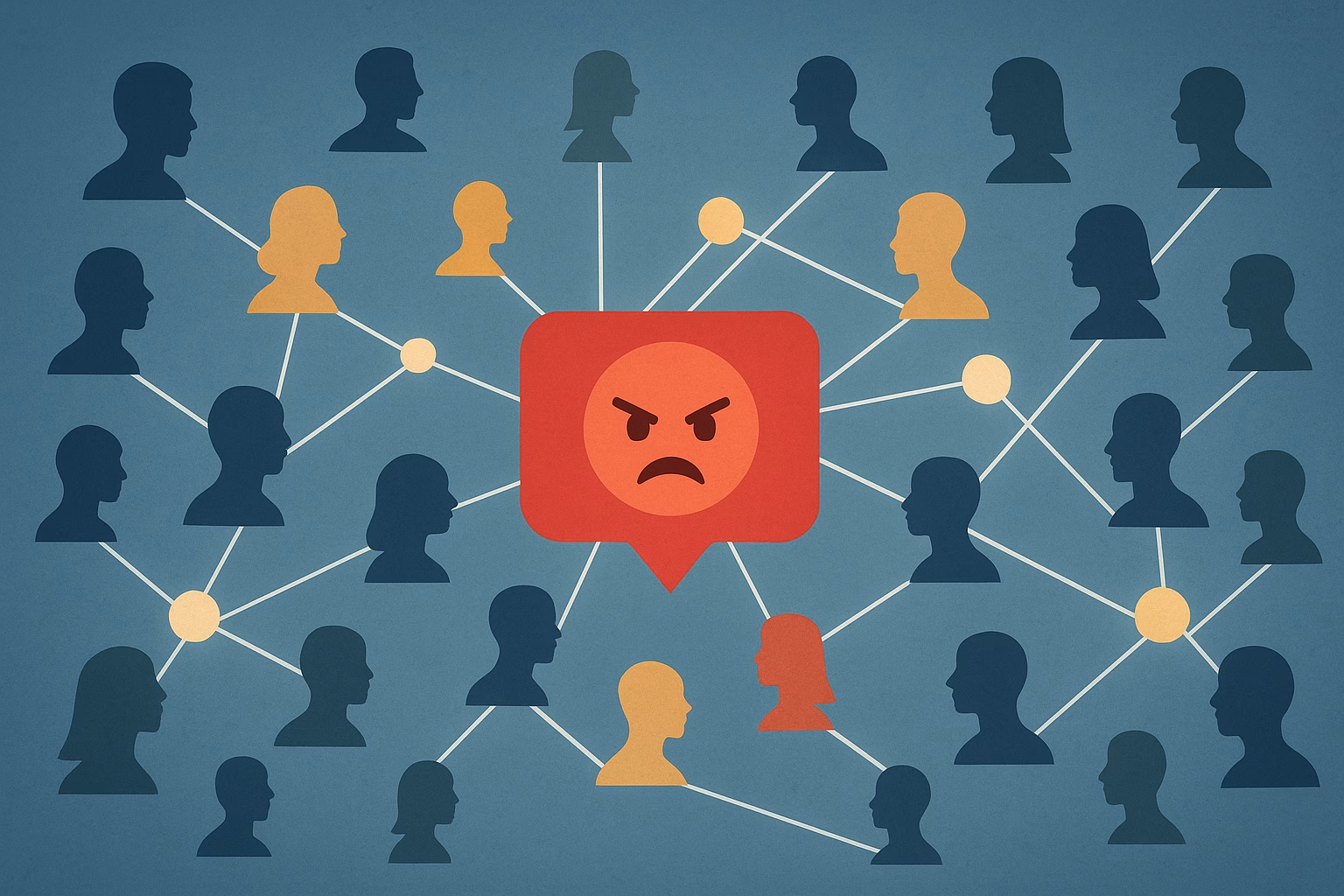
Social platforms are businesses before they are public squares. Their profits depend on how long users stay engaged.
Every additional minute spent scrolling means more ads displayed, more data collected, and more chances to convert attention into revenue. Engagement-based algorithms were built to maximize this cycle.
In an article published by Social Media Today, the outlet explained that “the biggest drivers of engagement are posts that spark strong emotional response.”
Research backs that up, showing that anger spreads faster and farther than almost anything else online. One study even concluded: “Anger is more contagious than joy.”
Once something sparks outrage, the system pushes it further.
It doesn’t matter whether the content is helpful, harmful, accurate, or misleading. All the algorithm sees is activity, and activity gets rewarded with a wider reach.
All it knows is response. If enough people are talking about something, whether it’s a celebrity scandal or a piece of disinformation, the system assumes more people will want to see it.
This design flaw is no small oversight.
As Social Media Today puts it, “algorithmic amplification, by design, drives more angst and division, because that’s inadvertently what it’s designed to do.”
The American Example
The United States has become the most visible case study of this dynamic.
Online commentators, often with little institutional backing, can build vast audiences by leaning into provocative takes.
Their reward isn’t just likes or shares but tangible influence in public debates. Entire news cycles are now shaped by posts designed to ignite fury.
Offline, the ripple effects are harder to ignore.
Political polarization has deepened, trust in institutions has eroded, and culture wars flare with renewed intensity. The line between genuine civic discourse and performative outrage grows thinner by the day.
It’s not that these divisions didn’t exist before, but the pace and scale of their amplification are unprecedented.
China’s Contrasting Approach
In China, the government has gone in the opposite direction. Douyin, the Chinese version of TikTok, promotes categories like “positive energy” and “knowledge sharing.”
The goal is to shape what young people see in ways the state considers more constructive.
That might sound heavy-handed, but it shows that feeds don’t have to run on outrage. They’re engineered choices, and they can be engineered differently.
The Problem With Regulation
The sticking point is who gets to decide. Giving governments direct control is risky. If politicians or ruling parties tilt the feed toward their own agendas, the cure could be worse than the disease.
That fear isn’t abstract. Leaders have already joked about reshaping algorithms to favor their politics.
Regional regulators, like those in the European Union, are testing stricter rules, but results so far have been uneven. And private owners haven’t fared better.
Elon Musk’s version of X shows how easily bias shifts depending on who’s in charge.
Would Scrapping Algorithms Work?
One idea is to bring back chronological feeds, where posts appear in the order they’re published. Without algorithmic boosts, inflammatory content might spread less widely.
But engagement would drop. Platforms like TikTok have trained people to expect curated feeds that feel personal. Remove that, and usage would likely fall, along with advertising revenue.
And even without algorithms, anger spreads on its own. People shared provocative ideas long before social media existed. Algorithms didn’t invent outrage, but they did accelerate it.
Living With the Consequences
Outrage keeps winning because it pays. Platforms profit, governments hesitate to intervene, and ownership doesn’t guarantee neutrality.
That leaves users caught in the middle. Every click, comment, or share feeds the system, giving it more reason to keep pushing similar content.
We may not be able to overhaul algorithms overnight, but small choices add up. Ignoring rage-bait, supporting constructive voices, and diversifying news sources all reduce the power of outrage-driven feeds.
What Helps Right Now
Here are a few small but effective steps you can take to limit the grip of outrage-driven feeds and make your online time healthier.
- Skip sharing content that thrives on anger. Even criticism amplifies it.
- Get information from a mix of sources instead of relying only on feeds.
- Pay attention to your own reactions. Strong emotions are the system’s trigger.
- Follow creators who inform or inspire. Your attention fuels their reach.
- Check your app settings. Some platforms allow chronological feeds or fewer recommendations.
Key Takeaways
- Outrage dominates online because algorithms reward it.
- Anger spreads faster and further than joy or fear.
- China has shown that algorithms can be redirected, but with heavy state influence.
- Neither governments nor private owners have found a balanced fix.
- Users still hold influence by choosing what to engage with.

Dileep Thekkethil
AuthorDileep Thekkethil is the Director of Marketing at Stan Ventures, where he applies over 15 years of SEO and digital marketing expertise to drive growth and authority. A former journalist with six years of experience, he combines strategic storytelling with technical know-how to help brands navigate the shift toward AI-driven search and generative engines. Dileep is a strong advocate for Google’s EEAT standards, regularly sharing real-world use cases and scenarios to demystify complex marketing trends. He is an avid gardener of tropical fruits, a motor enthusiast, and a dedicated caretaker of his pair of cockatiels.
