Key Takeaways
- Link building tools are platforms that help SEO professionals find link opportunities, qualify them, run outreach, and monitor placed links. Most teams stack two to four tools because no single platform covers the full workflow well.
- The strongest 2026 stack covers four jobs: research (Ahrefs, Semrush, Moz, Majestic), prospecting and contact discovery (Hunter.io, Respona), outreach at scale (Pitchbox, BuzzStream, Mailshake), and monitoring (Linkody, Check My Links).
- Free options exist for every stage. Google Search Console, MozBar, Check My Links, and Ahrefs Webmaster Tools cover most basics without a paid subscription.
- AI-powered outreach personalization is the biggest 2026 shift. Pitchbox and Respona now ship native AI personalization that lifts reply rates by an estimated 15–30%.
- Buying tools doesn’t build links. They remove the manual grunt work. The judgment, qualification, and editorial standard still has to come from a human.
Picking the right link building tools in 2026 comes down to one question: which part of your workflow is currently broken? Slow at finding prospects? You need a research tool. Drowning in spreadsheets? You need an outreach platform. Losing track of placed links a month after delivery? You need a monitor.
The link building tools below are organized by the four stages of a real link building campaign: research, prospecting, outreach, and monitoring. Each entry covers what the tool does, who it’s built for, current 2026 pricing, and the honest catch every vendor leaves out of their marketing pages.
We use most of these tools daily across active link building campaigns. The right combination of two or three of them will give a good strategy somewhere between 3x and 10x the leverage it would have manually. That’s what you’re actually buying.
What are link building tools?
Link building tools are platforms that automate parts of the backlink acquisition process, including backlink analysis, prospect discovery, contact finding, email outreach, and link monitoring. The category is also called link building software.
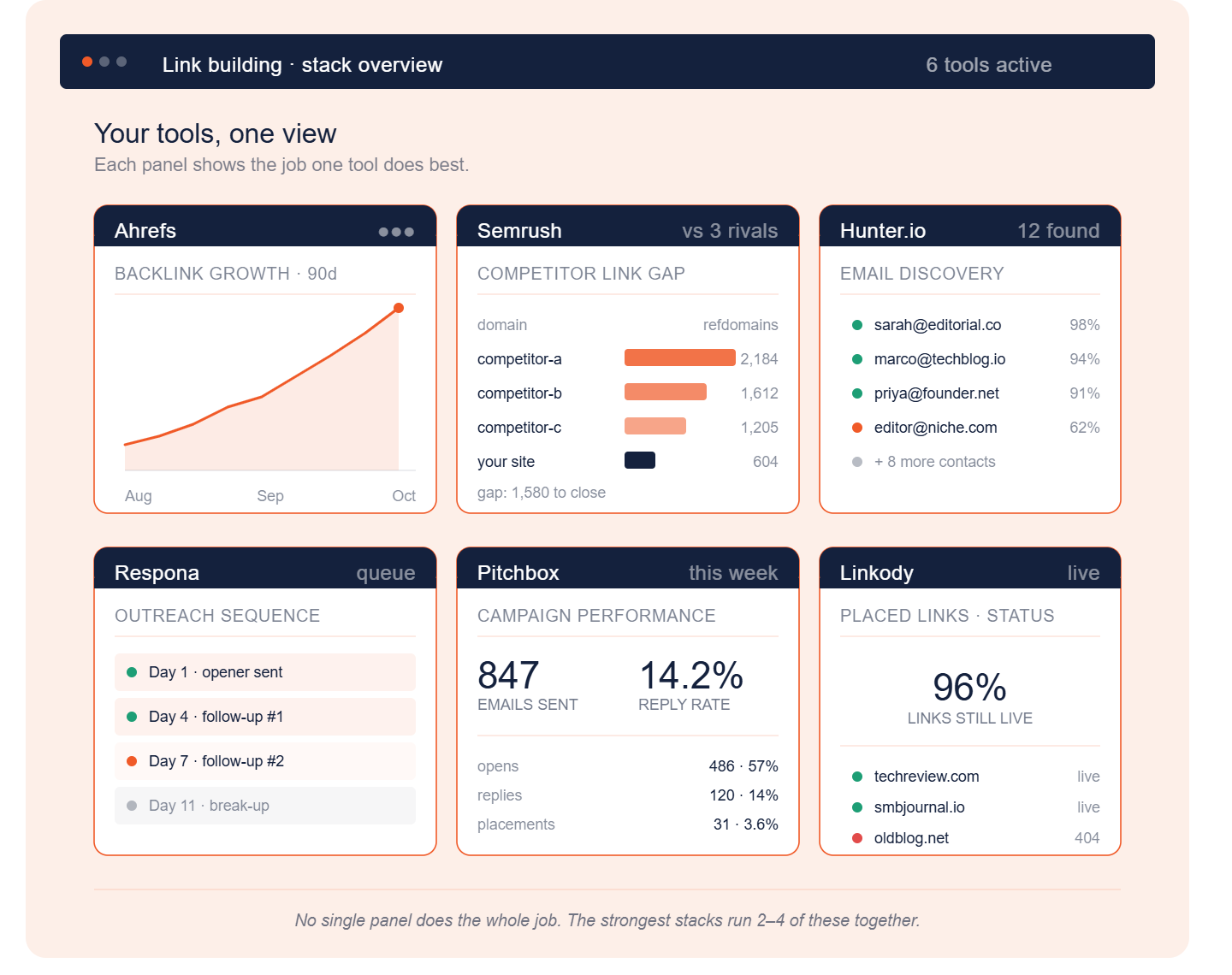
Examples include Ahrefs and Semrush for research, Hunter.io for finding contact emails, Pitchbox and Respona for managing outreach campaigns, and Linkody for tracking live links. No tool builds links on its own; the strongest setups combine 2-4 specialized tools.
4 stages of a link building workflow
Before picking tools, understand the job. Backlinks are earned through four distinct stages:
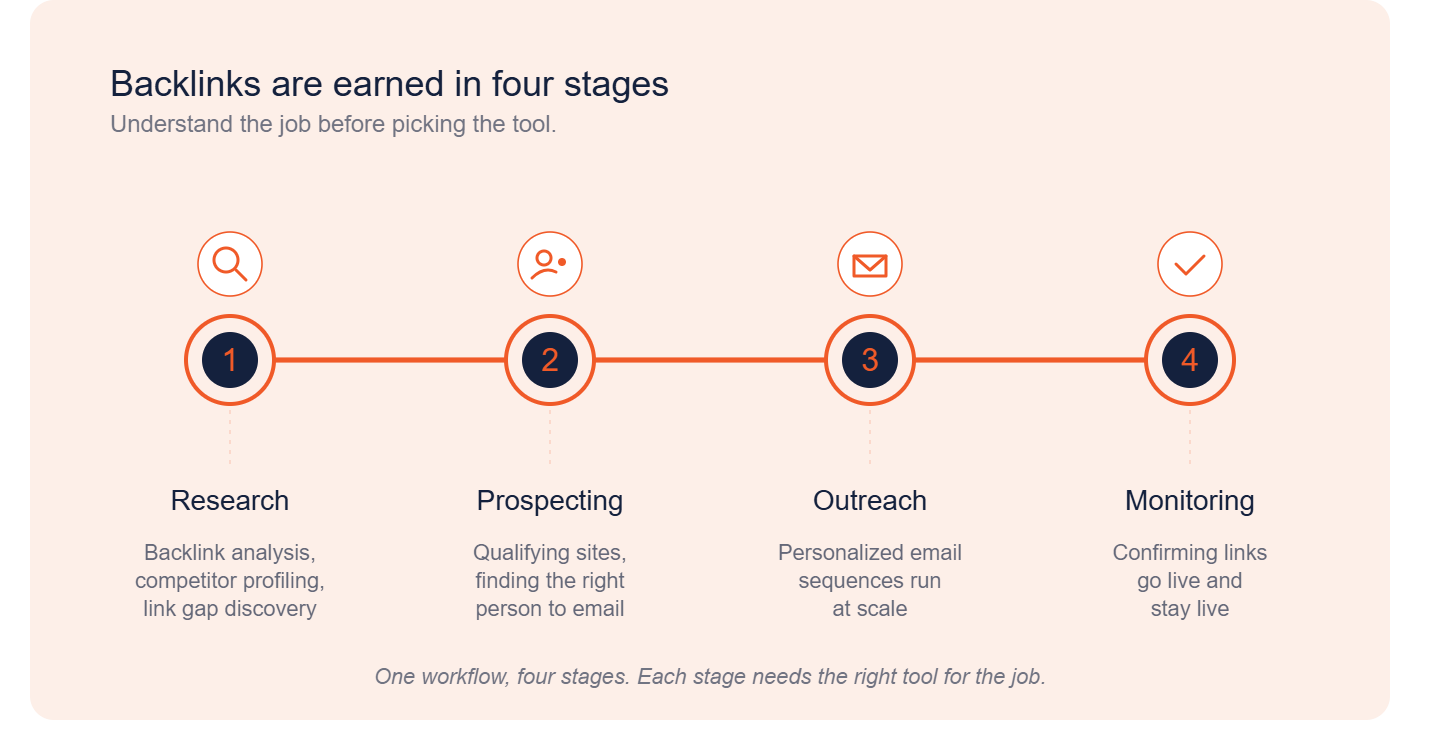
- Research: Backlink analysis, competitor link profiling, identifying link gaps
- Prospecting & contact discovery: Finding sites worth pitching, finding the right person to email
- Outreach: Running personalized email sequences at scale
- Monitoring & verification: Confirming links go live and stay live
Buying one tool for each stage is fine. Buying a heavy all-in-one platform when your team only needs research is a waste of budget.
Stage 1: Research & Backlink Analysis
This is where every campaign starts. You need to know your own backlink profile, your competitors’ profiles, and where the gaps are.
1. Ahrefs
Ahrefs has the largest live backlink index in the industry, with regular crawler updates and the deepest historical data.
The features that actually matter for link building: Site Explorer shows you any domain’s full backlink profile, referring domains, anchor text distribution, and DR breakdown. Content Explorer is a mini search engine for finding pages in your niche that have earned the most backlinks, gold for skyscraper campaigns. Link Intersect reveals sites linking to your competitors but not to you, which is the fastest way to build a prospect list.
We use Ahrefs to vet potential placement sites for relevance, traffic, and DR. The free Ahrefs Webmaster Tools gives you a meaningful slice of this data at no cost if you’re just starting out.
- Best for: any agency or in-house team running structured link building
- Pricing: $129/month (Lite) to $1,499/month (Enterprise); free Webmaster Tools available
- The honest catch: the interface has a learning curve. New users often pay for a Pro plan and use 10% of it.
2. Semrush
Semrush is the closest direct competitor to Ahrefs. Its Backlink Gap tool compares your link profile against up to four competitors at once, which is the cleanest way to surface domains linking to your rivals but not to you. The built-in Link Building Tool then lets you push qualified prospects into an outreach pipeline without leaving the platform.
If your bottleneck is process sprawl, strategy in one place, prospect lists in a spreadsheet, outreach in a separate inbox, Semrush is often the better pick over Ahrefs because more of the workflow lives inside one system.
- Best for: teams that need to move from research to outreach inside one platform
- Pricing: $139.95/month (Pro) to $499.95/month (Business); 7-day free trial available
- The honest catch: backlink depth is slightly behind Ahrefs for obscure niches and historical data.
3. Moz Pro
Moz is still the industry reference point for Domain Authority (DA), the metric many publishers still ask for when negotiating placements. Its Spam Score is also useful for vetting prospects before outreach. Both numbers travel well in client reports.
The free MozBar Chrome extension shows DA and spam score on any page you visit, which is a quick gut-check during prospecting.
- Best for: teams that report DA to clients and need a second opinion on link quality
- Pricing: $49/month (Starter) to $299/month (Premium); free MozBar extension
- The honest catch: Moz’s backlink index is materially smaller than Ahrefs or Semrush.
4. Majestic SEO
Majestic invented two metrics that have stuck: Trust Flow (a 0–100 quality score) and Citation Flow (a quantity score).
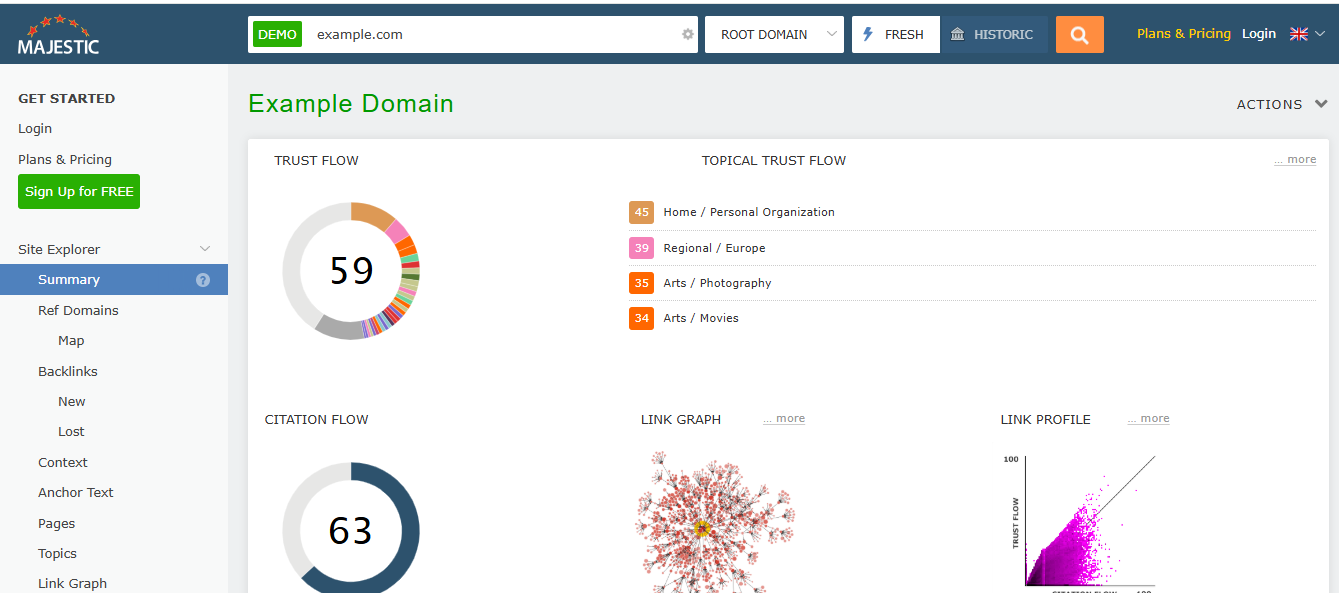
The ratio of the two is a fast read on whether a domain has earned its links naturally or stuffed itself with low-quality ones. Topical Trust Flow breaks Trust Flow down by category, so you can see if a finance site is actually a finance authority or a general-news site that occasionally writes about money.
- Best for: deep historical backlink audits and topical authority analysis
- Pricing: $49.99/month (Lite), $99.99/month (Pro), $399.99/month (API); annual billing brings Lite down to ~$41.67/month
- The honest catch: the interface looks like it hasn’t been redesigned since 2014. Functional, not pretty.
Stage 2: Prospecting & Contact Discovery
You found the sites. Now you need to find the right human to email and confirm their address actually works.
5. Hunter.io
Hunter.io is the fastest, cleanest tool for finding email addresses tied to a domain. Drop in a URL, Hunter returns verified email addresses with confidence scores. Bulk Domain Search lets you process lists. Email Verifier confirms deliverability before you send, which protects your sender reputation.
- Best for: any team doing email outreach at any volume
- Pricing: free plan with 25 searches/month; paid plans start at $49/month ($34/month billed annually)
- The honest catch: Hunter’s effective match rate hovers around 30–35% per recent independent benchmarks. Run found emails through a separate verifier before sending at scale.
6. Respona
Respona is what happens when you build outreach tools around the content rather than the contact. The platform has a built-in search engine that works like Google inside the tool: type a topic, get a list of relevant articles, and Respona automatically pulls the authors and their contact details. Then you sequence the outreach from inside the same tab.
Pre-built workflows ship for the skyscraper technique, guest posting, broken link building, resource pages, and unlinked mentions. The 2026 update added AI-powered personalization through article-summary snippets and social profile context.
- Best for: content-led link builders and digital PR teams running multi-template campaigns
- Pricing: $198–$799/month; 14-day free trial
- The honest catch: pricier than Hunter plus a generic sender, so it’s only worth it if you’re running outreach every week.
Stage 3: Outreach at Scale
Once you have prospects and contact emails, you need to send personalized outreach without losing your mind to manual follow-ups.
7. Pitchbox
Pitchbox is the Rolls Royce of link building outreach. This tool combines prospect discovery, contact finding, automated sequences, and team workflow into one platform. Direct integrations with Ahrefs, Semrush, Moz, and Majestic mean every prospect already has its DR, DA, and traffic data attached when you review it.
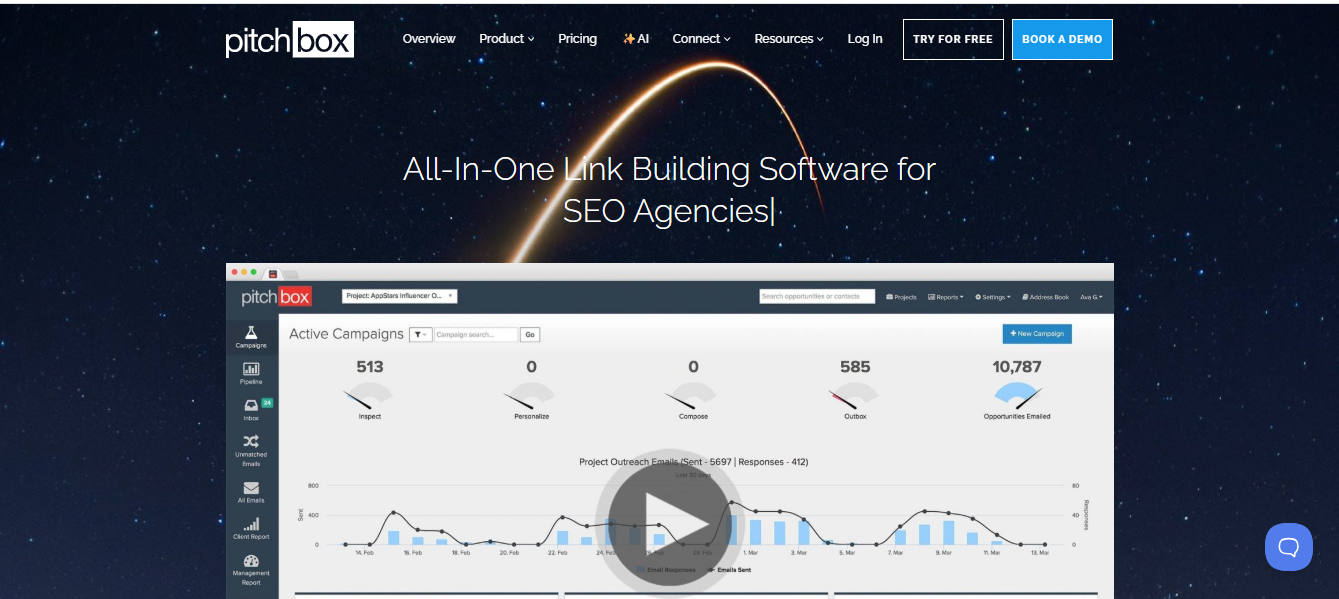
Where Pitchbox separates itself is at scale: multi-campaign management, email rotation across multiple sender accounts (deliverability protection), and 2026’s AI personalization layer that drafts opening lines based on the recipient’s recent content.
- Best for: agencies and in-house teams sending 500+ outreach emails per month
- Pricing: Pro starts at $165/month; Advanced (the real agency tier) is $420/month; Scale is $675/month
- The honest catch: the Pro plan caps you at 2,000 emails/month and 2 users, which a serious outreach team will burn through in a week. Plan on Advanced.
8. BuzzStream
BuzzStream takes a different approach: it organizes outreach around contacts, not campaigns. Every interaction is logged against a person and their site, so when you reach out to the same publisher a year later, the full history is right there. Useful if you maintain long-term blogger outreach relationships rather than blasting one-off campaigns.
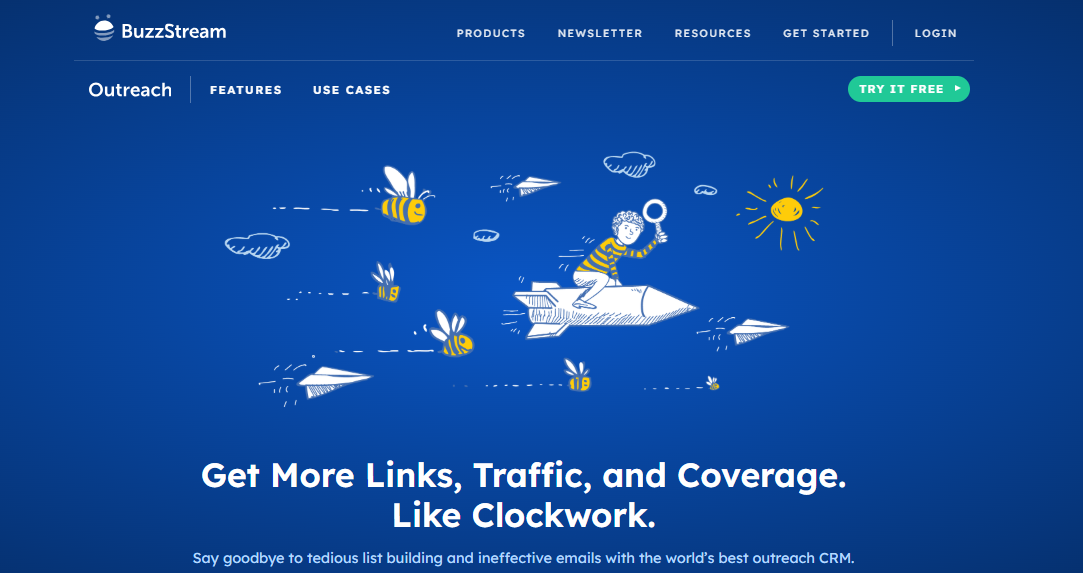
The base plan is also a fraction of Pitchbox’s cost, making it a fit for solo SEOs and smaller agencies.
- Best for: relationship-led outreach, smaller teams, freelancers
- Pricing: $24/month (Starter) to $999/month (Enterprise)
- The honest catch: the interface feels dated next to Pitchbox or Respona. Some teams find the contact-first model less intuitive than campaign-first.
9. Mailshake
Mailshake is the budget alternative to Pitchbox for sending bulk personalized outreach. Pre-built templates cover guest posting, broken link building, backlink requests, and PR pitches.
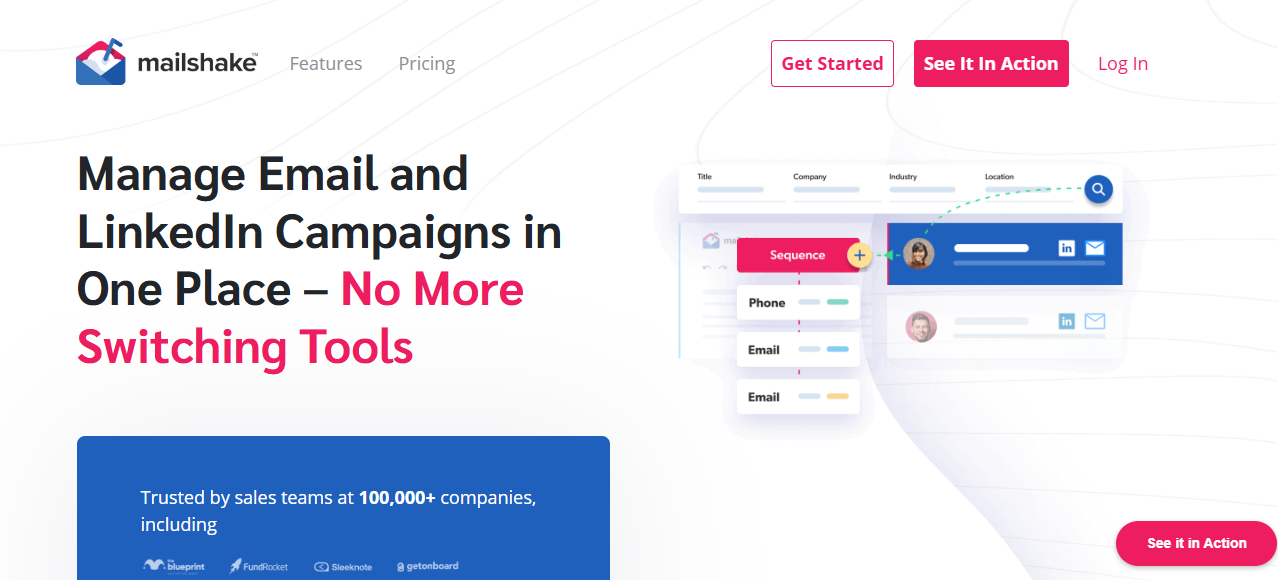
The Email Copy Analyzer scores your draft against deliverability and engagement signals before you hit send.
- Best for: solo SEOs and small teams sending fewer than 1,000 emails per month
- Pricing: $29–$99/month
- The honest catch: it’s an outreach tool, not a prospecting tool. You bring the list.
Stage 4: Monitoring & Verification
Built links aren’t real until they’re live, indexed, and still there a month later.
10. Linkody
Linkody is the most focused option for live link tracking.
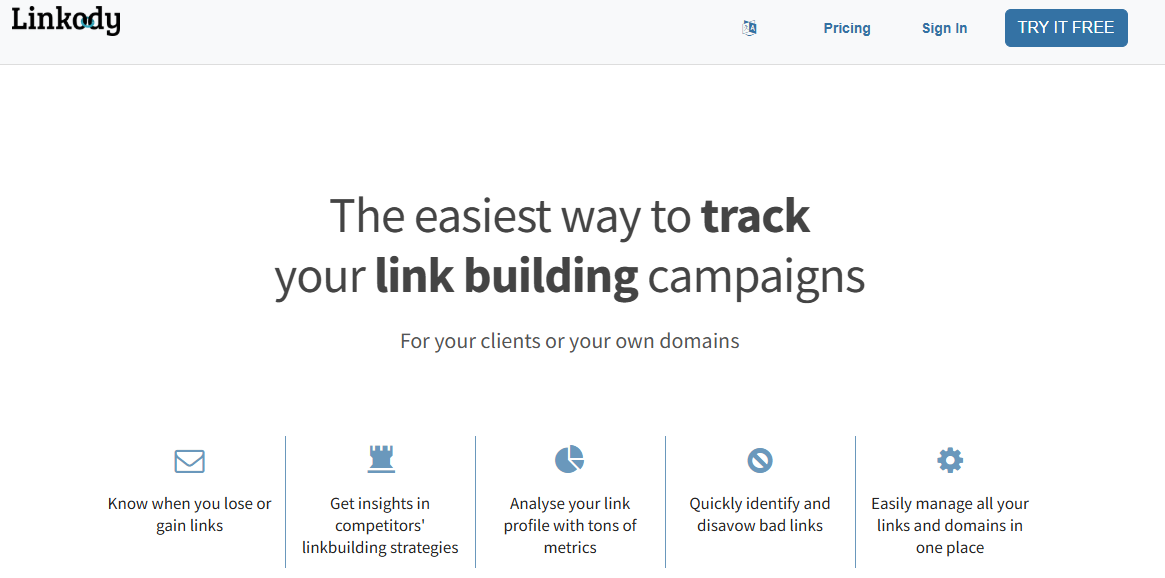
Drop in your URL and your important backlinks; Linkody pings each one daily and alerts you the moment a link gets removed, marked nofollow, or 404s. For agencies reporting to clients, this is the difference between “we built 30 links” and “30 of 30 links are still live as of today.”
- Best for: ongoing link health monitoring after placement
- Pricing: from $14.90/month (Webmaster) to $153.90/month (XL)
- The honest catch: Linkody only tracks links you tell it about. It won’t discover new backlinks the way Ahrefs does.
11. Check My Links
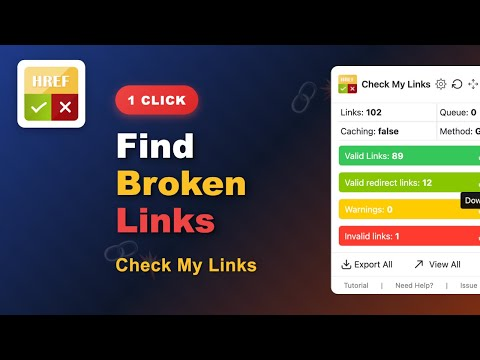
Check My Links is a free Chrome extension that crawls any page and flags every broken outbound link in red. The fastest way to identify broken link building opportunities. Open a resource page in your niche, run Check My Links, and you’ve got a list of broken links you could pitch your content to replace.
- Best for: broken link building campaigns, free option for everyone
- Pricing: free Chrome extension
- The honest catch: it tells you a link is broken. It doesn’t find the contact for the publisher; you still need Hunter.io for that.
Best Link Building Tools: A Comparison
| Tool | Stage | Best For | Pricing Starts | Free Option |
| Ahrefs | Research | Llink building teams | $129/month | Webmaster Tools |
| Semrush | Research + Outreach | All-in-one workflow | $139.95/month | 7-day trial |
| Moz Pro | Research / DA scoring | Client reporting | $49/month | MozBar extension |
| Majestic | Research / Trust Flow | Historical audits | $49.99/month | NA |
| Hunter.io | Contact discovery | Email finding | $49/month | 25 searches/ month |
| Respona | Prospecting + Outreach | Content-first outreach | $198/month | 14-day trial |
| Pitchbox | Outreach at scale | Agencies (500+ emails/month) | $165/month | Free trial |
| BuzzStream | Outreach (relationship-led) | Smaller teams | $24/month | Free trial |
| Mailshake | Outreach (budget) | Solo SEOs | $29/month | Free trial |
| Linkody | Link monitoring | Daily link health checks | $14.90/month | 30-day trial |
| Check My Links | Broken link discovery | Free option | Free | Yes |
Other Noteworthy Link Building Tools
A few more tools also earn a spot in serious stacks:
- BuzzSumo: content intelligence for finding link-worthy topics and unlinked brand mentions. Pricing from $199/month.
- Featured.com (the HARO replacement): free path to high-authority editorial links if you can write a sharp quote in under 10 minutes.
- Smartlead: cold-email deliverability layer that runs alongside Pitchbox or BuzzStream when you’re scaling past a few hundred emails per week.
- Google Search Console: free, and the most authoritative source for which backlinks Google has actually crawled.
- SparkToro: audience research for figuring out where your customers’ eyeballs already exist, which becomes your priority outreach list.
Free link building tools worth using before you spend a dollar
Plenty of money has been wasted on paid tools that overlap with what’s already free. If you’re starting out or running on a tight budget, build your initial stack here:
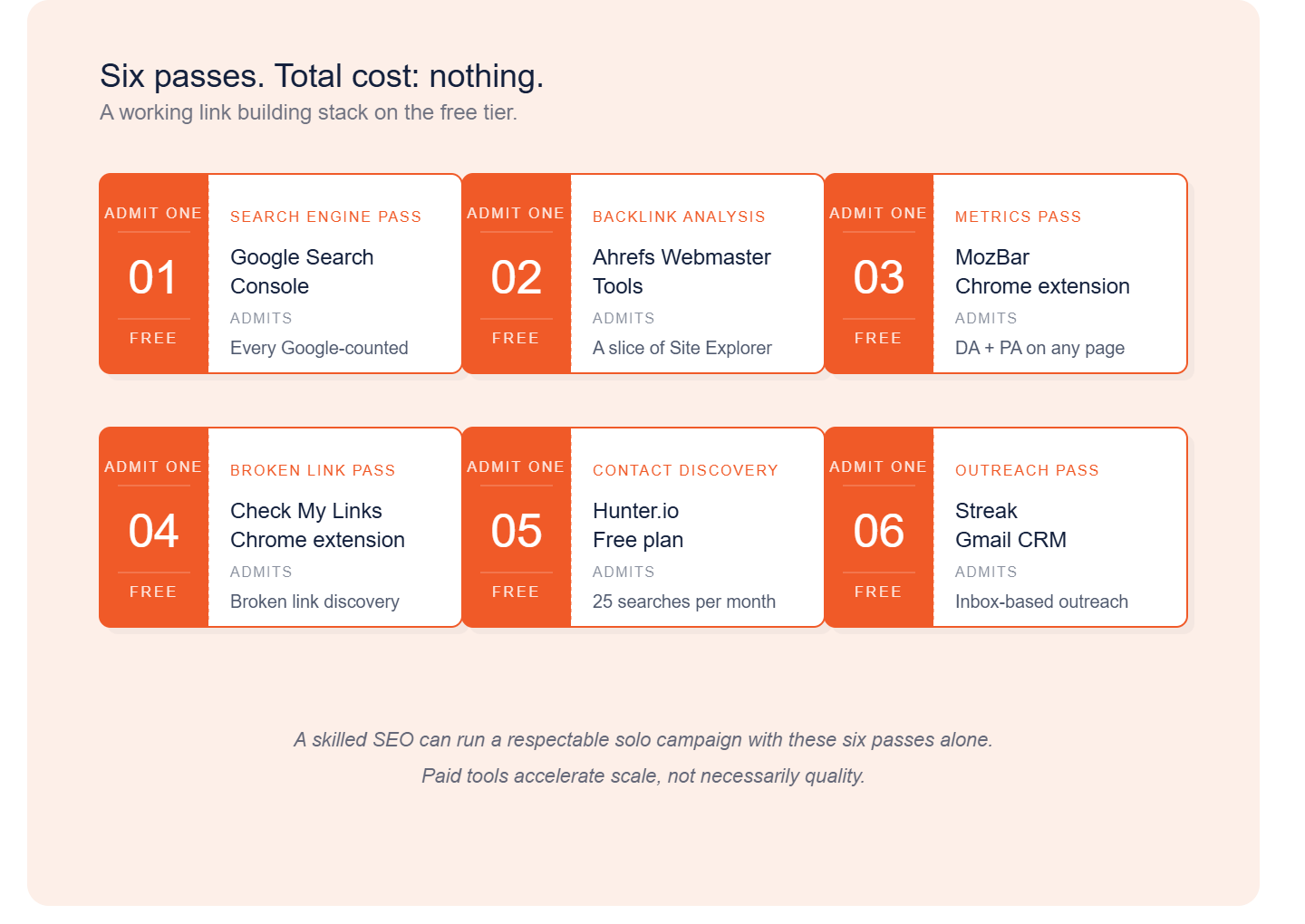
- Google Search Console: every backlink Google has counted, all in one report
- Ahrefs Webmaster Tools: a meaningful slice of Ahrefs Site Explorer, free for verified site owners
- MozBar: DA and Page Authority on any page, free Chrome extension
- Check My Links: broken link discovery on any page
- Hunter.io free plan: 25 email searches per month
- Streak (Gmail CRM): track outreach replies and follow-ups inside Gmail
A skilled SEO can run a respectable solo link building campaign using only this list. Paid tools accelerate scale, not necessarily quality.
How to pick the right link building tools for your situation
The right stack depends on three things: your team size, your monthly link target, and the stage of your workflow that’s slowing you down.
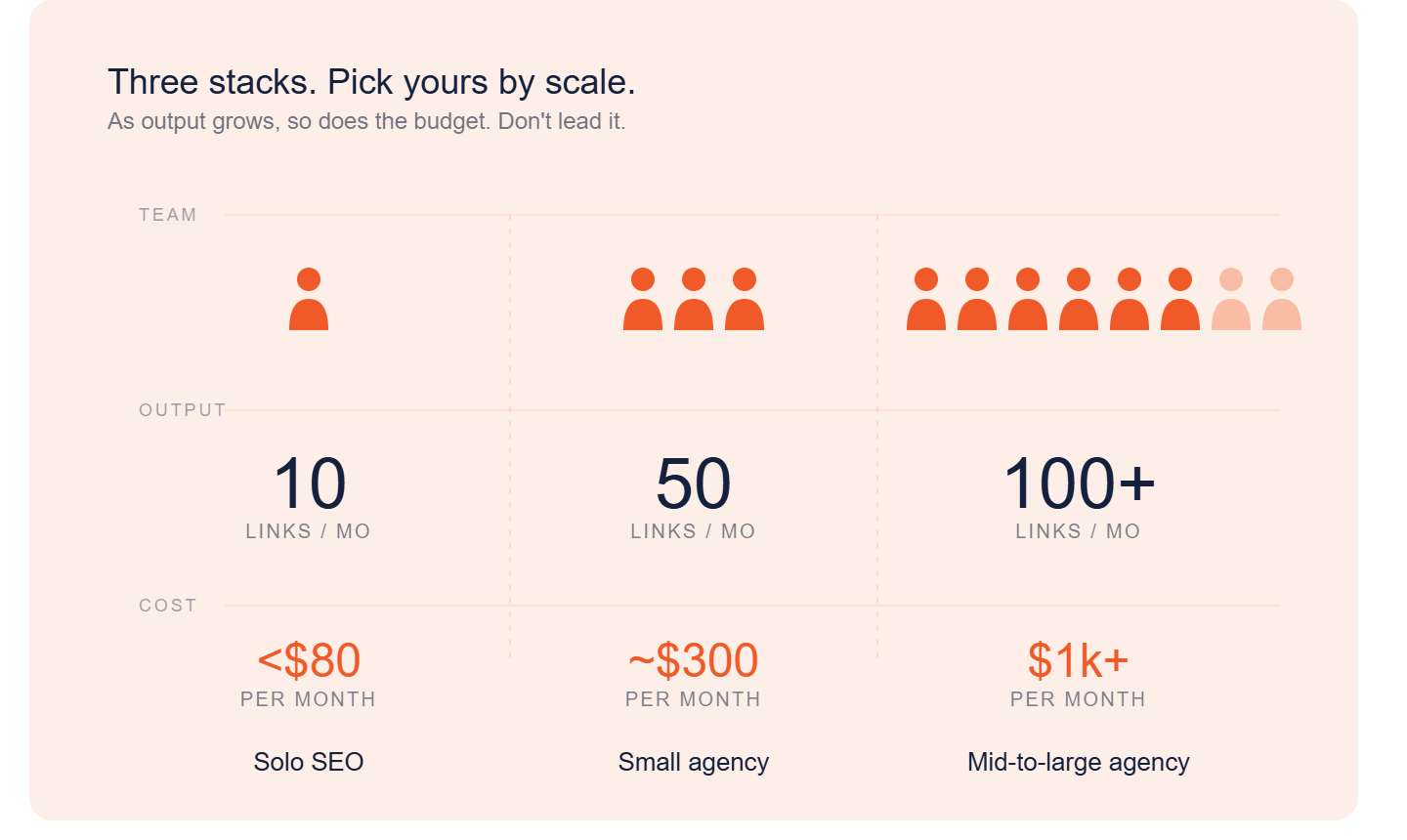
- Solo SEO or freelancer (1–10 links/month): Ahrefs Webmaster Tools (free) or Moz Pro Starter → Hunter.io free → Mailshake → Check My Links. Total monthly: under $80.
- Small agency (10–50 links/month): Ahrefs Lite + Moz Pro → Hunter.io Starter → BuzzStream → Linkody. Total monthly: ~$300.
- Mid-to-large agency (50+ links/month, multiple clients): Ahrefs Standard + Semrush Pro → Pitchbox Advanced + Hunter.io Growth → Linkody Pro. Total monthly: ~$900–1,200.
Don’t subscribe to anything you don’t have a workflow for. A paid plan you never log into is just a tax on your operating budget.
What link building tools won’t do for you
A common mistake: assuming tools replace the strategic work. They don’t.
The judgment calls: is this site relevant enough? Is the anchor text natural? Is this pitch worth following up three times?. Software accelerates manual labor (prospecting, contact discovery, sending follow-ups, monitoring placements). It does not replace strategic thinking, content quality and topical authority, or the editorial relationship between your team and the publishers you pitch.
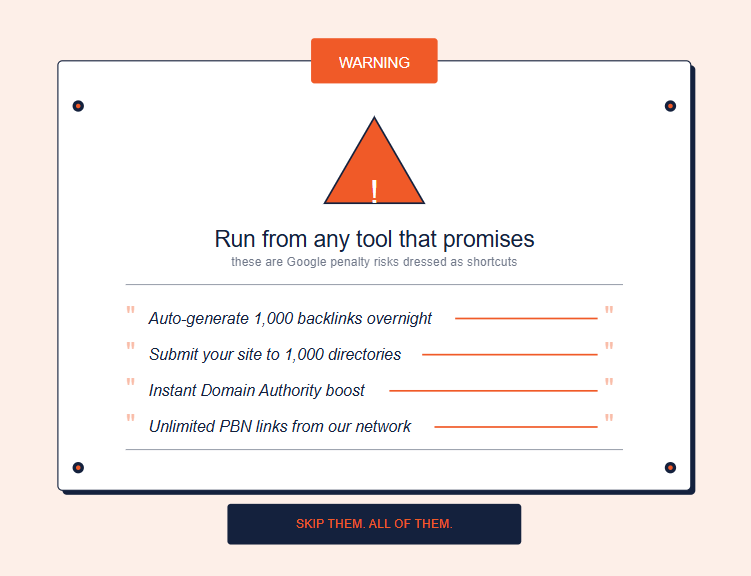
Any tool that promises to “auto-generate backlinks” or “submit your site to 1,000 directories” is selling you toxic links that risk a Google penalty. Skip them.
Final Thoughts
Picking the right link building tools is less about finding the “best” one and more about identifying which part of your workflow is broken. Slow at finding prospects? Hunter.io. Drowning in spreadsheets? Pitchbox or BuzzStream. Losing track of placed links? Linkody.
Start with one paid tool that fixes your biggest bottleneck. Add the next one only when the first is paying for itself. The agencies winning at scale in 2026 aren’t the ones with the deepest tool stack ; they’re the ones with the cleanest workflow.
Frequently Asked Questions
What are the best link building tools in 2026?
For most teams, Ahrefs + Pitchbox + Hunter.io is the strongest combination; Ahrefs for research, Hunter for contact discovery, Pitchbox for outreach at scale. Solo SEOs can substitute BuzzStream ($24/mo) for Pitchbox to cut costs.
Are there free link building tools?
Yes. Google Search Console, Ahrefs Webmaster Tools, MozBar, Check My Links, and the Hunter.io free plan cover the basics of backlink analysis, prospect vetting, and broken link discovery. A solo SEO can run a complete campaign using only free link building software like these.
What’s the difference between link building tools and SEO software?
SEO software covers the full SEO discipline, including keyword research, on-page audits, technical crawls, rank tracking, and link analysis. Link building tools focus specifically on the four stages of acquiring backlinks: research, prospecting, outreach, and monitoring. Ahrefs and Semrush span both categories; Pitchbox and Hunter.io are purpose-built for link building only.
Can link building tools replace an SEO agency?
No. Tools handle the manual work, such as finding prospects, sending follow-ups, tracking placements. They don’t make editorial judgment calls, write convincing pitches, or maintain the publisher relationships that compound over time. The best results come from skilled humans using the right tools, not from tools running on autopilot.
What is the best link building software for small teams on a budget?
The best link building software for tight budgets is the combination of BuzzStream at $24/month for outreach, the Hunter.io free tier (25 searches/month), and Check My Links (free Chrome extension). The whole stack costs under $30/month. Add Ahrefs Webmaster Tools (free) for analysis.
What tool do SEO agencies use most often for link building?
Industry surveys and our own experience consistently put Ahrefs at the top of the agency stack as the research layer, followed by Pitchbox for outreach automation, Hunter.io for contact discovery, and Semrush for combined research and outreach. Most agencies run 3 to 4 tools simultaneously, not one.
Are AI-powered link building tools worth using in 2026?
Yes, but with a clear role. AI helps with pitch personalization, summarizing prospect content, and drafting outreach templates. It does not improve targeting, judgment, or relationships. Use AI to remove the blank-page friction; let humans handle qualification.

Ananyaa
AuthorAnanyaa Venkat is a seasoned content specialist with over nine years of experience creating industry-focused content for diverse brands. At Stan Ventures, she blends SEO insight with strategic storytelling to shape a compelling brand voice. She has contributed to several leading SEO publications and stays attuned to evolving trends to ensure her content remains authoritative, relevant, and high-quality.