Ever notice how Google’s answers at the top of search results don’t always line up? Depending on how you phrase your search, Google’s Featured Snippets can actually show opposing information from the same source.
A recent study has uncovered this surprising glitch, raising concerns about whether Google is giving us helpful answers or just echoing what it thinks we want to hear.
The Problem With Google’s Snippets
Google’s Featured Snippets are supposed to provide quick, reliable information. But this study by Sarah Presch at Dragon Metrics reveals a flaw: they can display totally opposite answers from the same source, depending on how you ask.
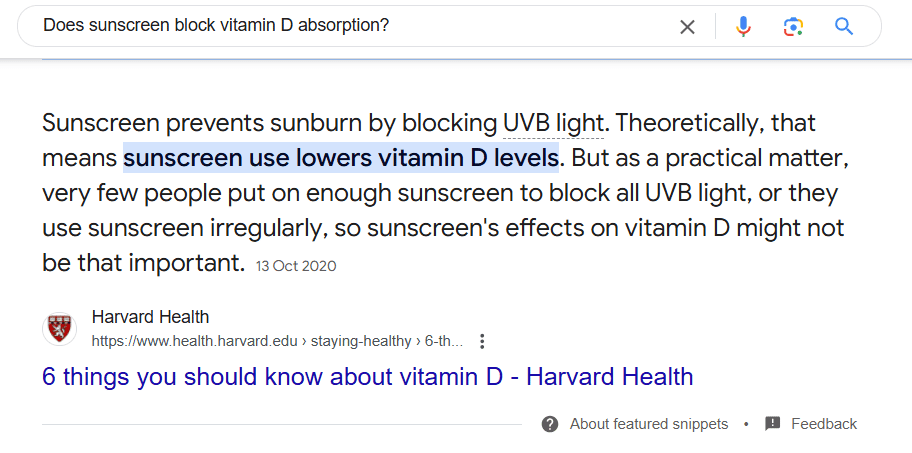
For instance, searching “does sunscreen block vitamin D absorption?” might show you a snippet suggesting sunscreen can lower vitamin D production by blocking UVB rays.
But search “can you get vitamin D with sunscreen on?,” and you might get a snippet saying that you can still get vitamin D while wearing sunscreen.
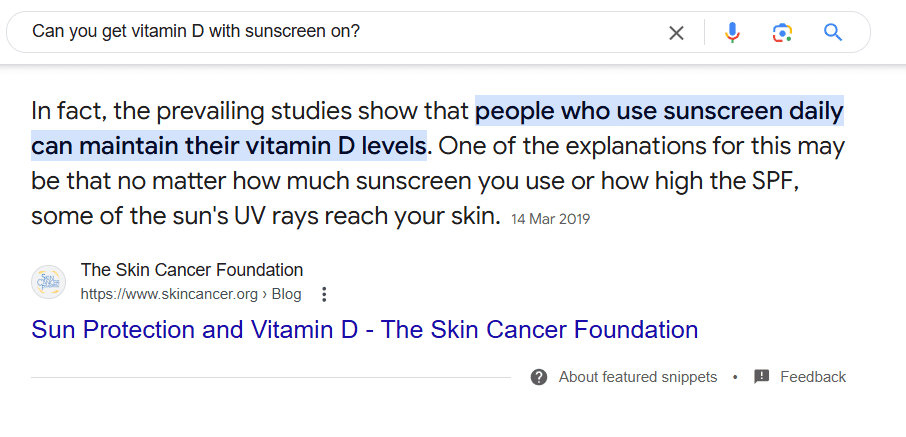
This contradiction shows how the way we phrase a search can completely change the answer Google serves up.
The study found these inconsistencies pop up across various topics, from health to politics. And it all boils down to this: Google is focused on what it thinks you want to see, not necessarily what’s accurate or balanced.
How User Intent Is Causing Confusion
Google’s algorithm is built to “understand” what users intend by their questions and pull relevant answers. However, this focus on intent over accuracy leads to issues.
Instead of a straightforward answer, Google may try to tailor results to what it thinks you’re really asking—and sometimes it guesses wrong.
Sarah Presch calls Google’s algorithm “one big bias machine.” The way Google is designed, it tries to please users by showing them what they’re most likely to click. This can create a feedback loop: if people often click on answers that match what they already believe, Google’s algorithm will show more of that type of answer.
This becomes especially tricky with topics like health or politics, where conflicting snippets can shape people’s views.
For example, searching “Is [politician] good?” could pull up positive snippets, while “Is [politician] bad?” might show negative ones—even if both snippets come from the same article. This could reinforce people’s existing biases rather than providing a clear view of the facts.
Why This Matters for Everyone
While these conflicting answers might seem like a minor annoyance, they’re part of a larger problem. People turn to Google for quick, accurate answers, especially on important topics like health or current events.
If Google’s algorithm is showing different answers based on how you phrase a question, it’s hard to trust that you’re getting the full story.
Historically, Google has positioned itself as a neutral provider of information. But if its algorithms are giving biased or conflicting answers, it could affect everything from public opinion to health decisions.
This issue might erode Google’s credibility as a reliable source, especially as more people depend on quick online answers.
How Content Creators Can Avoid the Problem
The findings from this study suggest that content creators need to be extra clear and balanced in the information they publish. By crafting content that stays accurate no matter how it’s interpreted, creators can avoid having their work pulled out of context in Google’s snippets.
To monitor this, experts recommend that creators regularly check how their content appears in Google snippets. Testing different search phrases can reveal whether their content is represented accurately or if Google’s algorithm sends mixed messages.
You can use third-party SEO tools like Semrush or Ahrefs to identify the keywords that are appearing with a featured snippet result and then verify if they are being used in the right context.
What Google Has to Say
Google has acknowledged the challenge, although it defended its algorithms as “providing diverse viewpoints.” The company points to features like “About this result,” which help users verify information sources.
However, with these issues persisting, the problem appears to be more structural than Google is willing to admit. Some experts suggest that Google’s attempt to become a one-stop “answer engine” might need to take a backseat until these biases are addressed.
As AI models advance and Google shifts further into providing direct answers, it will be interesting to see if new machine-learning techniques can mitigate these contradictory snippets.
But for now, the best advice for users is to dig deeper than the first snippet or two, consult multiple sources, and always question if what we’re seeing is a reflection of the full truth or just a well-packaged assumption of what Google thinks we want to know.
Practical Tips for Getting Reliable Information on Google
Here’s what you can do to make sure you’re getting accurate information from Google:
Try Different Phrasings: Rephrase your question and see if you get conflicting answers.
Check Full Articles: Instead of just reading the snippet, click through to the full article for context.
Verify Important Facts: For major topics, use multiple trusted sources.
Beware of Biases: Remember that Google may show answers that match popular beliefs.
Stay Updated on Google Changes: As Google updates its algorithms, keep an eye on how it affects search accuracy.
Key Takeaways
- Google snippets can show opposing answers from the same source based on phrasing.
- Google’s focus on “user intent” sometimes leads to confusing, biased results.
- Google’s algorithm might reinforce existing beliefs by prioritizing certain answers.
- Conflicting snippets challenge Google’s reputation as a neutral source.
- Users should question snippets, and creators should aim for clarity.

Dileep Thekkethil
AuthorDileep Thekkethil is the Director of Marketing at Stan Ventures, where he applies over 15 years of SEO and digital marketing expertise to drive growth and authority. A former journalist with six years of experience, he combines strategic storytelling with technical know-how to help brands navigate the shift toward AI-driven search and generative engines. Dileep is a strong advocate for Google’s EEAT standards, regularly sharing real-world use cases and scenarios to demystify complex marketing trends. He is an avid gardener of tropical fruits, a motor enthusiast, and a dedicated caretaker of his pair of cockatiels.
