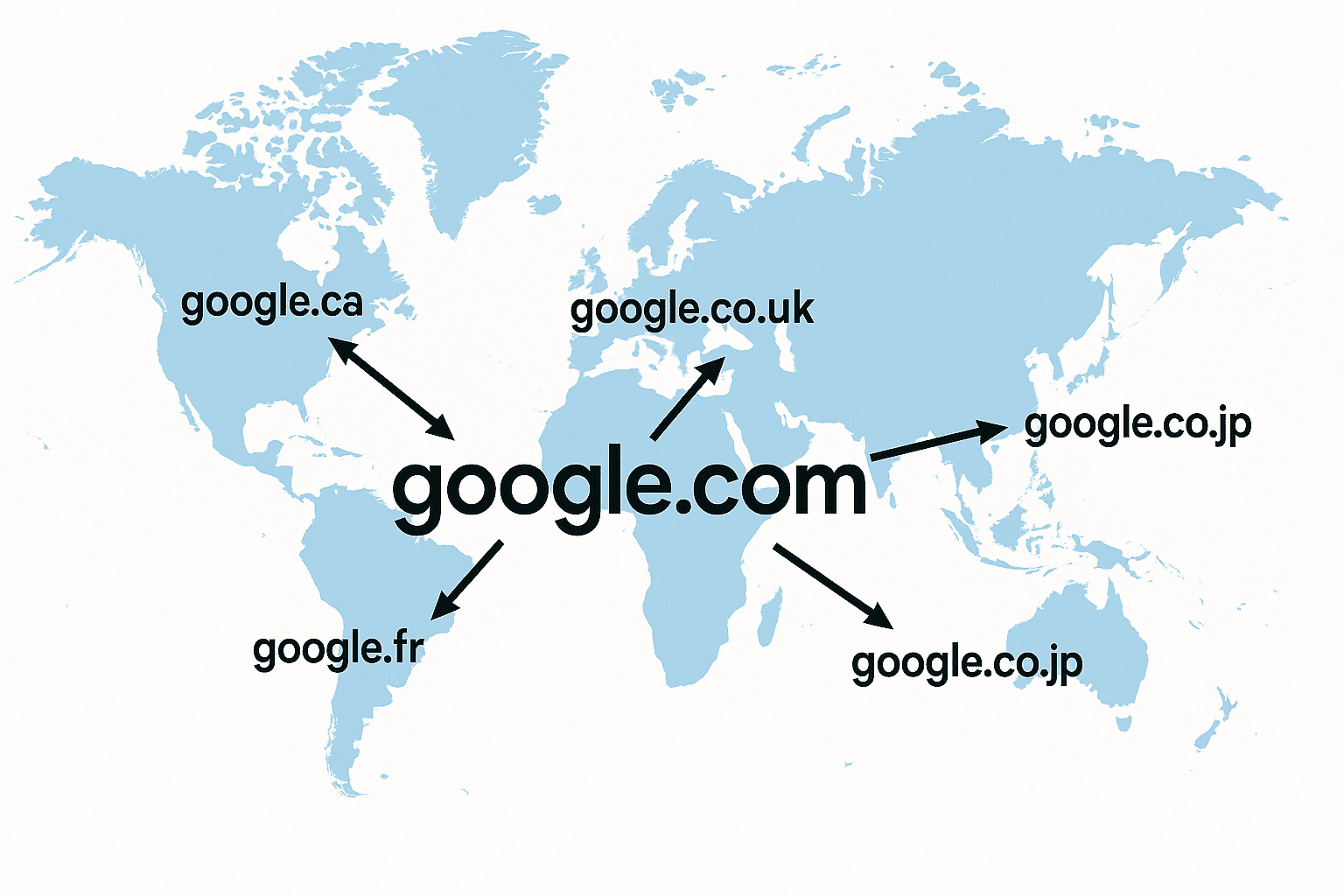
Google is ending the use of its country-specific domains like google.co.uk or google.fr, and instead, sending everyone to google.com, regardless of where they are.
The change is rolling out globally, and while it may appear dramatic, the company states that the way Google Search works will remain unchanged.
Local results will still appear. Users in France will continue to see French content, and users in Japan will continue to see Japanese content. The difference is that instead of using a local domain (like google.fr), users will see google.com in their browser.
So why make the change? And how does this affect the way websites use hreflang tags, which tell Google what version of a site to show users in different languages or countries?
Here’s a closer look at what’s behind the move, what SEO professionals need to know, and what to do next.
Why Google Is Making the Switch
Google says the main reason for redirecting all users to google.com is that it no longer needs country-specific domains to show local results.
Back in 2017, Google started delivering local search results based on your location, not the domain you visited.
Whether you typed in google.com or google.ca, you’d get search results tailored to where you were. That system worked well, and now Google says it’s confident enough to drop the old country domains fully.
Here’s Google’s reasoning:
“Over the years, our ability to provide a local experience has improved. Country-level domains are no longer necessary to deliver locally relevant results.”
In other words, the domain doesn’t matter anymore. Your location does. So Google is simplifying its system.
Will Search Results Be the Same?
Yes. Google says search will continue to work the same way. You’ll still see results relevant to your country and language, and Google will still follow national laws when showing content.
The only real difference is the domain you see in your browser bar.
What About International SEO and Hreflang Tags?
This is where it gets interesting for SEO professionals.
Hreflang tags are used to inform Google which language or country-specific version of a page to display to a user. They’re a key part of international SEO.
So, if Google is changing how it handles its own domains, does that mean hreflang tags are being phased out? No, for now.
John Mueller has clearly stated: “Nothing has changed with regards to international SEO.”

Still, there’s been some buzz in the industry. In Episode 78 of the Search Off the Record podcast, Google’s Gary Illyes said he hopes the future of search will rely more on automatic detection and fewer manual site annotations like hreflang. That’s not a policy change, but it shows where Google might be heading.
Some SEO experts believe this domain move may be related to that shift. AI and machine learning are improving at automatically detecting language and user location, which could reduce the need for hreflang tags in the long term. But that’s speculation. For now, nothing changes.
What You’ll See in Analytics
One area where you will notice a difference is in your data.
Previously, if a user clicked through from google.co.uk or google.ca, you could track that in your referral traffic. Now, everything will appear as coming from google.com. That might make it harder to see which regions are sending traffic, unless you’re using advanced tracking.
If you rely on country-specific Google domains to analyze user behavior, now’s the time to update your analytics filters and adjust your tracking setup.
Should Your Website Do the Same?
One common question that’s popped up: should businesses follow Google’s lead and consolidate all their domains under one .com?
The answer is no.
Google made this decision based on its unique position as a global brand. It doesn’t mean this is the best SEO move for most companies.
In fact, John Mueller has warned explicitly against copying Google’s strategy. What works for them might not work for you, especially if your business targets customers in specific countries and relies on ccTLDs for SEO signals.
If you use separate domains, such as example.fr and example.de, or subdirectories like example.com/fr/, stick with them. This change doesn’t mean you should restructure your entire site.
What You Should Do Right Now
This update is a good opportunity to refine your international SEO. Here’s what to focus on:
- Keep using hreflang tags. Google still relies on them.
- Make sure your site clearly targets regions and languages. Use language attributes in the code, local content, and metadata.
- Check your analytics. Watch for changes in referral sources and user behavior now that google.com is the default.
- Don’t copy Google’s domain strategy unless it truly makes sense for your business.
- Stay alert for future updates. While nothing’s changed for now, Google may lean more on AI in the future, reducing the need for manual signals.
What This Means for the Future
This domain change reflects a larger transformation at Google, aimed at simplifying its structure and investing more in AI.
The end of country domains suggests that Google trusts its ability to detect user intent, location, and language without relying on visible signals. That might lead to more automated SEO in the future, with less manual tagging and more behind-the-scenes processing.
But we’re not there yet. For now, the best practices remain the same: use hreflang, optimize for local audiences, and monitor your performance.
This change doesn’t rewrite the rules, it just shows that Google is preparing for a future where it might.
Key Takeaways
- All users are being redirected to google.com, regardless of their country.
- Local search results will still appear, based on your actual location.
- Hreflang tags still matter, and no changes to international SEO have been announced.
- Analytics data will change, since referrals will now show as coming from google.com.
- Don’t restructure your domains to follow Google’s lead unless it fits your business strategy.

Dileep Thekkethil
AuthorDileep Thekkethil is the Director of Marketing at Stan Ventures, where he applies over 15 years of SEO and digital marketing expertise to drive growth and authority. A former journalist with six years of experience, he combines strategic storytelling with technical know-how to help brands navigate the shift toward AI-driven search and generative engines. Dileep is a strong advocate for Google’s EEAT standards, regularly sharing real-world use cases and scenarios to demystify complex marketing trends. He is an avid gardener of tropical fruits, a motor enthusiast, and a dedicated caretaker of his pair of cockatiels.
