Google just made search a little more visual and perhaps a lot more inspiring.
With its latest update to AI Mode allows AI Mode to understand queries in a more visual way and return answers that combine textual and visual responses.
This update includes a new visual fan-out technique, capable of breaking down both text and images into multiple sub-queries. It analyzes everything from metadata to secondary objects in a photo.
The aim? To deliver a fuller, more context-aware set of results that “spark inspiration,” whether you are shopping, researching or just browsing for ideas.
So, let’s see what this means for search, for users and for businesses trying to get discovered.
What Is Google’s New Visual Fan-Out Technique?
Until now, Google’s query fan-out technique worked behind the scenes by splitting your question into subtopics and running multiple searches simultaneously.
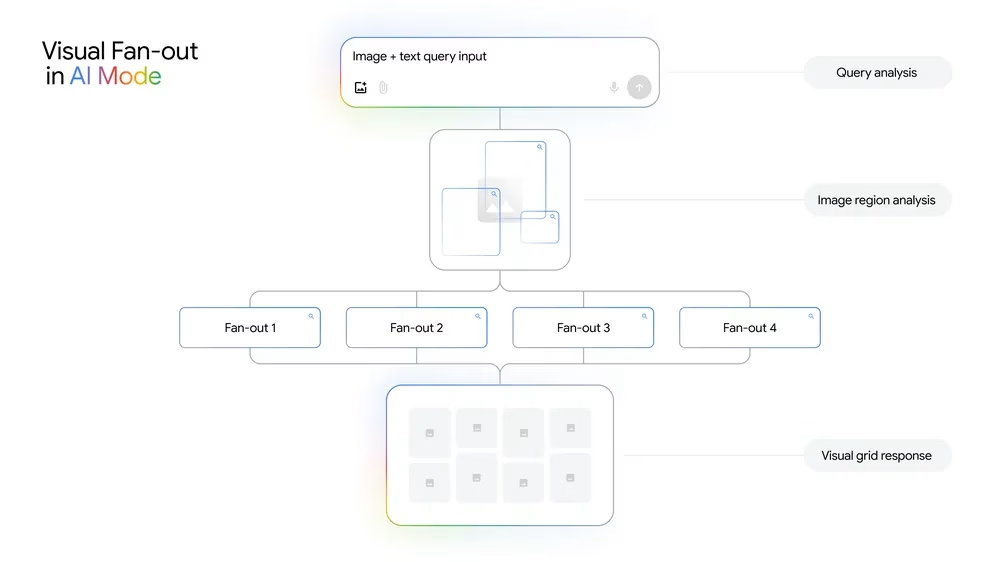
That’s why when you ask, “What’s the best chair for a small apartment living room?” Google doesn’t just look for “chair” but also “apartment size,” “design style,” and “living room furniture.”
With the update, Google is extending that to images. If you upload or click on an image—say a photo of your living room, Google can analyze:
- The primary object (the couch in the center)
- The secondary details (that lamp in the corner, the artwork on the wall)
- The metadata (colors, textures, possible styles)
Then it runs multiple queries in the background: “blue throw pillows,” “modern lamps for small spaces,” “artwork for neutral walls.” The output? A visual grid of highly relevant results, tailored to both what you said and what you showed.
Rajan Patel, Google’s VP, explained it this way:
“Building on our powerful query fan-out approach, our new visual search fan-out technique allows us to have a deeper understanding of precisely what’s in an image.
Building on our powerful query fan-out approach, our new “visual search fan-out” technique allows us to have a deeper understanding of precisely what’s in an image. This means AI Mode can perform a more comprehensive analysis of an image, recognizing subtle details and secondary… pic.twitter.com/tkybcsPzNL
— Rajan Patel (@rajanpatel) September 30, 2025
It means search with layers of visual understanding.
How Does AI Mode Change the Way You Search?
For users, this upgrade means conversations with Google feel less like typing into a box and more like an ongoing, fluid exchange.
Imagine you are redecorating your home. You upload a picture of your living room and ask, “
How can I make this space brighter?” Instead of a list of links, you might see a visual collage: lighter curtains, new lamp options or wall décor ideas—all tailored to the objects Google identified in your photo.
Or maybe you are shopping. You type: “throw pillows in the perfect shade of blue.” AI Mode will not only show products from the Google Shopping Graph but also present them visually so you can instantly compare styles and shades without clicking into multiple sites.
Robby Stein, Google’s VP of Product Management for Search, highlighted this use case:
“So whether you’re seeking creative inspiration, like decorating your home, or looking for something specific, like throw pillows in the perfect shade of blue, AI Mode can help.”
What Makes This a Breakthrough in Visual Search?
Google isn’t new to visual search—it already has Google Lens and years of image recognition under its belt. What’s different now is the combination of:
- Multimodal understanding (combining text and image queries seamlessly)
- Gemini 2.5’s language capabilities, adding depth to interpretation
- The Shopping Graph, which ties visual inspiration directly to purchase-ready results
Together, these elements create a powerful multimodal search engine.
Google described it as a “more comprehensive analysis of images,” capable of capturing subtle details and context that older systems would have ignored.
A vase in the background might now prompt suggestions for home decor, while the color palette in your photo could trigger shopping results aligned with your style.
What’s the Rollout Timeline?
The updated AI Mode with visual fan-out is rolling out this week in English in the U.S. on both desktop and mobile.
Key rollout milestones include:
- Initial release of AI Mode earlier this year as part of Search AI experiments.
- Expansion to handle multimodal queries (text + image) in real-time.
- This week’s visual fan-out upgrade, introducing grid-based visual responses.
Google has not confirmed a global rollout date yet but like most features, it will likely expand beyond the U.S. in phases.
How Does This Affect Shopping and E-Commerce?
For businesses, the most immediate impact is on shopping queries. Google explicitly tied AI Mode’s visual expansion to its Shopping Graph, meaning retailers will now see their products showcased more visually in AI responses.
This could be a double-edged sword:
- Pro: More opportunities for discovery if your products are optimized for Google Shopping and visual AI indexing.
- Con: Increased competition, since multiple products will be displayed side by side in AI’s visual grid.
For small businesses, this highlights the importance of structured product data, clear titles, descriptions and metadata that make it easier for AI to “see” and recommend your items.
What About Creative and Inspirational Searches?
While shopping is a major focus, Google also framed AI Mode as an inspiration engine. Whether you are planning a vacation, searching for outfit ideas, or brainstorming event decor, AI Mode can present visual suggestions alongside explanations.
On mobile, the experience goes deeper: users can now search within a specific image, asking follow-up questions in a conversational manner. For example:
- Upload an image of a travel destination → ask “What are hidden gems near here?”
- Share a picture of a meal → ask “What’s the recipe for this dish?”
This turns search into a dynamic, iterative process rather than a one-off query.
How Does It Compare to Previous Search Experiences?
Traditionally, Google gave users:
- A list of blue links (classic SEO era)
- Featured snippets and answer boxes (the answer engine era)
- Image packs and product carousels (the visual layer era)
Now we are entering the AI-powered multimodal era. The difference is that AI Mode doesn’t just present static search features—it actively interprets images and text together, breaks them into subtopics, and returns blended, visual-first results.
It’s a major step toward Google’s vision of “search that sees.”
Why Does This Matter for the Future of Search?
This update is bigger than just visuals. It shows where Google is heading: a multimodal, context-aware search engine that reduces friction between question and answer.
For users, that means less scrolling and more direct inspiration.
For businesses, it signals that optimizing for AI search is no longer optional. Products, images and content need to be structured, descriptive and visually clear to surface in AI Mode’s visual fan-out results.
And for SEO professionals, it is another reminder: the old keyword-and-link playbook isn’t enough anymore. The future of visibility lies in multimodal optimization—text, images and AI-driven context.

Dileep Thekkethil
AuthorDileep Thekkethil is the Director of Marketing at Stan Ventures, where he applies over 15 years of SEO and digital marketing expertise to drive growth and authority. A former journalist with six years of experience, he combines strategic storytelling with technical know-how to help brands navigate the shift toward AI-driven search and generative engines. Dileep is a strong advocate for Google’s EEAT standards, regularly sharing real-world use cases and scenarios to demystify complex marketing trends. He is an avid gardener of tropical fruits, a motor enthusiast, and a dedicated caretaker of his pair of cockatiels.