In the first episode of Google Trends Tutorial series, Daniel Waisberg, a Search Advocate at Google, takes viewers on an enlightening journey into the world of search data.
This episode is a must-watch for anyone interested in understanding how Google Trends works, how it collects and processes data, and how you can leverage this powerful tool to gain insights into global search behaviors.

Google Trends Decoded: What’s All the Buzz About?
Google Trends is a dynamic tool that provides a random sample of aggregated, anonymized, and categorized Google searches. It offers a clear view of what people worldwide are searching for, presenting trends that can inform business decisions, marketing strategies, and research projects.
📊 What is Google Trends, how does it process Search data, and how can you use it?
☕ Grab your cappuccino and join @danielwaisberg in the first episode of Google Trends Tutorials → https://t.co/ddJYzeR6HH pic.twitter.com/ebOhSrzmz1
— Google Search Central (@googlesearchc) July 31, 2024
Behind the Scenes
Waisberg explains that Google Trends utilizes a statistically significant random sample of searches from Google and YouTube. Analyzing every search would be impractical due to the sheer volume, so a representative portion is used instead. This ensures quick processing while maintaining the accuracy of trends.
Here’s a breakdown of the data processing steps:
- Data Sampling: Google Trends examines a representative sample of all searches, ensuring the data reflects broader search behaviors.
- Data Cleaning: This involves removing noise, such as infrequent search terms or repeated searches from the same user.
- Data Normalization: To facilitate easy comparisons, the data is normalized. This involves adjusting the search term occurrences relative to the total number of searches, ensuring the highest point in a dataset is scaled to 100, with other points adjusted accordingly.
Navigating the Trendscape: Mastering Google Trends
Using Google Trends is intuitive. Simply head to trends.google.com, enter a search term, and see how it has trended over time.
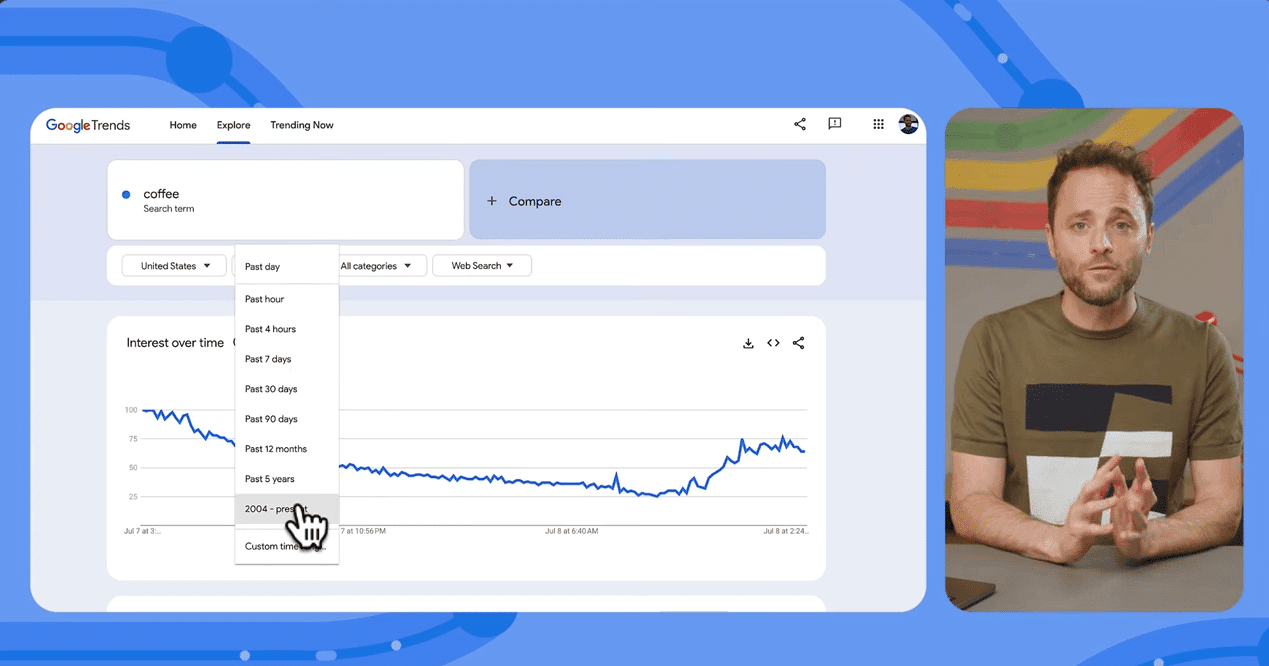
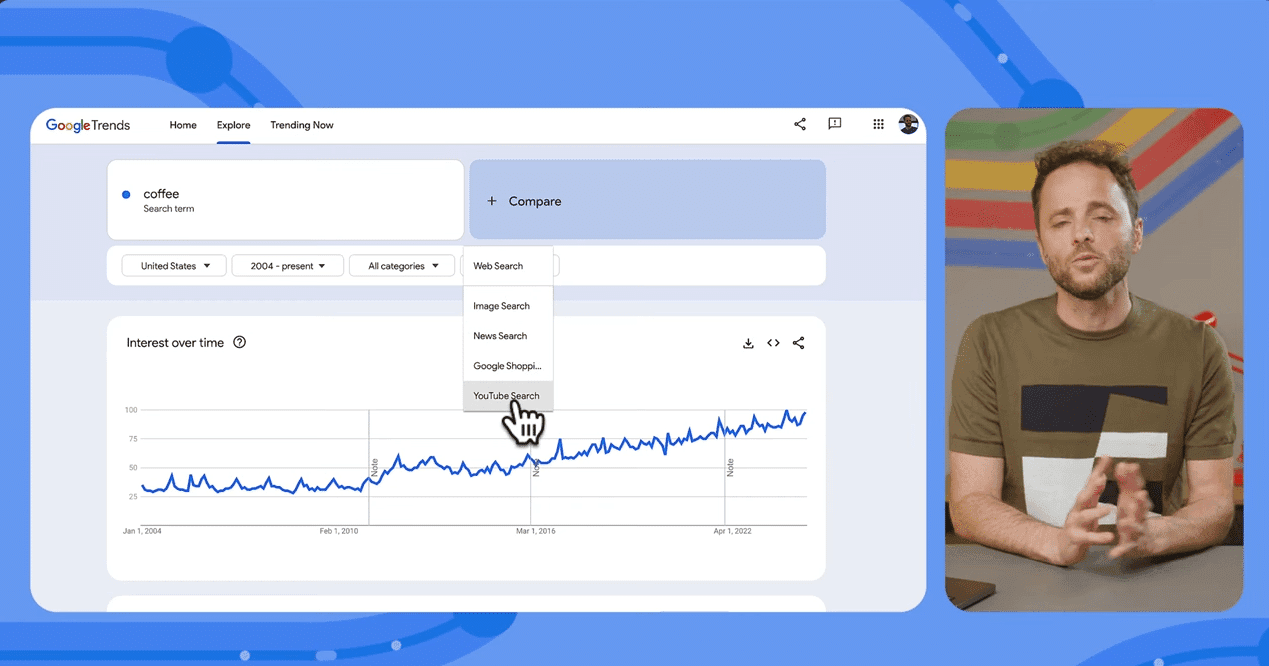
The tool allows for customization of date ranges, going back as far as 2004, and users can choose specific Google properties like Web Search, Google Images, News, Shopping, or YouTube.
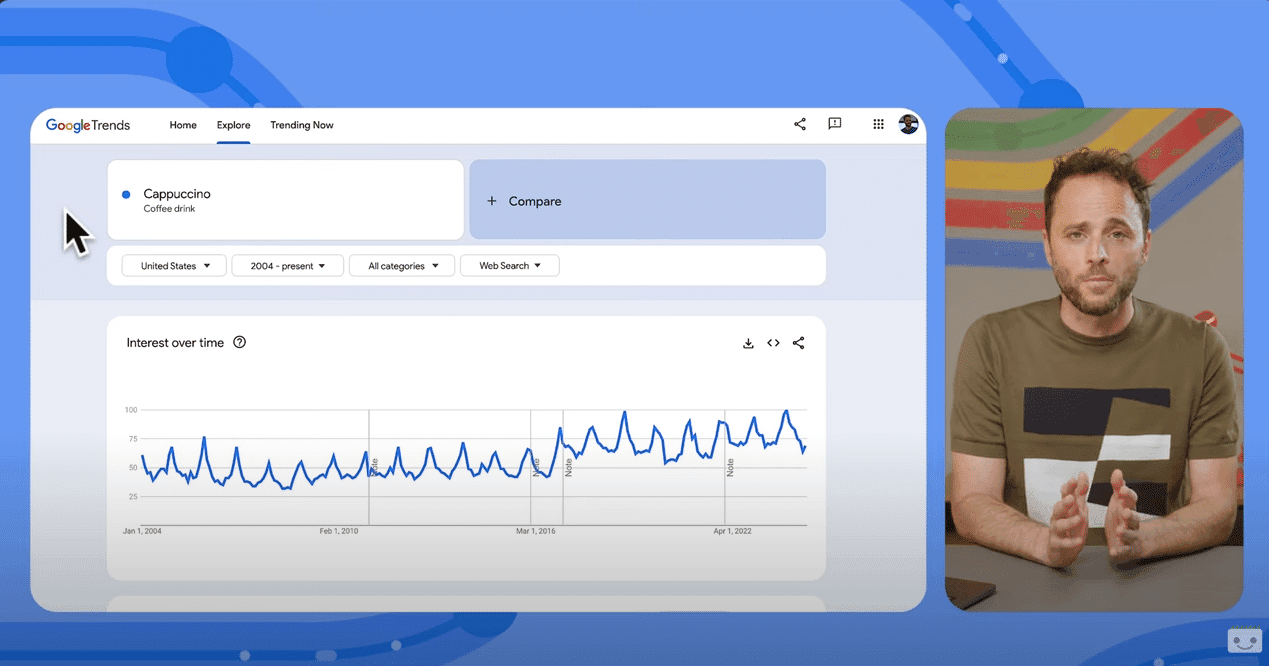
A notable feature highlighted by Waisberg is the option to choose between a search term and a topic. For instance, searching for “cappuccino” can show results for the exact term or the broader topic, encompassing related terms, misspellings, and translations. This ensures comprehensive and relevant data, especially when analyzing global trends.
How Google Trends Gathers and Processes Data
The insights provided by Google Trends are invaluable for various stakeholders:
- Businesses: Track interest in products or services, gauge market trends, and adapt strategies.
- Researchers: Analyze search behaviors to study societal trends and public interest in specific topics.
- Marketers: Optimize campaigns, understand audience interests, and stay ahead of trends.
What’s Next for Google Trends?
As more data becomes available and analytical techniques advance, tools like Google Trends will become even more sophisticated. This will enable more precise market predictions, improved public health responses by tracking disease-related searches, and a deeper understanding of societal shifts.
Tips and Tricks: Getting the Most Out of Google Trends
Waisberg offers several practical tips for effectively using Google Trends:
Be Specific: Use precise terms or topics to avoid unrelated results.
Use Comparisons: Comparing multiple terms can provide context and reveal relative interest levels.
Analyze Over Time: Look at trends over different time frames to identify patterns and shifts in interest.
Key Takeaways
- Google Trends uses a representative sample of search data to ensure quick and accurate insights.
- Normalizing data allows for easy comparison across different terms and periods.
- Google ensures user privacy by anonymizing and aggregating search data.
- Google Trends covers multiple languages and regions, offering a broad view of global search behaviors.

Dileep Thekkethil
AuthorDileep Thekkethil is the Director of Marketing at Stan Ventures, where he applies over 15 years of SEO and digital marketing expertise to drive growth and authority. A former journalist with six years of experience, he combines strategic storytelling with technical know-how to help brands navigate the shift toward AI-driven search and generative engines. Dileep is a strong advocate for Google’s EEAT standards, regularly sharing real-world use cases and scenarios to demystify complex marketing trends. He is an avid gardener of tropical fruits, a motor enthusiast, and a dedicated caretaker of his pair of cockatiels.
