
Google has rolled out a new Achievements report in Search Console, giving website owners a central hub to track click-based milestones, monitor progress toward new goals, and access tips for continued growth. The feature, now live for most users, aims to motivate site owners by turning search traffic data into a series of tangible milestones.
When you log into Google Search Console, you expect to see charts, graphs, and technical alerts. That’s the way it’s always been. But this week, Google introduced something different into the platform, something that looks less like raw data and more like a pat on the back. It’s called Achievements.
How the Achievements Report Works
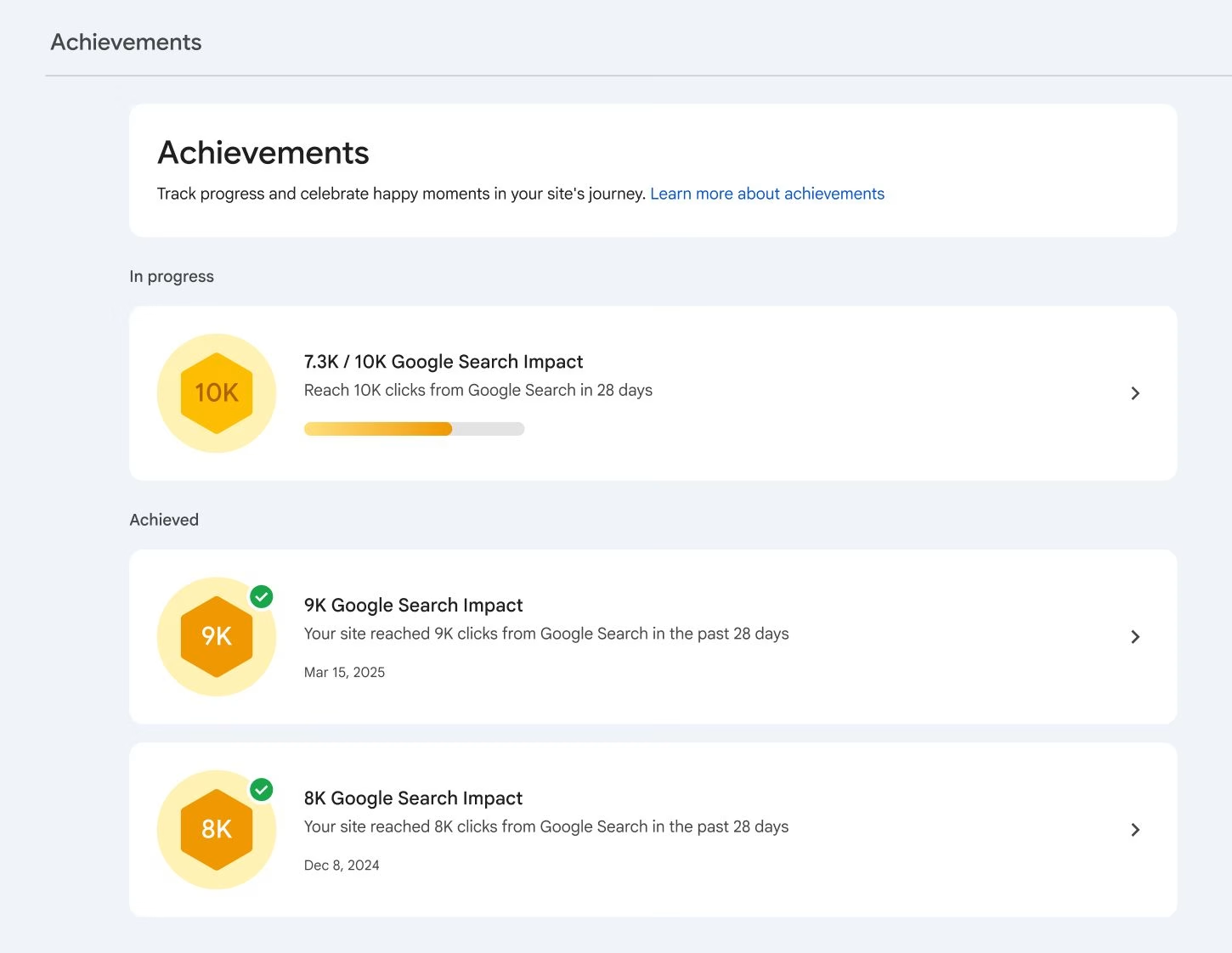
Achievements gather key milestones into one place rather than burying them in charts or scattered emails. The report is divided into two sections: In Progress and Achieved.
At any given time, the system spotlights one milestone that’s within reach—for example, a site with 40 clicks in the last 28 days might be shown a target of 50. Once that milestone is met, it moves into the Achieved section, and a new goal appears.
In effect, Google has added a touch of gamification to Search Console, turning traffic growth into a series of clear progress markers.
Why Google Introduced Achievements
The origins of this feature can be traced back to Search Console Insights, a tool launched in 2021 that aimed to provide site owners with digestible insights into how their content was performing.
Part of that experience included celebratory emails whenever a milestone was reached, such as “Your site reached 100 clicks this month!”
Google realized that users loved those emails. They provided a morale boost and a sense of progress in a field that can often feel overwhelming.
Now, instead of relying on scattered updates, the Achievements report consolidates them into one place inside Search Console.
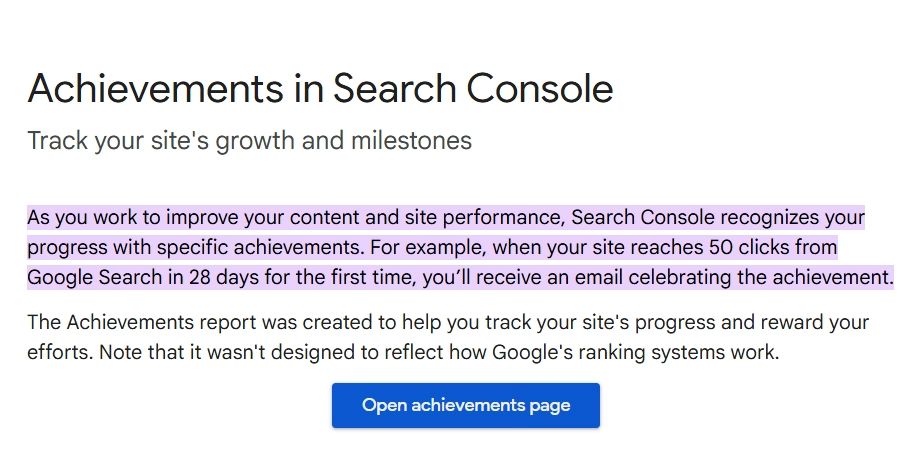
A post on Google’s LinkedIn announcement captured the reasoning:
What the Report Can (and Cannot) Tell You
Google stresses that these milestones are not ranking signals. They don’t reflect SEO quality or influence algorithms. Instead, they’re meant as motivational markers, giving site owners a sense of progress.
Clicking into a milestone provides additional context, such as performance compared with the previous 28-day period, along with links to Insights reports and practical growth tips.
Who Will See It and When
Most existing Search Console properties already have access to Achievements. For new sites, Google notes it can take about 28 days of click data before the first milestone appears.
What It Means for Website Owners
For publishers and marketers, the Achievements report adds a motivational layer to what can sometimes feel like dry analytics work.
SEO is rarely about instant gratification. Building authority, ranking content, and attracting clicks can take months or even years. By breaking progress into smaller, celebratory milestones, Google may be lowering the barrier for newcomers who might otherwise feel discouraged.
For seasoned professionals, the feature may not be revolutionary, but it still has value. Even high-traffic sites benefit from periodic recognition of growth, especially when shared with stakeholders or clients. Imagine being able to show a client a series of “achievement badges” as part of a progress report.
The system also underscores one of Google’s ongoing priorities: focusing on clicks rather than impressions.
In other words, success isn’t about being seen, but about being chosen. This subtle emphasis encourages publishers to craft content that actually earns attention, not just visibility.
Potential Downsides
Not everyone will find this feature useful. Since it focuses only on clicks, milestones may overemphasize volume without accounting for business value or strategic goals.
Some professionals may view it as a distraction from more meaningful metrics, such as conversions, revenue, or engagement.
Practical Advice for Users
If you’re exploring Achievements in your own Search Console, here are a few ways to get the most out of it:
- Treat milestones as motivation, not validation. Achievements are meant to encourage, not define success. Use them to stay engaged, but don’t let them distract from broader KPIs like conversions, revenue, or engagement.
- Share milestones with your team or clients. The badges can provide easy talking points for reporting. They’re also a morale boost, which can help maintain momentum.
- Pair milestones with action steps. When you reach a goal, ask yourself what contributed to it. Was it a new piece of content? A change in promotion strategy? Understanding cause and effect makes milestones more meaningful.
- Use the tips and resources. Clicking into achievements reveals links to Google’s own guidance. These can be helpful reminders of best practices, especially for beginners.
- Stay patient. If you’ve just added a property and don’t see data yet, remember that the system needs 28 days to establish a baseline.
Broader Implications
The Achievements report may seem minor, yet it reflects a change in how analytics are presented.
Instead of burying people in charts and tables, tools are finding ways to highlight progress in friendlier, more motivating formats.
Turning clicks into milestones gives Search Console a more human touch, framing data as growth rather than raw measurement
Key Takeaways
- Google’s new Achievements report tracks click-based milestones directly in Search Console.
- The report highlights one in-progress goal at a time, alongside completed achievements.
- Milestones are motivational only — they are not ranking signals.
- New sites may need up to 28 days of data before achievements appear.
- The feature is part of Google’s push to make analytics more accessible and engaging.

Dileep Thekkethil
AuthorDileep Thekkethil is the Director of Marketing at Stan Ventures, where he applies over 15 years of SEO and digital marketing expertise to drive growth and authority. A former journalist with six years of experience, he combines strategic storytelling with technical know-how to help brands navigate the shift toward AI-driven search and generative engines. Dileep is a strong advocate for Google’s EEAT standards, regularly sharing real-world use cases and scenarios to demystify complex marketing trends. He is an avid gardener of tropical fruits, a motor enthusiast, and a dedicated caretaker of his pair of cockatiels.
