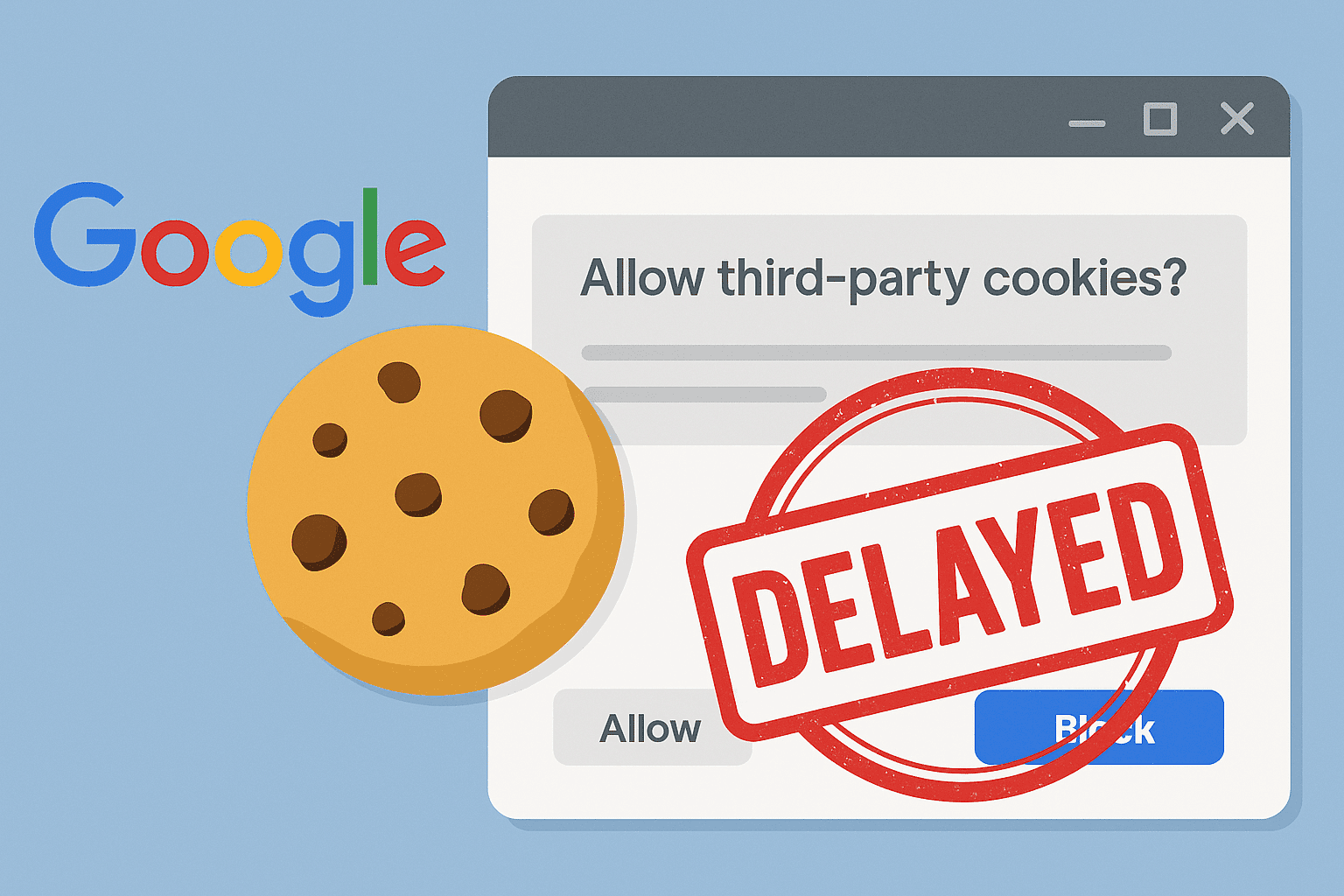
Google has decided not to roll out a new consent prompt for third-party cookies in its Chrome browser, signaling a major delay in its plans to shift toward more privacy-focused web tracking.
The announcement, made on April 23, 2025, by Anthony Chavez, Vice President of Privacy Sandbox at Google, means that advertisers can continue using existing third-party cookie tracking methods without disruption, at least for now.
Google Pauses Privacy Shift, Keeps Old System Running
Just two months ago, Google was preparing to introduce a new pop-up in Chrome that would give users more control over third-party cookies. That plan is now off the table.
“We’ve made the decision to maintain our current approach to offering users third-party cookie choice in Chrome,” Chavez wrote in a blog post. “We will not be rolling out a new standalone prompt for third-party cookies.”
The company states that the decision is based on feedback from advertisers, publishers, and regulators.
Many in the advertising industry have warned that changing cookie settings too quickly could harm ad performance and revenue, especially for publishers that rely heavily on advertising income.
Billions in Ad Dollars at Stake
Google Chrome is the most widely used browser in the world. Any changes to how it handles cookies have ripple effects across the global ad industry. Third-party cookies are a key part of how advertisers target users and measure the success of their campaigns.
Keeping cookies in place gives marketers short-term stability. It means their tools and data still work, and there’s no need to rush to find replacements. However, it also hinders efforts to move toward a more private web, one where users have greater control over how they are tracked.
Google is still advancing its Privacy Sandbox project, a set of tools designed to replace third-party cookies while maintaining effective advertising. But the project has struggled to win full support from advertisers and publishers.
Privacy Sandbox Faces Tough Questions
The Privacy Sandbox initiative includes proposals for replacing cookies with more privacy-respecting technologies. But the system hasn’t performed well in real-world tests.
Participants in the testing, including ad tech companies like BidSwitch, Index Exchange, and Raptive, have reported serious issues:
- The system is designed to work one-to-one, but real advertising involves many parties.
- It doesn’t scale well for large ad campaigns or fast data processing.
- Publishers are hesitant to switch because it could cut their income.
- Technical problems like lag and lack of support for video ads make adoption harder.
These problems mean that many in the industry see Sandbox as unfinished and unproven. Some even call it “stuck,” with little progress and unclear benefits.
What’s Really Behind Google’s Decision?
By keeping the current cookie system in place, Google is trying to balance competing priorities:
- Regulators want stronger privacy protections.
- Advertisers want tools that work without harming revenue.
- Google itself earns billions from advertising and wants to avoid shaking the market too much.
The decision not to launch a new consent prompt also gives Google more time to refine its approach. It avoids forcing users to make privacy decisions before alternatives are ready.
But, critics argue that it highlights the challenges of achieving real privacy reform when so much money is invested in maintaining the status quo.
What Advertisers and Publishers Should Do Now
Although cookies are staying for now, the future is still moving toward stricter privacy standards. Here’s how advertisers and publishers can prepare:
- Build first-party data systems: Focus on collecting and using data directly from your customers. It’s more reliable and future-proof.
- Experiment with cookieless solutions: Contextual ads and machine learning tools can help target users without tracking them.
- Stay involved in Sandbox testing: Even if the tools aren’t perfect, testing them helps shape what comes next.
- Follow privacy laws closely: New rules are coming, especially in Europe and the UK. Make sure your company is ready.
- Communicate with users: Being clear about how you use data builds trust, and that matters more than ever.
What’s Next for Privacy Sandbox?
Google says it remains committed to developing better privacy tools and plans to release updates soon. One of the next features, IP Protection for Incognito mode, is expected to launch in the third quarter of this year.
The company also states that it will collaborate with industry partners to develop a new roadmap for the Privacy Sandbox.
But many observers are skeptical. Without evident progress, Privacy Sandbox risks becoming a stalled project. The longer it takes to fix the issues, the more the industry may look elsewhere for answers.
Key Takeaways
- Google will not introduce a new third-party cookie prompt in Chrome, keeping the current system in place.
- Advertisers can continue using third-party cookies, avoiding short-term disruption.
- The Privacy Sandbox still exists, but its adoption is low due to technical and business concerns.

Dileep Thekkethil
AuthorDileep Thekkethil is the Director of Marketing at Stan Ventures, where he applies over 15 years of SEO and digital marketing expertise to drive growth and authority. A former journalist with six years of experience, he combines strategic storytelling with technical know-how to help brands navigate the shift toward AI-driven search and generative engines. Dileep is a strong advocate for Google’s EEAT standards, regularly sharing real-world use cases and scenarios to demystify complex marketing trends. He is an avid gardener of tropical fruits, a motor enthusiast, and a dedicated caretaker of his pair of cockatiels.
