Google is again quietly updating one of its most interesting AI experiments, NotebookLM.
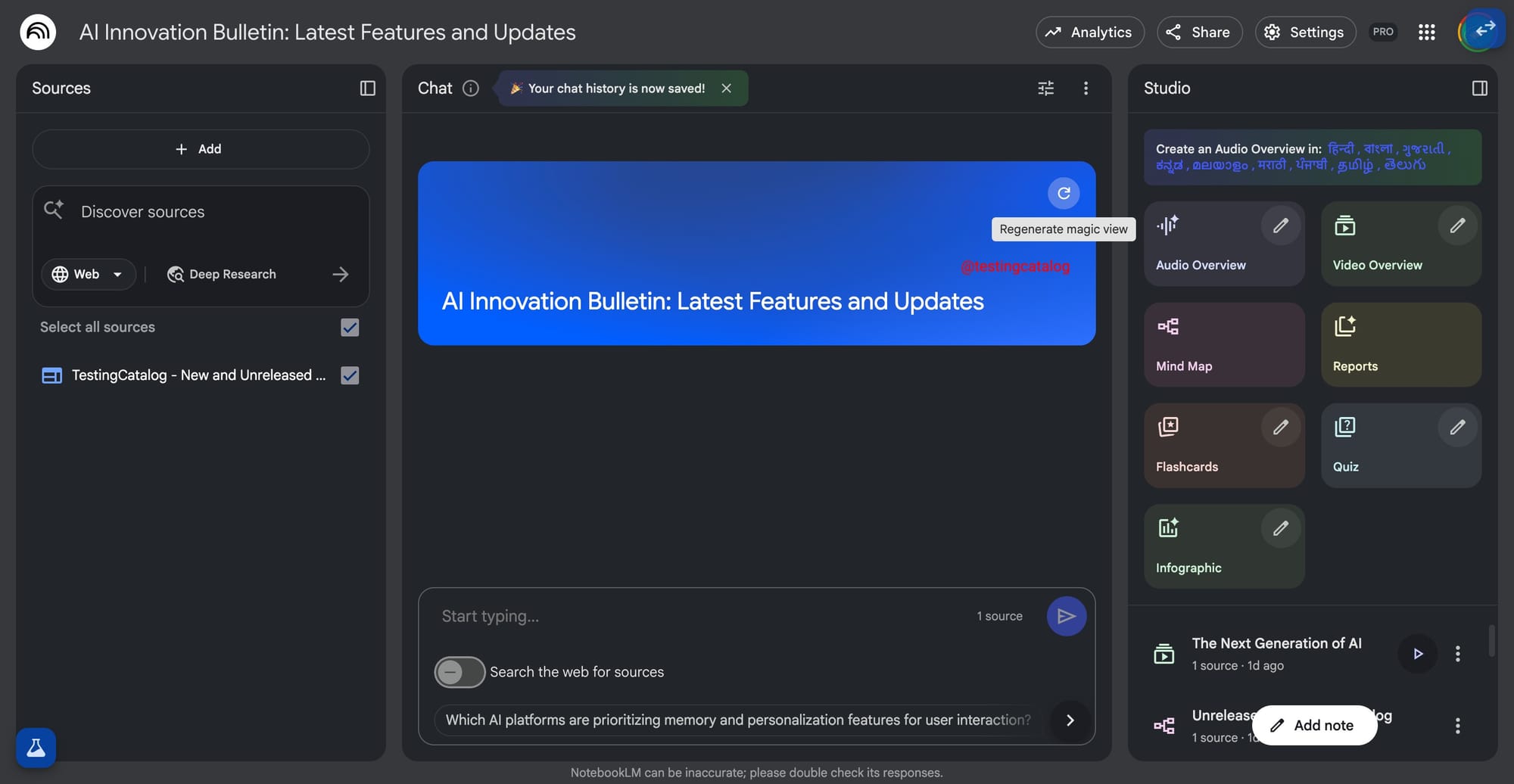
On October 7, 2025, users noticed something new in the Magic View feature.
This feature of Google, once lived as a separate title in Artifact Studio, has now shifted to the main chat interface of NotebookLM.
It appears right at the top of the screen, displaying the notebook name, a shifting background, and a refresh icon labeled “Regenerate Magic View.”
The change has caught immediate curiosity and, perhaps more importantly, fresh speculation.
What Exactly Is Magic View in Google NotebookLM?
For now, the purpose of Magic View remains ambiguous.
Early sightings described it as a pixelated loading animation, which led some to believe it was linked to Google’s annual Pixel event. That rumor has since been dismissed.
According to a recent post by Testing Catalog, they mentioned that Magic View is not just an artificial addition. It shows up persistently in the chat interface, acting almost like a contextual widget.
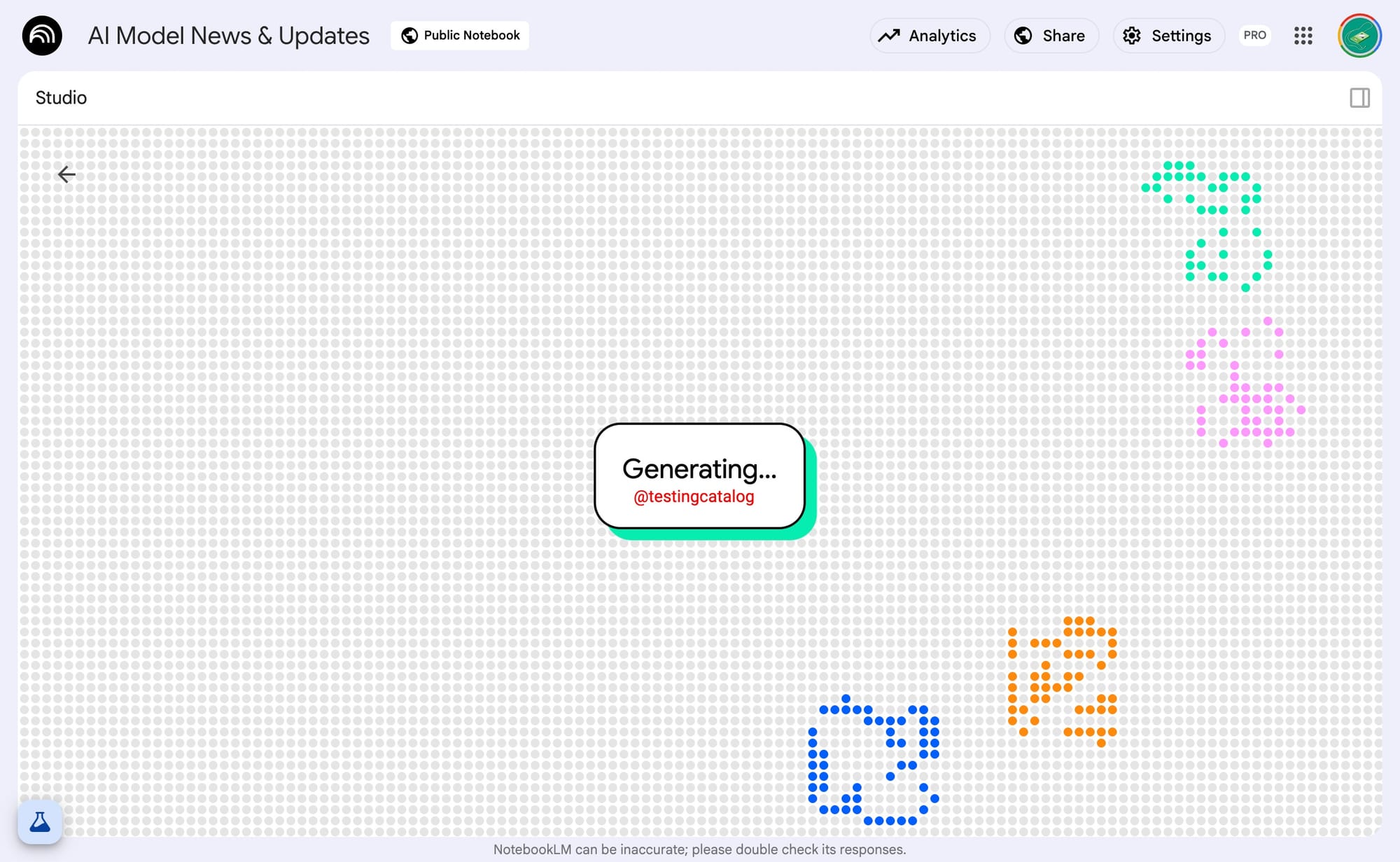
The dynamic background, which occasionally shifts color and the refresh button suggest it is meant to generate or adapt content though exactly what kind of content remains uncertain.
Why Did Google Move Magic View to the Main Chat Interface?
Previously, Magic View was tucked away in Artifact Studio, a place where users experiment with sources and drafts.
Moving it to the center of the chat experience signals Google’s intent to make it part of the core workflow.
Instead of being a side experiment, Magic View now greets users every time they open their notebook.
It feels less like an optional feature and more like a default layer of the NotebookLM experience.
The big question is why. If we step back and look at Google’s broader AI strategy, the answer may be that Magic View is intended to:
- Make the chat interface more visually engaging. Plain text can feel sterile, and visuals create a richer experience.
- Serve as context-aware feedback. A dynamic background could hint at the notebook’s theme or highlight important sources.
- Lay the groundwork for generative visuals. Google has deep investments in AI image models, so weaving them into NotebookLM feels inevitable.
Could Magic View Be Google’s Gateway to Generative Visuals?
Speculation among users has largely settled on the idea that Magic View is a generative visual feature.
Instead of static designs, the widget might use Google’s AI image generation models to craft backgrounds or illustrations tied to the notebook’s content.
Imagine uploading sources on climate change research and seeing a subtle, animated backdrop of global maps.
Or preparing notes on Shakespeare and getting a parchment-inspired theme with quills. It is not far-fetched, AI has already proven capable of generating contextual visuals in real time.
This would align with Google’s other experiments in visual AI, from Gemini multimodal features to AI-powered video overviews.
If Magic View really does become a personalized, generative visual layer, it could transform NotebookLM into more than a note-taking and summarization tool.
It could become an immersive, visual workspace.
How Does This Fit Google’s Pattern of Experimental Rollouts?
If the ambiguity of Magic View feels familiar, that is because Google has a history of introducing features quietly before announcing them fully.
Think of how Google Lens began as a tucked-away option before becoming integral to Search or how AI Overviews started as limited tests before rolling out more broadly.
Magic View seems to follow the same playbook:
- Introduce it quietly in a non-core space (Artifact Studio).
- Gauge curiosity and engagement. Users noticed, speculated and shared screenshots.
- Move it to a central interface (chat). Now, it’s unavoidable.
- Wait for patterns. How do users engage with it? Do they click “Regenerate”? Do they ignore it?
This cautious approach allows Google to test interest without overpromising. Once feedback is strong, it can pivot toward either expanding or sunsetting the feature.
Why Does Magic View Matter for NotebookLM Users?
NotebookLM, Google’s AI-powered notebook, already integrates deeply with user sources and summarizing documents, answering questions and even drafting new content.
Adding a layer like Magic View suggests Google wants to make the experience not just functional but also experiential.
For researchers, students, or professionals who spend hours in NotebookLM, Magic View could:
- Provide visual summaries of complex material.
- Signal context changes when switching between notebooks.
- Make long sessions less monotonous.
Even if its first role is important and visuals have a way of shaping engagement. A more lively workspace may encourage users to return, building habits around NotebookLM.
What Happens Next?
Google has yet to make an official statement clarifying Magic View’s purpose. That silence leaves plenty of room for interpretation but the fact that it now lives in the main chat interface suggests the company is not treating it as a minor experiment.
If history is any guide, we may see:
- Official demos at a future Google event. Perhaps tied to Gemini or other AI visual capabilities.
- Gradual integration with other NotebookLM features. Magic View could evolve into part of summaries, citations or source visualization.
- Feedback-driven pivots. If users ignore it, Google may repurpose or rebrand it.
For now, the best description of Magic View might be this: a placeholder for Google’s visual ambitions in AI notebooks.

Dileep Thekkethil
AuthorDileep Thekkethil is the Director of Marketing at Stan Ventures, where he applies over 15 years of SEO and digital marketing expertise to drive growth and authority. A former journalist with six years of experience, he combines strategic storytelling with technical know-how to help brands navigate the shift toward AI-driven search and generative engines. Dileep is a strong advocate for Google’s EEAT standards, regularly sharing real-world use cases and scenarios to demystify complex marketing trends. He is an avid gardener of tropical fruits, a motor enthusiast, and a dedicated caretaker of his pair of cockatiels.
