
OpenAI is ready to acquire the Chrome browser if the U.S. court compels Google to sell it, the company confirmed during a federal antitrust trial in Washington.
The statement, made by ChatGPT Head of Product Nick Turley, came amid the Justice Department’s push to curb Google’s dominance in search and web access.
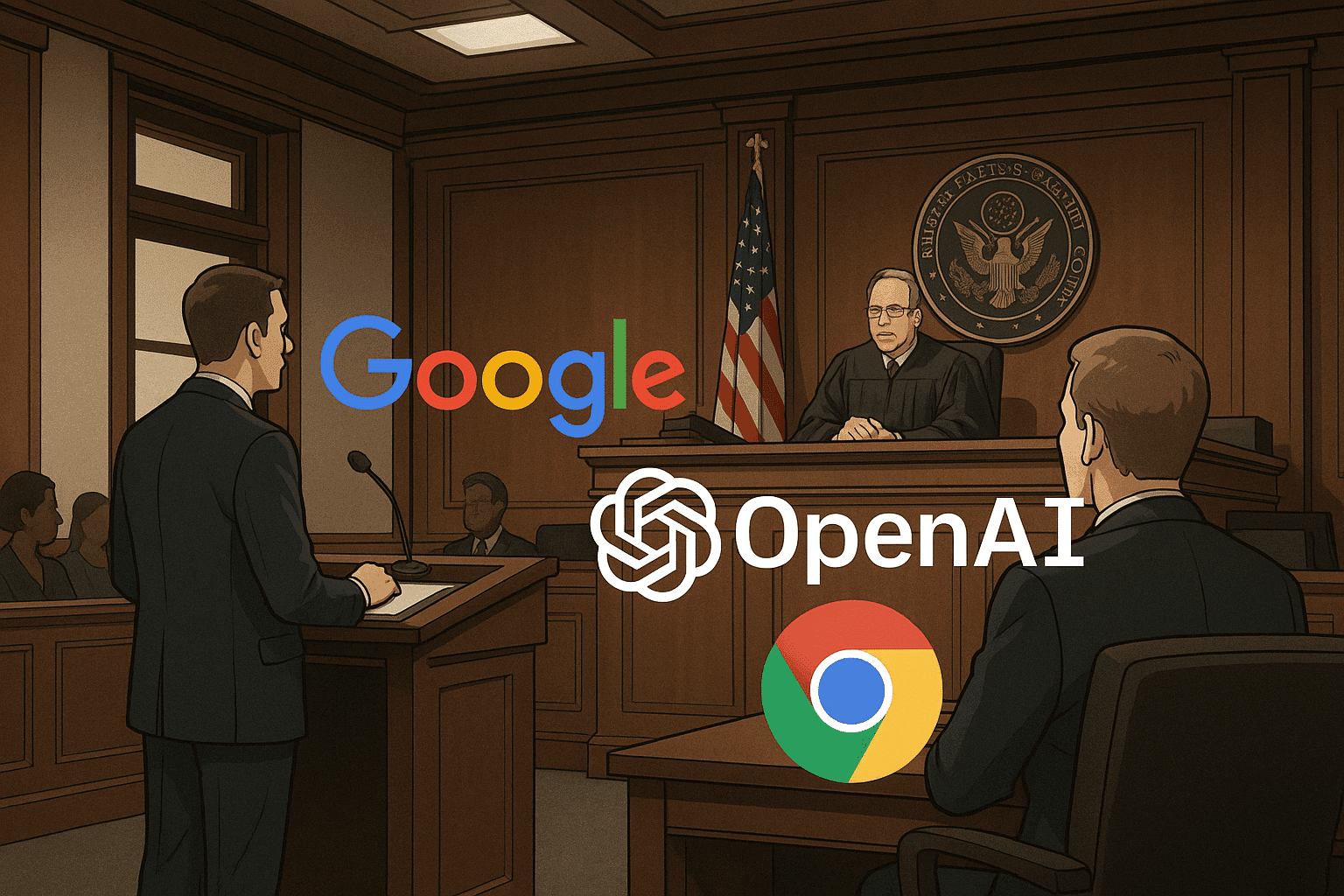
A Courtroom Curveball That Could Reshape the Internet
The U.S. Department of Justice (DOJ) is mounting one of its most ambitious challenges to Big Tech in decades. At the center of its case is a push to dismantle Google’s alleged stranglehold on search and browser dominance. Now, the courtroom drama has drawn in OpenAI.
During sworn testimony, Nick Turley, Head of Product at OpenAI’s ChatGPT division, confirmed the company’s willingness to purchase Chrome if a judge orders it to be split from Google’s parent company, Alphabet. This statement added a new layer of intrigue to a case already charged with the potential to upend how billions of people experience the web.
The DOJ contends that Google’s ecosystem, centered around its search engine, Chrome browser, and Android operating system, constitutes an unlawful monopoly.
Prosecutors argue that bundling these services has effectively shut out meaningful competition, stifling innovation and limiting consumer choice.
But Turley’s revelation suggests something else. Chrome, the gateway to the internet for over three billion users, is no longer just a browser.
It’s a prized strategic asset in a new arms race, one between AI giants competing not just for attention, but for control over how we navigate the web itself.
Not Everyone’s Cheering for a Breakup
While the idea of Chrome changing hands excites many critics of Big Tech, others see danger in dismantling a finely-tuned product that has, for better or worse, become central to digital life.
Aravind Srinivas, CEO of AI search startup Perplexity, publicly pushed back against the DOJ’s proposed remedy.
In a post on X and a follow-up editorial, Srinivas announced his intention to testify in favor of Google, arguing that separating Chrome from the company could weaken the very openness and stability regulators claim to protect.
Perplexity has been asked to testify in the Google DOJ case. Our core points:
1. Google should not be broken up. Chrome should remain within and continue to be run by Google. Google deserves a lot of credit for open-sourcing Chromium, which powers Microsoft’s Edge and will also…
— Aravind Srinivas (@AravSrinivas) April 21, 2025
Srinivas’ core message is to not confuse Google’s success with structural unfairness. He pointed to Google’s decision to open-source Chromium, the foundational code behind Chrome, as an act of generosity that empowered competitors like Microsoft Edge and now Perplexity’s own browser project, Comet.
He also warned that forcibly removing Chrome from Google’s ecosystem could degrade the browser’s performance and security, especially at scale, ultimately harming consumers who depend on its reliability.
More pointedly, Srinivas urged regulators to focus on real structural imbalances, such as Android’s default settings.
Google currently requires phone manufacturers to pre-install its services (like the Play Store and Google Maps) to gain access to key features. This, Srinivas argues, is where consumer choice is truly being constrained, not within Chrome itself.
Who Controls the Interface of the Internet?
While debates about monopolies and open ecosystems may sound abstract, what’s unfolding in the courtroom is fundamentally about the future of the internet.
Browsers like Chrome aren’t just passive tools; they shape what users see, how they search, and how companies profit from data.
If Chrome is spun off, it will no longer be tied to Google’s search engine or advertising model. This opens the door for companies like OpenAI to redesign how a browser interacts with users.
Imagine a browser that learns from your habits, engages in real-time dialogue, and proactively helps you browse more efficiently, not just fetch search results.
For OpenAI, acquiring Chrome would represent more than a business expansion—it would mark a transformation in how AI is embedded into daily life. A browser integrated with GPT technology could shift the center of gravity away from traditional search engines toward conversational and predictive navigation.
At the same time, Chrome’s independence could become a test case for what true interoperability and openness look like in the AI era.
If a neutral party gains control over the browser, it might foster more balanced competition among search engines, content platforms, and AI assistants.
But there are significant risks. Stripping Chrome from Google could destabilize its performance or fragment the web experience for users.
Without careful stewardship, a newly independent Chrome might fall into a tug-of-war between commercial interests, ultimately compromising the browser’s usability and security.
What This Means for the Rest of Us
Behind all the litigation and testimony lies a fundamental truth: the outcome of this antitrust trial will directly impact how we all experience the internet.
Consumers
If Chrome becomes independent—or lands in the hands of a new owner like OpenAI—users may benefit from more personalized and flexible browser experiences. But they could also face confusion, disruptions in service, or less consistent updates depending on how the transition is handled.
Developers and Tech Startups
A reshuffled browser landscape could unlock fresh opportunities to innovate. Freed from Google’s influence, Chromium-based browsers might experiment with novel user interfaces, plug-ins, or data models. The potential for AI-driven browsing experiences would no longer be theoretical.
Privacy Advocates
The breakup of Chrome could reduce centralized tracking and advertising dominance—provided the new owners adopt privacy-forward frameworks. However, there’s no guarantee that an independent or OpenAI-led browser would protect data any better. The devil will be in the defaults.
Regulators and Policymakers
This case is a rare chance to shape the rules for a new era of the web. If they succeed in rebalancing the ecosystem without undermining user experience, it could become a model for future antitrust efforts across tech.
Key Takeaways
- If Google is forced to sell its browser, OpenAI says it’s ready to buy it.
- The U.S. government is in court trying to break up parts of Google’s business, claiming it hurts competition.
- Another tech company, Perplexity, says Chrome should stay with Google to protect browser quality and innovation.
- At stake is who gets to shape how we access the internet—Google, OpenAI, or someone else.
- Tech leaders argue people should have more freedom to pick their default apps, not be locked into Google services.

Dileep Thekkethil
AuthorDileep Thekkethil is the Director of Marketing at Stan Ventures, where he applies over 15 years of SEO and digital marketing expertise to drive growth and authority. A former journalist with six years of experience, he combines strategic storytelling with technical know-how to help brands navigate the shift toward AI-driven search and generative engines. Dileep is a strong advocate for Google’s EEAT standards, regularly sharing real-world use cases and scenarios to demystify complex marketing trends. He is an avid gardener of tropical fruits, a motor enthusiast, and a dedicated caretaker of his pair of cockatiels.
