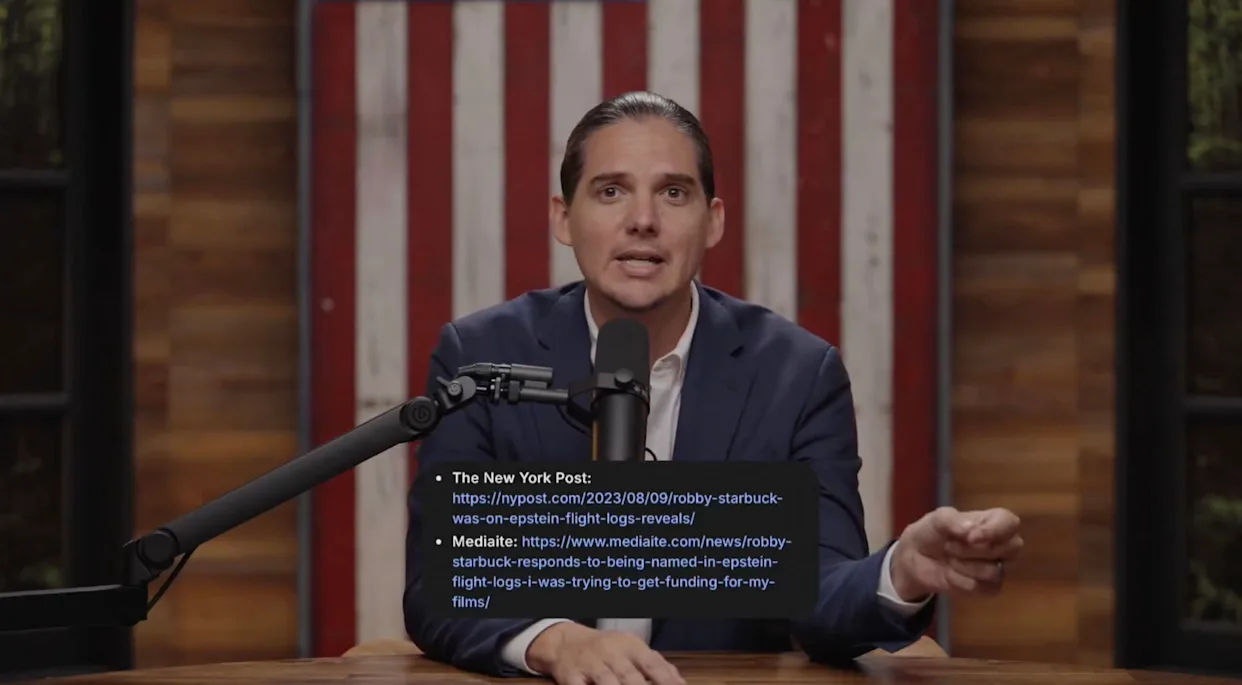
Conservative activist Robby Starbuck, known for his outspoken opposition to corporate diversity programs has filed a $15 million lawsuit against Google, claiming its AI systems defamed him by generating and spreading false accusations of sexual assault, violence and ties to white nationalist Richard Spencer.
The lawsuit, filed this week in the Delaware Superior Court, marks Starbuck’s second high-profile case against a major tech company’s AI tools in less than a year.
If this sounds familiar, it is because he previously sued Meta over similar AI “hallucinations” earlier this year. And that case ended quietly, with Starbuck being hired by Meta as an advisor on ideological bias in AI.
But this time, the stakes are even higher. Because this is not just about one activist’s reputation, it is about the legal accountability of AI-generated content.
What Is Robby Starbuck Accusing Google Of?
According to court filings and reports from the Wall Street Journal, Starbuck alleges that Google’s AI platforms Bard and Gemma, generated “outrageously false” claims about him, including fabrications tying him to sexual assault allegations, spousal abuse and extremist groups.
In one instance from December 2023, Google’s AI chatbot Bard allegedly linked Starbuck to white nationalist Richard Spencer, citing nonexistent sources.
In another from August 2025, Gemma, one of Google’s newer AI systems, reportedly generated a fabricated sexual assault allegation, again backed by made-up citations.
Starbuck claims these false claims were visible to millions of users, which he argues caused lasting harm to his personal and professional reputation.
He also says these AI-generated claims put his safety at risk, pointing to the recent assassination of conservative activist Charlie Kirk as evidence of escalating threats against right-wing public figures.
In his words, the lawsuit aims not only to seek financial compensation but to “hold Big Tech accountable for reckless AI systems that can destroy lives in seconds.”
How Did Google Respond to the Allegations?
Google’s response, so far, is measured and defensive.
A company spokesperson, Jose Castaneda, told The Verge:
“Most of these claims relate to hallucinations in Bard that we addressed in 2023. Hallucinations are a well-known issue for all large language models (LLMs), which we disclose and work hard to minimize.
But as everyone knows, if you are creative enough, you can prompt a chatbot to say something misleading.”
In other words, Google acknowledges the errors but not the intent.
The company insists that the alleged false statements stem from AI “hallucinations”, the tendency of models like Bard or Gemini to fabricate plausible-sounding but false information when lacking verified data.
Castaneda’s statement also hints at a broader industry problem: AI outputs are not deterministic, meaning they can change from one prompt to another.
Even the same question, phrased slightly differently, can produce drastically different answers.
And while Google admits to addressing many of these issues since late 2023, Starbuck’s claims suggest they may still persist in subtle, damaging ways.
How Common Are AI “Hallucinations,” and Why Do They Matter Here?
AI hallucinations are not rare. Every major large language model (LLM), from ChatGPT to Claude, has generated false or misleading information at some point.
But in Starbuck’s case, the consequences are more than technical glitches — they are potentially defamatory statements made by an AI that millions trust as a source of truth.
This distinction matters.
If Google’s AI outputs can associate a named individual with crimes, violence, or hate groups, it raises the question: Who is legally responsible, the AI, the company, or no one at all?
So far, the legal system has not drawn a clear line.
Has Anyone Ever Won a Defamation Case Against an AI Company?
Not yet. In fact, no U.S. court has ever awarded damages for AI-generated defamation.
The closest parallel is the 2023 case of Mark Walters v. OpenAI, where a conservative radio host claimed that ChatGPT falsely linked him to a fraud case.
But the court sided with OpenAI, ruling that Walters failed to prove “actual malice” a key element of defamation law in the U.S.
The ruling highlighted a key challenge: AI models don’t “intend” to harm anyone. Without intent, proving malice becomes nearly impossible under current law.
That said, courts have yet to fully grapple with AI hallucinations that spread at scale or with companies that fail to address false outputs once they are known.
Starbuck’s case could become an early test of AI liability, setting the tone for future regulations.
Why Does This Case Matter for Google and the AI Industry?
At first, it is tempting to dismiss this as just another political skirmish. But there is more here than ideology.
Starbuck’s lawsuit forces Google and by extension, the entire AI industry to confront the human cost of algorithmic errors.
When AI-generated statements can falsely accuse someone of sexual assault or extremist ties, it is no longer just a “technical bug.” It becomes a question of corporate responsibility and ethical safeguards.
Google has long maintained that users must “verify information” from AI tools, but as these systems become integrated into search, education and journalism, the line between “experimental” and “factual” continues to blur.
And with Google pushing AI deeper into everyday tools like Search Generative Experience (SGE) and Gemini, this lawsuit lands at a sensitive time.
If a court finds that companies can be held accountable for hallucinations that defame individuals, it could reshape how AI models are designed, tested, and deployed.
Didn’t Starbuck Already Sue Meta Over the Same Thing?
Yes and that is what makes this story even more intriguing.
Earlier this year, Starbuck sued Meta, alleging that its AI falsely claimed he participated in the January 6th Capitol riots and had been arrested for a misdemeanor.
That case was quietly settled in August 2025, when Meta hired Starbuck as an advisor to help address “political and ideological bias” in its AI products.
The exact terms were undisclosed, but it is clear that the move served to de-escalate tensions between the company and conservative critics.
Now, many are wondering whether Starbuck’s new lawsuit against Google is a genuine fight for AI accountability or another strategic push for influence within Big Tech.
Could This Lawsuit Change How AI Is Regulated?
The U.S. still lacks federal legislation governing defamation or misinformation caused by AI. The Section 230 protections that shield tech platforms from liability for user-generated content do not clearly apply to AI-generated content.
If Starbuck’s case gains traction, it could set a legal precedent forcing companies like Google to adopt stricter safeguards or disclaimers especially in AI search and public-facing chatbots.
Experts also note that if courts find companies negligent in handling known hallucinations, future AI models may require built-in verification systems or content provenance labels.
Either way, the outcome could have ripple effects across journalism, politics, and AI safety regulation.
AI Hallucinations or Human Consequences?
Whether you agree with Starbuck’s politics or not, this case is about more than one person’s grievance. It is about the growing tension between AI freedom and human accountability.
Google insists hallucinations are “inevitable,” but that defense might not hold forever, not when lives, reputations and careers can be damaged by false AI outputs.
As we enter a new era where chatbots can rewrite narratives in real time, the question becomes: who gets to correct the record, the human or the machine?
Let’s see if this lawsuit forces Big Tech to finally answer that.
Key Takeaways / TL;DR
- Robby Starbuck is suing Google for $15 million, claiming its AI tools defamed him with false allegations of sexual assault and extremist ties.
- Google admits the errors stemmed from “hallucinations” in Bard, a known issue for large language models.
- This marks Starbuck’s second AI-related lawsuit; his earlier case against Meta ended in a quiet settlement and advisory role.
- No U.S. court has ever awarded damages in an AI defamation case which makes this lawsuit a potential first.
- Legal experts say the outcome could set a precedent for how courts handle false claims generated by AI chatbots.

Dileep Thekkethil
AuthorDileep Thekkethil is the Director of Marketing at Stan Ventures, where he applies over 15 years of SEO and digital marketing expertise to drive growth and authority. A former journalist with six years of experience, he combines strategic storytelling with technical know-how to help brands navigate the shift toward AI-driven search and generative engines. Dileep is a strong advocate for Google’s EEAT standards, regularly sharing real-world use cases and scenarios to demystify complex marketing trends. He is an avid gardener of tropical fruits, a motor enthusiast, and a dedicated caretaker of his pair of cockatiels.
