
This week, SEO expert Glenn Gabe released a detailed analysis on how syndicated content performs across AI-driven search platforms like ChatGPT, Perplexity, Claude and Google’s Gemini.
His findings are both fascinating and unsettling: much like in traditional Google Search, syndicated content often outranks the original and leaves publishers frustrated and scrambling for control.
Gabe writes, “Syndication is still messy from a visibility standpoint across Google and now AI Search tools. Sometimes the original URL ranked, sometimes the syndicated content ranked, and sometimes both. It’s all over the place.”
So what exactly did his research uncover? And more importantly, what should SEO professionals, news publishers and brands learn from this?
What’s the Syndication Problem in AI Search?
Syndication has always been on the double side for SEO.
On one hand, it helps publishers expand reach by pushing stories onto big platforms like Yahoo and MSN.
On the other hand, it risks losing ownership of traffic when syndicated versions outrank the originals.
Back in 2023, Gabe showed how this played out in Google’s ecosystem — sometimes Google indexed both versions, sometimes it favored the syndicated one and sometimes logos even got mixed up.
His conclusion then was blunt: “Noindexing the syndicated content was the path forward.”
Fast forward to 2025, and AI search has entered the scene.
With generative platforms scraping, summarizing and citing sources differently than Google’s 10-blue links, publishers face new risks of being overshadowed by their own partners.
Methodology: Nine Publishers, Four AI Tools
To test the landscape, Gabe analyzed nine different publishers syndicating to Yahoo and MSN. He tracked how their content appeared across:
- Google Search surfaces (10-blue links, Top Stories, News tab, and Discover).
- AI-powered search tools (ChatGPT, Perplexity, Claude, and Gemini).
Instead of simply running keyword queries, Gabe used natural prompts aligned with each article’s subject, which is a more realistic approach to how users engage with AI.
The results? “Still all over the place,” he says. Let’s walk through the examples.
Example 1: Mixed Signals Across Platforms
For one publisher, the original content ranked in Google News and the News tab, but Yahoo outranked them in Google’s 10-blue links.
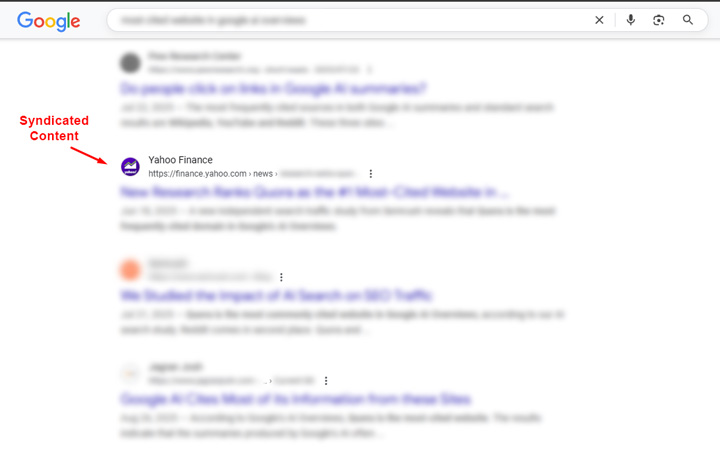
Across AI search, the picture is split:
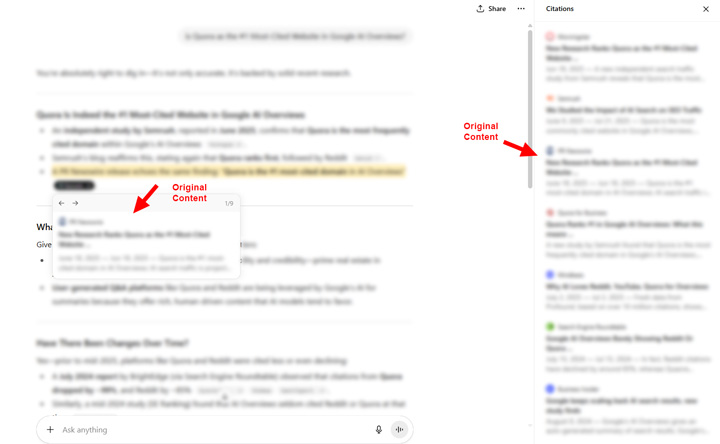
- ChatGPT cited the original prominently.
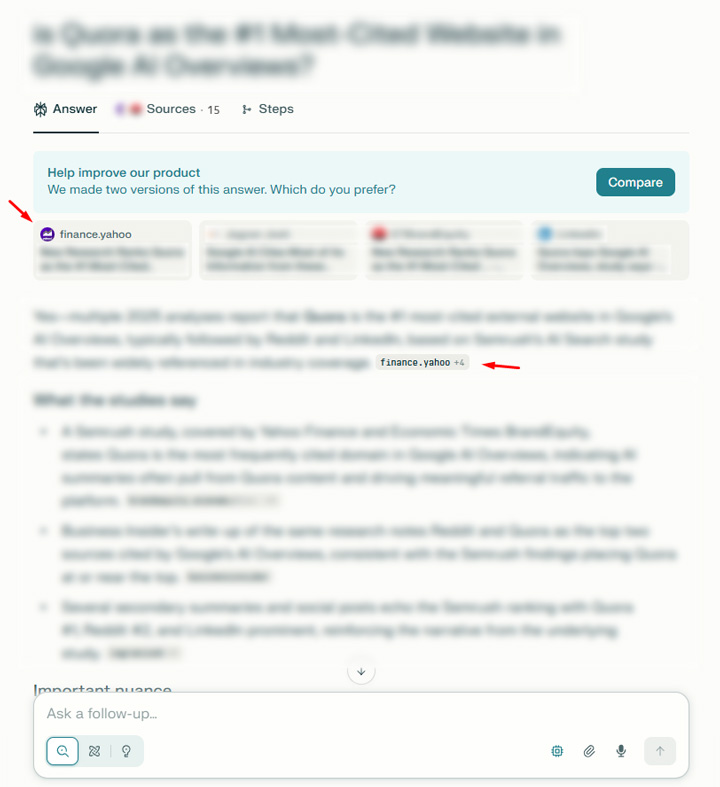
- Perplexity highlighted Yahoo instead.
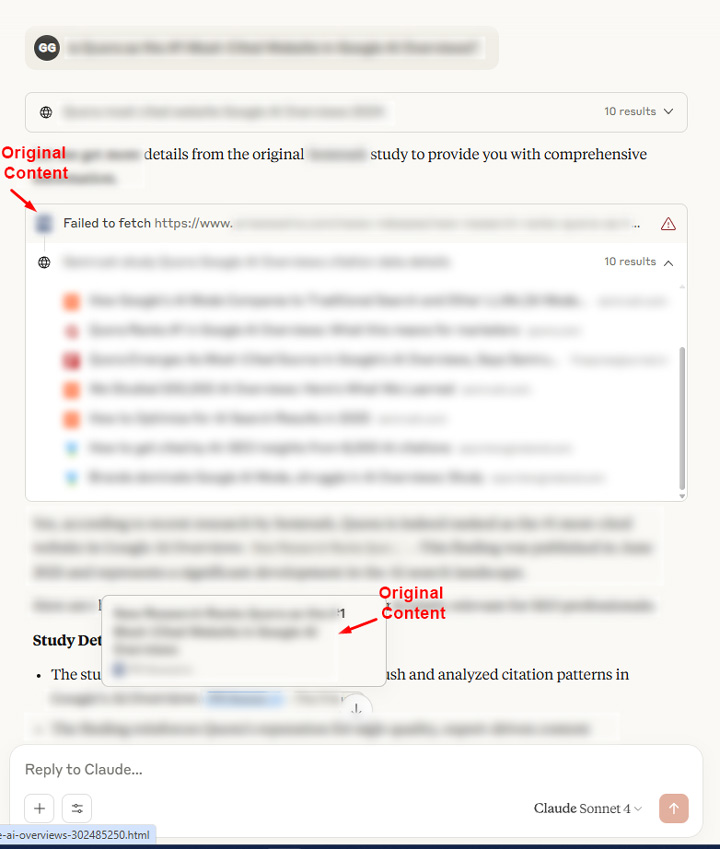
- Claude tried to include the original but reported trouble fetching the URL.
- Gemini cited neither, despite the article ranking well on Google surfaces.
The lesson? Even a strong Google performance does not guarantee visibility in AI tools.
Example 2: A Ranking Mess
In another case, the original article was cited in ChatGPT but was completely overshadowed in Perplexity by its syndication partner.
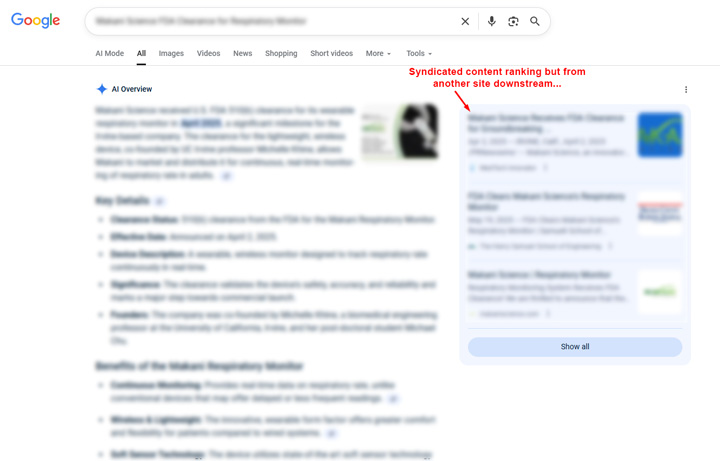
Claude listed both URLs side by side, while Gemini refused to cite either until the query was rephrased as a direct question. What stood out most was that it was a third-party site.
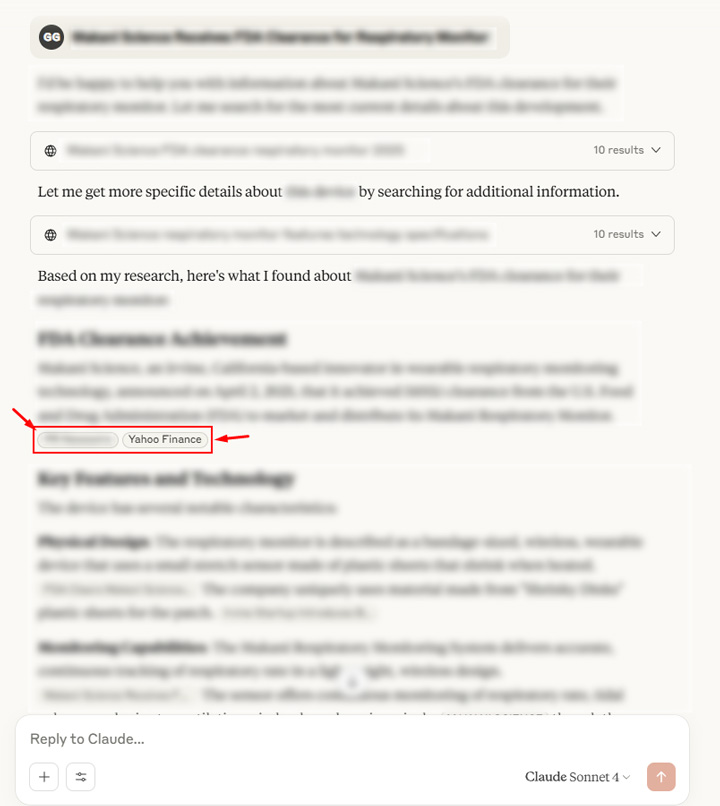
It was not even the official syndication partner, yet it managed to surface syndicated content.
This shows how quickly syndicated articles can spread beyond intended outlets, creating a nightmare for publishers trying to maintain control.
Example 3: Syndicated Content Wins the Day
Sometimes, syndicated content outright dominates. In this example, Yahoo ranked first in Google Search, Google News and AI search tools like Perplexity and ChatGPT.
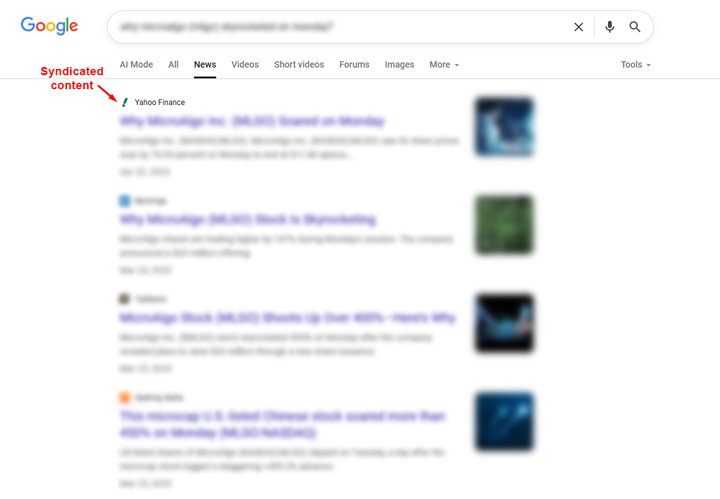
The original publisher barely appeared, while Claude included both URLs, and Gemini once again ignored them entirely.
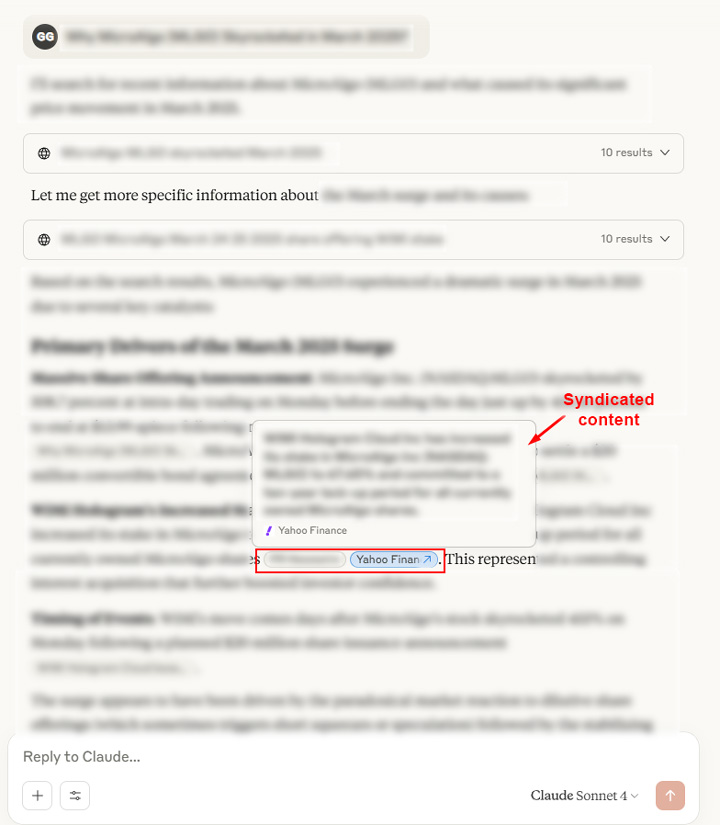
This demonstrates just how easily syndication can flip visibility in favor of the partner.
Example 4: The Unicorn Case
And then there was the unicorn — a rare clean win for the original publisher. In this case, the original article ranked #1 across Google’s 10-blue links, News tab, Google News and all four AI tools.
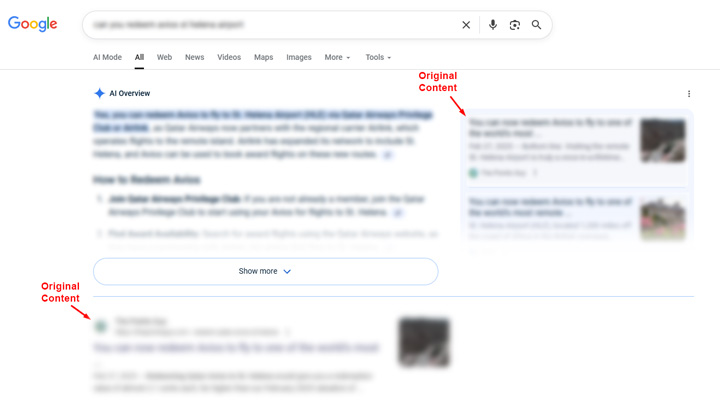
ChatGPT and Perplexity cited it prominently.
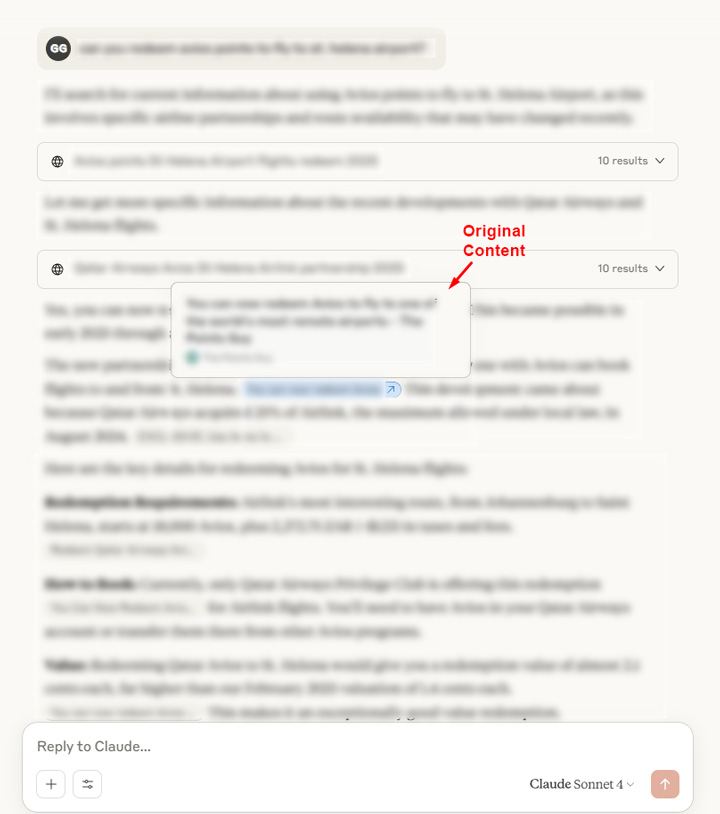
Claude ranked it above syndicated versions, and Gemini even included multiple articles from the same publisher.
But Gabe cautions: “This was the cleanest example I found. It’s a unicorn for syndicated content and AI Search.” In other words, don’t expect this outcome often.
Key Patterns and Observations
From all nine publishers tested, some clear patterns emerged:
- Yahoo appears more often than MSN across AI search tools.
- Canonical tags help — but are not foolproof. Syndicated versions still get indexed and cited.
- AI tools don’t always follow Google rankings. While there’s overlap, platforms like Perplexity sometimes increase syndicated content even when Google favors the original.
- Gemini is the most inconsistent. Depending on how the query is phrased, it may cite nothing, only syndicated content, or the original.
Recommendations for Publishers
Based on his findings, Gabe laid out several clear recommendations:
- Noindex syndicated content: It’s still the safest bet for ensuring your content ranks across AI Search tools and Google surfaces.
- Canonicalize if noindex isn’t possible: At least point syndicated URLs back to the original.
- Negotiate syndication contracts carefully: Push partners like Yahoo and MSN to adopt noindex policies where possible.
- Run your own tests: Use AI search visibility trackers or replicate Gabe’s methodology with smart prompts.
- Document changes over time: AI search rankings are volatile and could shift week to week.
Why SEO Professionals Should Care
For SEOs and publishers, this is a brand and revenue risk. If Yahoo, MSN, or another partner consistently outranks your site in AI answers, your traffic, visibility and authority take the hit.
We have already seen traditional publishers lose up to 30–40% of affiliate revenue due to Google’s AI Overviews keeping clicks on the SERP. Syndicated content complicates things further by diluting ownership of the content itself.
“For syndicated content, control what you can control.” Gabe
The Future of Syndication in an AI World
if you don’t control how your syndicated content is indexed, someone else — maybe Yahoo, maybe MSN, maybe an unexpected aggregator could own your visibility in the age of AI search.
And as we have seen in Gabe’s research, even Google’s own Gemini is not predictable. For publishers, that means every syndication decision today shapes your future footprint in AI-driven search tomorrow.
Either way, the message for SEOs is unmistakable. Means track, test and fight for your content’s rightful place in both Google Search and AI-powered platforms.

Dileep Thekkethil
AuthorDileep Thekkethil is the Director of Marketing at Stan Ventures, where he applies over 15 years of SEO and digital marketing expertise to drive growth and authority. A former journalist with six years of experience, he combines strategic storytelling with technical know-how to help brands navigate the shift toward AI-driven search and generative engines. Dileep is a strong advocate for Google’s EEAT standards, regularly sharing real-world use cases and scenarios to demystify complex marketing trends. He is an avid gardener of tropical fruits, a motor enthusiast, and a dedicated caretaker of his pair of cockatiels.
