Key Takeaways
- Most competitive sites outsource link building despite Google’s warnings. The difference between a ranking win and a penalty is execution, not intent.
- Bulk link buying is dead. In 2026 one link from a high-traffic, relevant site beats 1,000 directory links.
- The safest way to “buy” a link isn’t to pick a placement off a spreadsheet. It’s to pay for the service of manual outreach and real content.
- Vetting is the whole game. This guide gives you the exact framework to make sure you never pay for a toxic link.
Google’s Spam Policies are clear. Any link built to manipulate PageRank counts as a link scheme. That’s the official line, and reps repeat it every time.
Now the reality. If you’ve ever managed a site in a tough niche, you already know organic links are brutally hard to earn for commercial pages.
People link to breaking news and fun studies. Nobody wakes up wanting to link to your “Best CRM Software” page. Yet that page needs authority to rank. So you’re stuck in a loop: you need links to rank, but you can’t rank high enough to get seen and earn them.
That loop is why buying backlinks exists. Except in 2026 it looks nothing like paying a webmaster for a footer link. It’s grown into a full Digital PR and content operation.
This guide walks the grey area responsibly. How to vet vendors, read the metrics that actually matter, and understand the real economics behind a link that lasts. It’s the same playbook the Stan Ventures team runs every day.
The Evolution Of Paid Links (And Why “Cheap” Is Dangerous)
To buy links safely, you first have to spot the unsafe ones. Google’s SpamBrain AI has gotten scary good at catching unnatural patterns. Shop around for a vendor and you’ll run into three very different tiers of quality.
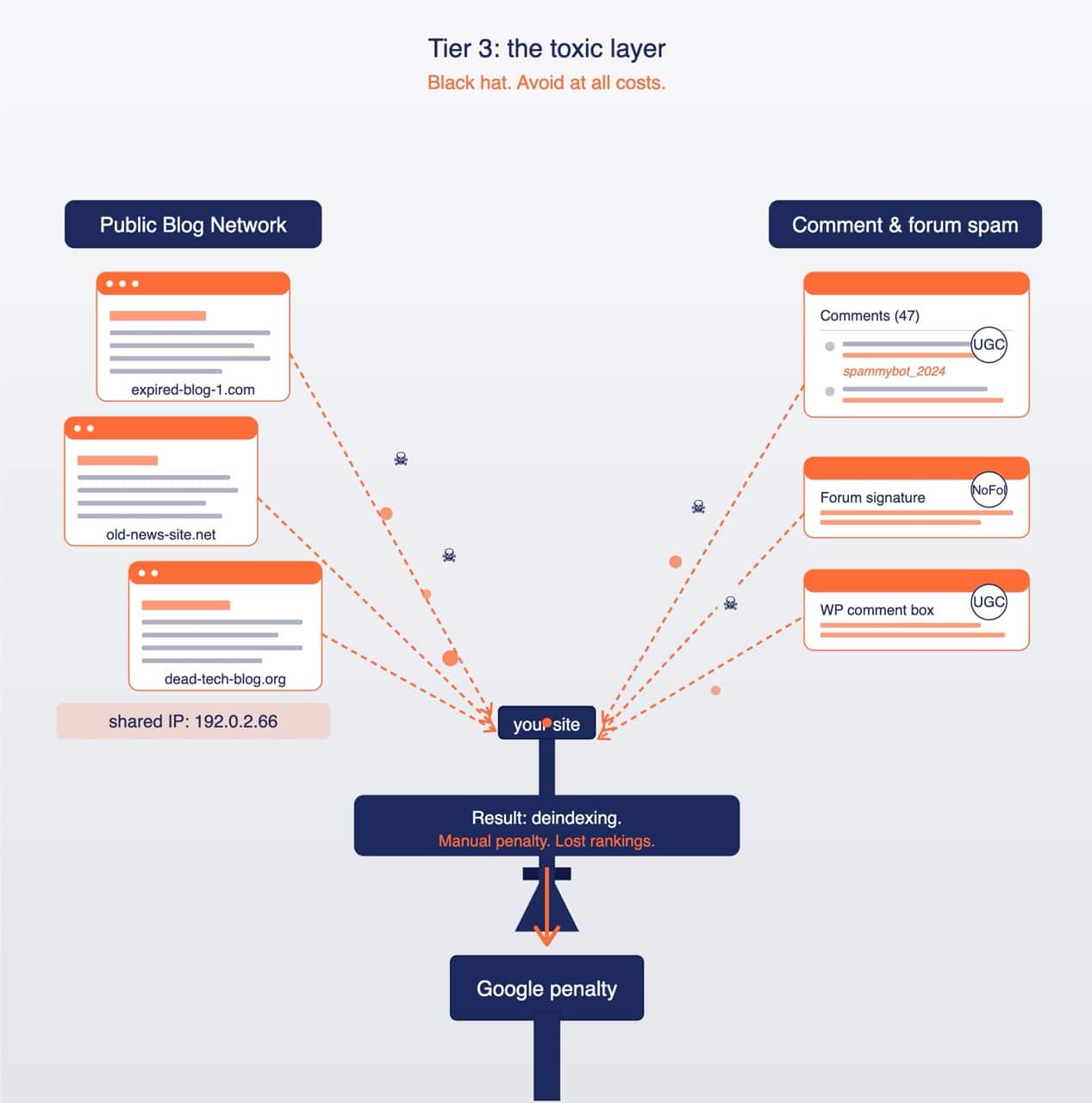
The Toxic Layer
The “DA 50+ Links for $10” pitches on Fiverr and in spam emails. Avoid them completely.
PBNs: Expired domains bought only to pass authority. No real audience, often on shared IPs. Google finds one, deindexes the network, and hands you a manual penalty.
Comment & forum spam: Bots dropping links in comments. Almost always NoFollow, so zero value, and a loud spam signal on top.
The Reseller Lists
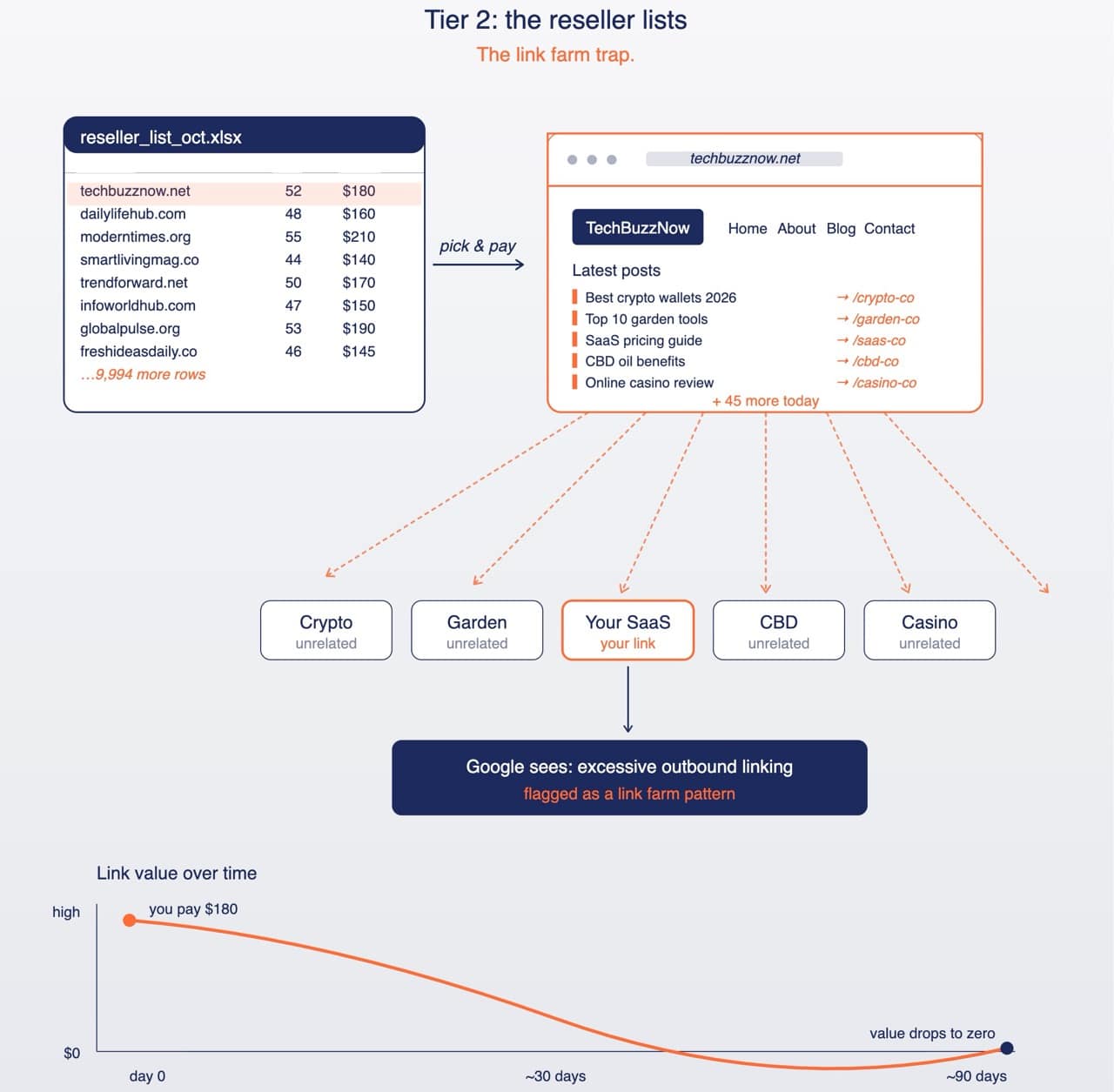
The daily emails with spreadsheets of 10,000 sites sorted by DA. Pick a site, pay, publish.
Why it looks safe: Real logos, real articles, a tidy About page.
Why it isn’t: These sites exist only to sell links. Fifty guest posts a day linking to crypto, gardening, and SaaS from one homepage. Google flags the excessive outbound linking and your link value drops to zero fast.
Manual Outreach & Editorial Placements
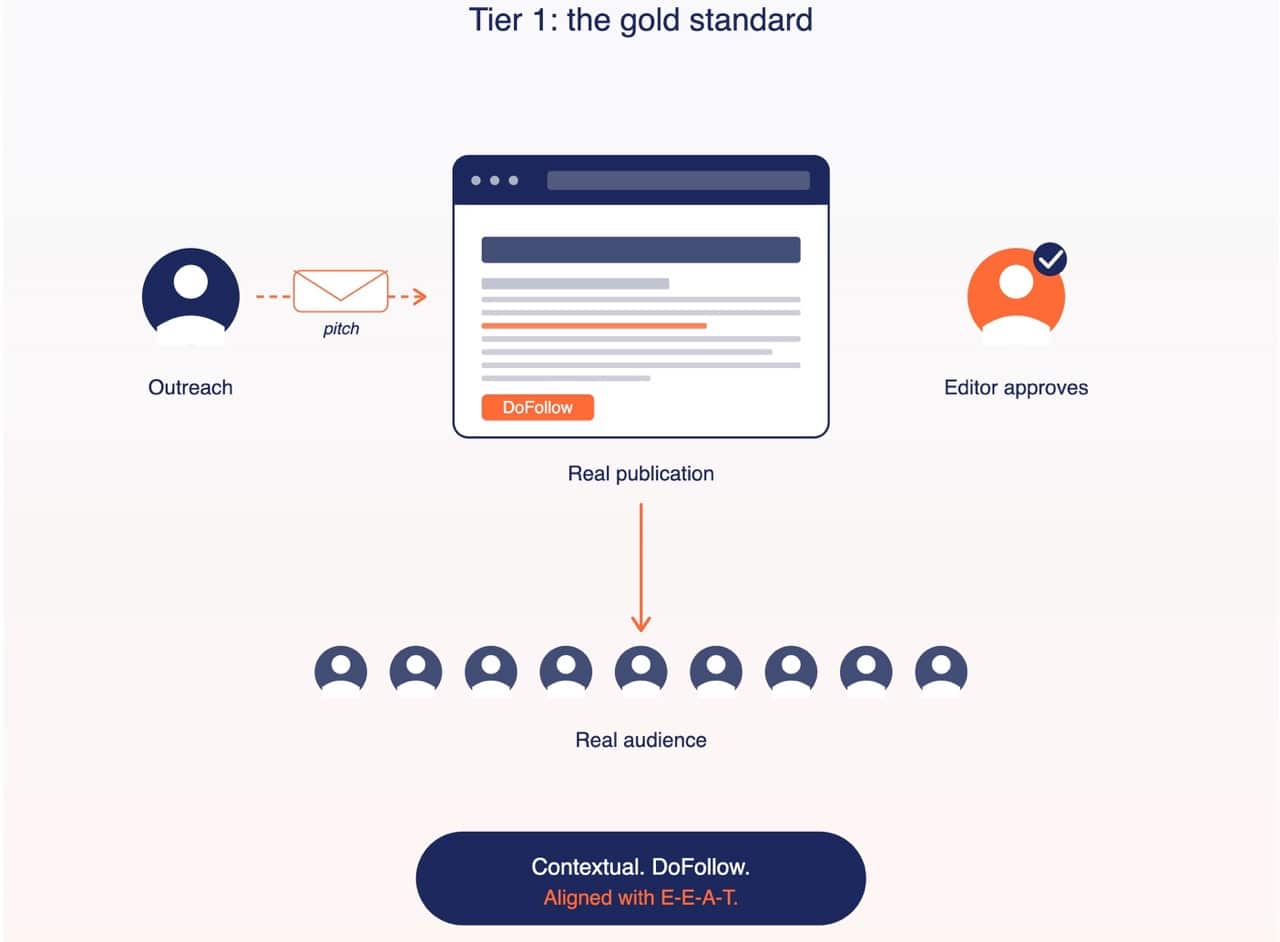
The only method that mimics natural linking and lines up with Google’s E-E-A-T guidelines.
The process: Find a relevant site with a real audience, pitch a genuinely good story, and place your link where it actually helps the reader.
The result: A contextual DoFollow link from a site with real human traffic. This is exactly what our white-label link building team does.
The Four Ways To Buy Links In 2026, Ranked By Safety
“Buying a link” isn’t one thing. It’s four very different transactions, each with its own risk profile and price tag. Industry pricing surveys put the average cost of a quality placement around $280 in 2025, and climbing. Here’s where that money goes and what each option really buys you.
Stan Ventures
Google actually spells this out in its spam policies: paid links are fine as long as they carry a rel=”sponsored” or rel=”nofollow” tag. The whole grey area exists because a tagged link passes no ranking value. That’s why manual outreach, where content quality earns the placement, remains the only route that gets you a DoFollow link and a defensible link profile at the same time.
The Vetting Framework: How To Audit A Link Vendor
Link building is like building a skyscraper. The foundation decides whether the whole thing stands. High-quality backlinks are your structural steel, and a single bad site can trigger a penalty that wipes out months of hard-won rankings.
So when you outsource link building, vet hard. Here’s the five-step audit to run on any link opportunity before you spend a dollar.
Start here, because this one catches almost everyone. A high vanity score means nothing if nobody visits the site. Same two sites, very different reality:
Stan Ventures
Traffic Is The Only Truth
DA, DR, and Authority Score are third-party metrics, not Google’s, and they’re easy to fake. A site can show DR 70 and pull zero real visitors.
The rule: never buy a link from a site under 1,000 monthly organic visitors.
How to check: ask for an Ahrefs or Semrush traffic screenshot. A big cliff in the graph means a Core Update hit them. Walk away.
The “Write For Us” Footprint
Run site:target-website.com “write for us”. If every post is stamped “Guest Post” or the site openly begs for articles, it’s a link farm.

The standard: target sites where it’s genuinely hard to get published. A promise of a live link in 24 hours is a red flag. Real outreach takes time.
Relevance And Neighborhood Checks
A “bad neighborhood” is a cluster of sites tied to spam, gambling, or adult content. Pull up the last five articles a prospect published:
- “Best Dog Food”
- “Crypto Trading Tips”
- “How To Fix A Leaky Roof”
- “Online Slots Review”
Topics all over the map means no topical authority. Prioritize sites that stick to their lane, like a marketing blog that only talks marketing.
Outbound Link Ratios
A healthy site earns more links than it gives. When a site has 100 inbound links but links out 50,000 times, it’s leaking authority.
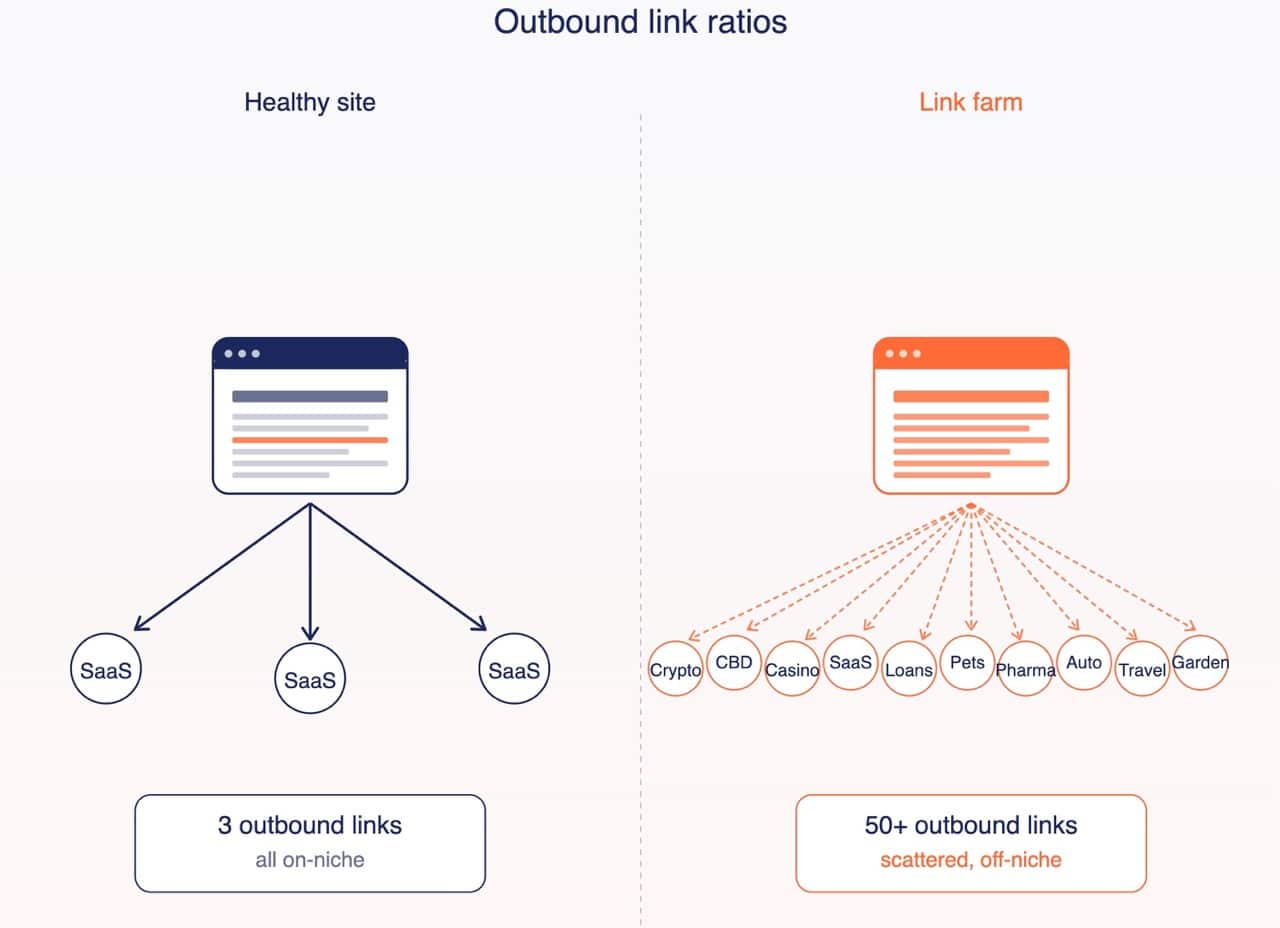
By the time that authority reaches you, it’s diluted to nothing.
Indexing Status
Sounds obvious, but search site:the-website.com on Google. Nothing shows up? The site is deindexed.
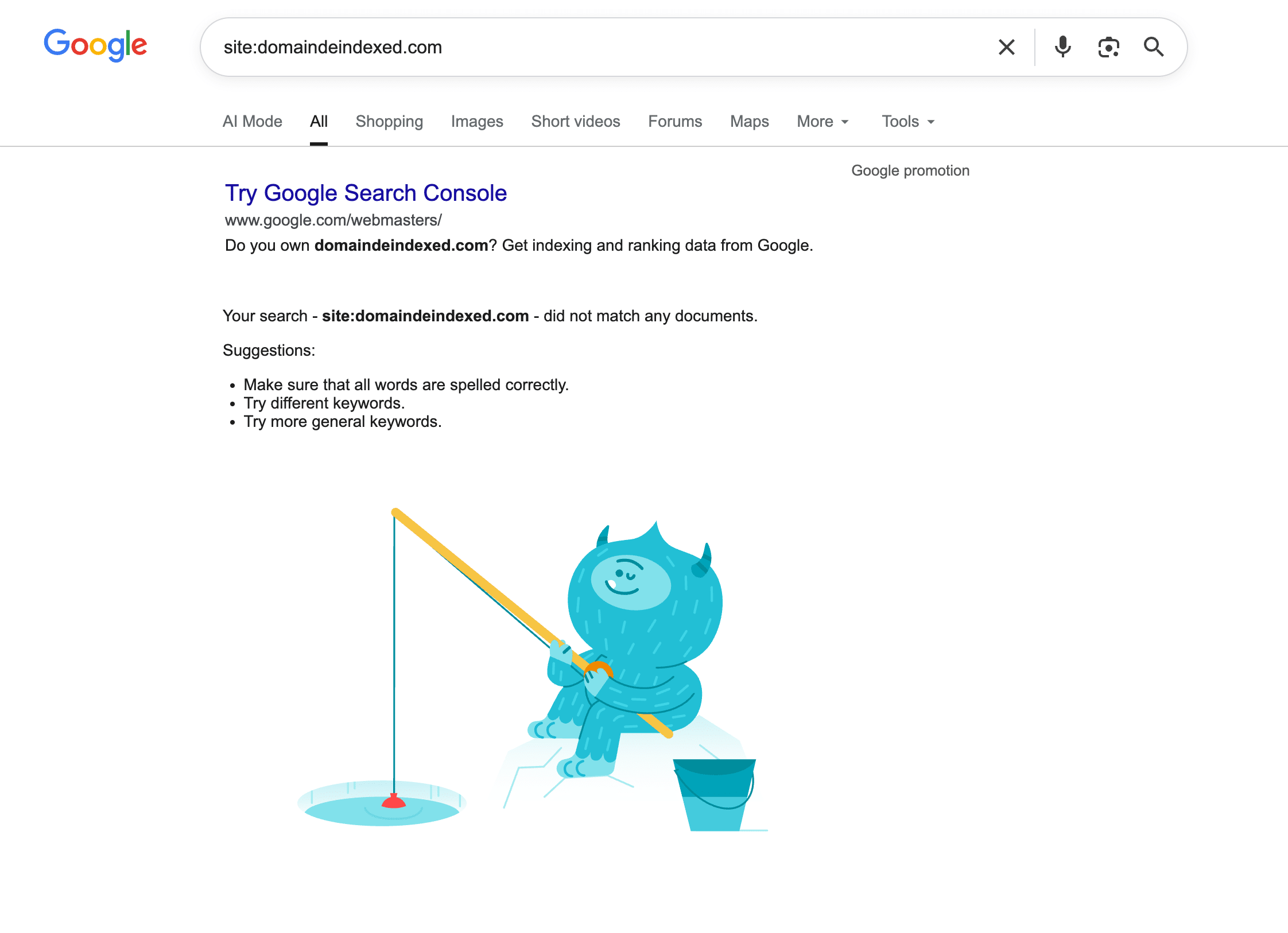
Any link on a deindexed site is invisible to search engines. Pure wasted money.
The No-Go Zone At A Glance: Two Site Profiles, One Decision
Run the five checks above on any prospect and you’ll land on one of these two profiles. Dummy data, real pattern:
Stan Ventures
Notice the twist: the no-go site has double the DR. If your vendor sells by DR alone, they’re selling you the left column.
Instant Red Flags: Walk Away If A Vendor Says Any Of These
- “Guaranteed DA 50+ links, live in 24 hours.” Real outreach can’t guarantee anything, and speed like that only comes from a network they control.
- “Bulk pack: 100 links for $99.” Divide the math. Nobody writes, pitches, and places a real link for a dollar.
- “We can’t reveal the domains until after payment.” Hiding the inventory means the inventory can’t survive daylight.
- “No reports, just trust the rankings.” A legit vendor shows you every URL, every metric, every anchor. No exceptions.
- “Anchor text? Just send us your money keyword.” A vendor with no opinion on anchor ratios is planning to torch your profile with exact match.
The Economics Of Safe Link Building
The question I hear most: “Why does a backlink cost $200 when I can get one for $50 somewhere else?”
Fair question. Here’s what actually goes into a Tier 1 editorial link.
The Prospector
Filters thousands of spam sites with paid tools to surface a few hundred real gems.
The Outreach Specialist
Writes personalized editor pitches. Cold reply rates sit below 5%, so getting one link can take 50+ emails.
The Content Writer
Good blogs reject AI filler. They want 1,000+ word pieces from writers with real niche expertise.
The Editorial Fee
Even legit bloggers sometimes charge a small processing fee to cover their own editing time.
The Hidden Cost Of Cheap Links
Pay $50 for a link and the math doesn’t work. That price can’t cover a real writer, a strategist, and an outreach manager. It almost always means the link came from an automated farm that accepts anything.
The true cost of a cheap link is the cleanup. After 15 years in this industry, I’ve watched site owners spend $10 on junk links and then $10,000 or more on audits and disavow work to undo the damage.
The New Stakes: Backlinks Now Decide Your AI Visibility Too
Here’s what most link buying guides still miss. Rankings are no longer the only prize. When ChatGPT, Perplexity, Gemini, or Google’s AI Overviews answer a question in your niche, they cite the sources they trust. And the trust signal they lean on hardest looks a lot like the one Google has used for 25 years: who links to you, and from where.
Our internal analysis across 300+ client campaigns and 40,000+ URL observations points to one pattern: AI engines don’t reward the best-written content. They reward the most verifiable source. Backlinks from real, high-traffic sites are exactly how a domain becomes verifiable.
The same editorial links that lift your Google rankings also raise the odds an AI assistant names your brand as the answer. One spend, two channels.
A spammy link profile doesn’t just fail on Google. It signals to AI models that your domain isn’t a source worth citing. Cheap links now cost you two channels.
LLMs also weigh unlinked brand mentions across trusted publications. Pair your link building with brand mention placements and the citation flywheel spins faster.
Anchor Text Strategy: Avoiding Over-Optimization
Anchor text is the clickable word in a link. Years ago you could spam exact-match keywords like “Best Running Shoes” and rank overnight. Those days are gone.
A lot of cheap vendors won’t touch keyword research, which leaves you guessing. Skip any vendor that refuses to help with anchor planning. They’re optimizing for a quick sale, not your rankings, and over-optimization is what gets sites in trouble. Here’s the safe mix for 2026:
70%
“Stan Ventures,” “StanVentures.com,” “According to Stan Ventures.” This is how people link naturally, and it builds brand entity signals.
15%
“Guide to outsourcing link building,” “link building safety tips.”
10%
“Click here,” “read more,” “this study,” “the source.”
5%
“Buy backlinks.” Save these for your most powerful links only.
Stan Ventures
Warning: keep exact-match anchors for your highest-authority links. Don’t burn them on lower-tier guest posts.
The Stan Ventures Process: Managed Outreach vs. Buying Links
Stan Ventures isn’t a back-channel link store that hides the domain until you’ve paid. It’s fully managed blogger outreach, built to be transparent from the first email to the live link. Four steps:
Niche Analysis
Every project starts by studying your niche and competitors up close, not a recycled list. That’s how we find sites where your audience actually hangs out.
The Manual Pitch
Real editors, real pitches, no automation blasts. Every piece is written to be a genuine asset to the host site and clear Google’s E-E-A-T bar.
In-Content Placement
No sidebar or footer links. Google weighs contextual links inside the main body far more heavily, so that’s where yours goes.
Transparency & Reporting
You review the domain, its metrics, and the content before anything goes live. Reports confirm exactly where each link landed.
From Thin Link Profile To Top 3: A Real Example
Polar White Labs, a specialized dog breeder, had a quality product and almost no search presence. The backlink foundation was too thin to compete beyond local buyers. Instead of grabbing bulk links, we ran the exact manual outreach playbook described above, earning placements on real, high-authority pet sites. Here’s what changed:
The traffic surge turned a local seller into a nationwide breeder with a steady stream of puppy inquiries. Read the full Polar White Labs breakdown or browse more SEO case studies across niches.
How To Measure The ROI Of Outsourced Links
When you spend on links, you want to see a return. Just know that SEO ROI takes more patience than paid ads.
A new link gets crawled in days, but the authority it passes takes 4 to 10 weeks to fully move rankings.
Why real outreach is slow and priced accordingly. Fifty pitches often buy a single quality link.
The floor for any site worth a link. Below that, the traffic isn’t real enough to matter.
So How Much Does Buying Links Actually Speed Things Up?
The question every SEO forum asks, and every sales page dodges. Here’s the honest answer: paid links compress the timeline, they don’t delete it. Organic link earning for a commercial page can take 12 to 18 months to build meaningful authority. A well-run paid campaign gets the same authority moving in 3 to 6 months. That’s the real value: you’re buying back a year, not buying a ranking.
Two conditions apply. First, links amplify pages that already deserve to rank. If your content is thin or your on-page basics are broken, links push a broken car. Fix the car first. Second, velocity matters more than volume. Google’s systems flag unnatural acquisition spikes, so a steady drip of 5 to 15 quality placements a month beats 50 links landing in one week, every single time. Match your velocity to what the top competitors in your niche are earning naturally, then run slightly ahead of it.
Why You Shouldn’t Expect Overnight Miracles
Being blunt here filters for the right kind of partner. If you need rankings next Tuesday, no honest vendor can help you, and any vendor who says otherwise is about to sell you the toxic tier from earlier in this guide. Links are an investment with a maturity date, not a vending machine. Here’s what a realistic first six months looks like:
Quiet on the surface. Placements go live, Google crawls and indexes them, and authority starts flowing. Rankings barely move yet. This is the phase where impatient buyers panic and bail. Don’t.
First real movement. Target keywords climb from page 3 to page 2, long-tail terms crack the top 10, and impressions in Search Console jump before clicks do. Momentum is compounding even if traffic hasn’t yet.
The payoff window. Money keywords reach page 1, traffic and leads follow, and each new link now lands on a stronger domain, so it works harder than the ones before it. This is the compounding phase that makes the whole spend worth it.
If a client can’t commit to that window, they’re better served by paid ads, and telling them so upfront saves everyone a refund conversation later. The clients who understand this timeline are the ones who renew.
Keep The Profile Looking Natural
A profile built only from premium editorial placements is its own red flag. Real sites that earn attention also pick up messy links along the way: social shares, forum threads, directories, small niche blogs. You don’t buy those, they accumulate. But it means you shouldn’t panic when they show up in your Ahrefs report, and you shouldn’t disavow everything below DR 40. Natural profiles have texture. Sterile ones look manufactured.
Metrics To Watch
- Keyword movement: track the keywords your target page is built for. Expect a gradual climb over 2 to 3 months, not an overnight jump.
- Domain authority growth: DA is third-party, but a steady rise correlates with better ranking potential.
- Referral traffic: a great link doesn’t just pass equity, it sends real humans. Check Analytics for referrals from those domains.
- Indexation rate: links help Google crawl faster. New content indexing within hours is a sign your profile is working.
The web is shifting hard toward authority. As AI content floods every niche, Google puts a premium on content backed by real humans, and backlinks, along with consistent brand mentions across the web, are the clearest digital vote of confidence a site can earn.
“Buying backlinks” still carries a stigma from the spam era. But paying for expert content and Digital PR isn’t spam. It’s strategic, professional marketing.
Frequently Asked Questions
Is Buying Backlinks Illegal?
No. There’s no law against it. It does violate Google’s Webmaster Guidelines, though, and Google can penalize you if it catches manipulation. That’s why manual outreach, where you earn links through content, beats buying direct placements.
How Many Backlinks Do I Need To Rank?
There’s no magic number. It comes down to keyword difficulty and how strong your competitors are. If the pages beating you have 50 links, you’ll generally need a comparable count of higher-quality links to compete.
Can I Buy Backlinks For A New Website?
Yes, but watch your link velocity. A brand new site that grabs 500 links in a week looks suspicious fast. For new sites, go slow and steady, around 5 to 10 quality placements a month.
What’s The Difference Between DoFollow And NoFollow?
A DoFollow link tells Google to pass authority to your site. A NoFollow says “I’m linking, but I don’t vouch for it.” For rankings, you mainly want DoFollow links.
Niche Edits Or Guest Posts: Which Should I Buy?
Niche edits place your link inside aged content that already ranks, so authority flows faster. Guest posts give you a fresh article and full control of context. Strong campaigns mix both: niche edits for speed on money pages, guest posts for durable topical relevance. Whichever you pick, the vetting framework above applies equally.
Do Backlinks Help Me Show Up In ChatGPT And AI Overviews?
Yes. AI engines cite sources they consider verifiable and authoritative, and a strong backlink profile from real, high-traffic sites is a core input to that judgment. The same quality bar applies: spammy links can push your domain out of AI citations entirely, while editorial links and brand mentions pull it in.
How Long Until I See Results From Bought Links?
Usually 4 to 8 weeks after the links index. SEO is a compounding long game, not an overnight fix.
Want Links You Can Actually See Before They Go Live?
Skip the spreadsheets and the toxic placements. Get contextual links from real sites with real traffic, fully vetted and fully transparent.

Dileep Thekkethil
AuthorDileep Thekkethil is the Director of Marketing at Stan Ventures, where he applies over 15 years of SEO and digital marketing expertise to drive growth and authority. A former journalist with six years of experience, he combines strategic storytelling with technical know-how to help brands navigate the shift toward AI-driven search and generative engines. Dileep is a strong advocate for Google’s EEAT standards, regularly sharing real-world use cases and scenarios to demystify complex marketing trends. He is an avid gardener of tropical fruits, a motor enthusiast, and a dedicated caretaker of his pair of cockatiels.