OpenAI has announced 1-800-ChatGPT, a groundbreaking service that lets users connect with its AI directly via phone calls or WhatsApp messages. This innovative approach redefines accessibility, offering a seamless and personal way to interact with ChatGPT without relying on traditional tech setups.

Here’s everything you need to know about this update.
AI That Speaks Your Language—Literally
OpenAI’s new feature allows you to talk directly to ChatGPT over the phone, marking a significant step forward by making the AI accessible without needing the internet or advanced devices. The best part is that it works not just on smartphones but on flip phones and even vintage rotary dial phones.
Simply save the number 1-800-242-8478 to your contacts and call it. No apps or internet browsers are needed—just a direct phone conversation.
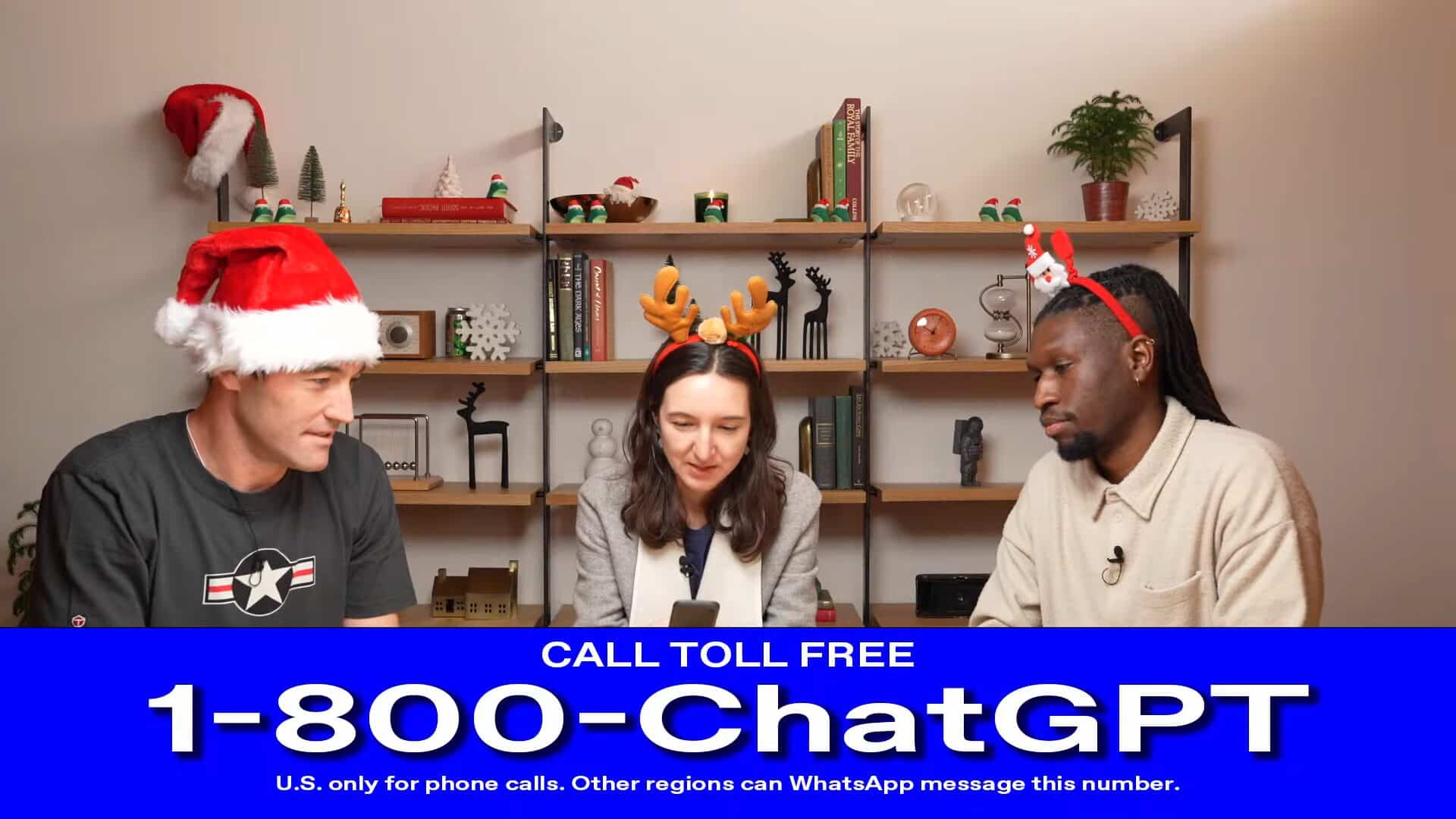
This service is currently available only in the United States. Users are granted 15 free minutes of calling per month. After setting up an account, the ChatGPT app offers extended options for those who need longer interactions.
In a demonstration, users called ChatGPT and asked it to explain complex concepts in simple terms. For instance, when asked about reinforcement learning, ChatGPT responded:
“Imagine you have a robot friend, and you want to teach it to clean up your room. You give it a treat every time it does a good job. That’s reinforcement learning—the robot learns to do better by getting rewards.”
This approach is simple, engaging, and effective—a hallmark of AI designed for everyone.
ChatGPT on WhatsApp
OpenAI has introduced ChatGPT on WhatsApp for users outside the U.S. This feature, accessible globally, allows users to text ChatGPT directly through the app. You don’t need an account for this; just save the contact number or scan a QR code to get started.
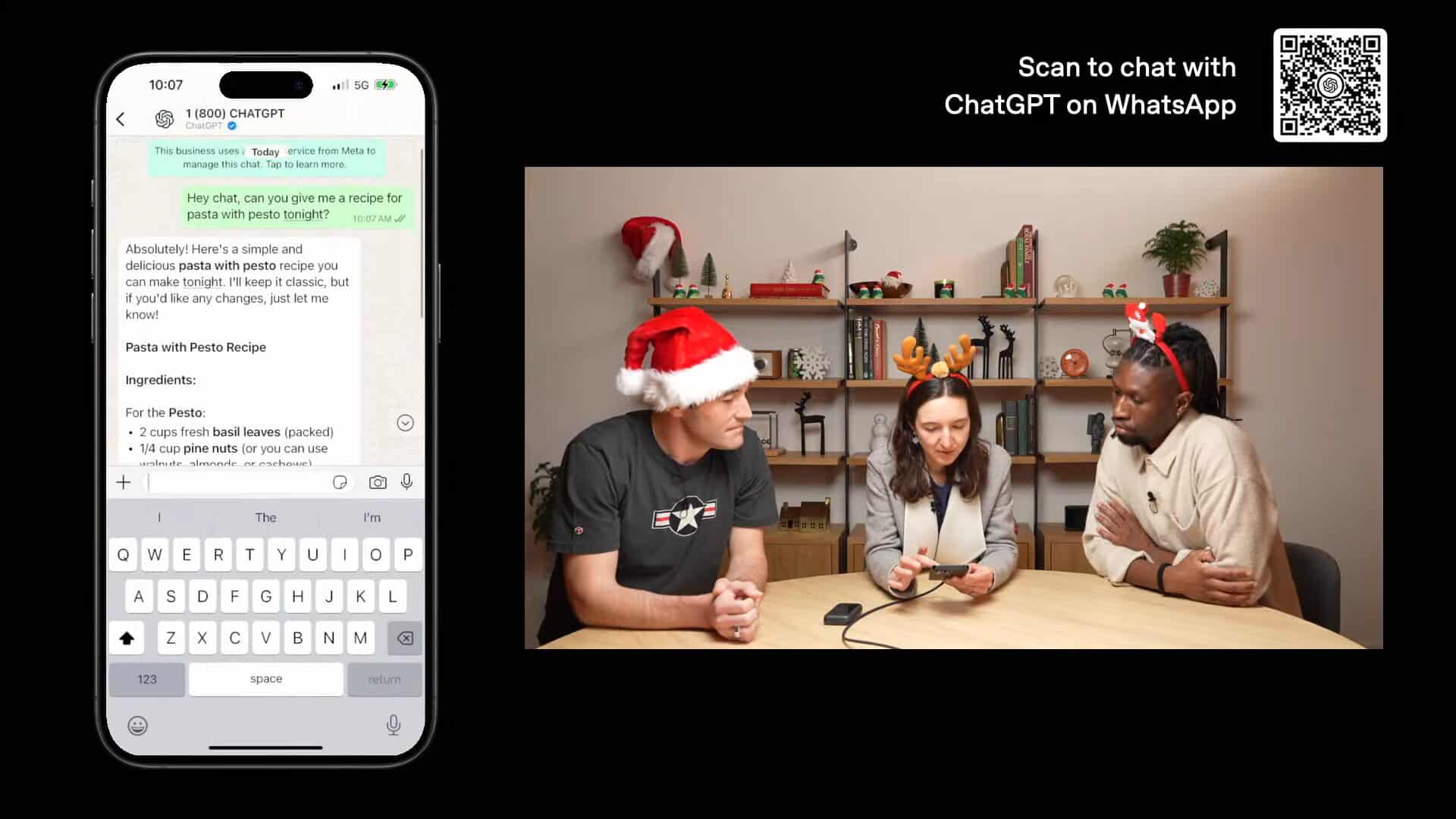
While WhatsApp currently supports text-based interactions only, OpenAI has big plans for the future. Features like authentication and image-based queries are in the works, promising even more versatile ways to engage with ChatGPT.
The Tech Behind the Innovation
These new features are powered by the ChatGPT 40 Mini model, a streamlined version of OpenAI’s technology optimized for quick and efficient interactions.
Unlike its larger counterparts, this model balances performance and accessibility, making it ideal for phone and text-based services.
Remarkably, OpenAI’s engineers developed this model in just a few weeks, highlighting their ability to rapidly innovate.
The efficiency and rapid rollout of these capabilities underscore OpenAI’s focus on staying ahead in AI development while catering to a broader audience.
Why This Matters
OpenAI’s new update makes it easier for everyone to use AI, especially older adults, people in rural areas with limited internet, and those who aren’t comfortable with advanced technology.
Allowing access through simple phones and WhatsApp ensures that more people can benefit from AI without needing fancy devices or fast internet.
This change also benefits businesses, schools, and healthcare providers. For example, a small business owner can use ChatGPT on WhatsApp to write emails or generate ideas, and teachers can get help explaining difficult topics to students. It’s a simple solution with endless possibilities.
A Look Back: From Screens to Conversations
Until now, ChatGPT interactions were limited to apps and web browsers. While effective, these platforms required users to be somewhat tech-savvy and internet-reliant. By expanding access to phone calls and WhatsApp, OpenAI has taken a massive step in making AI assistance more universally available.
This progression is reminiscent of earlier tech milestones—like the transition from personal computers to smartphones. Just as those innovations brought more people online, 1-800-ChatGPT and WhatsApp integration bring AI closer to those who might otherwise be left out.
What’s Next? Implications and Predictions
OpenAI’s new services promise to redefine AI accessibility, impacting users, businesses, and the tech industry in transformative ways.
Greater Reach: These features will likely make AI more popular among demographics that have historically been underserved by tech advancements.
New Applications: Businesses could leverage phone and WhatsApp-based AI to enhance customer support, providing instant answers without requiring app downloads.
Enhanced Features: OpenAI’s roadmap includes voice recognition improvements, expanded language support, and integration with additional communication platforms.
Global Competition: By making AI more accessible, OpenAI strengthens its position against competitors, setting a new standard for how AI should function.
Tips for Getting Started
Whether you’re a tech enthusiast or a first-time user, these steps will help you make the most of 1-800-ChatGPT and WhatsApp access.
Add the Number: To start, save 1-800-ChatGPT to your phone contacts. This simple step allows you to easily reach ChatGPT for assistance at any time. Ask it to explain something or help with a quick task.
Experiment on WhatsApp: Scan the QR code or save the number to start texting ChatGPT. It’s quick, simple, and doesn’t require an account.
Maximize Your Free Calls: Use the 15 minutes wisely—whether for learning, problem-solving, or entertainment.
Stay Informed: Keep an eye on updates. New features like image recognition on WhatsApp could open even more possibilities.
Key Takeaways
- OpenAI’s 1-800-ChatGPT lets users talk to ChatGPT over the phone, even with a landline.
- WhatsApp integration allows global users to text ChatGPT without requiring an account.
- The features rely on the ChatGPT 40 Mini model.
- These advancements expand AI access to non-tech users and underserved populations.
- Future updates promise enhanced functionality, from image queries to voice recognition.

Dileep Thekkethil
AuthorDileep Thekkethil is the Director of Marketing at Stan Ventures, where he applies over 15 years of SEO and digital marketing expertise to drive growth and authority. A former journalist with six years of experience, he combines strategic storytelling with technical know-how to help brands navigate the shift toward AI-driven search and generative engines. Dileep is a strong advocate for Google’s EEAT standards, regularly sharing real-world use cases and scenarios to demystify complex marketing trends. He is an avid gardener of tropical fruits, a motor enthusiast, and a dedicated caretaker of his pair of cockatiels.
