Chegg, a well-known education technology company, has taken a legal step against Google, accusing the tech giant of unfair competition.
According to Chegg, Google’s AI Overviews (AIO) are keeping users on Google’s platform, instead of directing them to third-party sources, resulting in a massive drop in traffic and revenue.
The lawsuit filed in the U.S. District Court for the District of Columbia may establish a significant precedent regarding online search and content ownership.
AI Overviews Are Hurting Content Creators
Chegg argues that Google’s AI Overviews have transformed its traditional search engine into an “answer engine” that pulls content from external sources without redirecting users to the original websites.
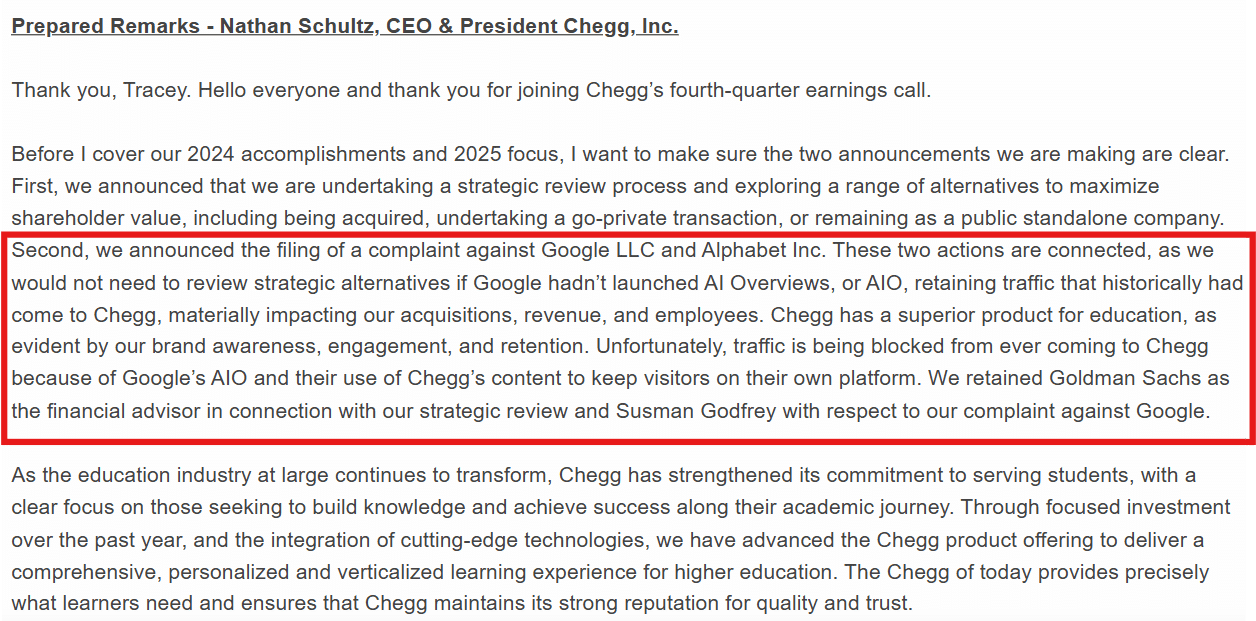
The company’s lawsuit outlines three major complaints:
- Forced Content Sharing: Google allegedly pressures companies like Chegg to provide proprietary content in exchange for visibility in search results.
- Abuse of Monopoly Power: Google is accused of using its dominant market position to push competitors out.
- Unfair Profits: Google is said to be profiting from Chegg’s content without compensation.
Chegg asserts that these practices have led to a devastating 49% drop in non-subscriber traffic as of January 2025—far worse than the 8% decline seen in mid-2024.
Chegg CEO Nathan Schultz stated in prepared remarks for investors that Google is “reaping the financial benefits of Chegg’s content without having to spend a dime.” The company is now considering getting acquired and going private as a result of these challenges.
The Financial Toll: A Business in Crisis
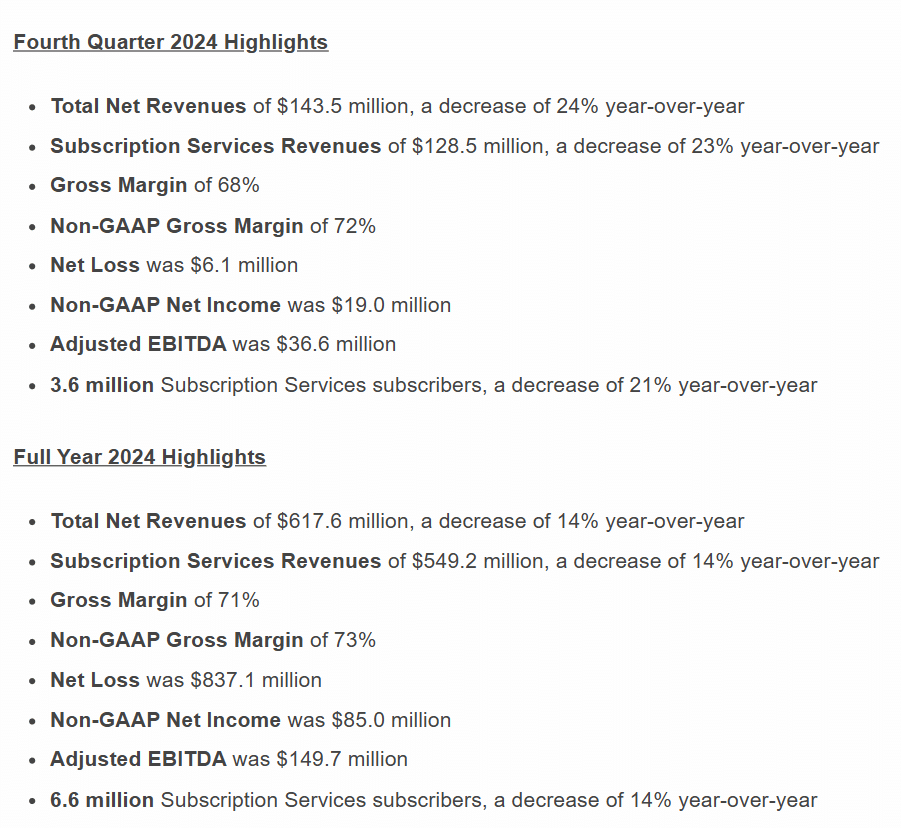
The impact on Chegg’s finances has been severe. The company reported a $6.1 million net loss in Q4 of 2024, with revenue falling by 24% year-over-year to $143.5 million.
Its stock has suffered as well, trading just above $1 per share, leaving the company valued at less than $200 million.
To navigate these challenges, Chegg has enlisted Goldman Sachs to explore potential acquisitions and other strategic options.
At the same time, it has hired Susman Godfrey, a law firm known for high-profile cases, to take Google to court.
The Future of Online Search and AI
This lawsuit centers around the future of digital publishing and AI-driven search. If Chegg wins, it could pave the way for other content creators and businesses to challenge Google’s practices.
Chegg’s leadership warns that the quality of educational content could decline if AI-generated summaries replace comprehensive, expert-reviewed resources.
“This isn’t just about us,” the company stated. “It’s about students losing access to accurate, step-by-step learning materials.”
Google, however, has dismissed the claims, stating that AI Overviews do not harm publishers.
“Every day, Google sends billions of clicks to sites across the web, and AI Overviews send traffic to a greater diversity of sites,” said Google spokesperson Jose Castaneda in a statement to Reuters.
This lawsuit emerges amid growing concerns from media outlets regarding Google’s AI summaries and their effect on web traffic.
Last year, the News/Media Alliance—an organization representing over 2,000 news publishers—issued a warning that AI Overviews could have a “catastrophic” impact on journalism, further intensifying scrutiny on Google’s evolving search technology.
What’s Next?
Google has yet to issue an official response, but the outcome of this lawsuit could force the company to rethink its approach to AI Overviews.
Will Google be required to share traffic and revenue with content creators? Will AI-driven search need clearer regulations to ensure fairness?
As this legal battle unfolds, businesses, educators, and publishers alike will be watching closely.
The stakes are high, and the decision could redefine how digital content is created, shared, and monetized.
Key Takeaways
- AI-powered search is transforming how users interact with online content, often keeping them within Google’s ecosystem.
- Content creators like Chegg argue that this change is cutting into their traffic and revenue.
- The lawsuit could establish new legal boundaries for AI-generated content in search engines.
- Businesses relying on search engine traffic may need to adapt to evolving digital trends.
- The case highlights broader concerns about AI ethics, monopolistic practices, and the future of digital publishing.

Dileep Thekkethil
AuthorDileep Thekkethil is the Director of Marketing at Stan Ventures, where he applies over 15 years of SEO and digital marketing expertise to drive growth and authority. A former journalist with six years of experience, he combines strategic storytelling with technical know-how to help brands navigate the shift toward AI-driven search and generative engines. Dileep is a strong advocate for Google’s EEAT standards, regularly sharing real-world use cases and scenarios to demystify complex marketing trends. He is an avid gardener of tropical fruits, a motor enthusiast, and a dedicated caretaker of his pair of cockatiels.
