
Google has introduced a new open commerce standard and a set of AI-powered retail tools aimed at making agent-led shopping a practical reality. The initiative is designed to help retailers reach high-intent shoppers, reduce friction at checkout, and stay visible as shopping increasingly happens through AI-driven experiences.
On January 11, 2026, Google outlined a major step in its vision for agentic commerce, a model where AI systems assist shoppers by handling tasks such as product research, comparison, and purchasing.
The announcement was made by Vidhya Srinivasan, VP and GM of Ads and Commerce, and reflects Google’s belief that this form of shopping is moving from experimentation to everyday use.
Rather than building closed systems, Google is pushing for a shared framework that allows retailers, platforms, and payment providers to participate on equal footing.
The goal is to ensure that AI-driven shopping benefits the wider retail ecosystem, not just a handful of large players.
AI agents will be a big part of how we shop in the not-so-distant future.
To help lay the groundwork, we partnered with Shopify, Etsy, Wayfair, Target and Walmart to create the Universal Commerce Protocol, a new open standard for agents and systems to talk to each other across… pic.twitter.com/8gDxDWjF9q
— Sundar Pichai (@sundarpichai) January 11, 2026
Introducing a Shared Standard for Agentic Commerce
At the center of the announcement is the Universal Commerce Protocol, known as UCP. This new open standard is meant to support the full shopping journey, from discovery and purchase to post-sale service.
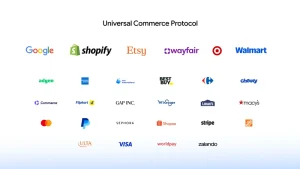
UCP gives AI agents and retail systems a common way to communicate, removing the need for separate integrations for each agent or platform.
UCP has been developed in collaboration with major retailers and platforms such as Shopify, Etsy, Wayfair, Target, and Walmart.
It also aligns with existing protocols, including Agent2Agent, Agent Payments Protocol, and Model Context Protocol.
More than 20 additional companies across payments, e-commerce, and retail have endorsed the standard, indicating broad industry interest in a unified approach.
Buying Without Leaving the AI Experience
One of the first consumer-facing changes enabled by UCP will be a new checkout option inside Google’s AI Mode in Search and the Gemini app.
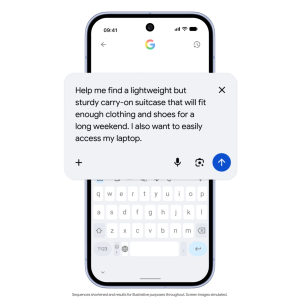
Eligible U.S. retailers will soon allow shoppers to complete purchases while they are still researching products, without redirecting them to an external site.
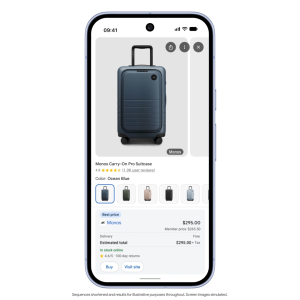
Transactions will use Google Pay, drawing on payment and shipping details already saved in Google Wallet. Support for PayPal is expected to follow.
Retailers remain the seller of record and can tailor the integration to match their operational needs. Google says this approach helps capture sales that might otherwise be lost to abandoned carts.
Additional features such as loyalty rewards, related product discovery, and global availability are planned for future updates.
A Branded AI Agent for Direct Customer Conversations
Google is also rolling out Business Agent, a branded AI assistant that allows shoppers to chat directly with retailers within Search.
The tool functions like a digital sales associate, answering questions in the retailer’s own tone and helping shoppers make decisions at critical moments.
Business Agent launches with retailers including Lowe’s, Michael’s, Poshmark, and Reebok. Eligible merchants in the U.S. can activate and manage the agent through Merchant Center.
Over time, retailers will be able to train the agent using their own data, gain insight into customer behavior, surface relevant offers, and enable direct purchases within the conversation itself.
Rethinking Product Data for Conversational Discovery
As shoppers describe needs in natural language rather than keywords, Google is expanding the type of product information retailers can provide.
Dozens of new data attributes are being added to Merchant Center to support discovery across AI Mode, Gemini, and Business Agent
These attributes include answers to common questions, compatible accessories, and substitute options. They are designed to work alongside existing product feeds, giving AI systems better context when matching products to shopper intent.
Google plans to roll out these features gradually, starting with a small group of retailers.
Direct Offers Target High-Intent Moments
To help retailers convert interest into purchases, Google is introducing Direct Offers, a new Google Ads pilot within AI Mode.
This feature allows advertisers to present exclusive deals, such as limited discounts, to shoppers who appear ready to buy
Retailers set up offers in their campaign settings, and Google’s AI decides when an offer is relevant enough to show.
The initial focus is on discounts, with plans to expand into other incentives such as free shipping and bundled products.
Brands including Petco, e.l.f. Cosmetics, Samsonite, Rugs USA, and Shopify merchants are already involved in early testing.
Why This Matters for Retailers
These updates signal a shift in where and how purchasing decisions are finalized.
Discovery, conversation, and checkout are increasingly happening within AI-powered interfaces.
Retailers that adapt their data, customer engagement, and promotional strategies may be better positioned as AI agents become a common entry point to shopping.
Useful Steps Retail Teams Can Take Now
Retailers can start by reviewing their product feeds to ensure they answer real customer questions, not only search terms.
Brands eligible for Business Agent should define how their voice and expertise come across in conversation.
Advertisers testing Direct Offers may want to focus on high-intent situations rather than broad discounts, using the tool to support conversion rather than replace brand value.
Key Takeaways
- Google has launched the Universal Commerce Protocol as an open standard for agent-led shopping.
- Checkout will soon happen directly inside Google’s AI experiences for eligible retailers.
- Business Agent enables branded, conversational shopping on Search.
- Merchant Center is expanding to support richer, question-based discovery.
- Direct Offers aim to close sales by showing timely deals during buying moments.

Zulekha
AuthorZulekha is an emerging leader in the content marketing industry from India. She began her career in 2019 as a freelancer and, with over five years of experience, has made a significant impact in content writing. Recognized for her innovative approaches, deep knowledge of SEO, and exceptional storytelling skills, she continues to set new standards in the field. Her keen interest in news and current events, which started during an internship with The New Indian Express, further enriches her content. As an author and continuous learner, she has transformed numerous websites and digital marketing companies with customized content writing and marketing strategies.
