
Google has appealed the US court ruling that labeled its search business a monopoly, warning that proposed remedies would require sharing sensitive search infrastructure and user data in ways that could weaken spam defenses, expose private behavior, and reshape how search quality is maintained.
Google filed its appeal alongside new court documents that outline why it believes parts of the proposed remedies would cause serious harm.
The filings include sworn statements from Elizabeth Reid, Google’s Vice President and Head of Search, and Jesse Adkins, Director of Product Management for Search and Ads Syndication.
The company takes particular issue with requirements related to mandatory data disclosures and search result syndication, stating that these measures would compel Google to share internal systems and datasets that were built for internal use and security, not external distribution.
What Data Google Is Being Asked to Share
Under the proposed remedies, Google would be required to provide competitors with detailed information from its web search index.
This includes unique identifiers for each indexed document, mappings between identifiers and URLs, crawl history timestamps, spam scores, and device-type indicators.
Google argues that this information goes beyond structural transparency and instead exposes how it evaluates importance, freshness, and trust across billions of web pages.
In my view, this is where the remedy risks crossing from promoting competition into revealing operational judgment that competitors did not independently develop.
How Google Explains Its Search Index
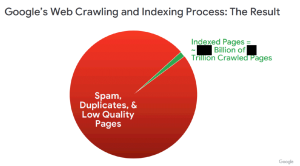
In the affidavits, Google outlines how its search index is built through multiple stages.
The company crawls the open web, applies internal quality and freshness signals, annotates pages for duplication and spam, and then organizes content into tiers based on expected user demand and update frequency.
Why Spam Signals Are a Core Objection
A central argument in Google’s appeal focuses on the disclosure of spam scores associated with indexed pages.
According to the filings, Google’s ability to reduce spam relies heavily on keeping detection methods and evaluations confidential.
If spam scores were accessed through data leaks or breaches, Google says attackers could identify pages considered low risk, compromise those sites, and replace legitimate content with deceptive material.
The company says that this would lead to more spam appearing in search results and reduce user trust in the reliability of search responses.
User Data and Internal Models Raise Privacy Issues
The appeal also challenges remedies that would require sharing user-side data used in internal systems such as GLUE and RankEmbed. This data includes search queries, location, time of search, clicks, and how users interact with results and search features.
Google states that the GLUE model alone incorporates more than thirteen months of search logs, including the order of results shown to users and how they responded.
The company argues that sharing this information would expose sensitive behavioral patterns and introduce privacy risks that extend beyond competition concerns.
Potential Impact on the Wider Web
Although the appeal centers on Google’s obligations, the company argues that the consequences would affect the broader search ecosystem.
Weakened spam defenses or exposed prioritization signals could make it easier for low-quality content to compete with legitimate publishers by imitating known thresholds rather than earning trust.
Google positions its appeal as an attempt to preserve search reliability while navigating regulatory oversight that does not inadvertently create new forms of abuse.
What Publishers Should Watch Closely
Publishers are not directly involved in the case, but the outcome could influence how search systems evolve.
Greater exposure of internal signals may encourage manipulation over substance, making long-term visibility more challenging for sites that rely on quality, originality, and credibility.
For publishers, the dispute reinforces the importance of building content strategies that remain resilient even as search platforms face structural and regulatory change.
Key Takeaways
- Google’s appeal targets data disclosure and search syndication requirements
- The company says index data would reveal internal prioritization logic
- Spam score exposure could make manipulation easier at scale
- User interaction data sharing raises privacy and security concerns
- The outcome could influence search quality for publishers and users

Zulekha
AuthorZulekha is an emerging leader in the content marketing industry from India. She began her career in 2019 as a freelancer and, with over five years of experience, has made a significant impact in content writing. Recognized for her innovative approaches, deep knowledge of SEO, and exceptional storytelling skills, she continues to set new standards in the field. Her keen interest in news and current events, which started during an internship with The New Indian Express, further enriches her content. As an author and continuous learner, she has transformed numerous websites and digital marketing companies with customized content writing and marketing strategies.
