
Google told ADWEEK that it is considering introducing ads into AI Mode, a new AI-powered search feature designed to answer complex questions in a conversation-like way.
Unlike traditional search, where users click links to find information, AI Mode delivers in-depth responses within the search itself.
While ads are not yet available in AI Mode, Google plans to explore integrating them in the future, similar to how it has done with AI Overviews.
But will advertisers see success, or will they struggle to drive engagement?
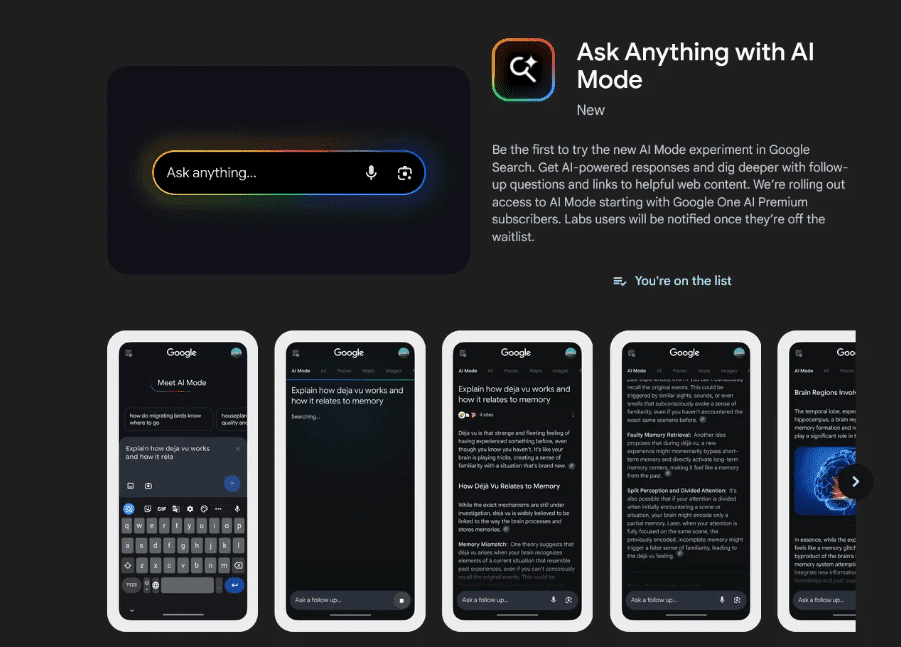
What Is AI Mode and Why Does It Matter?
AI Mode is Google’s latest search innovation, capable of running multiple searches at once to generate detailed, relevant responses.
Rather than providing a simple list of links, it engages users in a conversation, allowing them to refine queries and receive more personalized answers.
Although ads aren’t currently part of AI Mode, Google has expressed interest in bringing them into the feature.
The company plans to use insights from AI Overviews—a feature that integrates AI-generated responses into search results—to inform how advertising will work in this new format.
How AI Overviews Paved the Way
Since October, Google has included ads within AI Overviews, pulling content from existing Search and Shopping campaigns.
These ads appear below AI-generated responses under a “Sponsored” label and have been met with positive feedback.
Given this success, Google sees AI Mode as the next step. However, since AI Mode operates differently—offering a more interactive and extended search experience—advertisers are questioning whether the transition will be just as effective.
Advertisers’ Concerns: Will AI Mode Ads Work?
While AI Overviews ads seem promising, AI Mode presents new challenges. Because it’s designed to keep users engaged within the conversation, advertisers worry that fewer people will click on ads compared to traditional search results.
Melissa Mackey, head of paid search at Compound Growth Marketing, acknowledges the potential but remains cautious.
She believes that AI Overviews ads work well because they align with user intent, but AI Mode could feel more intrusive. “Advertisers will need to get creative to capture attention and pull users away from the conversation,” she warns.
Navah Hopkins, an executive at pay-per-click platform Optmyzr, shares similar concerns. She predicts lower click-through rates (CTR) in AI Mode since users might receive all the information they need without leaving the chat.
Additionally, AI-driven search results could be classified as premium inventory, leading to higher cost-per-click (CPC) rates and potentially lower returns on ad spend (ROAS).
A Shift in Search Advertising
Google’s AI Mode represents a fundamental shift in how search advertising works. Traditionally, ads have relied on users clicking links to visit external websites. AI Mode, however, provides direct answers, potentially reducing ad interaction.
If Google can integrate ads into AI Mode seamlessly, it could open new opportunities for advertisers. But if the ads feel intrusive or fail to drive conversions, brands may hesitate to invest heavily in this new approach.
What Advertisers Need to Know
For brands preparing for AI-driven search, here are five key takeaways:
- Creativity Will Be Key – Standard ads may not work well in AI Mode. Marketers must develop engaging, conversational ads that fit within AI interactions.
- Expect Higher Costs – AI Mode ads may be classified as premium placements, increasing CPCs.
- Click-Through Rates Could Drop – Users may not click as often if AI Mode provides complete answers upfront.
- Search Behavior Is Changing – Advertisers must shift from traditional keyword-based targeting to more intent-driven strategies.
- Data Will Drive Success – Since AI Mode ads are still experimental, advertisers must closely monitor performance and adapt accordingly.
The Future of AI-Driven Ads
With Google enhancing AI Mode, the future of search advertising remains uncertain.. Should AI-driven ads effectively boost engagement, they have the potential to revolutionize digital marketing. Conversely, if these ads do not meet expectations, Google may have to revise its approach.
In the meantime, brands ought to stay flexible, test various ad formats, and monitor essential performance metrics. It is evident that AI is transforming search, and businesses need to adapt accordingly.

Dileep Thekkethil
AuthorDileep Thekkethil is the Director of Marketing at Stan Ventures, where he applies over 15 years of SEO and digital marketing expertise to drive growth and authority. A former journalist with six years of experience, he combines strategic storytelling with technical know-how to help brands navigate the shift toward AI-driven search and generative engines. Dileep is a strong advocate for Google’s EEAT standards, regularly sharing real-world use cases and scenarios to demystify complex marketing trends. He is an avid gardener of tropical fruits, a motor enthusiast, and a dedicated caretaker of his pair of cockatiels.
