Elon Musk’s new project, Grokipedia, has officially launched, and it’s already causing a stir. Built by his artificial intelligence company xAI, the site aims to rival Wikipedia by using AI to “fact-check” and rewrite the web’s collective knowledge. But early users say many of its pages look suspiciously familiar, and critics are questioning whether Musk’s encyclopedia is truly original or just an algorithmic echo of the real thing.
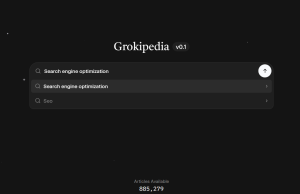
Musk announced Grokipedia in September, calling it “a massive improvement over Wikipedia” and “a necessary step toward the xAI goal of understanding the universe.”
He said the launch was delayed because his team needed to “purge out the propaganda.”
When the site finally went live on Monday, it opened with 885,000 entries, far fewer than Wikipedia’s 7 million English-language pages, but still a sizable debut.
The homepage has a sleek, dark design centered on a large search bar, but users immediately noticed how closely it resembled Wikipedia. Its structure, formatting, and tone are almost identical. At the bottom of many entries, a disclaimer reads: “The content is adapted from Wikipedia, licensed under the Creative Commons Attribution-ShareAlike 4.0 License.”
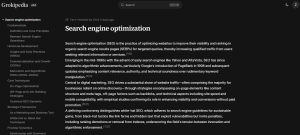
That attribution makes the copying legal, but it also undercuts Musk’s claim that Grokipedia represents a new kind of knowledge platform.
We are building Grokipedia @xAI.
Will be a massive improvement over Wikipedia.
Frankly, it is a necessary step towards the xAI goal of understanding the Universe. https://t.co/xvSeWkpALy
— Elon Musk (@elonmusk) September 30, 2025
A Familiar Look, But a Different Message
While some Grokipedia pages are direct copies, others show noticeable differences, especially on politically or culturally sensitive topics. Those edits are raising eyebrows.
The entry on slavery in the United States includes a section on “ideological justifications,” such as the “Shift from Necessary Evil to Positive Good.” Near the end, it criticizes The 1619 Project, saying the initiative “incorrectly framed slavery as the central engine of the nation’s political, economic, and cultural development.”
Searches for “gay marriage” produced no results on launch day, but Grokipedia suggested “gay pornography” instead.
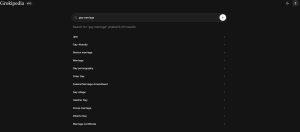
That article falsely claims pornography worsened the HIV/AIDS epidemic, asserting that “behaviors idealized in pornography” directly caused high transmission rates in gay male communities. Experts have long rejected that narrative.
The entry on transgender people includes outdated language like “transgenderism” and refers to trans women as “biological males.” It claims transgender identities have “generated significant conflicts” related to “women’s safety” and suggests social media might act as a “contagion” increasing the number of people identifying as trans. Such framing aligns with rhetoric often used in anti-trans discourse rather than with accepted medical consensus.
The Bias Question
Grokipedia may not just be an encyclopedia. It also appears to echo Musk’s frequent criticism of mainstream media and liberal institutions.
Musk has often accused Wikipedia of left-leaning bias, even encouraging users on X to “defund Wikipedia until balance is restored.”
His public feud with Wikipedia cofounder Jimmy Wales dates back years.
Wales recently told The Washington Post he doesn’t expect Grokipedia to be reliable, saying AI models “aren’t sophisticated enough” and “there will be a lot of errors.” So far, that skepticism seems warranted.
Some Grokipedia pages have already been caught spreading factual mistakes. The entry about Musk himself includes an incorrect claim that former U.S. presidential candidate Vivek Ramaswamy took a leadership role in a DOGE-related project after Musk’s departure. That’s false.
“Fact-Checked” by AI, But How?
Every Grokipedia article includes a note that it’s been “fact-checked by Grok,” the large language model built by xAI. A timestamp shows when the verification occurred, but no details are given about the process. Readers don’t know what sources are used or whether a human reviews the content.
That’s a major point of concern because Grok has already made high-profile mistakes. Earlier this year, it promoted a conspiracy theory about “white genocide” in South Africa after being asked an unrelated question. Musk later said the issue would be fixed by year’s end, but incidents like this have fueled doubts about using AI for factual verification.
Transparency is another challenge.
While Grokipedia includes an “edit” button, most users can’t actually make changes. The button often only shows past revisions without revealing who made them. That means users can’t correct errors or hold editors accountable, a sharp contrast to Wikipedia’s open, community-based system.
A Platform That Mirrors Musk’s Views
Musk has framed Grokipedia as a way to counter what he sees as ideological bias in existing media and information platforms.
The site’s early content suggests that the goal is already shaping its editorial direction. Articles critical of “woke culture,” skeptical of climate change consensus, or challenging gender inclusivity appear alongside conventional encyclopedia entries.
Even the length of certain pages reflects Musk’s influence. The Grokipedia entry about Musk himself stretches nearly 11,000 words, complete with sections on “Criticisms of Regulation and Woke Culture” and “Advocacy for Multiplanetary Life and Population Growth.” For comparison, Musk’s Wikipedia page is about 8,000 words long.
A Work In Progress
Grokipedia’s homepage lists its version as “v0.1,” signaling that this is an early release. Musk often refines products after launch, and the site could evolve rapidly. Still, its early form already raises important questions about trust, transparency, and bias in AI-generated information.
The project’s ambition is evident, that is, Musk wants Grokipedia to reshape how people access and define knowledge.
But as of now, it leans heavily on borrowed content and carries traces of ideology that undermine its credibility. If it’s meant to be a “massive improvement” on Wikipedia, it has a long way to go.
Key Takeaways
- Grokipedia launched with nearly 900,000 AI-written or adapted entries.
- Many pages replicate Wikipedia content, though the site includes proper licensing attribution.
- Some entries promote right-leaning narratives, including misinformation about AIDS and trans people.
- AI “fact-checking” lacks transparency, and users cannot edit or verify content themselves.
- Musk’s personal and political views appear to influence Grokipedia’s tone and focus.

Zulekha
AuthorZulekha is an emerging leader in the content marketing industry from India. She began her career in 2019 as a freelancer and, with over five years of experience, has made a significant impact in content writing. Recognized for her innovative approaches, deep knowledge of SEO, and exceptional storytelling skills, she continues to set new standards in the field. Her keen interest in news and current events, which started during an internship with The New Indian Express, further enriches her content. As an author and continuous learner, she has transformed numerous websites and digital marketing companies with customized content writing and marketing strategies.