If you’ve been in digital marketing for a while, you know search advertising has always been a moving target. We’ve lived through the keyword match wars, the rise of Shopping campaigns, and the era of Performance Max automation. But what Google is doing now with AI Mode is a fundamental rewrite of how search itself works. And if you’re still treating it like a “wait-and-see” experiment, you’re already behind.
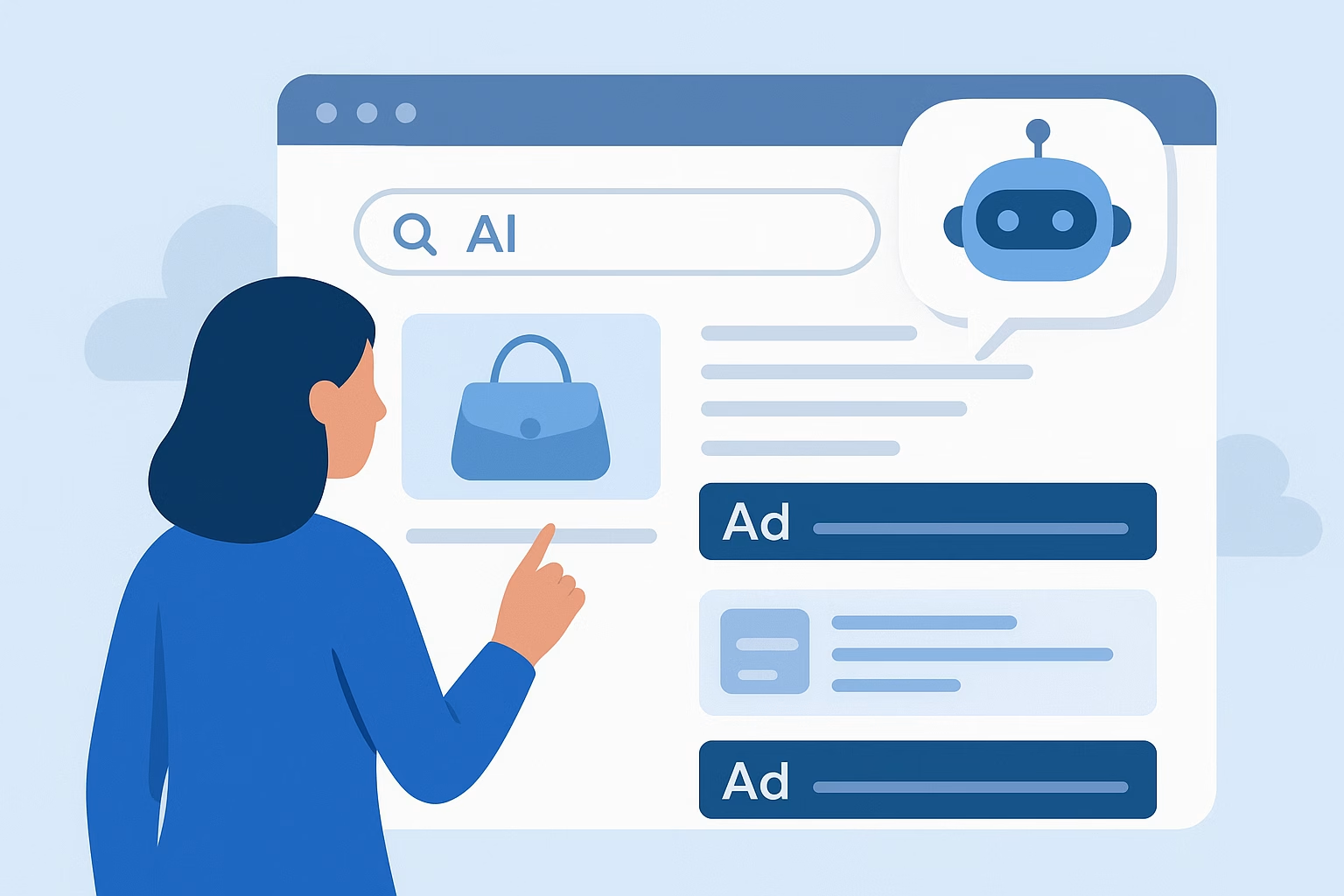
What’s Really Happening in AI Mode
Think about how we used to search. Type a keyword, scan a page of blue links, click one (or maybe three), and go from there. That mental model is gone.
In AI Mode, Google’s engine builds a multi-step conversation with the user. Instead of bouncing between links, people refine, compare, and decide without leaving Google’s ecosystem.
For example, Google is testing a new shopping feature inside Chrome’s AI Mode, showing brief product summaries when users click on individual listings. The test, visible only intermittently, illustrates how Google aims to make shopping faster and more self-contained within search.
Because users are staying inside Google for answers, the way ads appear is also changing. They don’t sit off to the side. They’re pulled directly into these conversations, sometimes showing above the AI summary, sometimes embedded right inside it.
Google calls it “shortening the path from discovery to decision.” This means fewer clicks leaving Google, tighter control of user journeys, and a fresh battleground for advertiser budgets.
Why This Shift Is Bigger
Here’s what the data already shows:
- Zero-click searches now make up almost 70% of all queries.
- When AI Overviews appear, top-ranking organic traffic can drop by 80% (Authoritas).
- Traditional click-through falls from 15% to just 8% when an AI summary is present (Pew Research).
So, if you’ve been relying on organic clicks to balance rising CPCs, that cushion is shrinking fast. Paid is no longer optional; it’s the only lever left in some industries.
Honestly, this is not just a matter of user experience. Microsoft, OpenAI, and Perplexity are already testing ads within AI search tools.
Google has no option but to respond aggressively. Ads inside AI Mode can be seen as Google’s way of adapting to survive.
The New Ad Landscape: Costs, Auctions, and Creative
Here’s the thing: AI Mode isn’t a standalone campaign type. Ads are pulled from Search, Shopping, Performance Max, and App campaigns, but you get no visibility into which impressions actually come from AI Mode.
That means:
- Bigger brands win first. Broad match, massive budgets, and deep product feeds get more exposure. Smaller advertisers risk being squeezed out.
- CPCs are under pressure. Scarcer ad space = fiercer bidding. If you’ve seen CPC inflation over the past year, buckle up — this isn’t temporary.
- Conversational ads outperform blunt CTAs. “See how much you could save in minutes” works better in an AI flow than “Sign up today.” It feels like part of the journey, not an interruption.
And don’t ignore Google’s testing of embedded actions (price tracking, virtual try-ons, cost calculators) all inside AI journeys. This hints at a gradual shift from CPC to cost-per-action pricing.
The Blind Spot No One Likes to Talk About
The elephant in the room? Well, it’s transparency.
Right now, you can’t see AI Mode performance broken out in Google Ads or Search Console. Everything is blended into existing campaigns. That leaves marketing leaders explaining to CFOs why spend is rising while reporting feels like a black box.
Some brands are already fighting back:
- Building marketing mix models to estimate AI contributions.
- Tightening CRM pipelines to connect spend with real customer outcomes.
- Tracking mid-funnel events (like demos, downloads, or lead quality) to see if AI-driven impressions are nudging users toward conversion.
However, until Google provides us with AI-specific reporting, we’re flying with partial instruments.
Don’t Overlook the Brand Safety Risk
You’ve probably seen the memes about Google’s AI telling people to put glue on pizza or eat rocks. Funny, yes. But for advertisers, not so much.
If your brand appears next to an AI-generated mistake, the reputational fallout is real. And regulators are paying attention:
- The FTC is watching how AI blurs the line between answers and ads.
- The EU AI Act is poised to demand stricter labeling for AI-generated content and advertising.
That means brand safety protocols — long standard in Display — now belong in search strategies too.
What Smart Marketers Are Doing Right Now
Here’s how the leaders are preparing instead of waiting:
- Design for journeys, not keywords. AI Mode thrives on refinement. Don’t just target “compare insurance rates.” Anticipate the next steps, like “how to switch providers” or “what’s best for families.”
- Set guardrails for automation. Yes, Performance Max and broad match get you into AI Mode — but use negatives, audience signals, and clean feeds to protect efficiency.
- Elevate your assets. Schema markup, entity-rich product feeds, structured data — these aren’t nice-to-haves. They’re your ticket into AI-driven surfaces.
- Measure deeper than last-click. Last-click CPA won’t cut it. Track assisted conversions, lead quality, and sales velocity to understand AI’s real impact.
- Experiment with conversational creative. Ads should feel like a natural next step in a dialogue. Test softer CTAs that align with user intent.
- Create brand safety frameworks. Set thresholds, monitor placements, and push back on Google when needed. Don’t outsource trust.
The Bottom Line
Paid search has relied on transparency, predictable intent, and measurable outcomes. AI Mode shakes all these pillars.
The truth is that search across the industry is converging on AI-first, ad-embedded journeys.
The brands that will win aren’t the ones waiting for perfect reporting. They’re the ones reframing PPC as journey management, not keyword bidding. They’re doubling down on first-party data, building their own attribution systems, and rewriting creative for an AI world.
Because in this new era, ads don’t just sit beside the answers. Ads are the answers.

Dileep Thekkethil
AuthorDileep Thekkethil is the Director of Marketing at Stan Ventures, where he applies over 15 years of SEO and digital marketing expertise to drive growth and authority. A former journalist with six years of experience, he combines strategic storytelling with technical know-how to help brands navigate the shift toward AI-driven search and generative engines. Dileep is a strong advocate for Google’s EEAT standards, regularly sharing real-world use cases and scenarios to demystify complex marketing trends. He is an avid gardener of tropical fruits, a motor enthusiast, and a dedicated caretaker of his pair of cockatiels.