As per a recent July 2025 report by Adobe Express, a powerful shift is taking place in how people access information online and it centers around ChatGPT.
ChatGPT is now being widely adopted as a primary search engine alternative.
The data from Adobe’s survey of 1,000 U.S. respondents including 800 consumers and 200 marketers or small business owners reveals that this change is no longer speculative. It is already here.
So the big question is: Is your business ready to show up in AI conversations the way it used to show up in Google search?
Why Are People Turning to ChatGPT Instead of Google?
The convenience and speed of conversational AI play a big part in this shift. ChatGPT delivers answers in a clean, distraction-free interface that minimizes clicks and ads.
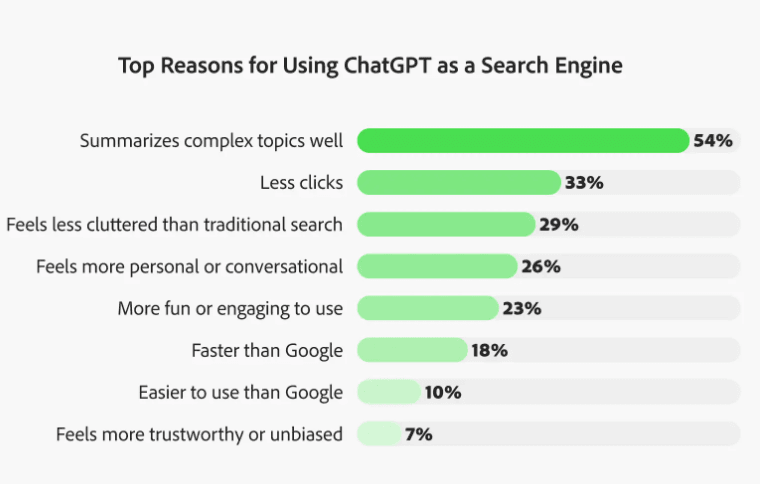
According to the report, 54% of users prefer ChatGPT because it can summarize complex topics quickly which makes it ideal for learning or understanding nuanced subjects.
A third of those surveyed also appreciated that ChatGPT involves fewer steps to reach answers, compared to navigating multiple links on traditional search engines.
Whether it’s “How does inflation work?” or “Give me 10 side hustle ideas I can start this weekend,” ChatGPT provides immediate and readable responses.
This real-time dialogue and ability to tailor responses on the fly give users a sense of personalization.
In fact, 77% of those surveyed felt that ChatGPT’s answers were more personalized than Google’s, particularly when it came to creative or open-ended questions.
These features make AI search not just an alternative but often a better fit for the way modern users want to find and consume information.
What Are People Using ChatGPT For?
The Adobe report broke down user behavior and found that people are using ChatGPT most for everyday questions (55%) and creative or brainstorming tasks (53%).
These include content ideation, meal planning, trip outlines, study help and even basic coding.
Interestingly, 21% of respondents said they use ChatGPT for financial advice, while 13% use it for online shopping-related searches.
While the latter might still be dominated by e-commerce search engines and platforms like Google Shopping, the fact that a growing number of users are even starting their shopping journeys on ChatGPT is significant.
Additionally, over a third (36%) of all users said they discovered a new brand or product through ChatGPT.
This statistic becomes even more compelling when we break it down by generation like 47% of Gen Z and 37% of Gen X reported finding new products or services via AI search.
In short, ChatGPT is not just a question-answering tool. It is becoming a gateway to brand discovery and commercial intent.
ChatGPT and Trust: How Does It Compare to Google?
While Google has long been the most trusted source for online answers, Adobe’s research suggests that trust in AI tools is steadily growing.
Three in 10 users now say they trust ChatGPT more than traditional search engines.
That may not sound sustainable at first glance but consider the trajectory. Just a year or two ago, AI-generated answers were still viewed with skepticism by many mainstream users.
Now, 30% of people not only use ChatGPT—they prefer and trust it.
This trust is fueled by the AI’s ability to summarize information, avoid clickbait and give users an uninterrupted experience.
As users get more comfortable with ChatGPT’s outputs and as models continue to improve in accuracy this trust gap could continue to narrow or even reverse.
How Are Marketers and Small Businesses Responding?
The shift in consumer behavior is not going unnoticed.
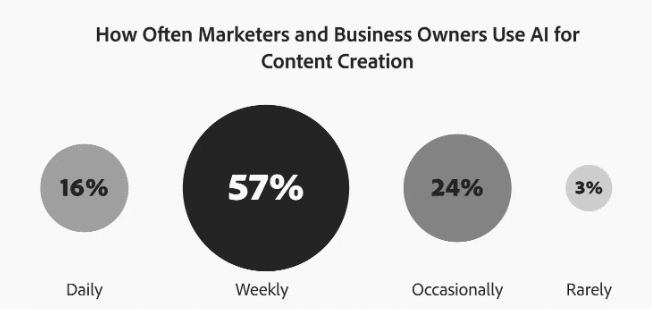
Adobe’s report reveals that 47% of marketers and small business owners already use ChatGPT to promote their products and services.
Most are using the tool for tasks like:
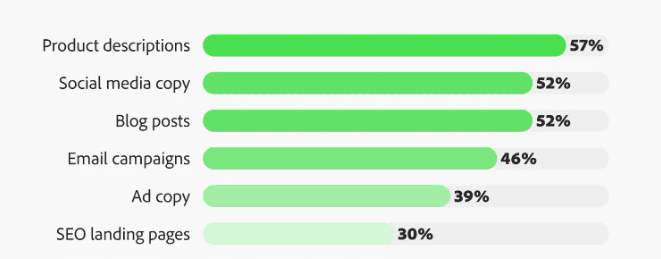
- Writing product descriptions
- Generating blog content
- Crafting social media captions
- Drafting marketing copy
But the bigger shift lies ahead: Two out of three business owners plan to increase their focus on AI visibility in 2025.
That means they are actively thinking about how to optimize for tools like ChatGPT and Gemini in the same way they once focused solely on ranking high in Google search results.
In fact, 76% of marketers say it is essential for their brand to show up in AI-generated answers in 2025.
This is again a huge change in mindset and a clear indicator that AI visibility is becoming a core part of digital strategy.
What Kind of Content Performs Well in AI Search?
As AI-driven platforms shape how content is surfaced and recommended, not all formats perform equally.
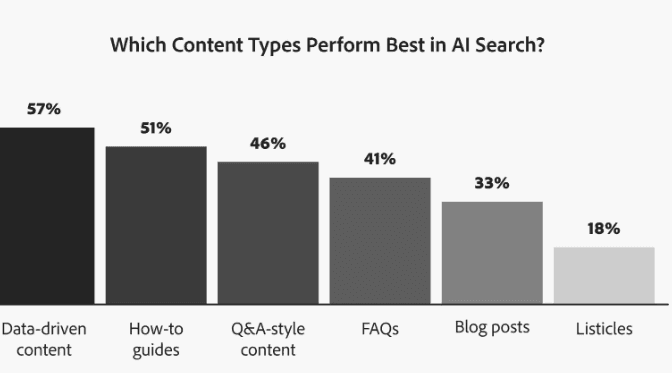
According to Adobe’s findings, 57% of marketers reported that data-driven content performs best, while 51% said how-to guides are their top performers.
This makes sense when you consider ChatGPT’s strengths: it works best on structured, factual, well-organized information that can be condensed into helpful, digestible answers.
Therefore, content that is educational, solution-focused or step-by-step in nature is more likely to be quoted or recommended by the AI
It also signals that content quality still matters if not more than ever.
Businesses need to ensure their material is well-written, up to date, trustworthy and easy for AI models to parse and present clearly.
What Does This Mean for the Future of Search?
Adobe’s report concludes with a clear message: the way we search is evolving, and fast. People are no longer just typing keywords into a box and clicking through links and they are having conversations with AI.
They are getting real-time answers, discovering products and forming opinions—all within a single prompt.
It is not about abandoning Google. It is about expanding your presence to wherever your customers are searching and today, that increasingly includes ChatGPT.
Is ChatGPT a Threat or an Opportunity?
That depends entirely on how you respond.
Yes, ChatGPT is changing how we search. But it is not just disrupting Google but expanding the entire ecosystem of digital discovery.
The brands that adapt now will gain first-mover advantage in AI-powered spaces. Those that ignore it risk disappearing from the conversation altogether.
Think about it: If someone asks ChatGPT for “the best CRM for solopreneurs,” will it mention yours?
Why It Matters More Than Ever
In a world where search is growing into conversation, your brand needs to become part of the dialogue.
It is no longer just about being found.
It’s about being recommended by the most trusted digital assistant in your customer’s pocket.
Let us see where this goes. But one thing is clear: AI search is not the future but already here.

Dileep Thekkethil
AuthorDileep Thekkethil is the Director of Marketing at Stan Ventures, where he applies over 15 years of SEO and digital marketing expertise to drive growth and authority. A former journalist with six years of experience, he combines strategic storytelling with technical know-how to help brands navigate the shift toward AI-driven search and generative engines. Dileep is a strong advocate for Google’s EEAT standards, regularly sharing real-world use cases and scenarios to demystify complex marketing trends. He is an avid gardener of tropical fruits, a motor enthusiast, and a dedicated caretaker of his pair of cockatiels.
