
Meta, the company behind Facebook and Instagram, is making headlines with a controversial decision to abandon its fact-checking program in favor of a new moderation system inspired by X’s “Community Notes.”
While Zuckerberg frames it as a push for free speech and simplicity, many are asking: what’s really behind this decision?
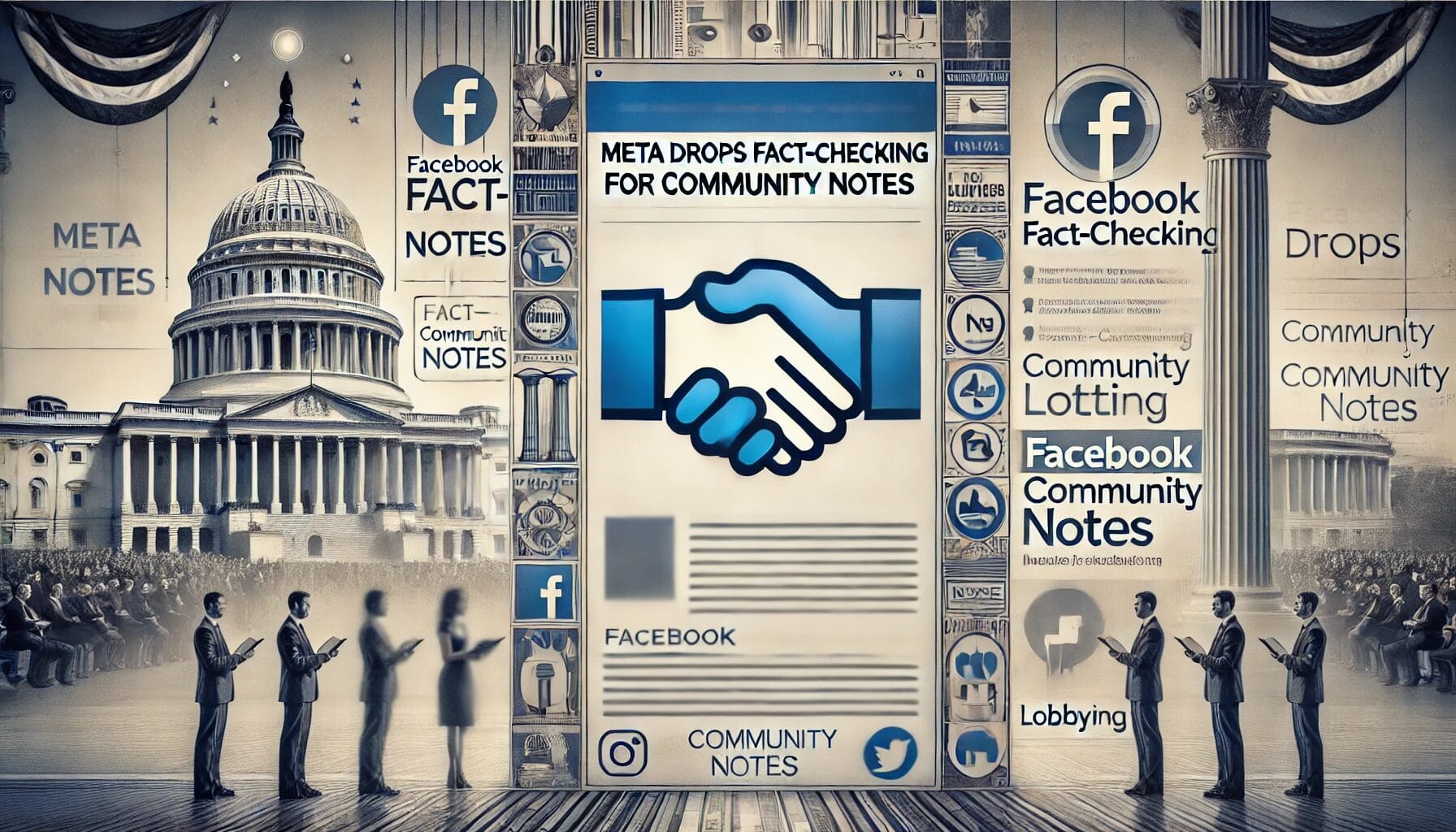
What’s Happening and Why Now?
Meta says it’s ditching its fact-checkers because they’ve become too error-prone and overly restrictive.
Zuckerberg explained, “Our systems make too many mistakes, and it’s too much censorship.” He also highlighted a desire to return to Meta’s original mission of promoting free expression.
But here’s the kicker: this announcement comes at a politically charged moment. With a new administration on the way, some believe Meta is making changes to stay in good graces with the incoming leadership.
A dinner meeting between Zuckerberg and President-elect Trump has fueled speculation. During this meeting, Trump reportedly pushed for a rollback of content restrictions, among other changes. Coincidence? Many aren’t so sure.
What’s the Deal with Community Notes?
Community Notes is a feature that lets users flag posts they think are misleading and add clarifying information.
On paper, it sounds great—people helping each other understand the truth. But there’s a catch: it relies on consensus.
Users with different perspectives must agree on whether a post needs context. On topics like elections or immigration, getting everyone on the same page is easier said than done.
Even on X, where Community Notes has been around for a while, the system struggles. Only a small fraction of flagged posts actually end up with added context.
Now imagine trying to make this work on Meta’s massive platforms, with billions of users. It’s a tall order, to say the least.
A Flip-Flop on Political Content
This isn’t just about fact-checking. Meta is also bringing more political content back into users’ feeds, reversing its earlier stance.
Just a few years ago, Zuckerberg said people were tired of politics dominating their online experience. Meta even introduced tools to let users opt out of seeing political posts altogether.
So, why the change? Critics argue it’s all about politics—specifically, Meta’s relationship with the new administration.
For example, Meta has made leadership changes, appointing figures with strong Republican ties. These shifts suggest a strategic alignment with the political winds rather than a genuine commitment to user preferences.
What Could Go Wrong?
Community Notes is far from perfect, and scaling it to Meta’s enormous audience could lead to an explosion of unchecked misinformation.
Without robust fact-checking, false claims could spread faster than ever. And with more political content back in the mix, users may find themselves wading through heated debates and divisive rhetoric.
Meta says it’s doing this to promote free speech, but critics worry it’s prioritizing business interests over public safety.
Political advertisers and those seeking less-moderated platforms might be thrilled, but many everyday users might not feel the same.
What You Can Do
If you’re a Meta user, these changes will affect how you experience the platform.
Here’s how you can stay ahead:
- Double-Check Information: Don’t take everything at face value—verify claims through reliable sources.
- Use Community Notes Wisely: Participate in the system if you can add valuable context, but approach it critically.
- Adjust Your Settings: Explore options to filter your feed and reduce exposure to political or controversial content.
- Stay Informed: Keep an eye on Meta’s policy updates and how they impact your online experience.
- Speak Up: If you’re concerned about these changes, let Meta know through feedback channels or public forums.
What’s the Bigger Picture?
Meta’s decision isn’t just about changing how it handles posts—it’s part of a larger trend. Social media platforms everywhere are struggling to balance free speech, misinformation, and political pressure.
With Community Notes, Meta is taking a big risk. It could give people the power to add helpful context to posts and make the platform more transparent. Or it could backfire, leading to even more false information spreading unchecked.
Right now, it’s hard to say if this is a good move or a bad one. But one thing is certain: the way we share and consume information online is evolving. It’s up to all of us to stay informed and play our part in shaping a better digital world
Key Takeaways
- Meta is replacing its moderation systems with a user-driven Community Notes feature.
- Meta is reversing its policy to limit divisive political posts.
- The decision coincides with political shifts, raising concerns about Meta’s motivations.
- Scaling Community Notes to Meta’s size could lead to more unchecked falsehoods.
- It’s up to individuals to critically evaluate information and shape their own online experience.

Dileep Thekkethil
AuthorDileep Thekkethil is the Director of Marketing at Stan Ventures, where he applies over 15 years of SEO and digital marketing expertise to drive growth and authority. A former journalist with six years of experience, he combines strategic storytelling with technical know-how to help brands navigate the shift toward AI-driven search and generative engines. Dileep is a strong advocate for Google’s EEAT standards, regularly sharing real-world use cases and scenarios to demystify complex marketing trends. He is an avid gardener of tropical fruits, a motor enthusiast, and a dedicated caretaker of his pair of cockatiels.
