At Ahrefs’ Evolve 2025 event, Product Advisor and Technical SEO expert Patrick Stox explored the ongoing transformation of search. His session, “GEO? AEO? LLMO? What’s with all this AI SEO stuff?”, presented new Ahrefs data revealing how AI assistants are reshaping online visibility, clicks, and user behavior.
Patrick Stox is a familiar name to anyone in technical SEO. He serves as Product Advisor and Brand Ambassador at Ahrefs, contributes as the lead author for the SEO chapter of the Web Almanac 2021, and acted as Technical Review Editor for The Art of SEO (4th Edition).
His Evolve 2025 presentation built on this background, combining community insight with Ahrefs’ massive data set to explain what’s happening to search as AI assistants grow in influence.
The New Search Market: Google Still Dominates, but AI Is Growing
Stox began his presentation with a comparison between traditional search engines and AI assistants.
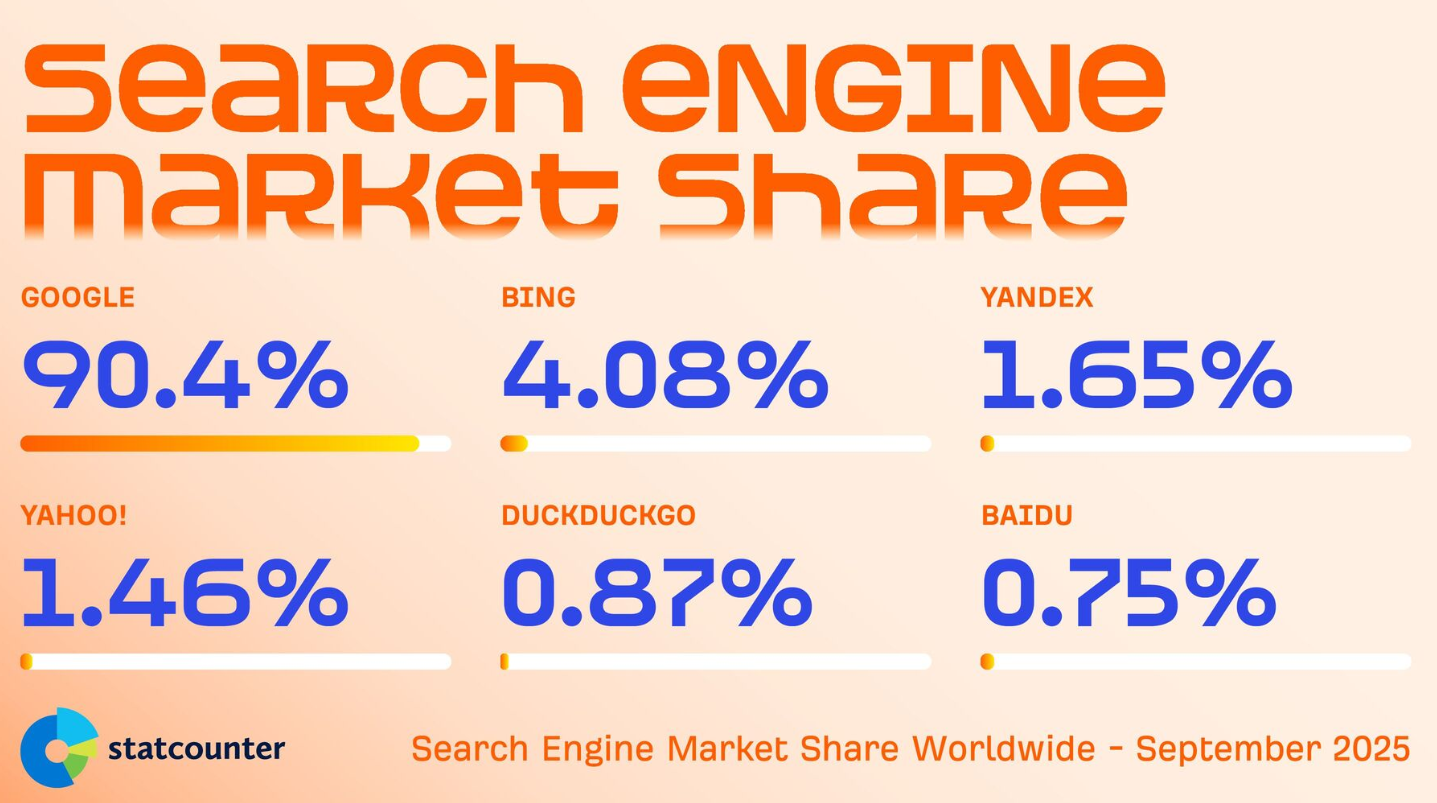
According to Ahrefs’ September 2025 global data, Google continues to dominate search with 90.4% of the total market share, followed by Bing at 4.08%, Yahoo at 1.46%, and Yandex at 1.65%. Other engines, such as DuckDuckGo and Baidu, each hold under one percent.
However, a new set of competitors is emerging on a completely different front, that is, AI assistants.
As of the same period, ChatGPT commands 81.13% of the AI assistant market, followed by Perplexity at 10.82%, Microsoft Copilot at 4.05%, and Google Gemini at 2.82%. Smaller tools such as Claude, Deepseek, and others make up the rest.
These numbers indicate that, although Google still sends the most traffic overall, the way people access information is changing rapidly.
Stox included a quote from Ahrefs’ own Ryan Law on one slide, reminding attendees that “Google still sends far more traffic. And it’s still your best marketing channel.” The point was that AI search does not replace traditional search; it extends it.
AI Traffic Is Rising Rapidly
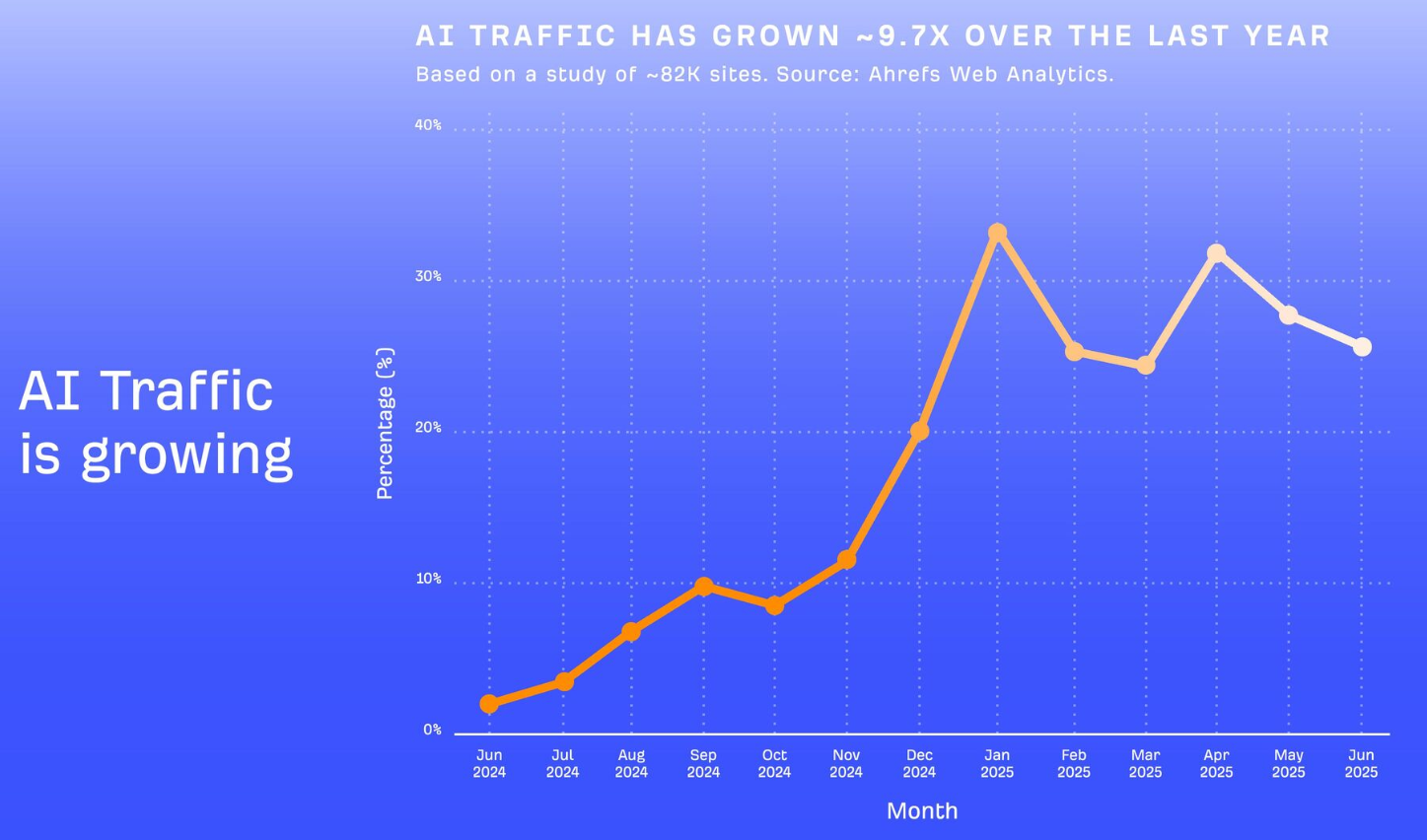
Ahrefs’ Web Analytics data, based on 82,000 sites, showed a dramatic rise in AI-generated traffic.
Over the previous twelve months, AI traffic had grown by approximately 9.7 times. This metric, drawn directly from aggregated Ahrefs data, illustrates how users are increasingly turning to AI interfaces for information retrieval, recommendations, and product discovery.
A separate visualization compared web traffic coming from ChatGPT, Gemini, Perplexity, and other assistants. ChatGPT accounted for the vast majority of AI-related referrals. The trendline in Ahrefs’ chart was steep, indicating that AI-driven discovery is mainstream.
The Great Decoupling
One of the most striking sections of Stox’s presentation was titled “The Great Decoupling.” It referred to the growing separation between impressions and clicks in Google Search Console data.
Ahrefs analyzed roughly 800,000 Google Search Console properties, observing that impressions are increasing while clicks are declining.
The cause, Stox explained through his visuals, lies in Google’s AI Overviews (AIOs). These generative summaries now appear in roughly 19% of search results, based on Ahrefs’ analysis of one million SERPs.
A separate chart showed how the average click-through rate for position #1 had dropped by 34.5% in March 2025. This decline correlates directly with the expansion of AI Overviews, which provide answers directly within search results, reducing the need for users to click through to source sites.
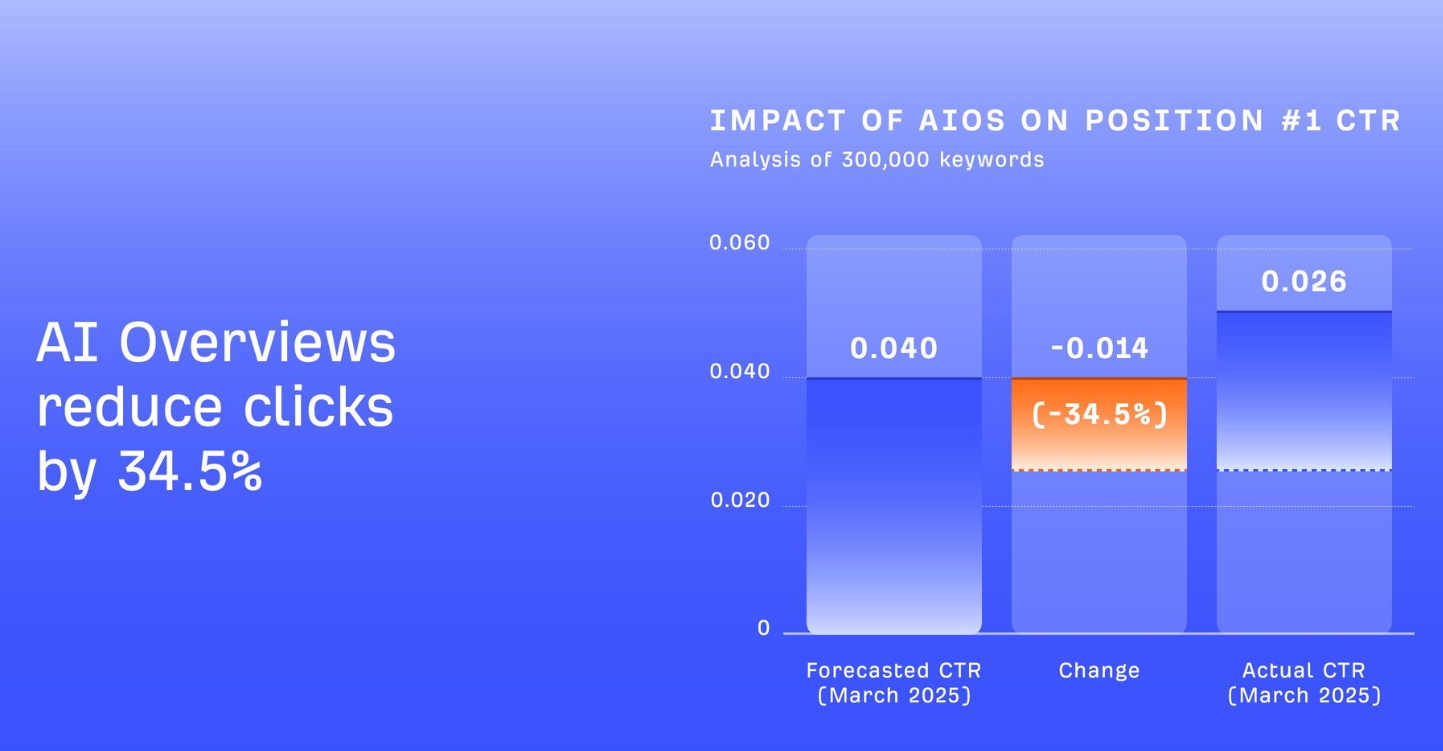
Another line on the slide projected that clicks may eventually fall to 25% of their former levels as AI-generated responses become standard for informational queries. Underneath, Stox included the line:
“AI Overviews reduce clicks by 34.5%. My estimate for the new normal: Clicks will be 25% of what they are.”
How SEOs Are Adapting to New Metrics
The slides suggest that impressions will soon become a more common reporting metric than clicks.
While most SEOs still track clicks, Stox’s data indicated that other performance measures, such as conversions, lifetime value (LTV), and customer acquisition cost (CAC), are becoming equally relevant.
The Quality of AI Search Traffic
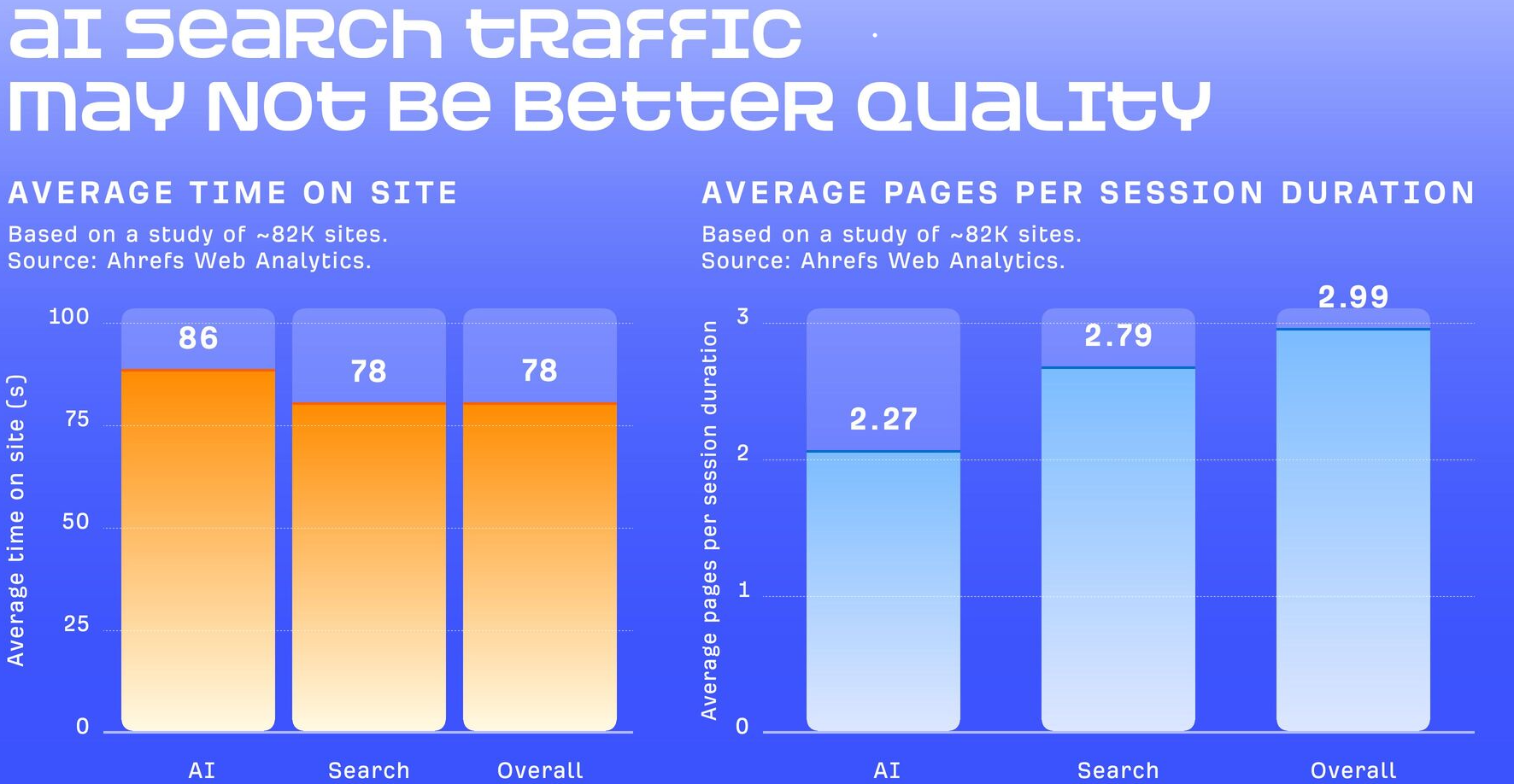
Ahrefs compared AI and traditional search visitors across bounce rate, pages per session, and time on site.
From its sample:
- Average bounce rate: AI (67.8%), Search (63.7%), Overall (62.4%)
- Average pages per visit: AI (2.27), Search (2.79), Overall (2.99)
- Average time on site: AI (86s), Search (78s), Overall (78s)
The conclusion on the slides was:
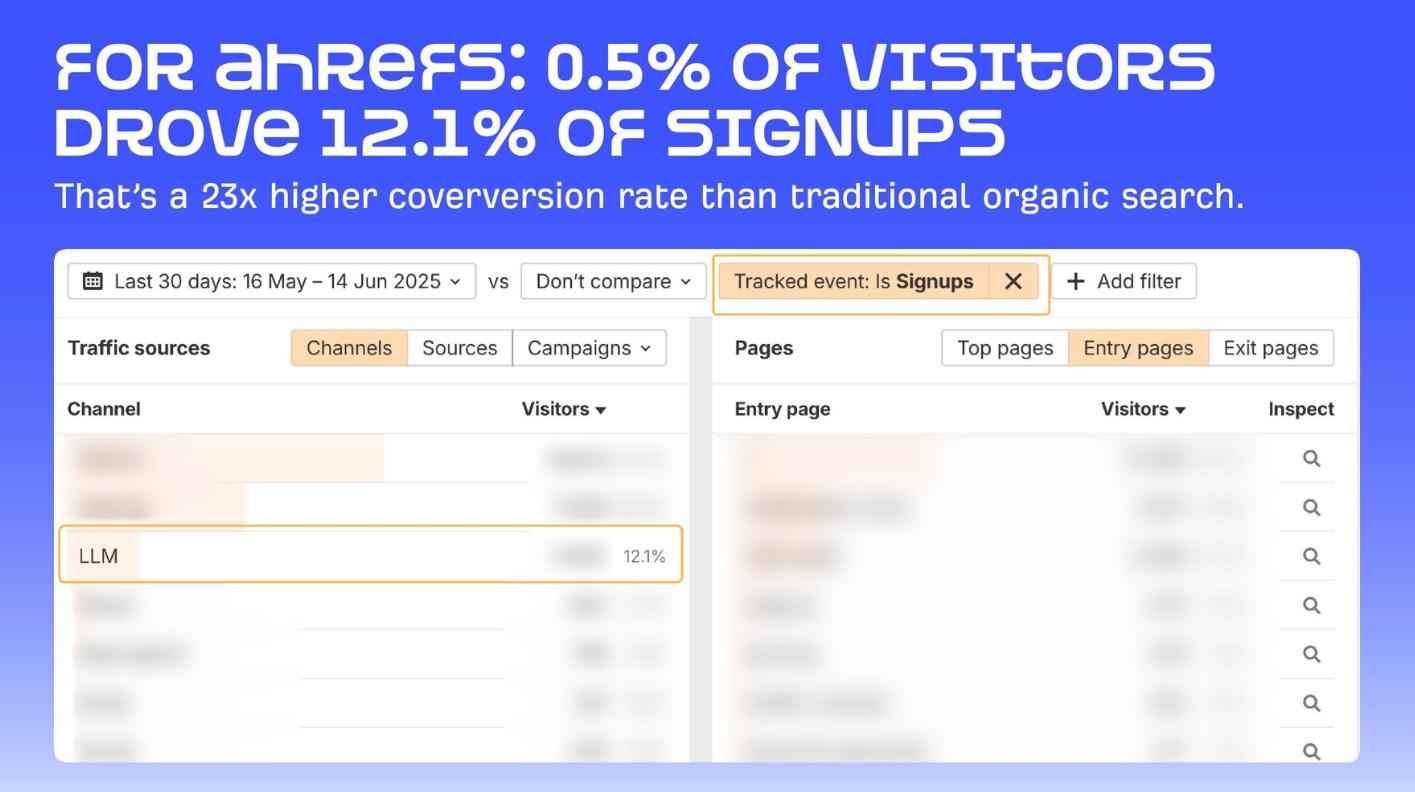
However, another slide showed that Ahrefs’ own site saw AI-driven visitors convert at a 23x higher rate than traditional search visitors, even though only 0.5% of visitors from AI sources produced 12.1% of signups.
AI Traffic Isn’t Mobile-First
Device data in the presentation revealed a sharp divide between AI and organic traffic sources (June 2025):
- AI traffic: 65% desktop, 20.9% smartphone
- Organic traffic: 76.5% smartphone, 20.9% desktop
That suggests AI discovery still happens mostly on desktop platforms, while traditional search remains mobile-heavy.
Content Type and Performance
Ahrefs compared traffic patterns by page type and found that AI assistants perform differently from organic search. Product pages and homepages performed better in traditional search, while informational and data-study pages tended to perform better through AI assistants.
Global Bias and Language Limitations
Ahrefs’ data also showed that international pages perform poorly in AI search. The reason, according to the presentation, is that the international corpus of training data is smaller, and English-language content is more likely to be cited by AI assistants.
However, the slides also noted that translated content has better chances of being cited. One line on the slide stated clearly: “You won’t be cited at all without translated content.”
In other words, creating localized versions of data-driven or research-heavy pages can help brands appear in AI-generated results that rely on source citations.
Brands Dominate in AI Overviews
Ahrefs examined which factors most strongly correlate with appearing in AI-generated search summaries. The top predictor was branded web mentions (0.664 correlation), followed by branded anchor text (0.527) and branded search volume (0.392).
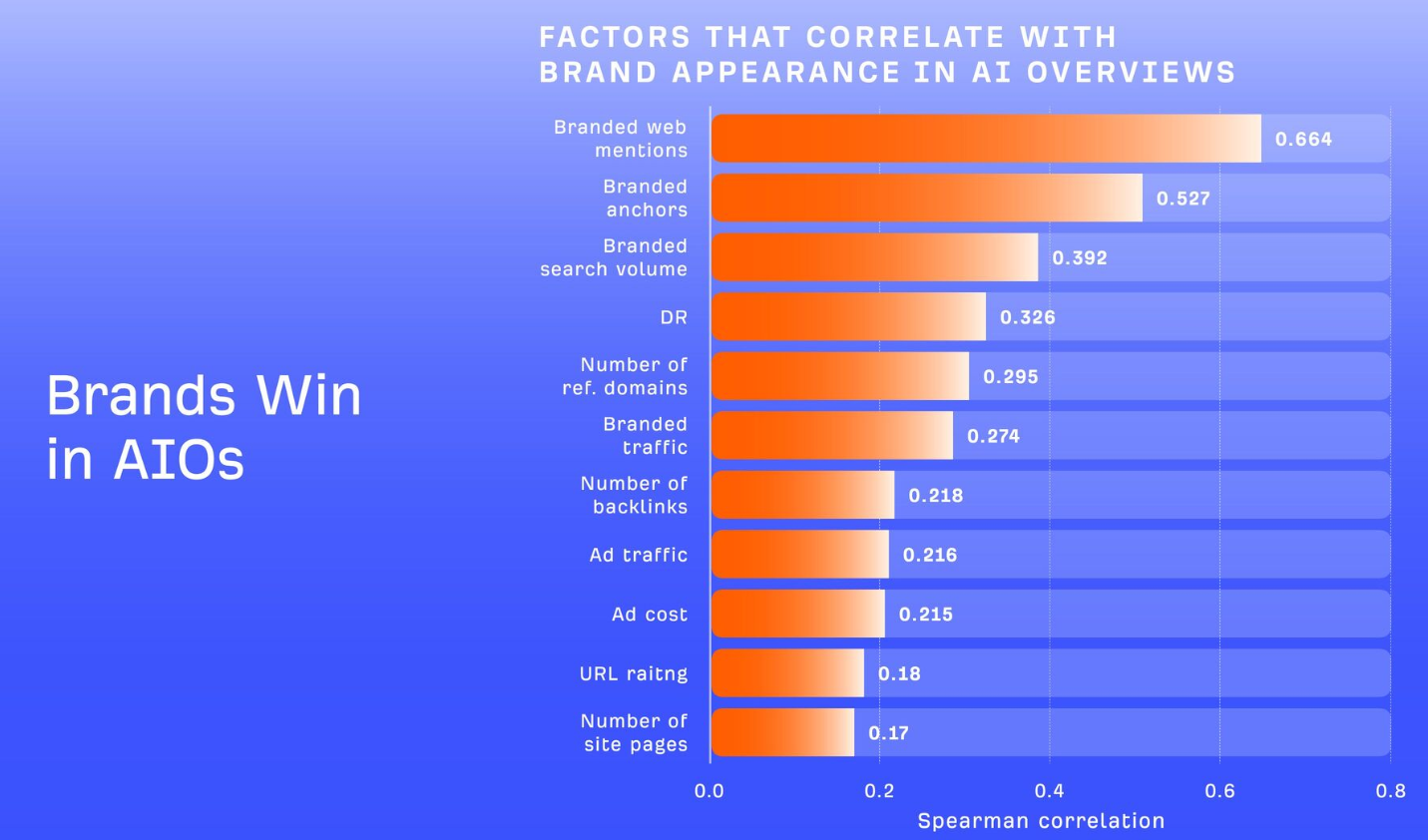
This pattern indicates that brands with a strong digital presence are significantly more likely to appear in AI Overviews.
A slide titled “Brands Win in AIOs” summarized this idea with clear data: ChatGPT, Perplexity, and Google AI Overviews all favored branded entities.
Spam and Manipulation: AI’s “Black Hat Era”
Stox’s slides warned that AI assistants are currently in a “black hat era.”
Examples listed included:
- Parasite pages
- Hacked sites
- Expired domains
- Spam from Reddit and Quora
He also mentioned the risk of data poisoning, where false or manipulated information enters AI training sets. A note in the slides suggested that AI tools will eventually improve at detecting and removing such manipulation.
Mapping Modern Strategies
A section titled “How They Map” outlined how traditional SEO practices correspond to broader marketing efforts:
- Multiple articles → Content
- Buying or setting up other sites → M&A
- Influencer marketing → Influencer partnerships
- Affiliate leverage → Affiliate marketing
- Paid content → Paid promotion
- Digital PR → Public relations
Top AI Search Tactics
The presentation summarized actionable steps for brands to adapt:
- Optimize how the internet talks about your brand — beyond just your website.
- Repurpose content — share consistent messages across blogs, social media, podcasts, and videos.
- Diversify traffic sources — expand to platforms like YouTube and online communities.
- Create citable content — publish data, studies, or statistics that AI can reference.
- Track brand mentions and competitor gaps — monitor how your brand is represented across AI tools.
How AI Is Already Changing Content Creation
According to survey data from the presentation:
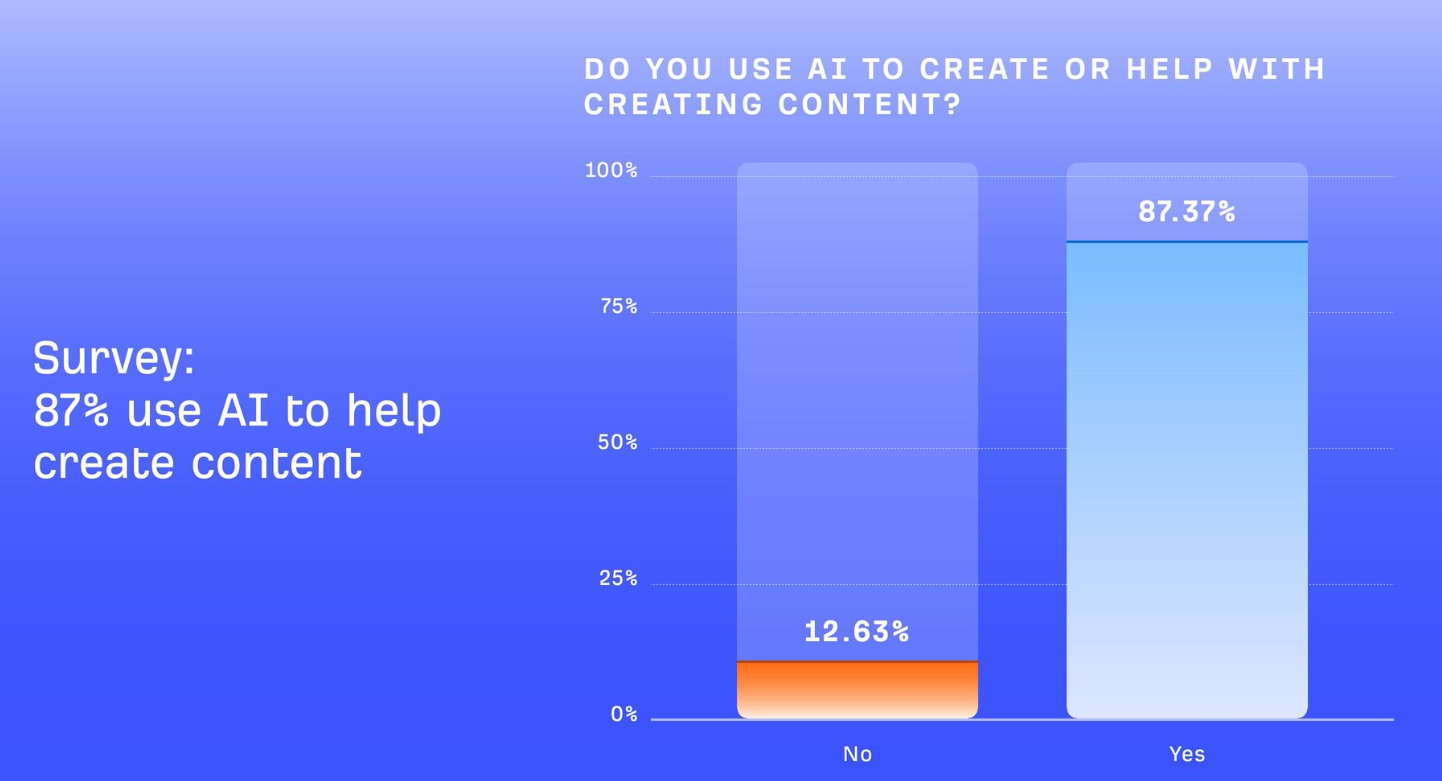
- 87% of respondents said they use AI to help create content.
- Companies using AI publish 42% more frequently than those who don’t.
- 97% review AI-generated content manually before publishing.
Ahrefs’ analysis of 900,000 web pages (one per domain) published in April 2025 found that over 80% of top-20 SERP pages were AI-assisted in some way.
The Human-AI Balance
The final slides showed how teams currently mix AI and human input:
- Pure AI: 4.6%
- Dominant AI use (71–99%): 46.3%
- Substantial AI (11–70%): 25.8%
- Minimal AI (1–10%): 15.5%
- Pure human: 2.5%
The Bottom Line
Patrick Stox’s presentation at Ahrefs Evolve 2025 highlighted how search is moving into a new phase driven by AI systems. His data showed that the way people find and interact with information is changing fast. AI assistants and AI Overviews are now shaping what users see first, how traffic flows, and which brands get noticed.
If you’re involved in SEO and digital marketing, it’s helpful to remember that success today really hinges on how much a brand is recognized, mentioned, and trusted across the internet.
The future of search belongs to businesses that build genuine authority and create information worth referencing, not just by search engines, but by AI tools.
Key Takeaways
- AI-generated traffic has grown nearly 10x in a year, led by ChatGPT.
- Google’s AI Overviews appear in 19% of queries and reduce clicks by 34.5%.
- Brands with frequent mentions dominate AI visibility.
- International content underperforms unless translated.
- 87% of content creators use AI, but human review remains essential.

Zulekha
AuthorZulekha is an emerging leader in the content marketing industry from India. She began her career in 2019 as a freelancer and, with over five years of experience, has made a significant impact in content writing. Recognized for her innovative approaches, deep knowledge of SEO, and exceptional storytelling skills, she continues to set new standards in the field. Her keen interest in news and current events, which started during an internship with The New Indian Express, further enriches her content. As an author and continuous learner, she has transformed numerous websites and digital marketing companies with customized content writing and marketing strategies.
