About This Episode
[00:00:00] Aaron:
Hi, welcome back to another episode of SEO OnAir.
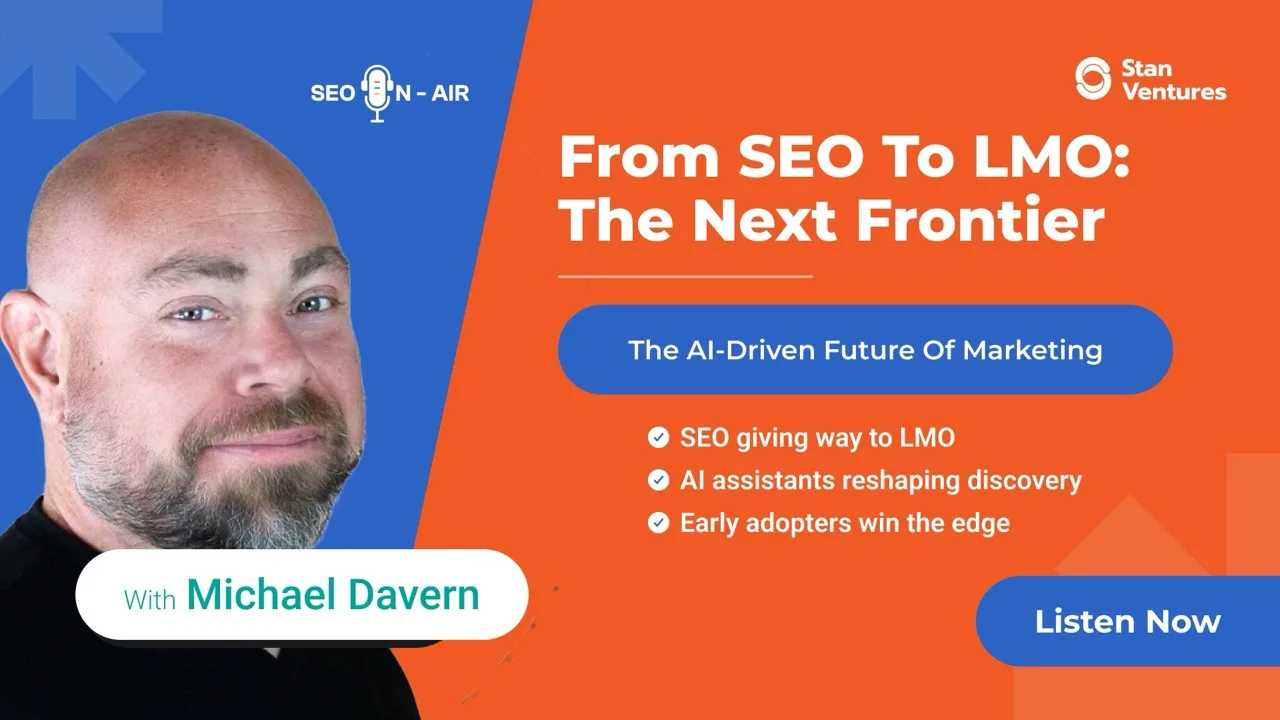
Today, I’m joined by Michael Davern, Partner and CEO of Incept — a strategy-first marketing consultancy. From a background in music to leading high-impact marketing work, Michael brings a unique perspective to the field.
In this episode, we’ll cover his journey, Incept’s approach to strategy, common marketing pitfalls, the role of AI, how to balance data with creativity, and — most importantly — how to measure what really matters.
[00:00:30] Aaron:
Michael, what sets you and Incept apart from other agencies?
Michael Davern:
We’re really a strategic partner. For us, strategy is never “finished” — it’s ongoing. Sure, if you look at any digital agency’s website, you’ll see a list of services. We do those too, but that’s not how we lead the conversation.
It starts with uncovering what a client truly needs — their goals, their challenges — and then figuring out the best way to get there. That’s what strategy is. Tactics come later, and those are relatively easy to execute once the bigger “why” is defined.
Aaron:
Right — so instead of jumping into “we need ads” or “we need a new website,” you ask why.
Michael:
Exactly. Clients might think they need a website redesign or a social campaign, but often the real opportunity is different. That discovery process is where we provide the most value.
[00:02:15] Aaron:
Let’s touch on myths in marketing. What are some that you still see businesses believe?
Michael:
One of the biggest myths is that likes and follows on social media equal reach. I still see people thinking, “If I just get everyone to like my page, my business will grow.” The truth is, that can actually hurt your reach — because people like once, then never engage again. Platforms like Facebook and Instagram will suppress your content if engagement drops off.
Organic reach for small or mid-sized brands is basically near zero. Unless you’re a huge brand, putting out content alone won’t move the needle.
Aaron:
Totally agree. Vanity metrics like likes and followers don’t equal revenue.
Michael:
Right. Instead, you need to be strategic: understand your audience, figure out where they consume content, and be prepared to back it with ad spend if you want traction.
[00:05:45] Aaron:
So when it comes to social media, what metrics actually matter?
Michael:
It depends on your goal. Engagement is fine, but if the campaign has a conversion goal, then that’s what matters most — not clicks or impressions.
We often reverse-engineer from the end goal:
How many sales or sign-ups do we need?
What does that mean in terms of clicks?
What level of engagement gets us there?
That way, we can determine the optimal budget and strategy upfront.
[00:06:50] Aaron:
Let’s flip it. What are some tactics you think people waste money on?
Michael:
Google Search Ads in highly competitive industries are often a race to the bottom. Three years ago, you could win with long-tail, high-intent keywords. Now, Google and Meta are controlling targeting more tightly, and clicks in many verticals are just too expensive.
If you’re in B2B, LinkedIn can be another money sink if you’re not hyper-specific with targeting.
Aaron:
So what’s a better alternative?
Michael:
For local businesses, Google Local Service Ads can be a good option since you pay per call. More broadly, I’m bullish on DSPs and programmatic advertising. It’s platform-agnostic, follows user consumption, and gives you multiple touchpoints — display, pre-roll, audio, even connected TV. Done well, it keeps your brand top of mind.
[00:10:50] Aaron:
Let’s talk AI. Everyone’s experimenting, but how should businesses actually be using it?
Michael:
First, operationalize it — calendar management, meeting notes, SOP writing, reputation management. If you haven’t done that yet, you’re already behind.
Second, use it as an assistant. Think of AI as having gone from “intern” level a year ago to “junior team member” now. With the right inputs, it can draft strategy docs, brainstorm campaigns, even mimic brand voice in reputation management replies.
But you still need humans to guide it. Agencies that go all in on AI will fail. Agencies that ignore it will also fail. The winners will be those who integrate AI smartly to free up human time for strategy and creativity.
[00:17:15] Aaron:
That brings me to the balance between creativity and data. How do you keep both in check?
Michael:
It’s about roles. Data and process can kill creativity, but creativity without structure won’t scale. We think of it like visionaries and implementers: the visionary pushes ideas forward, and the implementer grounds them with process and metrics.
Having the right people in the right seats — and encouraging passionate, even heated debates — is key. Strategy keeps both sides aligned on the bigger goal.
[00:21:00] Aaron:
Michael, before we wrap, any final pitch for Incept?
Michael:
We’re a strategy-first consultancy. That means we don’t just build websites or run ads; we help clients understand the why behind what they’re doing and ensure every tactic supports the bigger strategy.
We like challenges, we experiment, and we aim to stack early wins while building toward long-term goals. Strategy is never done — and that’s what sets us apart.
Aaron:
And where can people find you?
Michael:
Our website is Incept.com (we’re working on a redesign). Personally, I’m very active on LinkedIn — just search for “Michael Davern,” and you’ll find me.
[00:22:45] Aaron:
Michael, this was one of my favorite conversations. You made my job easy — I just asked the questions and let you run. Thanks so much for joining.
Michael:
Thanks, Aaron. Really enjoyed it.
Aaron:
That’s a wrap for today’s episode. If you found this conversation valuable, subscribe so you never miss an episode. And if you enjoyed it, please leave us a 5-star rating — it really helps us grow.
If you want to take your SEO game to the next level, visit StanVentures.com to learn how our expert-driven SEO services can help your business thrive.
Until next time: keep reading, keep innovating, and we’ll see you in the next episode.

Michael Davern
Partner and CEO of Incept
Never Miss an Episode
Get the latest SEO strategies delivered to your inbox.
Thanks! We’ll be in touch shortly.