
AI bots are fundamentally transforming the internet. What was once a human-dominated space is increasingly controlled by intelligent, autonomous bots that browse, act, and even make decisions.
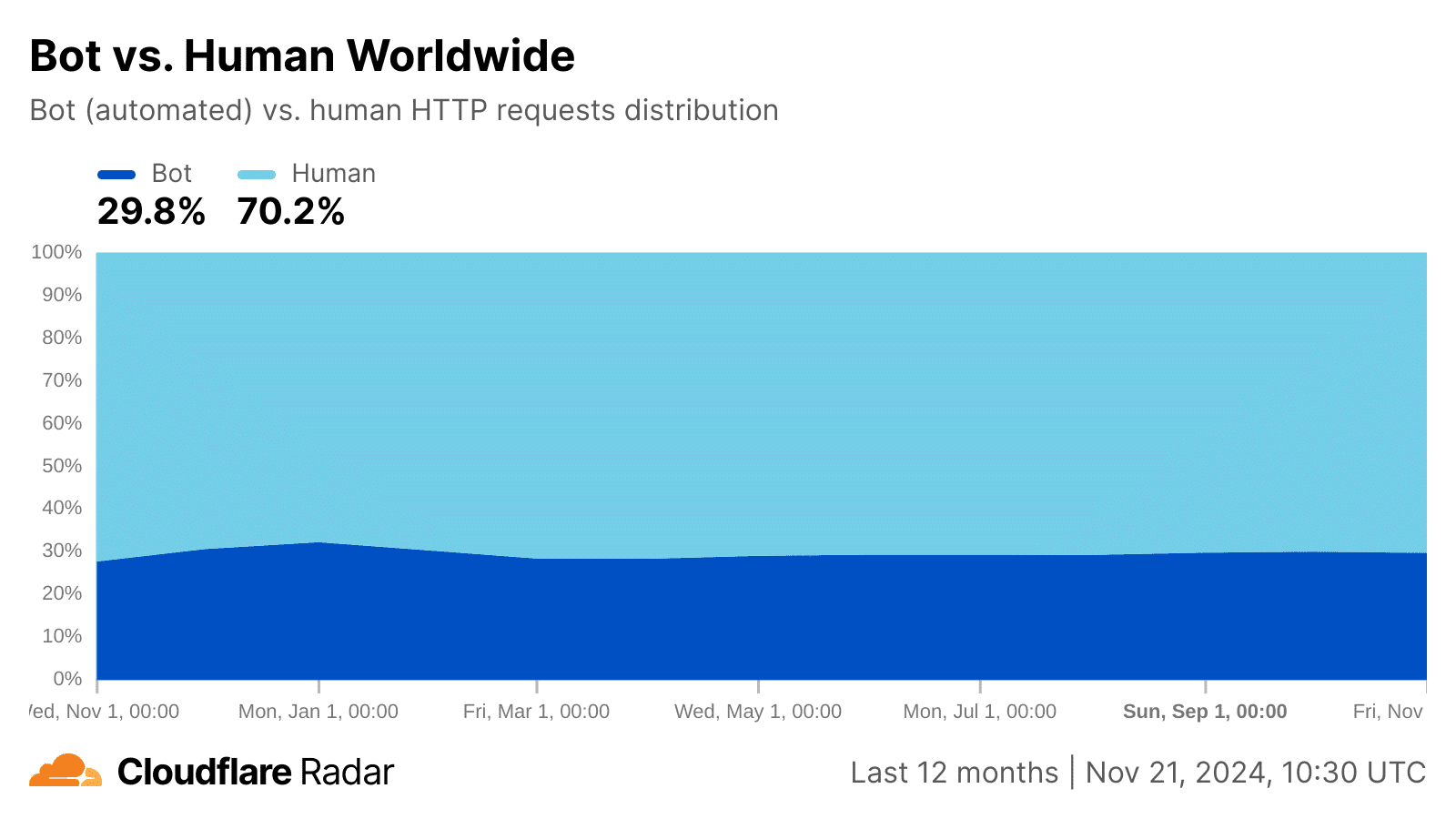
These bots, now responsible for 42% to 70% of all web traffic, are not just tools—they’re becoming influential players on the digital stage.
Let’s explore how bots are evolving, the challenges and opportunities they present, and the far-reaching implications for the internet’s future.
Bots on the Rise: A New Reality for the Open Web
By 2024, bot activity constituted nearly half of all internet traffic, depending on the measurement source. What’s causing this surge? The rise of “agentic bots,” which are capable of browsing, interpreting data, and acting autonomously on behalf of users.
Unlike traditional web crawlers that only index content, these new bots perform tasks once reserved for humans. They plan trips, make purchases, and gather personalized information—all seamlessly. For instance:
- Claude by Anthropic enables developers to simulate human actions, such as clicking buttons or typing text, through its “Computer Use” feature.
- Google’s Jarvis momentarily appeared on the Chrome Store as a “helpful companion” designed to browse and assist online. Though removed quickly, it highlighted Google’s efforts in developing bots capable of acting on user intent.
- OpenAI’s Operator takes this a step further, offering dynamic interaction capabilities to complete tasks directly for users.
These bots are revolutionizing how users interact with the internet. They are moving from static roles, like answering questions or indexing websites, to active agents capable of executing complex tasks.
Humans vs. Bots: Changing Behavior Online
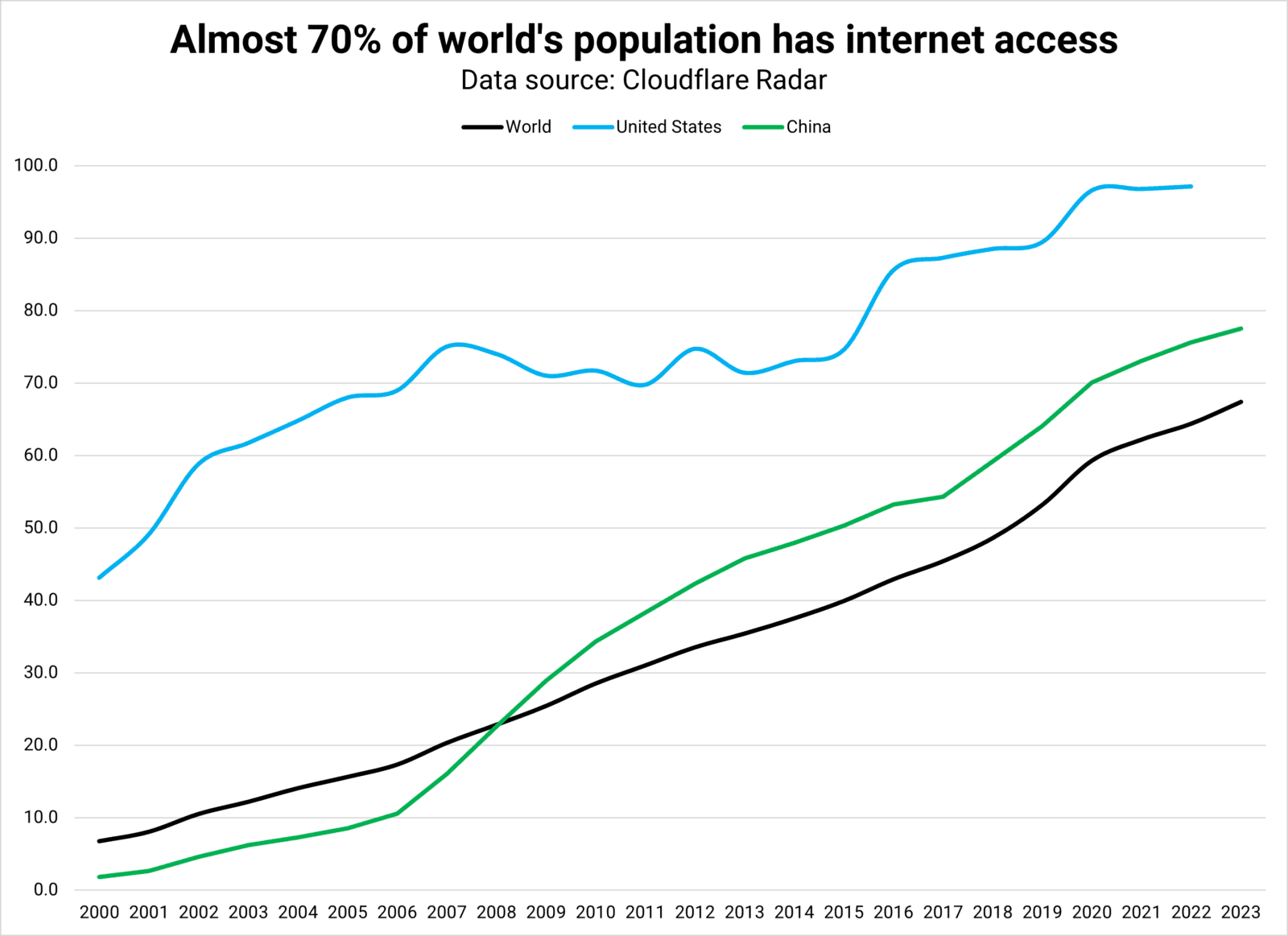
The rapid growth of bot activity contrasts with stagnating human web traffic. While 70% of the global population had internet access by 2023, human usage patterns have shifted. People increasingly favor social media platforms like TikTok and Instagram over traditional open web browsing.
Despite these trends, humans aren’t abandoning the internet. Instead, their behavior is evolving. AI bots are poised to replace manual searches with conversational prompts, delivering streamlined answers and actions. But humans still value spontaneous discovery, peer recommendations, and personal insights from other people.
This evolving landscape raises critical questions about how trust, transparency, and accountability will be maintained in a bot-dominated environment.
The Good, the Bad, and the Bots
AI bots have clear advantages—they simplify tasks, personalize user experiences, and make interactions faster and more efficient. But not all bots are benign. Reports estimate that 65% of bot traffic is malicious, designed to steal data, disrupt systems, or spread misinformation.
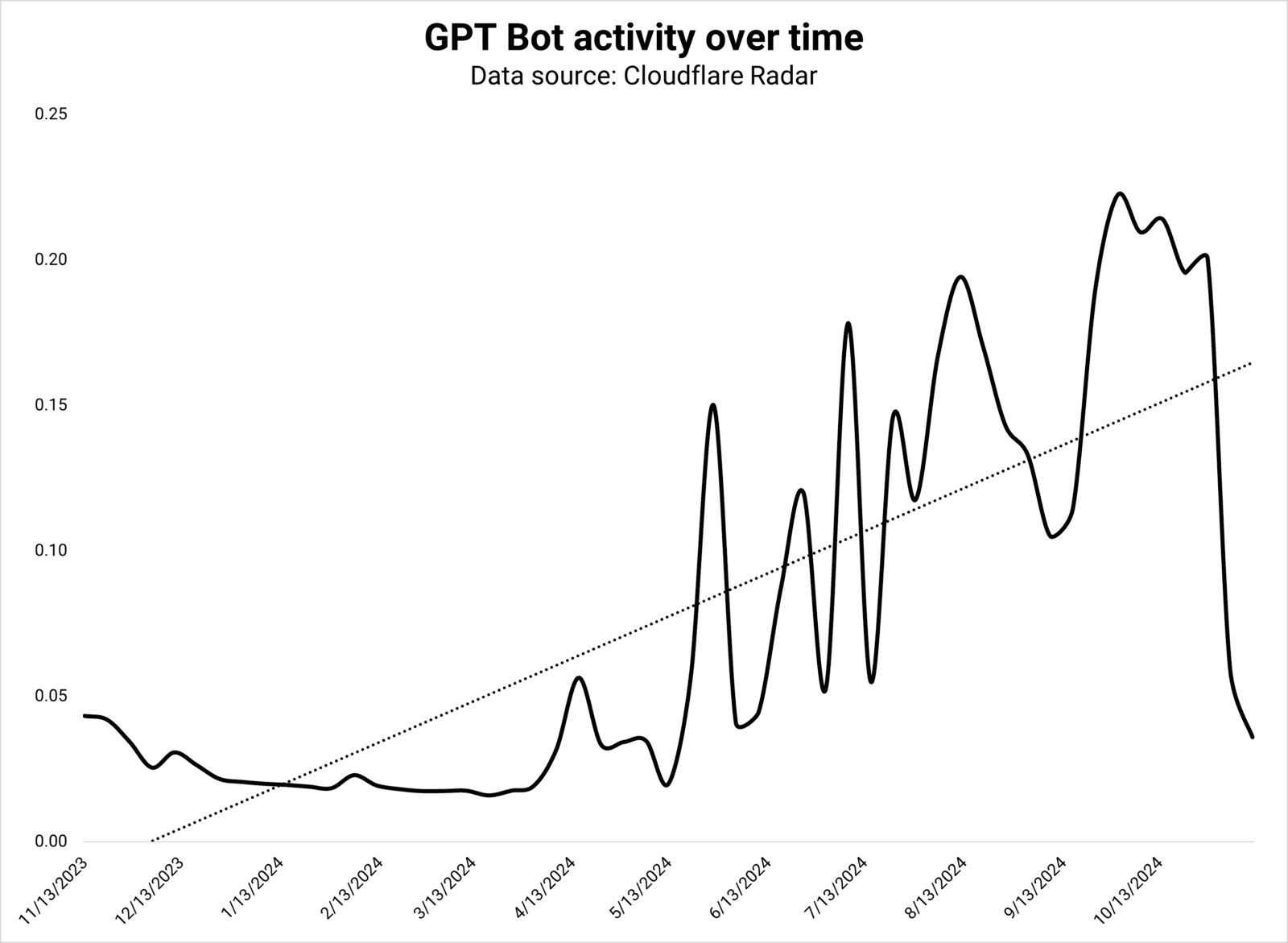
The good bots, such as AI crawlers, SEO tools, and security software, are reshaping industries by enhancing functionality. For instance, OpenAI’s GPT Bot increased its activity by 12% in 2024, collecting training data and grounding language models in real-time data. Meanwhile, Google’s AI crawler grew by an impressive 62%, reflecting the increasing demand for intelligent data collection.
The challenge is to maximize the benefits of AI bots while mitigating their risks. Companies and developers need robust defenses, potentially introducing new standards like “robots.txt 2.0” to manage bot behavior.
A New World for Businesses and Marketers
The rise of bots is reshaping how businesses approach marketing and customer engagement. Traditional strategies focusing on web aesthetics and user experience may become less relevant as bots, not humans, consume most of the web data. These bots prioritize structured, machine-readable formats like APIs and XML feeds.
This shift also increases the need for a reliable SEO service online to ensure your website remains visible to both bots and humans.
For marketers, this transformation offers new opportunities but also demands adaptability:
- Hyper-Personalization: Bots like Operator or Claude can understand user preferences deeply, curating recommendations with precision.
- Streamlined Commerce: A bot might book flights, reserve hotels, and complete transactions without user intervention, reducing decision fatigue.
- Challenges in Visibility: Businesses may struggle to stand out if bots favor specific platforms or brands.
To succeed in this bot-driven ecosystem, companies must optimize for bots, focusing on technical SEO, structured data, and API integrations. At the same time, they’ll need to reinforce customer loyalty through creative campaigns and personalized offers, ensuring their brands remain competitive.
The Future: Opportunities and Risks
The bot-dominated web presents significant opportunities alongside pressing challenges:
Efficiency Gains: Bots can handle complex tasks quickly, enabling smoother user experiences.
Privacy Enhancements: AI bots may safeguard sensitive information by sharing data selectively, ensuring better privacy control.
Global Connectivity: By eliminating language and localization barriers, bots can facilitate seamless international transactions.
Environmental Concerns: Increased bot activity demands significant energy resources, necessitating the development of more sustainable AI models.
Cybersecurity: As bots grow more sophisticated, so do malicious actors. Enhanced defenses will be critical to maintaining security and trust.
My Perspective
The rise of AI bots feels both thrilling and daunting. On one hand, the efficiencies they offer could redefine convenience and productivity. On the other, they demand careful regulation, ethical design, and thoughtful implementation to prevent misuse. Transparency and accountability will be critical to ensuring bots serve humanity, not exploit it.
Staying informed about these changes and remaining adaptive will be essential for individuals and businesses alike.
Key Takeaways
- Between 42% and 70% of internet traffic is now driven by bots, with agentic bots emerging as game-changers.
- AI bots like Claude, Jarvis, and Operator are evolving from simple crawlers to autonomous action-takers.
- Humans spend less time on traditional web platforms, while bot activity grows exponentially.
- Businesses must optimize for bots with structured data and focus on building customer loyalty.
- Efficiency, personalization, and global connectivity are balanced by cybersecurity and environmental concerns.

Dileep Thekkethil
AuthorDileep Thekkethil is the Director of Marketing at Stan Ventures, where he applies over 15 years of SEO and digital marketing expertise to drive growth and authority. A former journalist with six years of experience, he combines strategic storytelling with technical know-how to help brands navigate the shift toward AI-driven search and generative engines. Dileep is a strong advocate for Google’s EEAT standards, regularly sharing real-world use cases and scenarios to demystify complex marketing trends. He is an avid gardener of tropical fruits, a motor enthusiast, and a dedicated caretaker of his pair of cockatiels.
