As per a recent report, OpenAI’s ChatGPT has been partially relying on data scraped from Google search results through SerpApi, an eight-year-old web-scraping firm.

The revelation highlights how even the most advanced AI models require external data sources to provide real-time updates on current events such as news and sports.
SerpApi had listed OpenAI as one of its customers until May last year, before quietly removing the reference.
The reasons behind this removal remain unclear, which further spark debate in both the AI and SEO communities. What does this reliance on scraped Google results mean for ChatGPT’s independence, its competition with Google and the future of information retrieval? Let’s see.
How Did SerpApi Become the Silent Middleman for ChatGPT?
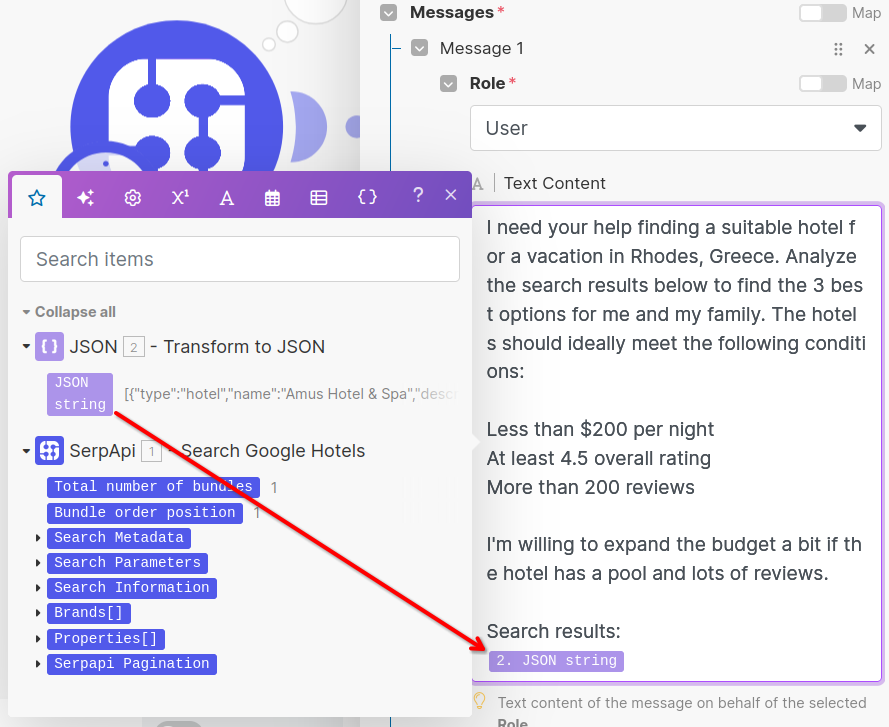
For those unfamiliar, SerpApi is a specialized service that scrapes Google search results and delivers them as structured data via an API.
Think of it as a bridge, it collects raw results that Google displays and serves them neatly in a machine-friendly format.
So why would OpenAI use SerpApi?
The answer is quite clear: ChatGPT, especially with its browsing features and real-time event queries, needs fresh information. Unlike static training data (which cuts off at a certain point), users expect ChatGPT to answer “What’s happening today?” questions. That is where SerpApi steps in.
A surprising detail here is that OpenAI wasn’t alone. Perplexity AI, another fast-rising AI-powered search tool, is reportedly also a SerpApi customer. This signals that scraping services like SerpApi are quietly powering some of the biggest names in AI—while users think they are just talking to “AI magic.”
But then, does not this make ChatGPT heavily dependent on Google’s ecosystem indirectly?
If ChatGPT Uses Google Data, Is It Competing with Google or Relying on It?
ChatGPT is often framed as a “Google Search challenger,” a new way to discover answers without sifting through endless blue links. Yet, if OpenAI is feeding its system with Google’s scraped results, then is it not competing while simultaneously depending on its rival?
It feels like a paradox. Imagine a new electric car company claiming to outpace Tesla but secretly buying Tesla’s batteries to run its cars. Strange, right?
To add more perspective, Glenn Gabe, a well-known digital marketing analyst, pointed out on X that “Well, there you have it… It’s SerpApi. Note, Perplexity is also a customer of theirs.” This public confirmation made many in the SEO and AI communities pause and rethink what “independent AI search” actually means.
Well there you have it… It’s SerpApi. Note, Perplexity is also a customer of theirs -> Sources: OpenAI has been partially using Google search results scraped by a startup called SerpApi for ChatGPT responses on current events like news and sports
Well there you have it… It’s SerpApi. Note, Perplexity is also a customer of theirs -> Sources: OpenAI has been partially using Google search results scraped by a startup called SerpApi for ChatGPT responses on current events like news and sports
“OpenAI is getting the data… pic.twitter.com/XGMXRUBRZC
— Glenn Gabe (@glenngabe) August 22, 2025
Here is where data gives us more clarity. A study by Ahrefs revealed a surprising statistic: 83.39% of ChatGPT’s chosen results don’t appear in Google’s search results at all for the same fan-out queries.
Wait, let’s stop here for a second. If ChatGPT is using Google data through SerpApi, why do most of its results not align with Google’s?
The likely reason is that ChatGPT does not simply replicate search results. Instead, it pulls in data and then processes, summarizes, and reformats it into conversational responses.
Sometimes, that means filtering or discarding what Google shows. Other times, however, ChatGPT’s answers match Google’s results quite closely, leaving traces of where the underlying data may have come from.
This duality, being different yet occasionally identical, is precisely why the debate around scraping, originality and fair use continues to intensify.
Is This Ethical, Legal or Just the New Normal?
Google has historically frowned upon scraping, often labeling it as a violation of its terms of service. At the same time, countless businesses, SEO tools and now even AI firms rely on scraping for insights.
SerpApi, in this sense, is both a disruptor and a service provider.
By offering structured Google search results, it enables companies like OpenAI and Perplexity to bypass building their own scraping infrastructure while still giving users what they want, fresh, real-time answers.
But should companies that position themselves as pioneers of independent AI innovation rely so heavily on data scraped from their competitors?
That’s a fair question. If ChatGPT is shaping the future of knowledge, then its sources matter more than ever.
Personally, this could ignite new waves of disputes between Google and OpenAI.
After all, if AI assistants can answer queries directly using Google’s data, why would users still click on Google search ads—the core of Google’s $175 billion advertising empire?
How Does This Impact the SEO Community?
From an SEO perspective, this development is both fascinating and concerning.
On one hand, SEOs now know that part of ChatGPT’s responses could be influenced by scraped Google results.
On the other hand, Ahrefs’ data shows that ChatGPT is not just mirroring Google but often generating unique interpretations.
This means SEO professionals can no longer just optimize for Google. They must also consider how AI systems like ChatGPT and Perplexity interpret, repackage and present their content. The rules of visibility are shifting rapidly.
Here is an example:
- A blog post ranking on page two of Google might rarely get clicks.
- But if ChatGPT interprets that same post as authoritative and presents it directly in an answer, the content suddenly reaches more users—even bypassing Google’s ranking system.
That’s a huge paradigm shift.
What Happens Next—Will Google Push Back?
If history has taught us anything, it is that Google doesn’t stay silent when others attempt to leverage its ecosystem. In the past, companies that scraped or reused Google’s data without permission have faced lawsuits, penalties and shutdowns.
Could Google crack down on SerpApi and, by extension, affect OpenAI’s access to fresh data?
Possibly. Or, could Google see this as validation that even AI leaders need its search infrastructure and push harder on its own AI products like Gemini and Search Generative Experience (SGE)? That seems even more likely.
One thing is certain: the competition between OpenAI and Google is no longer just about “better AI models.” It’s about control over the information pipeline—where data comes from, how it is processed and ultimately, who owns the user’s trust.
Is ChatGPT Really Independent?
This revelation about ChatGPT using SerpApi to scrape Google results leaves us with a bigger question: is any AI truly independent right now?
From my perspective, the most advanced AI systems cannot exist in isolation. They need fuel and data. And for real-time queries, there is no richer source of public information than Google’s search index.
As users, we might shrug and say, “Well, as long as the answers are useful, who cares?” But for content creators, SEO professionals and even regulators, this development signals the beginning of a new battlefront: the war for data sources in the AI era.
And perhaps that’s the bigger story here is not just that OpenAI used SerpApi but that the very foundations of AI competition rest on access to the same search well we’ve been drinking from for two decades.

Dileep Thekkethil
AuthorDileep Thekkethil is the Director of Marketing at Stan Ventures, where he applies over 15 years of SEO and digital marketing expertise to drive growth and authority. A former journalist with six years of experience, he combines strategic storytelling with technical know-how to help brands navigate the shift toward AI-driven search and generative engines. Dileep is a strong advocate for Google’s EEAT standards, regularly sharing real-world use cases and scenarios to demystify complex marketing trends. He is an avid gardener of tropical fruits, a motor enthusiast, and a dedicated caretaker of his pair of cockatiels.
