Rand Fishkin, cofounder of SparkToro and longtime marketing contrarian, is warning that the numbers marketers have lived and died by are losing meaning. Social platforms want people to stay put, Google is keeping more clicks for itself, and AI tools are changing how people look for information. He believes it is time to drop traffic as the primary measure of success and focus on attention instead.
If there is one thing Rand Fishkin has become known for, it is telling the truth before people are ready to hear it.
He has challenged the myths of SEO, warned that search engines tilt the playing field, and pressed marketers to watch how real people behave rather than cling to outdated habits. His latest talk in 2025 carried a message that was even more difficult to take in.
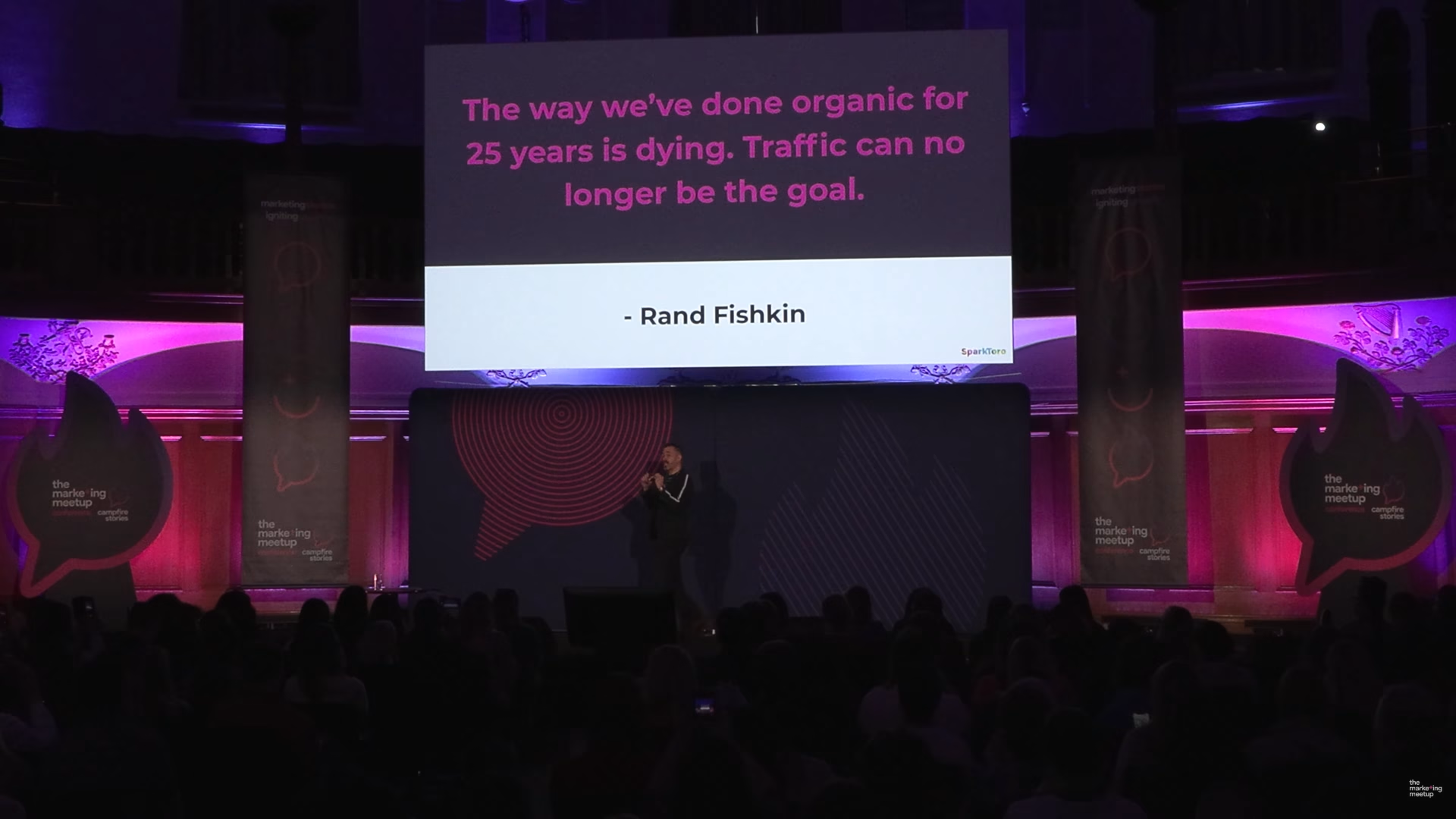
“The way we have done organic traffic for the last twenty-five years is dying,” he told a packed audience.
Social Media is No Longer a Traffic Driver
Marketers have been frustrated with social media for a long time. In 2014, Facebook cut organic reach down to two percent, a move that caused outrage across the industry.
Looking back, that number now seems generous. According to Fishkin, no major platform comes close to offering even that level of reach today.
Instagram, Twitter, LinkedIn, and YouTube all reward content that keeps users inside their walls.
TikTok looks healthier for the moment, but Fishkin believes its days of leniency are numbered. “Platforms want people to stay in place,” he told the audience.
The result is that posts with links tend to sink, while posts with no links tend to soar.
Fishkin and his SparkToro colleague Amanda Natividad call it zero-click content. Their tests show that the same post without a link can reach ten times the audience.
Well, the lesson here is hard to miss. Anyone still counting on social platforms to deliver traffic is chasing an opportunity that no longer exists.
Google is Keeping the Spoils
If social media keeps people inside, Google keeps them busy. Despite endless predictions about its decline, Google continues to own roughly ninety percent of search.
The company reported five trillion searches in 2024, a staggering number. Yet publishers are not feeling the benefit.
Six out of ten searches now end without a click.
Of those that do generate a click, many are swallowed by Google’s own products. Maps, YouTube, Flights, Shopping all appear ahead of external websites. Fishkin did not sugarcoat it. “For every thousand searches in Europe, only 374 make it to the open web,” he said.
The arrival of AI overviews has made the picture darker. Studies suggest that these new summaries strip away between 20% and 40% of the clicks that used to flow outward.
On top of that, the introduction of AI mode in Chrome is another example of how content consumption is changing. These tools can display summaries, tips, or insights directly in the browser, allowing people to access the information they need without needing to click away.
Email Continues to Hold Steady
Email has been declared obsolete more times than anyone can count. Each time the prediction has been wrong.
Fishkin pulled up two decades of data to show that open rates have remained almost exactly the same. Every generation eventually adopts email because they need it for work, housing, government services, or school.
The catch is that people now prefer to consume in place. They open emails but click less often.
Fishkin calls it a shift in psychology, a habit of scrolling rather than leaving the environment.
To adjust, SparkToro has begun embedding screenshots of social posts in newsletters so readers can absorb the content without clicking away.
The tactic sacrifices measurable traffic but builds trust and recognition, which is what Fishkin believes matters most.
The Myth of AI Replacing Search
The question everyone asks is whether tools like ChatGPT or Perplexity will knock Google from its perch. Fishkin has run the numbers.
OpenAI says its users send one billion messages per day. About a third of those could be considered search-like. Even at that scale, the figure is a tiny fraction of Google’s trillions of searches.
“ChatGPT is a top ten website,” Fishkin admitted, “but compared to Google it is a rounding error.”
That does not mean AI tools are irrelevant.
In fields like B2B software, they are already influencing research and purchase decisions. But they are not replacing search in the near term.
The Failure of Attribution
Underneath these shifts lies the problem that Fishkin believes marketers need to face most directly. Attribution, the tidy story about which channel caused a conversion, is broken.
A customer may hear about a brand on Reddit, see it again in a newsletter, and only later type the brand’s name into Google. Analytics will then give credit to Google even though the real influence came earlier.
Fishkin shook his head at the absurdity of it. “Google did not do the work,” he said. “They are like a traffic cop pointing you to make a left. That is not credit they deserve.”
The problem is that companies use these flawed numbers to decide budgets. They double down on the wrong platforms and give away power to the very systems that are draining them of traffic.
Shifting From Clicks to Memory
Fishkin’s conclusion was simple but radical. Traffic can no longer be the measure of success.
“Traffic is a vanity metric,” he said. “What matters is attention.”
That means measuring reach, mentions, and recall rather than raw visits. It means treating social platforms like television or radio. The goal is not to drive a click but to be remembered.
He acknowledged that it feels risky to invest so much in “rented land” like LinkedIn or YouTube, but the math is convincing. A video on SparkToro’s site may attract two thousand views. The same video on LinkedIn can reach fifty thousand or more. Even if the platform changes tomorrow, the exposure today still matters.
How Marketers Can Respond
Fishkin didn’t leave his audience in despair. He urged marketers to rethink how they approach 2025.
Links often hurt performance on most platforms, so the key is to deliver value where your audience already spends time.
Success should be measured not just in referral sessions, but in audience size, recall, and influence.
It’s important to pay attention to where your specific audience gathers (whether that’s Slack groups, niche podcasts, newsletters, or Reddit communities) as no two companies share the same mix.
Protect the channels you can still own, like email, which remains resilient and worthy of investment.
And while AI tools are increasingly influential, they shouldn’t be mistaken for a replacement for Google.
Why it Matters
Fishkin’s message landed hard because it asks marketers to let go of the number they have lived with for decades.
It means analytics reports will look different. It means leadership will need to accept that clean attribution is fading. It means strategies built on traffic will have to be rebuilt around influence.
But in Fishkin’s view, this is not a death knell. It’s an opportunity to return to what marketing has always been about. Not to trick someone into clicking, but to create a lasting impression.
“Find where your audience actually pays attention,” he urged at the close of his talk. “Then meet them there. That is the future.”
Key Takeaways
- Social platforms are punishing links and rewarding native content.
- Google continues to dominate search but keeps most of the clicks inside its walls.
- Email remains a reliable direct channel, though users prefer to consume content without leaving.
- Attribution is increasingly misleading, often giving Google credit for work done elsewhere.
- Attention, not traffic, is the metric that matters most in 2025.

Dileep Thekkethil
AuthorDileep Thekkethil is the Director of Marketing at Stan Ventures, where he applies over 15 years of SEO and digital marketing expertise to drive growth and authority. A former journalist with six years of experience, he combines strategic storytelling with technical know-how to help brands navigate the shift toward AI-driven search and generative engines. Dileep is a strong advocate for Google’s EEAT standards, regularly sharing real-world use cases and scenarios to demystify complex marketing trends. He is an avid gardener of tropical fruits, a motor enthusiast, and a dedicated caretaker of his pair of cockatiels.
