Google says it’s rebalancing how results appear in Search, giving more visibility to short-form videos, forums, and user-generated content.
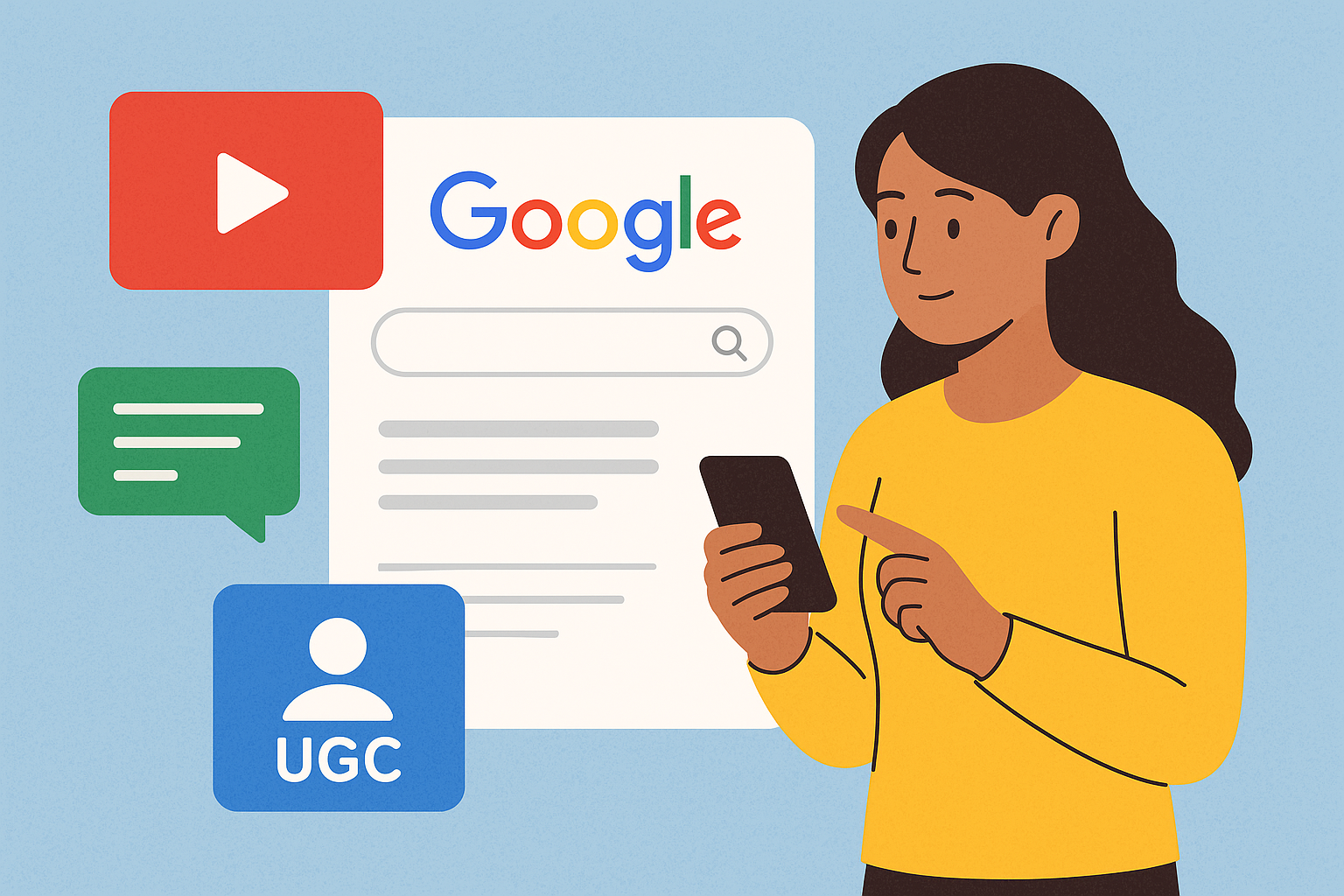
Google is rethinking what deserves to rank. In a recent Wall Street Journal interview, Liz Reid, Google’s Vice President and Head of Search, said the company has adjusted its ranking systems to better reflect user behavior. People aren’t just looking for official information anymore, they’re looking for real experiences and voices they can relate to.
“There’s a behavioral shift happening,” Reid explained. “People are going to short-form video, they are going to forums, they are going to user-generated content a lot more than traditional sites.”
She described how Google’s team noticed users turning to places like Reddit, YouTube, and TikTok for quick, authentic takes. That change, Reid said, forced Google to adapt.
“We have to respond to who users want to hear from,” she said. “We aim to give high-quality information — but also the kind of information people actually seek out.”
A Reflection of Real Behavior
Google’s focus was on authority and expertise for years. Pages with credentials, structure, and trust signals often dominated search results. Now, behavior tells a different story.
Younger audiences, in particular, are finding everyday answers from creators and communities. A short video showing how to fix a recipe mistake or a forum thread discussing the pros and cons of a phone model feels more useful than a polished, keyword-optimized blog.
Reid used an example: “Where are you getting your cooking recipes from — a newspaper or YouTube?”
That question sums up the shift. People want real-world perspective, not just professional advice.
Winners, Losers, and the New Reality of Search
As with every change, there are trade-offs. Reid acknowledged that ranking updates always come with “winners and losers.”
This time, creators who share authentic, first-hand experiences through short videos, community posts, or discussion threads are likely to benefit. Traditional publishers and marketers who rely mainly on text-based, SEO-driven pages may see less visibility for some queries.
The real shift may depend on search intent. Questions like “best laptop for designers” or “how to fix a squeaky chair” often favor content that feels personal and relatable. More technical or data-driven topics will likely continue to favor established sites.
For content professionals, the takeaway is clear: credibility still matters, but so does connection.
The Role of AI and New Search Tools
Reid also discussed how new features, like AI Overviews and Google Lens, fit into this larger change. Some marketers have worried that AI summaries might reduce traffic or ad clicks. Reid pushed back on that idea.
“The revenue with AI Overviews has been relatively stable,” she said. “Some queries may get fewer clicks on ads, but overall, it grows total searches.”
In other words, people might click less on one query but perform more searches overall. By making it easier and faster to explore topics, Google believes these tools actually keep users more engaged.
Reid said most queries don’t have ads anyway, meaning many search results are unaffected by ad performance altogether.
How Google Tests and Tunes
One of the most interesting insights from the interview was how Google evaluates its changes. Reid described the process as a constant feedback loop:
- Gather data from user research.
- Test changes in live environments.
- Watch how people respond.
- Refine and repeat.
“You take feedback from what you hear about what users want, you test it out, and then see how they act,” Reid said. “Then the system learns and adjusts.”
That iterative model means updates happen continuously rather than through large, sudden algorithm shifts. It also helps explain why some publishers see fluctuations even between core updates — user behavior keeps teaching the system new patterns.
Quality Still Matters, But It’s Defined Differently
Reid made it clear that Google’s stance on quality hasn’t softened. Instead, it’s evolving.
She said Google’s teams are now expanding beyond the concept of “spam” to address “low-value content.” That includes pages that technically follow SEO rules but offer little real insight or usefulness.
According to Reid, deeper and more substantial material still drives engagement within AI and Search experiences. But that doesn’t always mean long-form text. A detailed, experience-based Reddit thread or a well-produced tutorial video can carry the same weight if it meets a user’s intent.
Why This Matters for Marketers and Publishers
For content professionals, the implications are big. If user-generated material and short-form videos are surfacing more often, traditional SEO tactics alone won’t protect rankings.
Here’s what’s changing in practice:
- Authenticity is a ranking factor in disguise. Google’s systems appear to reward firsthand knowledge and relatable voices.
- Format diversity now matters. Brands can’t rely only on blogs and articles. Videos, community threads, and real-world perspectives all play a role.
- Audience behavior guides strategy. Look at where your audience already talks — Reddit, Quora, TikTok, YouTube — and meet them there.
- Data should guide adjustments. If visibility drops, check which formats are now ranking for your core queries. That’s where competition is moving.
This doesn’t mean long-form content is obsolete. It means creators need to mix formats: an article that explains, a video that shows, and a comment thread that connects.
The Questions Still Open
Reid didn’t share when the ranking changes started or how much weight the new signals carry. It’s also unclear which industries are most affected or whether this emphasis on UGC will keep expanding.
But what’s certain is that Google’s definition of “useful” is evolving with its users. Search isn’t only about accuracy anymore. It’s also about voice, experience, and relatability — the things that make people trust what they find.
Actionable Tips for SEO and Content Teams
Here’s how SEO and content teams can respond to Google’s shift and keep their visibility strong as user behavior reshapes what ranks.
- Audit your visibility. Track where your pages have lost or gained rankings. Identify if forum or video content has replaced your listings.
- Add video and community formats. Turn key pages into multi-format experiences — short clips, FAQs, or user discussion sections.
- Invest in real expertise. Firsthand experiences resonate more than generic advice. Use real voices within your team or customer base.
- Monitor how AI Overviews use your content. Quality and clarity can influence whether your material is featured.
- Stay adaptable. User behavior is changing fast, and Google is learning from that behavior just as quickly.
Key Takeaways
- Google has updated its ranking systems to feature more short videos, forums, and UGC.
- The change follows how users — especially younger ones — are searching today.
- Authentic experiences and relatable voices are gaining priority.
- AI tools like Overviews and Lens are increasing total search activity.
- Marketers should diversify formats and stay focused on useful, experience-driven content

Zulekha
AuthorZulekha is an emerging leader in the content marketing industry from India. She began her career in 2019 as a freelancer and, with over five years of experience, has made a significant impact in content writing. Recognized for her innovative approaches, deep knowledge of SEO, and exceptional storytelling skills, she continues to set new standards in the field. Her keen interest in news and current events, which started during an internship with The New Indian Express, further enriches her content. As an author and continuous learner, she has transformed numerous websites and digital marketing companies with customized content writing and marketing strategies.
