SEO professionals are facing a paradox: while AI dominates headlines as a transformative force in search marketing, industry leaders are warning that the biggest bottlenecks are not AI-driven.
Could it be that operational inefficiencies, client communication gaps and unrealistic expectations are the real barriers to success in 2025?
That is exactly what three SEO agency owners explored in the latest episode of the SEO on-Air Roundtable Podcast.
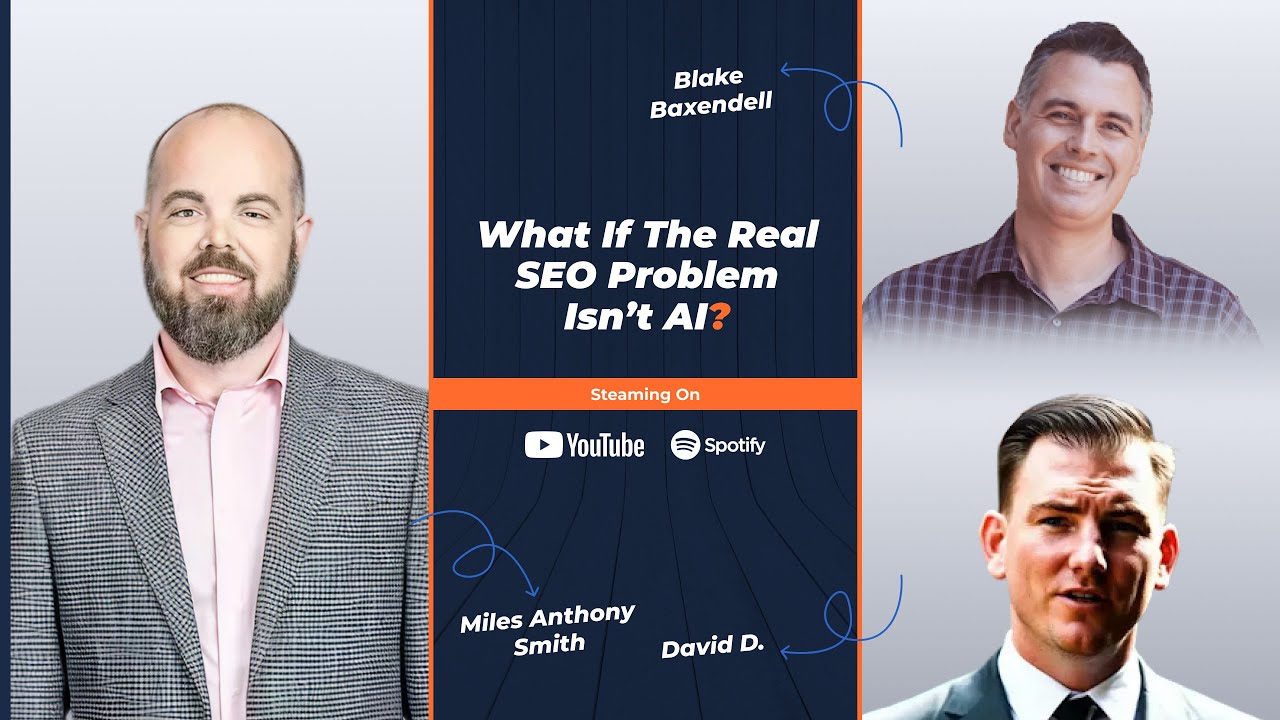
Miles Anthony Smith, Blake Baxendell and David, all seasoned SEO operators and agency owners, unpacked the challenges.
These are the challenges that SEO practitioners and agencies are encountering in the modern digital ecosystem.
From delegation struggles to attribution black holes caused by AI-driven search overviews, the conversation sheds light on topics most agencies hesitate to discuss publicly.
Why Is Client Communication the Biggest SEO Bottleneck?
One of the most surprising takeaways from the discussion was the consistent emphasis on client communication as a fundamental challenge.
“The problem that we are having is our clients never get back to us on quality,” Blake Baxendell said, echoing a sentiment many agency owners quietly experience.
Miles Anthony Smith added that client responsiveness directly affects strategy execution.
If clients are slow to approve content, provide feedback, or implement recommendations, SEO campaigns stall.
This is especially critical because SEO outcomes rely heavily on iterative adjustments based on client-side actions.
David reinforced this point by sharing how small businesses often lack the bandwidth to fully engage with their SEO partners.
He noted that taking on one small brand for a full year can sometimes be more effective than spreading efforts across multiple clients without proper collaboration.
The takeaway is clear that AI tools can support SEO efforts but without active client involvement, even the most advanced strategies will struggle.
How Are Agencies Rethinking Operations, Hiring, and Pricing?
The podcast explored how agencies are evolving their internal operations to remain competitive in an increasingly complex landscape.
Both Smith and Baxendell emphasized the importance of hiring strategically and delegating effectively.
Smith explained that hiring less experienced individuals can be advantageous: “I can train them how we do work for the client a specific way, rather than retrain someone who learned a different method elsewhere.”
This approach allows agencies to shape a team culture that aligns with their workflows and quality standards.
Baxendell added that surrounding yourself with team members who are specialists in areas you are not familiar with strengthens an agency’s overall offering.
In modern SEO, this may include advanced technical SEO, AI-assisted content creation, or complex programming for large-scale web platforms.
Pricing models are also shifting. Agencies are increasingly transparent about the hours needed for AI-assisted SEO work, especially for small businesses.
Baxendell noted that AI overviews often consume more hours than traditional SEO tasks, impacting pricing tiers.
By communicating these nuances upfront, agencies can set realistic client expectations while protecting profitability.
What Is the “Attribution Black Hole” Caused by AI?
A striking observation in the discussion was the emergence of what Smith called an “attribution black hole.”
As AI search summaries and overviews become more prominent in search engines, direct clicks on organic results are declining.
Users may get answers through AI-generated insights without ever visiting the website.
“This is creating a huge underreporting issue,” Smith explained. “Search engines don’t clearly attribute these interactions, which makes it harder for SEO teams to prove the ROI of their efforts.”
This is a growing concern because traditional metrics, like organic traffic and click-through rates, may no longer fully capture SEO performance.
Agencies are being forced to adapt their reporting and measurement strategies to account for these invisible interactions.
Why Will Omnichannel Brands Win in the New Search Ecosystem?
With AI-driven search changing how users access information, omnichannel marketing is emerging as a competitive advantage.
Agencies noted that brands that integrate AI SEO with other channels such as paid media, social, and direct engagement can maintain visibility even when AI intermediates search.
David shared his approach of providing comprehensive marketing support to small businesses, from website management to SEO and broader digital strategy.
This type of integrated offering positions brands to capture leads across multiple touchpoints, mitigating the risk posed by AI-driven search summaries.
How Can Small Businesses Stay Competitive in SEO?
For small businesses, competing with larger agencies and omnichannel brands requires a combination of programmatic scale, automation and strategic partnerships.
Baxendell emphasized that even small agencies can use AI tools to optimize workflows but warned that these tools are supplements, not replacements for strategic thinking.
The consensus: small businesses must focus on building structured processes, maintaining client responsiveness and using AI as an operational tool rather than relying on it as a replacement for human expertise.
What Lessons Can Agencies Learn from Operational Challenges?
Delegation and workflow management were recurring themes throughout the podcast. Smith described the difficulty of letting go of control, especially in the early stages of agency growth.
Yet, he stressed that effective delegation enables scalability.
Baxendell agreed, noting that trusting team members and hiring specialists allows founders to focus on higher-value activities.
The key lesson: operational efficiency and team alignment are far more critical than worrying about AI replacing human SEO work.
Are SEO Agencies Future-Proofing for the Next 12 Months?
The panel concluded with reflections on how agencies can prepare for future shifts in SEO and digital marketing.
Smith suggested that while some agencies or independents may exit the industry, those who persevere and adapt will find greater value in their services.
“Business outcomes that clients need are still there, and the complexity to achieve them is only increasing,” he said.
Agencies that can demonstrate tangible results, navigate AI-induced attribution challenges and maintain strong client communication will remain indispensable.
Baxendell echoed this optimism, highlighting the importance of networking, partnerships, and leveraging specialist knowledge.
By building robust internal operations and maintaining transparency with clients, agencies can thrive even as AI continues to reshape the search landscape.
Is AI the Threat or the Tool?
The roundtable discussion underscored a critical insight: the challenges facing modern SEO are less about AI replacing human expertise.
It is more about how agencies operate, communicate and manage expectations.
Tools, automation and AI can enhance SEO efforts but they cannot compensate for broken processes, undertrained teams, or disengaged clients.
For professional SEO, agency owners, and small business marketers, the message is clear.
Future-proofing SEO success requires a balanced approach, using technology while doubling down on operational excellence, client collaboration, and strategic thinking.
The next wave of SEO may be AI-driven but the real differentiator will always be how agencies adapt their operations, hire effectively, and communicate value in a complex digital ecosystem.

Dipti Arora
AuthorDipti Arora is a Senior Content Writer with over seven years of experience creating impactful content across Digital Marketing, SEO, technology, and business domains. She has a strong background in managing news verticals and delivering editorial excellence. Dipti has contributed to leading publications such as The Times of India and CEO News, where her research-driven storytelling and ability to simplify complex subjects have consistently stood out. She is passionate about crafting content that informs, engages, and drives meaningful results.
