Google is preparing to roll out a new AI-powered “Branded Query” filter inside Google Search Console. The update will help site owners clearly separate brand-driven searches from discovery-focused searches, giving them cleaner reporting and a more honest view of organic performance.
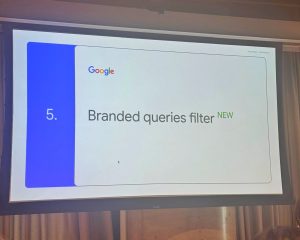
Google Search Advocate Daniel Waisberg shared an early look at a new Branded Query filter during Search Central Live in Tel Aviv.
The feature uses artificial intelligence to figure out which searches are meant for a specific brand. It will group direct brand searches, misspellings, and product-related queries.
Live from Google Search Central Tel Aviv:
Coming soon in Search Console… AI-assisted brand query exclusion 💫 pic.twitter.com/c080oK2Xgk
— Daragh Nener-Lally (@nenerlally) November 20, 2025
What Google Says the Filter Will Understand
During the demo, Google showed that the filter will recognize different types of brand intent. This includes:
- People typing the exact brand name
- People typing misspellings or close variations when trying to reach the brand
- People searching for known brand products or service names
By identifying all of these, Google aims to give a clearer split between direct brand demand and discovery searches.
Why the AI Element Matters
Until now, most SEO teams built their own filters with regular expressions or relied on outside tools. Those methods often break when searchers type sloppy versions of a brand name or combine terms in unusual ways.
AI should be able to interpret these patterns with more accuracy, which means fewer mistakes and cleaner data inside Search Console. It also reduces the need for manual cleanup, which has always been time-consuming.
Teams that work with AI SEO Services may find it easier to interpret shifts in branded and discovery traffic once Google rolls out this update.
How the Update Could Change Reporting
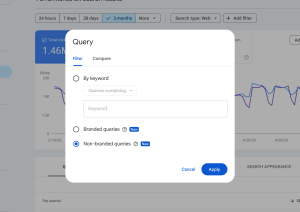
Branded searches often signal familiarity or intent to revisit a known brand. Non-branded searches, on the other hand, reveal how well content attracts new people who may not know the brand yet.
Mixing both types of queries has always made analysis messy.
A native branded filter will help teams show client performance more clearly and reduce confusion around why impressions or clicks spike for reasons unrelated to new audience growth. This is especially helpful for agencies handling multiple accounts.
Points of Caution as the Rollout Approaches
Although the demo looked polished, some brands may still run into classification questions.
Companies with short or common names may need to review how Google categorizes their queries. There may also be differences between past custom filters and the new AI output. The first few weeks after launch will likely involve checking edge cases, comparing numbers, and recalibrating internal reporting.
Google explained in its official blog that the branded queries filter will appear in stages over the next few weeks. Some site owners may not see it right away, and there are a couple of reasons for that.
The feature is limited to top-level properties, so it will not show up for URL-specific paths or subdomains. It also requires a certain amount of search activity. Sites with very low query or impression volume may not meet the threshold needed for the signals to work.
A number of SEO professionals are already asking thoughtful questions about how this will work in practice.
Glenn Gabe shared one of those early reactions on X, noting:
Interesting, will there be any setup for site owners? Do you need to tell GSC which are branded queries and which are brand-related products? They say it’s AI-assisted so maybe not… Eager to see this roll out. https://t.co/LUnjTknjrU
— Glenn Gabe (@glenngabe) November 20, 2025
How Teams Can Get Ready Right Now
Here are a few practical steps that can help teams prepare before the new filter goes live.
- Make a list of all brand terms you currently consider branded. Include variations and product names to help compare later.
- Save your existing branded vs. non-branded reports. These benchmarks will help you measure any shifts once the new filter appears.
- Share an internal note or client update explaining that numbers may change because of a new detection method, not because performance changed.
- Test tricky queries when the feature launches. Some terms may flip classification, and you may want to flag them for future discussions.
- Update dashboards or data pipelines so they align with the new classification once you decide how to adopt it.
What This Means for Agencies and Tools
Agencies will benefit from faster client reporting and less manual cleanup. Third-party dashboards may need to update how they ingest Search Console data and how they define branded filters.
In some cases, agencies might keep their custom filters for historical continuity while adopting the GSC filter for forward-looking dashboards.
Key Takeaways
- Google previewed an AI-powered Branded Query filter at Search Central Live.
- It will group brand names, variations, and brand products.
- AI should provide clearer reporting than manual regex setups.
- No launch date is confirmed, but the public demo indicates it is close.
- Teams should prepare benchmarks and expect classification changes.

Zulekha
AuthorZulekha is an emerging leader in the content marketing industry from India. She began her career in 2019 as a freelancer and, with over five years of experience, has made a significant impact in content writing. Recognized for her innovative approaches, deep knowledge of SEO, and exceptional storytelling skills, she continues to set new standards in the field. Her keen interest in news and current events, which started during an internship with The New Indian Express, further enriches her content. As an author and continuous learner, she has transformed numerous websites and digital marketing companies with customized content writing and marketing strategies.
