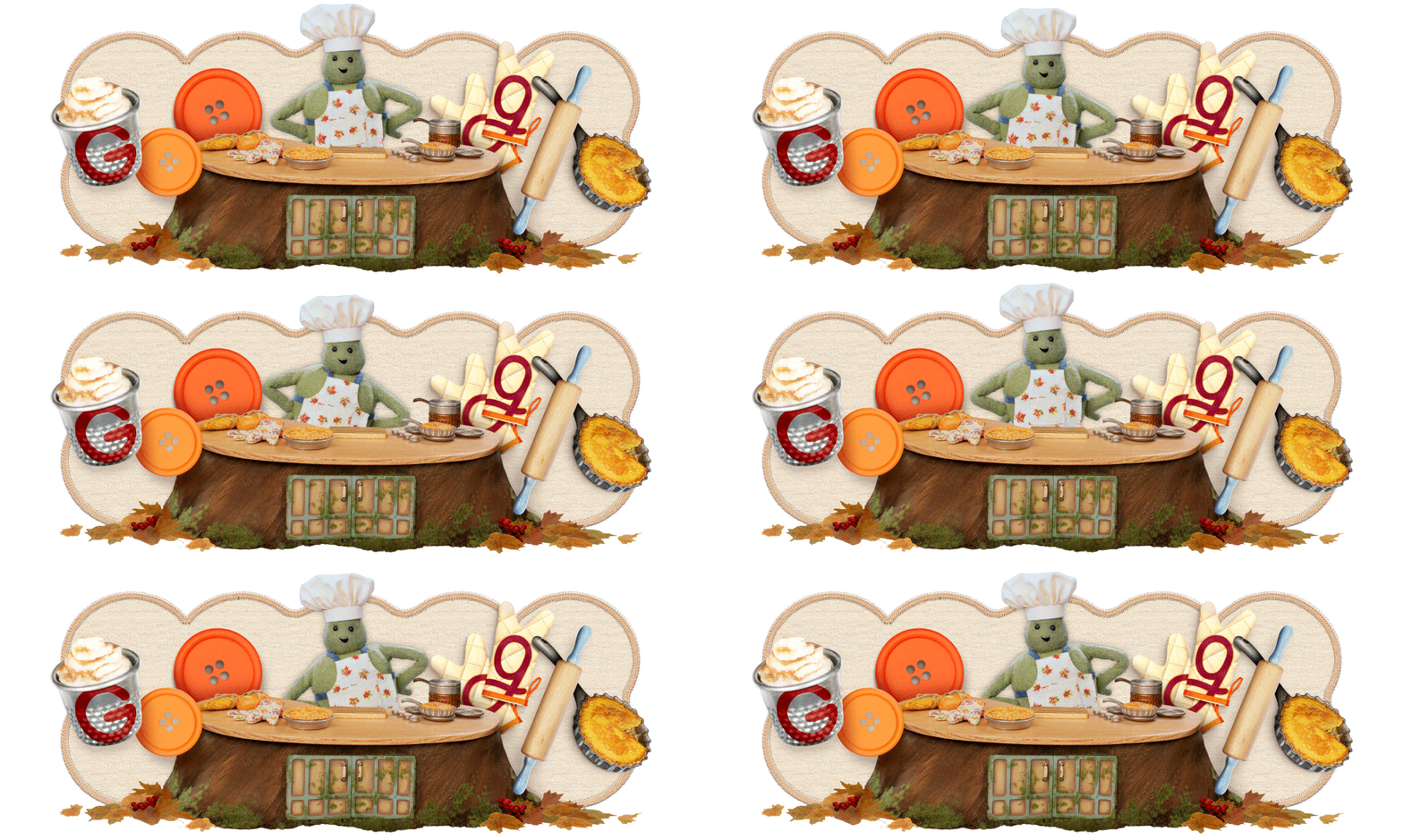
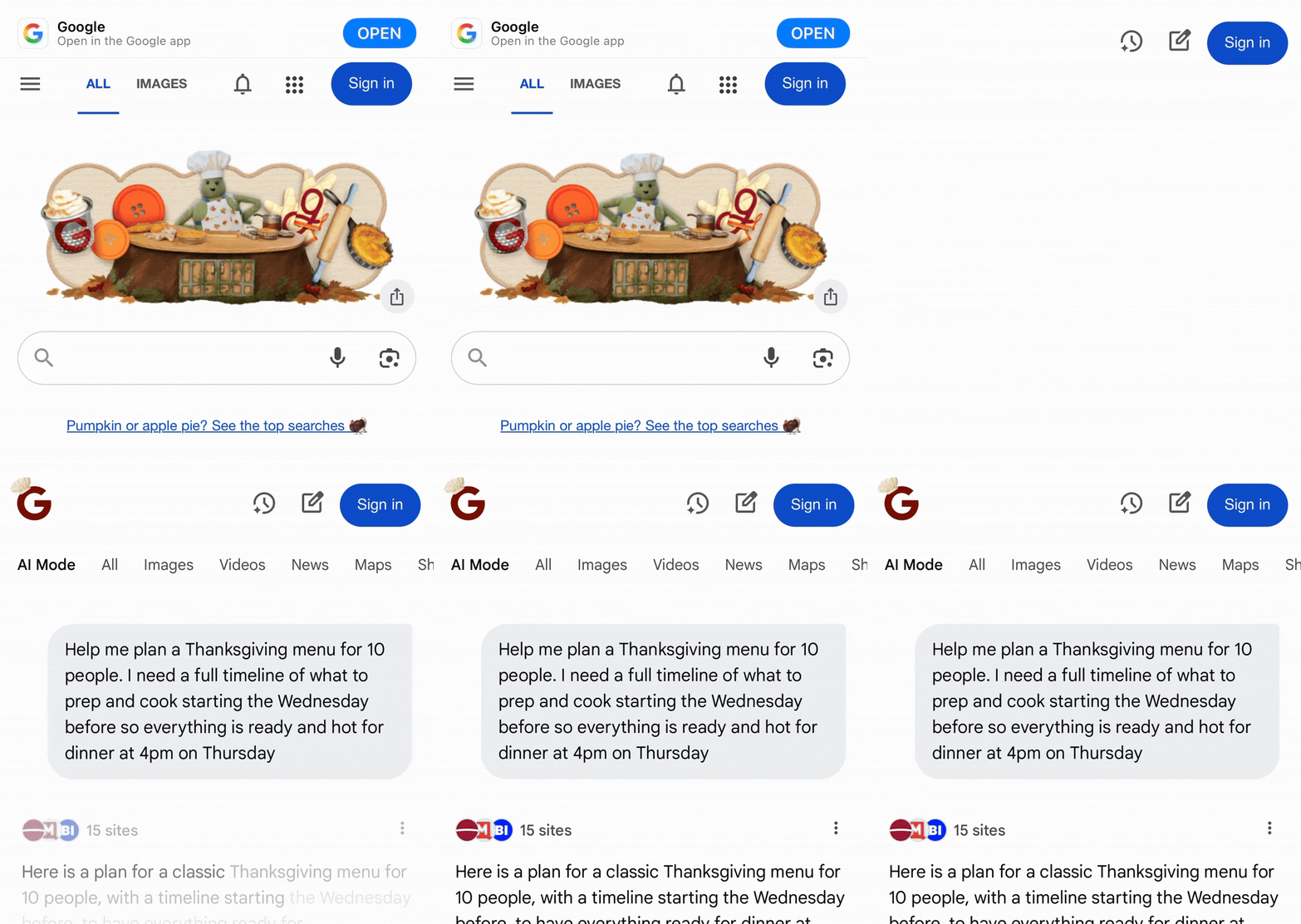
Google’s Thanksgiving Doodle went live this morning, but instead of taking users to the usual search results about the artwork or the artist, the Doodle now redirects directly into AI Mode, dropping users into a pre-filled prompt about planning a Thanksgiving dinner for 10. And surprisingly, the AI results don’t mention the Doodle at all.
What does this shift actually mean? Why is Google using a cultural moment to push AI Mode?
This small change feels bigger because when a Google Doodle, a staple of Search for over two decades stops linking to search results, it signals a deeper internal shift: Google wants users inside AI Mode, not just on the SERP.
Let’s break down everything that happened, what users expected, and why this matters.
Why Did Google Redirect Its Thanksgiving Doodle to AI Mode?
When users clicked the Thanksgiving Doodle on Google.com, they were not taken to the classic results page explaining the Doodle’s story, artist or meaning.
Instead, the click opened AI Mode with a preset prompt:
“Help me plan a Thanksgiving menu for 10 people. I need a full timeline of what to prep and cook starting the Wednesday before so everything is ready and hot for dinner at 4pm on Thursday.”
This is unusual, even jarring because Google Doodles normally celebrate the artwork itself. They rarely, if ever, bypass Search entirely.
This time, Google chose to turn a cultural touchpoint into a funnel for its AI experience. It’s not accidental, and definitely not subtle.
It isa clear experiment in behavior steering: If millions click a Doodle every year, why not use that moment to bring them into AI Mode?
What Does the Doodle Actually Meaningfully Say?
On its official Doodle page, Google shared the backstory but ironically, most people won’t see it because the Doodle no longer links there.
According to Google:
- The Doodle was created in collaboration with Tiny Chef, a lovable herbivore chef who lives inside a tree stump.
- The character “Cheffy” celebrates the spirit of cooking with heart, not perfection.
- The artwork aims to highlight sharing food, joy, and warmth during Thanksgiving.
But here is the real issue: Users don’t get any of this when they click the Doodle.
There is no explanation, no context, no link to the Doodle’s pag, only AI Mode and its Thanksgiving menu generator. And that shift is what caught everyone off guard.
Is Google Using Doodles to Promote AI Mode?
What does this mean in a broader sense? For years, Google Doodles have served as entry points to learning. Whether it’s a tribute to a scientist, an artist, a historical event, or a cultural festival, the point is curiosity → discovery.
This time, however, curiosity is redirected into a transactional AI experience, not knowledge.
And the unanswered question is: Does this represent a permanent shift or just a holiday test?
Because if Google starts using Doodles to push AI Mode, it could redefine the most visible UX surface of Search.
It is an experiment in:
- Changing user behavior
- Familiarizing users with AI Mode
- Replacing informational search journeys with generative ones
And for Google, a company trying to accelerate adoption of AI Mode without alienating mainstream users, this is a clever but controversial move.
Why Does This Matter for Search Experience (and User Expectation)?
People didn’t click the Doodle asking for a Thanksgiving menu. They clicked to learn about the artwork itself. This mismatch signals a deeper friction emerging inside Search:
Is Google prioritizing pushing AI Mode over giving users what they expect?
That’s the heart of the debate forming online. Users expect a Doodle explanation. And Google delivers an AI assistant. If Users want context then Google offers recipes.
This may seem like a small irritation today, but multiply this pattern across cultural moments, news queries, educational topics and most importantly? Holiday searches.
And the user experience starts shifting from searching for information to being pushed into AI workflows.
What Are People Saying About the Redirect?
Critics on X argue that the move undermines the purpose of Doodles entirely.
Google’s Thanksgiving Doodle goes to AI Mode and doesn’t explain the Doodle https://t.co/R7ddvAVjcj
— Barry Schwartz (@rustybrick) November 26, 2025
One of the main reactions has been: “No one is clicking the Doodle to plan a Thanksgiving dinner.”
And honestly… it is hard to disagree. The Doodle is essentially being used as an ad placement for AI Mode, without being labelled as such.
Some users see it as harmless experimentation. Others see it as Google forcing AI adoption too aggressively.
But the core sentiment remains consistent: The Doodle no longer tells you anything about the Doodle.
Is This Google Testing a Future Where SERPs Become Optional?
This may be the bigger story behind the story. Google seems to be probing a world where:
- Search results are not the default
- AI Mode becomes the primary answer engine
- Generative experiences launch without an explicit query
- Google uses its most-trafficked elements to funnel users into AI-first workflows
This aligns with Google’s recent moves:
- AI Overviews appearing in over 50% of queries
- Hints that AI Mode may become the default interface
- Tests where complex queries automatically route into AI Mode
- AI-first search results that prioritize generative UI over traditional links
This Doodle redirect, then, is part of a pattern, not an accident.
What Does This Mean for Publishers and SEO?
It is becoming increasingly clear that Google is repositioning its search surfaces to:
- Introduce AI Mode as the central experience
- Reduce dependence on traditional blue links
- Increase user interaction directly on Google’s own AI pages
And for publishers, the worrying part is simple. If even a Doodle click no longer leads users to a results page… what happens when more search flows bypass the SERP?
Will AI Mode eventually replace the search journey rather than support it? And if Google can hijack its own Doodle clickstream, what stops it from doing the same with other high-traffic surfaces?
These questions are going to matter more than many realize.
So Why Did This Really Happen?
The simplest explanation: Google wants everyday users, not just tech-aware ones to actively use AI Mode. And to get them there, Google needs to introduce it in non-threatening ways.
They need to weave it into familiar interactions and use charming cultural touchpoints like Doodles. And the results? You click a cute art piece → you land inside generative AI.
That is strategic. Do users like it long-term? That is what Google is testing.
A Small Redirect with Big Implications
Google’s Thanksgiving Doodle redirect may look like a holiday experiment, but it reflects a larger truth: Google is quietly reshaping search behavior by redirecting curiosity into AI Mode.
It is subtle. But it also raises concerns about user intent, transparency, and how aggressively Google plans to push AI as the future of Search.
We may look back at this moment as one of the early signs that Google’s centre of gravity is shifting, from Search as we knew it to a generative assistant-led experience.
And if this becomes the norm, then yes… even a Doodle may never look the same again.

Dipti Arora
AuthorDipti Arora is a Senior Content Writer with over seven years of experience creating impactful content across Digital Marketing, SEO, technology, and business domains. She has a strong background in managing news verticals and delivering editorial excellence. Dipti has contributed to leading publications such as The Times of India and CEO News, where her research-driven storytelling and ability to simplify complex subjects have consistently stood out. She is passionate about crafting content that informs, engages, and drives meaningful results.
