A Peloton prompt surfaced in a ChatGPT conversation and set off a wave of questions from paid users, prompting OpenAI to explain that the suggestion was part of an unfinished app-discovery test, not advertising.
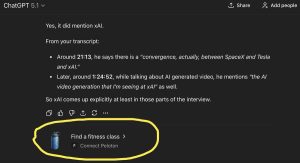
What looked like an ordinary chat turned into a viral talking point when a screenshot shared by Hyperbolic co-founder Yuchen Jin showed ChatGPT recommending the Peloton app during a discussion about Elon Musk and xAI.
The post spread widely on X on December 1, 2025, and reactions came fast.
Wow, ChatGPT is already showing ads?
I was just talking with it about Elon on Nikhil’s podcast when out of nowhere it popped up an ad saying, “Find a fitness class, Connect Peloton.” 🤯
Wild. At least match the ad to the topic next time! https://t.co/U4QMmiGbRn pic.twitter.com/s9uREIlB50
— Yuchen Jin (@Yuchenj_UW) December 1, 2025
Many wondered why such a suggestion appeared for a Pro subscriber paying $200 each month. They expected relevance and clarity, especially inside a paid experience.
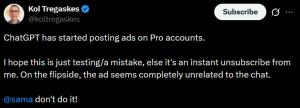
OpenAI’s Response
Daniel McAuley, who leads data efforts at the company, said the Peloton prompt was not an ad. Instead, it was part of a system meant to highlight apps inside ChatGPT when the assistant thinks they might be useful or when a user mentions one.
Hey, Kol. Thanks for flagging 🙏 This is not an ad (there’s no financial component). It’s only a suggestion to install Peloton’s app. But the lack of relevancy makes it a bad/confusing experience. We’re iterating on the suggestions and UX, trying to make sure they’re awesome.
— Daniel McAuley (@_dmca) December 1, 2025
He acknowledged that the Peloton suggestion wasn’t relevant in this case and noted that the team is refining how these moments appear.
Why Relevance Matters
One reason the moment stirred so much reaction is that even unpaid suggestions can feel like ads if they derail the conversation or push users toward services they did not ask about.
Since users currently cannot disable these suggestions, some felt the experience was drifting away from a clean, uninterrupted chat.
For Pro customers who pay a premium, the expectation is a focused environment. If conversations start to feel cluttered, people may consider trying other AI tools that promise fewer interruptions.
How This Fits Into OpenAI’s App Project
OpenAI introduced its app platform in October, explaining that apps would work directly inside chats and respond the moment users need them.
Big names such as Booking.com, Canva, Zillow, Coursera, Expedia, and Figma are already part of the effort.
The recent confusion shows how early the rollout still is. The idea of surfacing useful apps at the right time can bring convenience, but only if the suggestions appear with precision.
Guidance for Users and Product Teams
If you use ChatGPT regularly, expect occasional experiments like this during the app-discovery phase. The best way to influence improvements is to provide clear feedback whenever a suggestion feels irrelevant or distracting.
Teams building similar features can take a lesson from this moment. Introduce prompts sparingly, and only when the connection is obvious. Give people an option to turn suggestions off. Widen testing groups, watch early signals, and adjust quickly so the experience feels genuinely helpful.
Agencies focused on AI SEO can use these lessons to refine how they guide clients and shape smoother, more helpful interactions inside conversational tools.
What Happens Next
OpenAI’s vision for app integration could eventually streamline how people find tools inside chat environments. If suggestions become smarter, users may discover apps more naturally. But more missteps could fuel skepticism and slow adoption.
Watch for changes in relevance, opt-out options, and how partners respond to feedback as the platform matures.
Key Takeaways
- The Peloton suggestion inside ChatGPT was a test feature, not a paid promotion.
- Subscribers questioned why irrelevant prompts showed up during unrelated chats.
- OpenAI says it will refine when and how app suggestions appear.
- Users want more control, including the ability to turn off suggestions.
- The success of app integrations depends on relevance and user trust.

Zulekha
AuthorZulekha is an emerging leader in the content marketing industry from India. She began her career in 2019 as a freelancer and, with over five years of experience, has made a significant impact in content writing. Recognized for her innovative approaches, deep knowledge of SEO, and exceptional storytelling skills, she continues to set new standards in the field. Her keen interest in news and current events, which started during an internship with The New Indian Express, further enriches her content. As an author and continuous learner, she has transformed numerous websites and digital marketing companies with customized content writing and marketing strategies.