OpenAI has launched a new generation of chat-based apps that live inside ChatGPT, along with an SDK that allows developers to build their own.
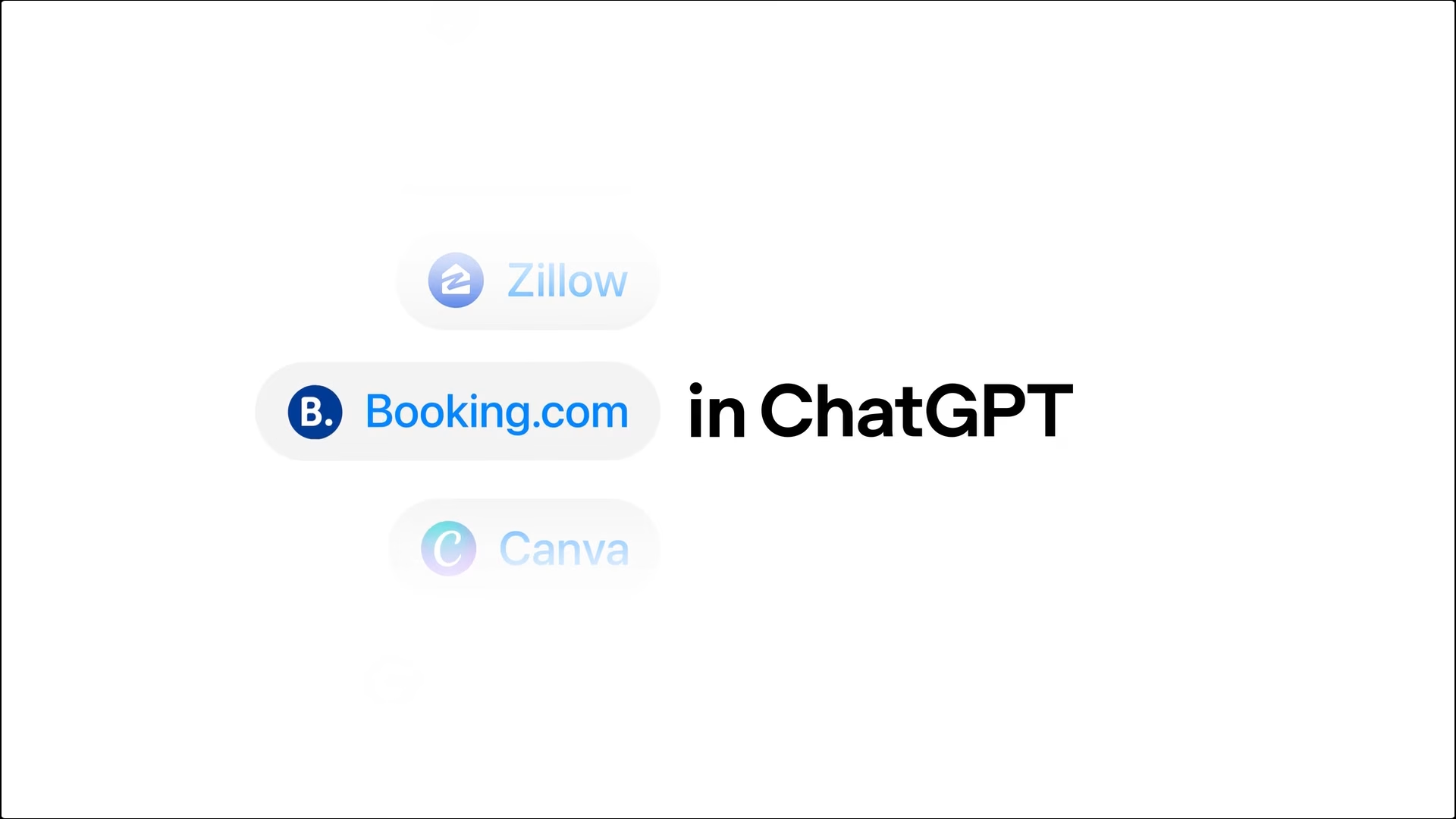
OpenAI on Tuesday announced a major expansion of ChatGPT’s capabilities, introducing “apps” that can function directly inside the chat interface.
The company also put in place a software development kit (SDK) that lets developers create their own applications for the service, marking a significant step toward turning ChatGPT into a platform rather than just a product.
Happy OpenAI DevDay!
Today we’re introducing a new generation of apps you can talk to – built right into ChatGPT – and the tools for developers to build them. Whether it’s creating a playlist with @Spotify, finding your next home with @Zillow, or taking a course with @Coursera,… pic.twitter.com/GwwFk1pdxz
— Nick Turley (@nickaturley) October 6, 2025
The new feature allows users to interact with third-party services in natural language, requesting actions or information without leaving the conversation.
Apps can be summoned by name, for instance, “Spotify, make a playlist for my trip this weekend,” or appear contextually when relevant to what’s being discussed.
The rollout begins immediately for all logged-in ChatGPT users outside the European Union, covering Free, Go, Plus, and Pro plans.
OpenAI’s early partners include Booking.com, Canva, Coursera, Figma, Expedia, Spotify, and Zillow. Additional partners are expected later this year, with European access to follow.
For developers, the SDK preview offers a new way to reach ChatGPT’s vast user base. Built on the Model Context Protocol, or MCP, the toolkit provides an open standard for connecting ChatGPT to external systems and data sources.
Inside the New Experience
Apps in ChatGPT are designed to appear naturally in conversation. If a user discusses vacation plans, for example, ChatGPT might suggest the Expedia app to search flights or hotels. If they’re house-hunting, it could bring up Zillow, allowing them to explore listings directly in the chat window.
The idea is to make tasks simpler and more immediate. Instead of juggling multiple apps or browser tabs, users can perform actions through natural conversation.
Why This Matters
The introduction of apps represents a turning point for OpenAI’s flagship product. What began as a chatbot for answering questions and generating text is evolving into a multi-purpose platform that can handle actions and transactions.
By inviting developers to build on top of ChatGPT, OpenAI is effectively creating an ecosystem similar to mobile app stores or browser extensions — except this one runs on conversation.
For developers, the potential audience is enormous. A study says more than 700 million people use ChatGPT, giving app creators direct access to a massive pool of users through a single conversational interface.
The SDK preview, available starting October 6th, lets developers experiment with building and testing apps inside ChatGPT. It supports custom interfaces, natural language logic, and direct connections to back-end systems, enabling features like user logins or premium access.
Building on an Open Standard
The new SDK extends the Model Context Protocol, an open standard introduced earlier this year that allows ChatGPT to securely connect to external data and tools. By making the SDK open source, OpenAI says it wants to encourage broader adoption beyond its own ecosystem. Apps built with it could, in theory, run anywhere that adopts the same protocol.
OpenAI has published documentation, design guidelines, and sample apps to help developers get started. Early testers can use a new “Developer Mode” inside ChatGPT to preview their creations before public release.
Later this year, OpenAI plans to begin accepting app submissions for review and publication, with a curated directory where users can browse and search for new additions. Apps that meet high standards of design and functionality will receive featured placement both in the directory and in conversations.
Safety, Privacy, and Data Transparency
As with previous updates, OpenAI is emphasizing user safety and privacy controls. All apps must follow the company’s usage policies and be appropriate for all audiences. Developers must publish clear privacy policies and collect only the minimum data required for functionality.
The first time a user connects an app, ChatGPT will display a prompt explaining what data may be shared. Later this year, OpenAI plans to introduce more detailed controls that let users specify which types of data each app can access for personalization.
These policies, the company says, are meant to preserve user trust while opening the system to third-party developers.
A Preview of What’s Next
OpenAI says the app ecosystem will expand in stages. Later this year, ChatGPT Business, Enterprise, and Education customers will gain access to apps. Developers will also be able to publish and monetize their work, supported by a new standard called the Agentic Commerce Protocol, which allows instant checkout inside ChatGPT.
More reusable components and faster developer tooling are already in the pipeline. The company says it plans to use the preview period to gather feedback from builders before a full public release.
If successful, the update could make ChatGPT a central hub for digital activity — not only for answering questions but for accomplishing real tasks. In doing so, OpenAI would be positioning its AI assistant as an all-purpose interface for both users and businesses.
Practical Insights
OpenAI’s announcement carries major implications for both everyday users and developers hoping to engage with ChatGPT’s massive audience. Here’s how to take advantage of what’s new:
For users:
- Apps can be accessed directly inside ChatGPT without separate installation.
- Type an app’s name followed by a natural language request.
- Review permissions before connecting to ensure transparency.
- Expect more app options as the ecosystem expands.
- Future privacy settings will allow fine-grained control of shared data.
For developers:
- The Apps SDK preview is available now with full documentation.
- Developers can test in ChatGPT’s Developer Mode.
- Apps must meet OpenAI’s safety, privacy, and content standards.
- Monetization and app submissions will open later this year.
- Building on the open MCP standard allows cross-platform flexibility.
Key Takeaways
- ChatGPT apps are now live for users. People can interact with third-party services like Spotify, Canva, and Zillow directly through chat.
- Developers can build with the Apps SDK. The toolkit allows creators to design chat-ready apps using the open Model Context Protocol.
- The rollout has begun globally. The new apps are available to all logged-in users outside the EU, with European access coming soon.
- Privacy remains a top priority. Apps must include clear policies and request user consent before sharing data.
- A full app ecosystem is coming. Later this year, developers will be able to publish and monetize apps in a dedicated ChatGPT directory.

Zulekha
AuthorZulekha is an emerging leader in the content marketing industry from India. She began her career in 2019 as a freelancer and, with over five years of experience, has made a significant impact in content writing. Recognized for her innovative approaches, deep knowledge of SEO, and exceptional storytelling skills, she continues to set new standards in the field. Her keen interest in news and current events, which started during an internship with The New Indian Express, further enriches her content. As an author and continuous learner, she has transformed numerous websites and digital marketing companies with customized content writing and marketing strategies.
