
The question resurfaces every few years, sparking debate across marketing forums, panels, and podcasts alike – Is SEO finally dead?
But this time, the concern feels challenging. With AI overviews, large language models (LLMs) and answer engines changing how people consume information.
It is hard not to ask: If AI delivers answers directly, where does that leave traditional search optimization?
Are we witnessing the end of SEO as we know it, or are we simply stepping into a new era where optimization itself takes a smarter, more strategic form?
To find out, we turn to the latest roundtable of “SEO on Air” by Stan Ventures, where three industry leaders came together to unpack this very question: Alfredo Abreu, Tarun Gehani, and Daniel Hamilton.
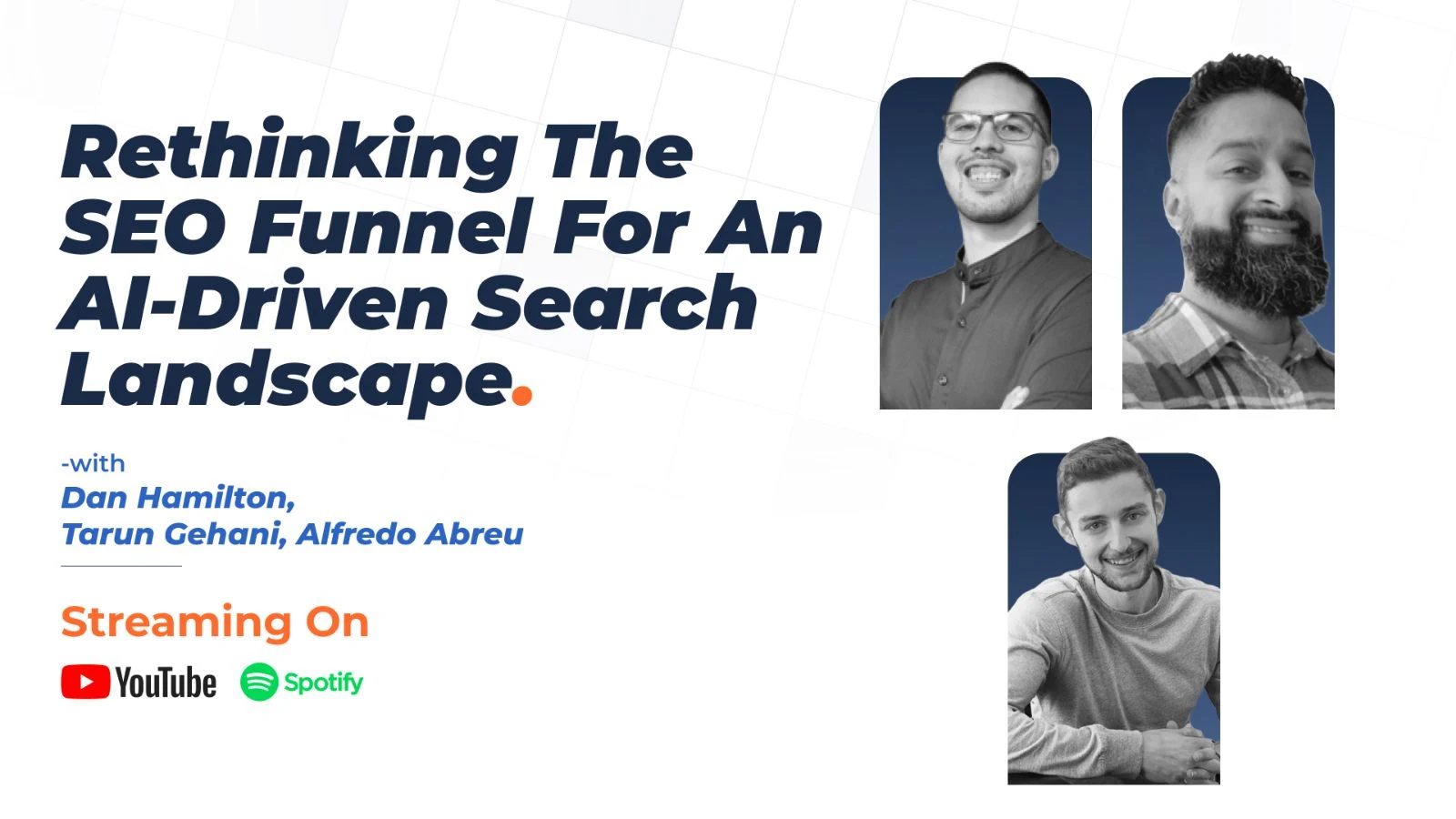
Their conversation offered clarity, realism and perhaps most importantly, optimism.
The consensus? SEO is not dying. It is evolving, just as it always has.
The Experts In The Podcast
Alfredo Abreu, from Caracas, Venezuela, has been in the SEO space for over five years, now working on product management for a North American agency.
While his current focus is e-commerce, his roots span across B2B and service providers, giving him a 360-degree understanding of how optimization strategies shift across industries.
Tarun Gehani, SEO Director at Pure Visibility, has spent over 15 years leading strategies for healthcare, technology and multi-location clients. He believes SEO today requires a holistic approach that blends technical precision with user experience and focuses less on vanity metrics and more on real business outcomes.
Daniel Hamilton, Director of SEO at Zero Gravity Marketing, brings six years of experience building omnichannel strategies that integrate SEO with paid ads, social media, and email marketing.
He represents the new wave of SEOs who view organic optimization as a collaborative engine, not an isolated practice.
Together, they dissected the current challenges and opportunities that come with an AI-driven search environment.
Is SEO Dead, or Just Evolving Into Something New?
Daniel Hamilton jumped in first and his answer was definitive.
“SEO is not dead. It is evolving. It’s branching into different forms, like SEO for AI, GEO (Generative Engine Optimization), and LLM optimization.
The fundamentals have not disappeared; they are just being adapted to fit a changing landscape.”
He compared this evolution to PPC, which started as a general concept but now includes countless specializations, from display to retargeting to programmatic.
SEO, he said, is simply expanding its toolkit to stay relevant in a multi-layered, AI-driven world.
Tarun Gehani agreed wholeheartedly. He reflected on the past two decades of SEO evolution, the countless algorithm updates, from Panda and Penguin to Core and Helpful Content and how each one sparked doomsday predictions.
Yet, SEO always rebounded stronger, smarter, and more strategically.
“Every time Google makes a major change, people panic,” he said. “But every major update has actually aligned SEO closer to user behavior.
When mobile became dominant, we adapted. When voice search came, we evolved again. Now it’s AI’s turn.”
In other words, SEO doesn’t die, it mutates. And as Alfredo Abreu humorously put it,
“SEO will die when people stop searching. And I don’t think humanity is getting bored of the internet anytime soon.”
How AI Is Redefining Search Behavior
The three experts agreed that AI is drastically transforming how people find information. Search behavior today isn’t limited to Google.
People “search” on TikTok, Reddit, Instagram, LinkedIn, and even ChatGPT, each powered by its own algorithm.
That means SEO now extends far beyond search engines, it is about visibility across discovery ecosystems.
Tarun noted that AI summaries and overviews are already influencing user decisions. Instead of scrolling through ten blue links, users are satisfied with one AI-generated answer.
The downside? Fewer clicks, fewer impressions, and less measurable engagement, even for pages that still rank well.
“Clients often tell us their rankings haven’t changed, but their traffic has dropped,” Tarun said. “That’s because users aren’t clicking anymore. They are getting the answer in the SERP itself. It is not a ranking issue, it is a behavioral shift.”
But the silver lining, he added, is that AI still depends on SEO-optimized content to generate those answers.
If your content isn’t accessible, structured, and authoritative, AI won’t use it as a data source. So while the click may disappear, visibility in the form of AI mentions is the new frontier.
Alfredo added, “SEO exists anywhere people search and even within social media algorithms. Whether you’re on TikTok, YouTube, or ChatGPT, you are optimizing to be found. That’s SEO in its purest sense.”
How Businesses Are Reacting: From Search to AI Visibility
Let’s see, are clients already adjusting their expectations? Absolutely.
According to Daniel, more businesses are now approaching agencies asking, “How can we appear in AI results?” rather than “How do we rank higher on Google?”
It is a subtle but powerful shift, from ranking to representation.
Tarun shared that at Pure Visibility, they have noticed two clear patterns:
- New clients are asking how to be visible in LLMs and AI-generated results.
- Existing clients are noticing declining organic traffic despite stable rankings because users are simply not clicking through as often.
This marks the beginning of a new SEO paradigm and one where being featured in AI answers becomes just as valuable as ranking on page one.
As Alfredo explained,
“Clients used to be hesitant about AI. But now, they come asking how to show up in AI results. We’re all learning together.
There’s no absolute playbook yet, but structured data, accessibility, and high-quality content are non-negotiables.”
Adapting Strategies: What Still Works and What’s Changing
If SEO isn’t dead, how are the pros adapting?
The panel’s response was unanimous by experimenting, iterating, and combining fundamentals with innovation.
Daniel revealed that his team has been leaning heavily on structured data, schema markup, and long-tail query testing. By studying what AI models cite and summarize, they refine their content to mirror those data patterns.
“We test queries and see what kind of content AI pulls,” he explained. “If it is informational, we rewrite our articles to directly answer those subtopics. We make our content easier for AI to summarize.”
Tarun added that his agency is focusing on concise content structures and clear formatting.
“AI platforms value clarity and brevity. Reformatting pages to give straightforward answers early on and expanding later makes it easier for AI systems to cite your content.”
Alfredo, meanwhile, reminded listeners not to abandon traditional SEO altogether.
“Most of what works in AI SEO is just good old SEO,” he said. “Answer questions clearly, avoid hiding information behind scripts, optimize for accessibility, these practices have been around for years. They still work.”
For all three experts, the formula is simple: keep what’s proven, enhance what’s emerging.
Managing Client Expectations in a Fast-Moving World
Of course, a big part of SEO success still hinges on client education especially in an era of instant gratification.
Daniel noted that many clients now expect “AI-speed” results. His approach? Balance quick wins with long-term strategy.
“We start by fixing technical issues, optimizing metadata, and auditing indexing problems that can show fast results. But we also make it clear that sustainable SEO takes time.”
Alfredo takes an equally transparent approach.
“I babysit the client, not literally,” he laughed, “but I explain in simple terms why SEO takes months, not days. I even show them Google’s official timeline, which says changes take 90 days or more to reflect. Once they see that, they are more patient.”
Tarun agreed, adding that setting expectations upfront is vital for trust.
“SEO is compounding interest. You invest effort now and see exponential results later. But you have to explain that, otherwise, clients assume silence means stagnation.”
So, What’s the Real Future of SEO?
Let’s see, what does the road ahead look like for SEO professionals?
The experts agreed on one thing: SEO’s scope is expanding, not shrinking. AI may be transforming how search works, but it’s also creating new opportunities for visibility.
AI’s Relationship with SEO
Tarun Gehani focus that AI and SEO are not rivals but partners in progress. He explained that AI systems still rely heavily on well-structured, optimized and human-created content to learn and generate accurate responses.
In other words, AI can only summarize or recommend information that already exists and SEO ensures that content is accessible for those systems to interpret.
A New Beginning for SEO Experimentation
Daniel Hamilton pointed out that the current landscape feels like the early days of SEO all over again, when experimentation, curiosity, and testing were the only ways to learn what works.
He highlighted that every business, marketer, and creator is starting from the same point in this AI-driven environment. That, he said, makes this era exciting because innovation and collaboration will shape how SEO evolves over the next few years.
SEO’s Enduring Relevance
Alfredo Abreu brought the discussion full circle by focusing on the permanence of search itself.
He explained that as long as people continue to look for information whether through Google, ChatGPT, TikTok, or any AI tool, SEO will remain vital. Search behavior may change, but the need to be found will not.
SEO’s New Era Is About Synergy, Not Survival
So, is SEO dead? Not even close.
The world of search is expanding beyond links and rankings into a broader ecosystem of discoverability, AI visibility, and user intent alignment.
The lines between search, social, and AI are blurring but the core mission remains the same: helping people find what they need.
What this discussion on SEO on Air makes clear is that SEO is entering a new era and one where human strategy and machine intelligence must coexist.
The future belongs not to those who resist change, but to those who adapt, iterate, and evolve. Because at the end of the day, SEO isn’t dead, it’s simply thinking smarter, faster, and deeper than ever before.

Dileep Thekkethil
AuthorDileep Thekkethil is the Director of Marketing at Stan Ventures, where he applies over 15 years of SEO and digital marketing expertise to drive growth and authority. A former journalist with six years of experience, he combines strategic storytelling with technical know-how to help brands navigate the shift toward AI-driven search and generative engines. Dileep is a strong advocate for Google’s EEAT standards, regularly sharing real-world use cases and scenarios to demystify complex marketing trends. He is an avid gardener of tropical fruits, a motor enthusiast, and a dedicated caretaker of his pair of cockatiels.
