
In January 2025, Google made a decisive update to its Search Quality Raters Guidelines (QRG), adding clear language to crack down on misleading content, fake authority, and manipulative page designs.
These changes are designed to help human raters flag websites that stretch the truth, fake trust signals, or trick users into clicking and buying.
If your website relies on artificial credibility, it’s time to rethink your strategy.

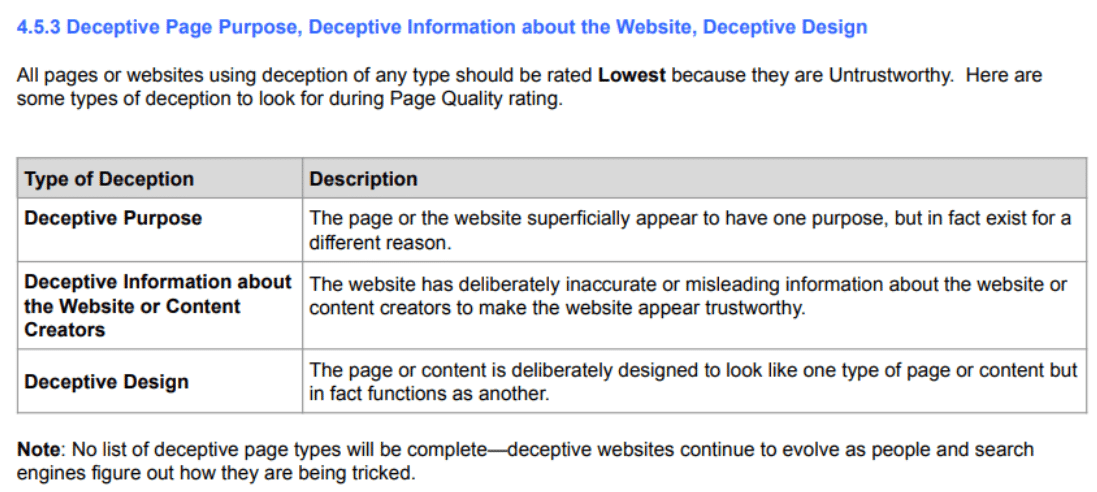
What’s New in Section 4.5.3
Section 4.5.3, previously labeled “Deceptive Page Purpose and Deceptive MC Design,” has been retitled and rewritten to reflect a wider scope.
The new title, “Deceptive Page Purpose, Deceptive Information about the Website, Deceptive Design,” introduces more examples and clearer language to help raters spot dishonest behavior.
Three key areas are now under the microscope:
- Fake claims about who you are or what you offer
- False representations of trust, authority, or experience
- Interface designs meant to mislead or manipulate users
Faking EEAT? Google’s Watching
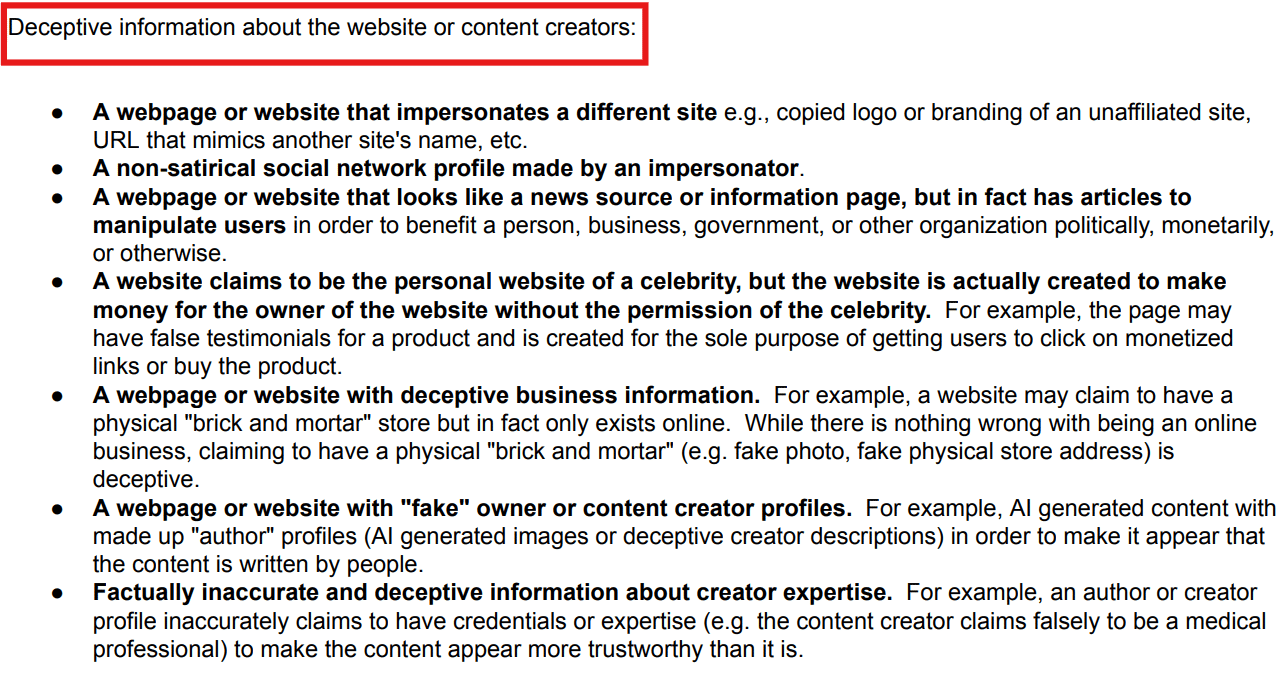
A major addition is a new subsection targeting fake EEAT. These are signals that Google uses to evaluate whether a website is credible. The updated guidelines now outline exactly what counts as deceptive:
- Claiming to have a physical store when none exists.
- Using made-up author profiles or AI-generated personas.
- Lying about professional credentials or experience.
For instance, if a blog says a doctor runs it but the person behind it has no medical background, that site could now be flagged for low quality.
Even stock photos of fake team members or bios packed with unearned titles are seen as misleading.
This section is a wake-up call for marketers using AI to churn out content and slap a fictional face on it.
Intent Is Everything
What’s behind your content matters just as much as what’s in it. That’s the message Google is sending.
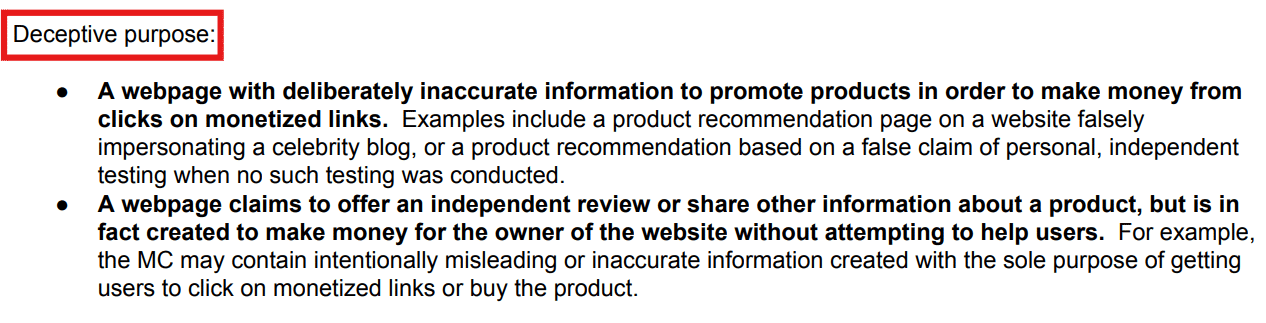
The new guidelines explain that “deceptive purpose” includes any content that’s designed to make money or influence behavior under false pretenses.
One example is a product review site that pretends to be a personal blog with fake testimonials or celebrity names. The content might look fine, but the purpose, that is, driving sales through dishonesty, gets it flagged.
Manipulative Design Tricks Are Also Out
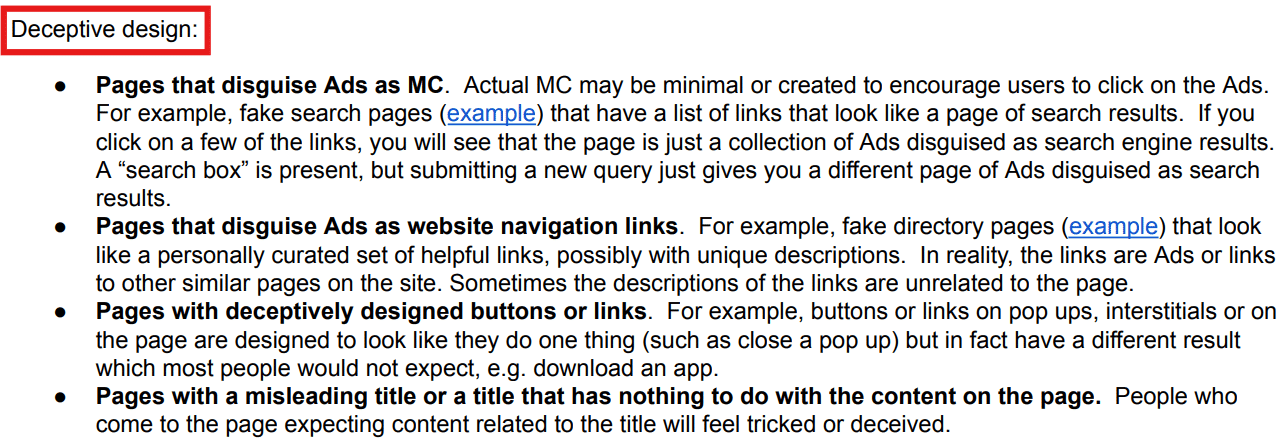
The guidelines now include examples of deceptive page design that can hurt your credibility:
- Buttons that look like they’ll close a pop-up but start a download instead
- Page titles that promise one thing but deliver unrelated content
If your design causes users to take actions they didn’t expect, you’re at risk. This applies to aggressive affiliate marketing tactics and misleading navigation cues that misrepresent the page’s real function.
What This Means for Your Website
If you’re creating content for search, selling online, or managing a blog, this update affects you directly. Google is prioritizing trust, and it wants both its algorithms and its raters to recognize when trust is being faked.
This isn’t a minor update. It’s a message: surface-level polish doesn’t cut it anymore. Authority can’t be manufactured.
If your site misleads visitors or pretends to offer more credibility than it truly has, it’s going to struggle.
Simple Steps to Stay on the Right Side of Google
Here’s how to make sure your site stays credible, honest, and aligned with what Google now expects.
Be Honest About Who You Are
Don’t use fake addresses or team members. If you run a business online, say that plainly. Authenticity is more valuable than a false storefront.
Don’t Invent Credentials
If someone without formal training writes your content, don’t claim they’re an expert. Be transparent about their experience and background.
Check Your Author Pages
Make sure author bios are real, clear, and link to external proof when possible. Avoid AI-generated faces or generic profile blurbs.
Stop Misleading with Design
Every element on your site should do what it looks like it will do. No fake buttons, no bait-and-switch tactics, and no deceptive layouts.
Let EEAT Come Naturally
EEAT isn’t something you can paste into a page. It grows through consistent, honest publishing, good sourcing, real-world credibility, and satisfied users.
Google Is Drawing a Line
Human raters might not directly change rankings, but their feedback trains the systems that do. If your site falls into the kinds of deception outlined here, it may not see penalties tomorrow, but you’re already on borrowed time.
This isn’t a crackdown on AI or automation. It’s a warning against fakery. Google knows what manufactured authority looks like, and it’s getting better at spotting it.
If your website builds value, demonstrates real knowledge, and serves its audience without shortcuts, you’re doing exactly what Google wants. But if you’re faking it, even a little bit, this update just made it riskier than ever.
Key Takeaways
- Google now flags fake EEAT practices like false bios and business claims.
- Deceptive intent (not just false info) can lead to a quality downgrade.
- Misleading buttons and bait-and-switch titles may trigger penalties.
- These changes guide human raters, but also inform future algorithms.
- Honesty, accuracy, and transparency are now essential ranking signals.

Dileep Thekkethil
AuthorDileep Thekkethil is the Director of Marketing at Stan Ventures, where he applies over 15 years of SEO and digital marketing expertise to drive growth and authority. A former journalist with six years of experience, he combines strategic storytelling with technical know-how to help brands navigate the shift toward AI-driven search and generative engines. Dileep is a strong advocate for Google’s EEAT standards, regularly sharing real-world use cases and scenarios to demystify complex marketing trends. He is an avid gardener of tropical fruits, a motor enthusiast, and a dedicated caretaker of his pair of cockatiels.
