
Google has made another move that is sending shockwaves through the SEO world: the removal of the “&num=100” parameter.
For years, this small tweak in a search URL allowed SEOs, marketers and rank-tracking tools to view the top 100 search results on a single page. But as of September 2025, that option is gone.
Now, if you want the top 100 results, you must paginate through 10 separate pages, each with 10 results. For casual users, this might not sound dramatic. But for SEOs and businesses that depend on large-scale rank tracking and competitive intelligence, this change fundamentally alters the playing field.
At Stan Ventures, we have been watching this development closely. And let’s be honest, this is not just a technical tweak.
It is a strategic move from Google that will reshape SEO workflows, tool costs, and data accuracy in the months ahead. So, what exactly does this mean for your business, and how should you adapt? Let’s break it down.
Why Did Google Remove the 100-Result Parameter?
Google has not released an official explanation, but based on patterns we have observed, three motivations seem likely:

- Curbing automated scraping: The “&num=100” parameter was a gift for bots and tools scraping SERPs at scale. In an era where AI companies are aggressively pulling web data to train models, Google may want to tighten access.
- User experience alignment: The vast majority of users never see more than 10 results per page. By removing the bulk option, Google ensures SEOs don’t have visibility beyond what normal users experience.
- Infrastructure and efficiency: Serving 100 results at once is resource-heavy. Forcing pagination spreads the load and reduces strain on Google’s systems.
Regardless of the reason, the outcome is clear: the barrier to accurate, large-scale SEO data collection just increased by 10x.
Why Does This Change Matter for SEO Professionals?
On paper, it is a pagination tweak. In practice, it has ripple effects across the industry:
- Rank tracking costs go up: Tools now need 10 requests to get the same data they previously captured in one. That means higher bandwidth, more server resources, and potentially higher subscription prices for users.
- Data freshness may suffer: Collecting large sets of keywords will take longer, leading to reporting delays.
- Accuracy risks increase: If tools can’t adapt, SEOs may see misleading rank drops or incomplete data.
And let’s not forget: this comes at a time when Google’s AI Overviews, Knowledge Panels, and featured snippets are already crowding the SERPs, reducing the visibility of traditional blue links.
The Stan Ventures Perspective: Turning Disruption Into Strategy
Here is where we stand: yes, this change makes life harder for SEOs who rely purely on raw rank positions. But for us at Stan Ventures, it is an opportunity to rethink how we define SEO visibility and success.
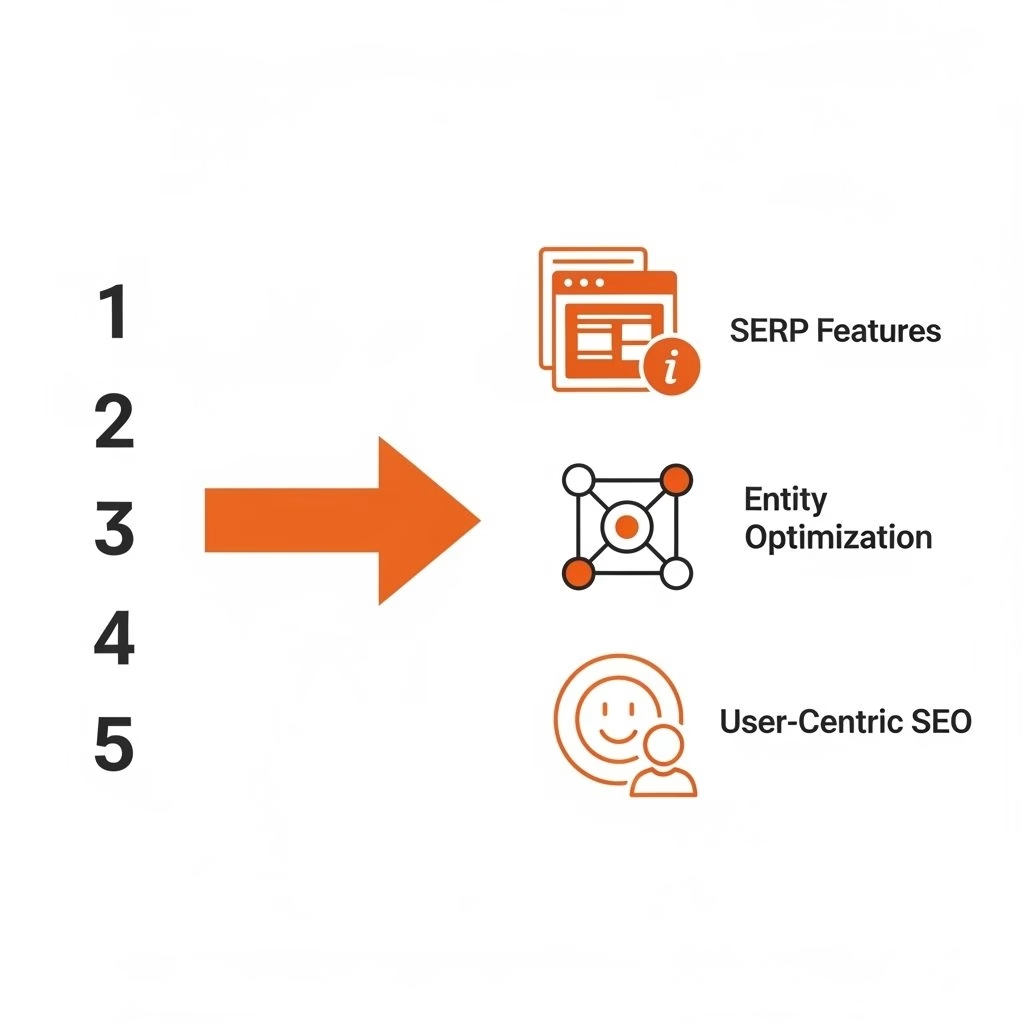
For years, we have been telling clients: don’t obsess over being “#47” in Google. Instead, focus on:
- Owning SERP features (snippets, FAQs, knowledge panels).
- Entity optimization that makes your brand recognizable to Google’s Knowledge Graph.
- User-centric SEO, where relevance and authority matter more than raw ranking.
This parameter removal only reinforces that mindset. It is proof that Google wants SEOs to stop relying on mechanical shortcuts and instead build brands that algorithms can’t ignore.
How Stan Ventures Is Responding to the Change
Unlike smaller players scrambling to patch their systems, we at Stan Ventures had already anticipated a shift like this. Here is how we are handling it for our clients:
1. Advanced SERP Tracking
We have enhanced our tracking infrastructure to capture paginated SERPs efficiently, without compromising data accuracy. Yes, it requires more requests, but our systems are built for scale.
2. Visibility Beyond Rankings
Instead of just reporting “position 1–100,” we are expanding reporting into:
- Share of Voice in SERPs.
- SERP feature dominance (snippets, knowledge panels, local packs).
- Entity presence in AI Overviews.
This paints a fuller picture of visibility that simple rank positions can’t capture anymore.
3. Proactive SEO Adjustments
We are advising businesses to focus on:
- Structured data and schema optimization.
- Authority-building through PR and high-quality backlinks.
- Content strategies designed for AI-readiness, not just keyword rankings.
Industry Implications: What Comes Next?
Let us zoom out. Why does this matter beyond your dashboards?
- Tools may get more expensive: Expect some platforms to raise prices as their infrastructure costs rise.
- Rank obsession may fade: Businesses will need to accept that SEO is no longer about 100 clean rankings, but about overall discoverability.
- Google tightens its grip: By raising the cost of data collection, Google keeps more control over what SEOs can measure and, indirectly, how strategies are built.
At Stan Ventures, we believe this is part of a broader trend: Google is moving toward entity-first, AI-powered search. Traditional rankings are just one piece of a much larger puzzle.
Example: What This Means in Practice
Let’s take an example. Imagine you’re tracking “CRM software.”
- Before, you could instantly see all the top 100 competitors on one page. Easy benchmarking.
- Now, you will need 10 paginated views, and if your tool is not efficient, you might only get the top 20 or 30.
But here is the kicker: even if you do see the top 100, the real visibility battle is happening elsewhere, in the AI Overview that answers “What’s the best CRM software?” right at the top. If you’re not there, being in position #32 means little.
That is why our focus at Stan Ventures is shifting toward AI-driven SEO visibility. We are helping clients ensure their brands aren’t just in the rankings but in the summaries, snippets and AI-powered answers that shape real user behavior.
Adapting With Stan Ventures
So, let us call it like it is: the removal of the 100-parameter is frustrating, yes. But it is also a wake-up call. Google is showing us that the old ways of measuring SEO are fading.
At Stan Ventures, we are not waiting for the dust to settle. We are already helping clients pivot from raw rank tracking to holistic visibility strategies that account for pagination, AI overviews, knowledge panels and beyond.
The bottom line? Don’t panic about this change. Partner with an SEO team that’s built for volatility, and you will turn disruption into opportunity.
Ready to adapt your SEO strategy for the new SERP reality? Book a consultation with Stan Ventures today, and let’s make sure your brand stays visible, no matter how Google changes the rules.

Dileep Thekkethil
AuthorDileep Thekkethil is the Director of Marketing at Stan Ventures, where he applies over 15 years of SEO and digital marketing expertise to drive growth and authority. A former journalist with six years of experience, he combines strategic storytelling with technical know-how to help brands navigate the shift toward AI-driven search and generative engines. Dileep is a strong advocate for Google’s EEAT standards, regularly sharing real-world use cases and scenarios to demystify complex marketing trends. He is an avid gardener of tropical fruits, a motor enthusiast, and a dedicated caretaker of his pair of cockatiels.
