
A new usability study of Google’s AI Mode reveals that users rarely click away from the feature, treating it as a self-contained destination for answers. The findings signal a major shift in how people search and how brands must adapt to stay visible in an increasingly closed ecosystem.
When Google introduced AI Mode, few predicted how profoundly it would reshape the way people search and decide online.
But now, a new usability study led by Kevin Indig, Amanda Johnson, and Eric Van Buskirk has revealed what actually happens when real users interact with Google’s hybrid AI-powered search and chat experience.
Across 250 recorded sessions involving 37 participants performing seven specific tasks, one pattern stood out. Users remain in AI Mode, reading the generated responses, and exit only when they’re ready to transact.
People Stay Inside the Box
The study’s most striking insight is how much time people spend inside AI Mode and how rarely they leave it.
In roughly three out of four sessions, participants never clicked outside the AI Mode pane, and 88 percent of first interactions were with the AI-generated text itself.
Average engagement time hovered between 52 and 77 seconds, long enough to read, decide, and move on without ever visiting a website.
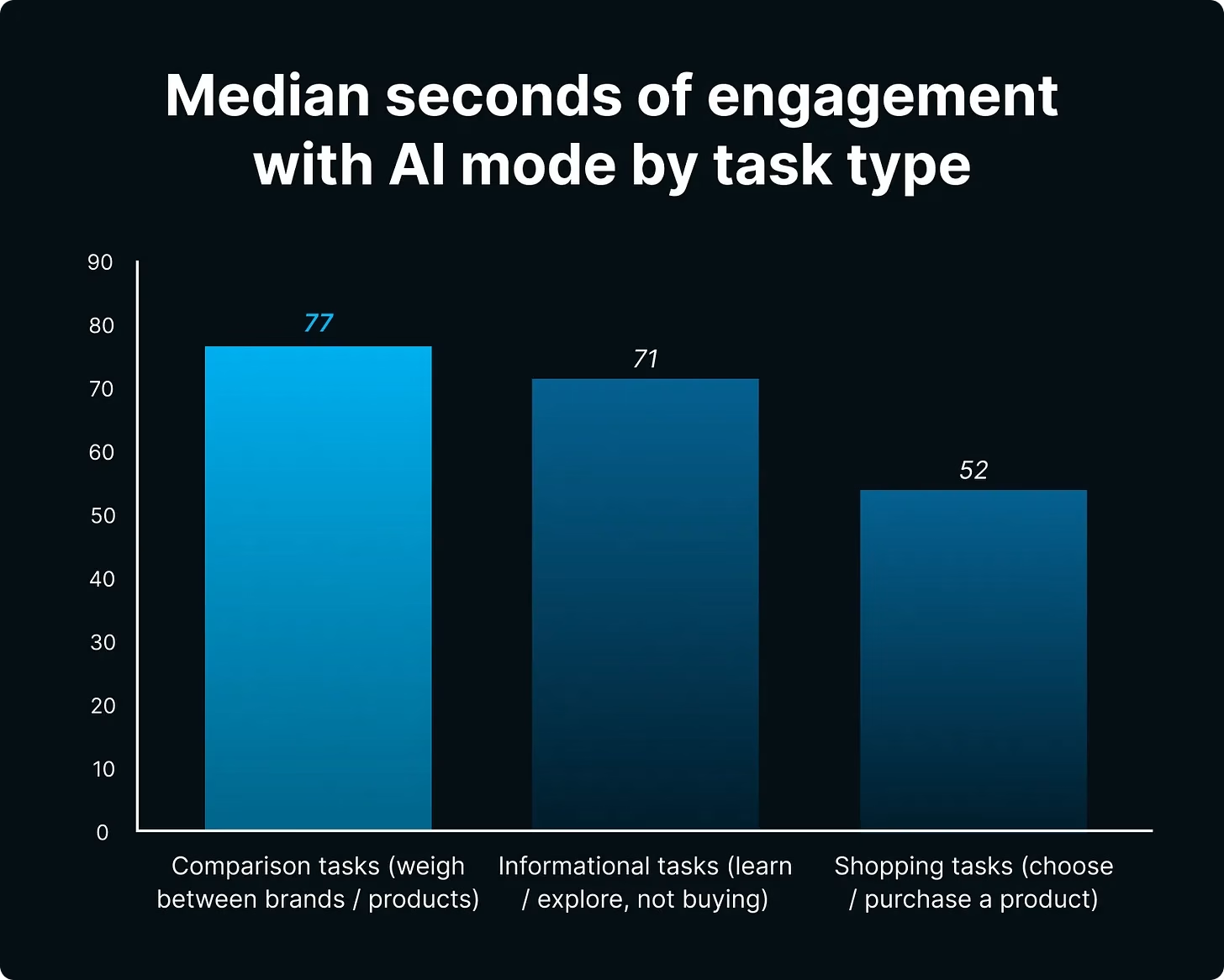
That finding challenges one of the core assumptions of search behavior. For two decades, Google’s blue links have been a launchpad — the place where users discover and explore the web. But inside AI Mode, that relationship flips. The summary becomes the product.
“The majority of sessions had zero external visits,” the researchers note. “People read and decide within AI Mode. It holds attention and resolves many tasks without sending traffic.”
From a publisher’s perspective, that’s a seismic change. If users are reading, comparing, and forming opinions without leaving Google, visibility alone may soon matter more than clicks.
Fewer Clicks, But More Decisions
The study also found that clicks are scarce and almost always transactional. Participants only clicked out when the task demanded it, such as adding an item to a cart or visiting a product page.
Informational and comparison-based queries, the kind that once drove steady organic traffic, kept users contained within AI Mode.
Across the 250 tasks, the median number of external clicks was zero. Even in product-focused searches like “canvas bag” or “tidy desk cables,” most users read the AI summary and clicked one or two marketplace links at most.
By contrast, comparison queries such as “Oura Ring vs Apple Watch” generated almost no outbound traffic. The decisions were made inside the panel.
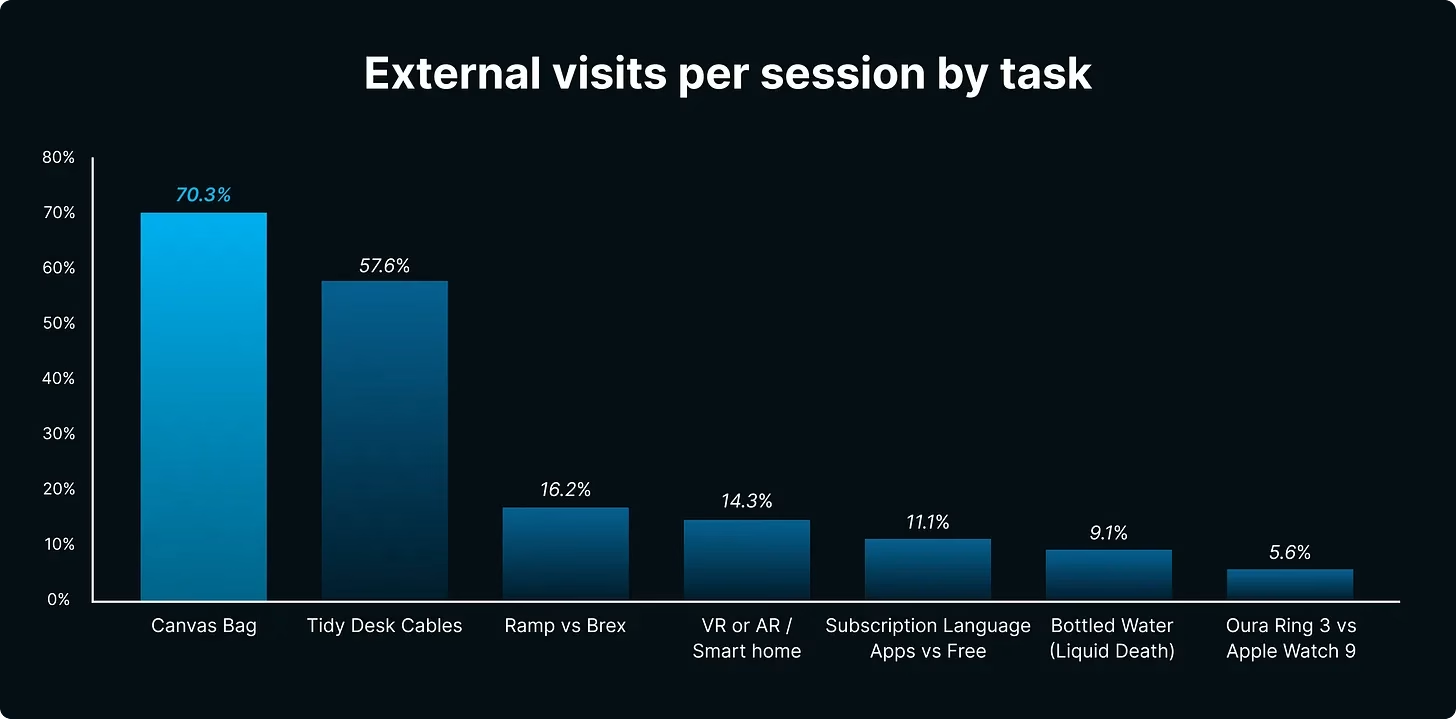
In other words, AI Mode eats the upper and middle funnel — users discover, evaluate, and narrow down their choices within the interface itself. By the time they do click, they’re ready to buy.
This pattern could reshape how attribution, conversion, and brand discovery are measured. As Indig puts it, “AI Mode is a contained experience where sending clicks to websites is a low priority. Giving users the best answer is the highest one.”
The Intent Hierarchy: What AI Mode Chooses to Show
A closer look at the study’s data reveals that AI Mode not only summarizes but also curates. The feature seems to understand site type as much as it understands search intent.
For product prompts, it tends to display brands and marketplaces. For comparisons, it favors review sites like NerdWallet or PCMag. And for reputation or opinion-based searches, publishers and community platforms like Reddit or YouTube make the cut.
This distribution isn’t random. It suggests that AI Mode assigns specific roles to different site categories — marketplaces for choice, review sites for trust, and brands for decisions.
For example:
- A search for “canvas bag” sent 93% of exits to brands and marketplaces.
- “Ramp vs Brex” routed 83% of exits to review sites.
- A prompt about “Liquid Death” split evenly between brand and publisher links.
For SEOs, this means that Google may be segmenting the web by intent rather than keywords. Being visible in AI Mode could depend on how Google classifies your site (as a brand, marketplace, reviewer, or publisher) rather than how well it ranks for a query.
Product Previews Are the New Storefronts
Roughly one in four sessions in the study displayed product previews within AI Mode( small cards showing images, specs, and merchant links).
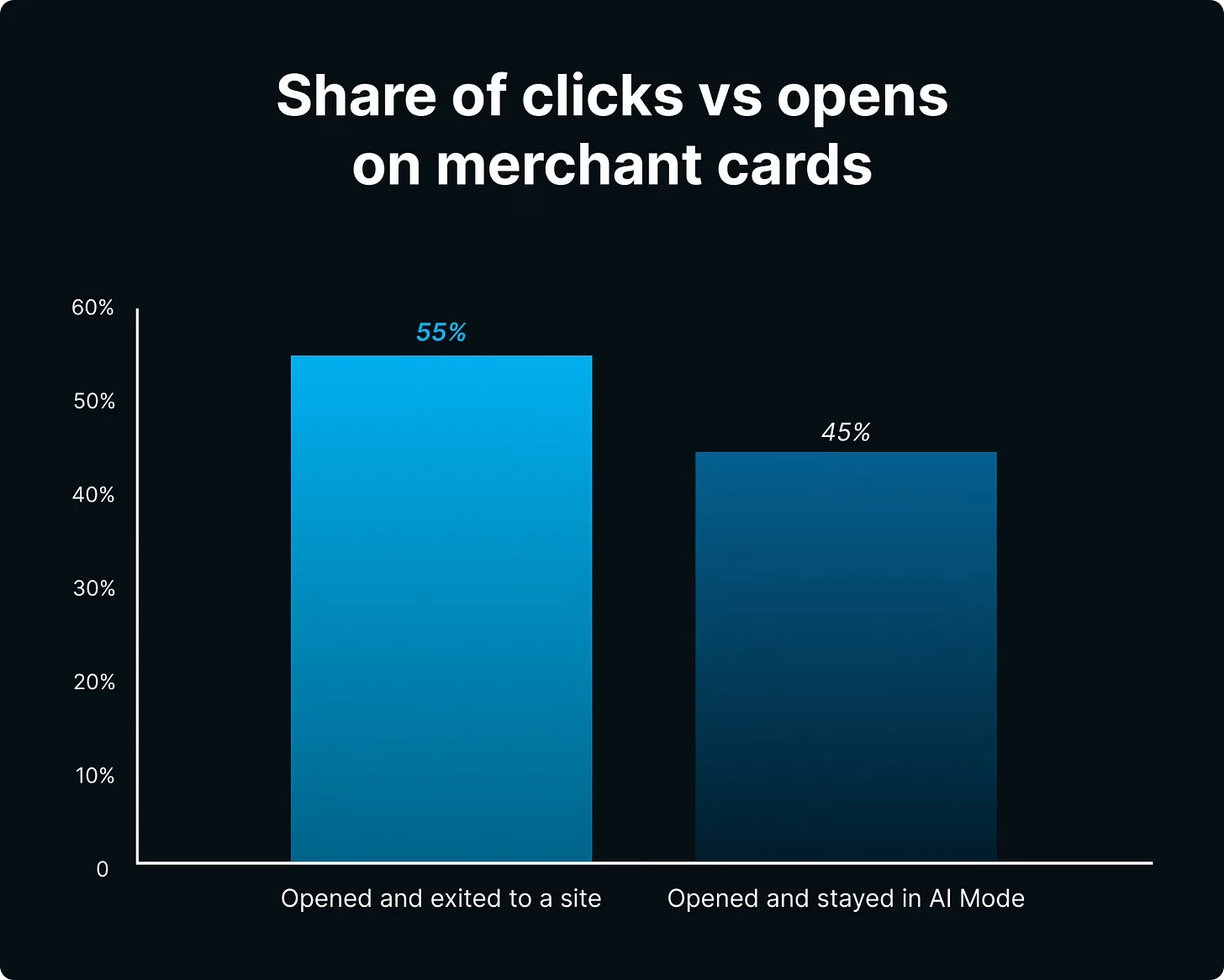
Participants spent about nine seconds on each preview and often opened just one before deciding. Nearly half stopped there without clicking through.
These mini product detail pages act like a compressed shopping experience. They provide just enough context for users to make a decision without ever leaving Google.
In one recorded session, a participant noted, “It looks like it has a lot of positive reviews. That’s one thing I’d look at if I was going to buy this bag. So this would be the one I would choose.”
That simple comment underscores a deep behavioral change. For years, e-commerce optimization meant driving traffic to a site and nurturing the sale. Now, the “storefront” might exist inside Google’s AI surface.
The Business Implications: From Traffic to Visibility
If Google continues integrating AI Mode into its main search interface (as Sundar Pichai recently confirmed it plans to), traditional SEO strategies will need a reset.
Visibility, not traffic, becomes the new currency. Brands may need to think less about ranking for keywords and more about earning citations inside AI Mode.
“Preparing for the future of search means treating AI Mode as the destination, not the doorway,” Indig writes. “You’ll need to show up there in ways that actually matter to real user behavior.”
That future is already taking shape. Google’s own AI Overviews appear in billions of searches each month, and AI Mode is being rolled out gradually. Similarweb data suggests usage of the standalone AI Mode tab is around 1% in the U.S., but engagement levels are significantly higher than traditional searches.
As AI answers become the norm, publishers and brands face a paradox: users are consuming more information than ever, but generating fewer clicks.
What It Means for Marketers and Publishers
The study’s authors outline a few clear strategies:
- Focus on influence, not volume. Your presence in AI Mode matters even if it doesn’t drive direct traffic.
- Optimize for decisive exits. If a user does click, make sure your landing page converts fast — display reviews, pricing, and trust signals up front.
- Segment by intent. Don’t expect visibility across all query types. Tailor your strategy to the intents AI Mode associates with your category.
- Track citations. Monitor which of your pages or competitors appear in AI answers and how they’re framed.
- Design for readability. Since users are reading summaries, clarity and context in your own content may improve your odds of being cited.
The Human Side of Search
Beyond the statistics, what stands out in this study is how naturally users adapt. No one needed an instruction manual to use AI Mode. People simply searched, read, and moved on.
That subtle behavioral shift shows that users trust the AI surface enough to make decisions without verifying sources.
It’s an efficiency gain for them, but a challenge for transparency and media literacy. When the interface decides what’s worth showing, the open web shrinks a little further.
Still, it’s early days. AI Mode is experimental, and Google continues to adjust its balance between user experience and publisher ecosystem.
Where This All Leads
If the researchers are right, AI Mode could mark the biggest behavioral shift in search since Google’s founding.
Clicks may become rare, but influence will be concentrated at the source, in the citations chosen by the AI system.
For brands, that means new competition for attention and for users, it means faster answers but fewer diverse perspectives.
Key Takeaways
- AI Mode keeps users inside; most never click beyond the AI-generated results.
- Clicks are mostly transactional, showing users complete their intent before leaving.
- Site visibility depends on intent, with brands, marketplaces, and review sites occupying distinct roles.
- Product previews act as micro storefronts, replacing some traditional e-commerce pathways.
- Future SEO will hinge on citations and visibility, not just rankings and traffic.

Zulekha
AuthorZulekha is an emerging leader in the content marketing industry from India. She began her career in 2019 as a freelancer and, with over five years of experience, has made a significant impact in content writing. Recognized for her innovative approaches, deep knowledge of SEO, and exceptional storytelling skills, she continues to set new standards in the field. Her keen interest in news and current events, which started during an internship with The New Indian Express, further enriches her content. As an author and continuous learner, she has transformed numerous websites and digital marketing companies with customized content writing and marketing strategies.
