Recent changes to Google’s search algorithm are creating a storm for smaller websites, many of which are finding it harder than ever to compete.
With Google controlling over 86% of global internet searches, the company’s updates—like the recent “helpful content update”—are reshaping the digital landscape, not always for the better.
While Google aims to prioritize content “by humans, for humans,” these changes are having unintended consequences that are leaving small creators in the dust.

Small Creators Feeling the Impact
According to an article published by CNET, Brandon Saltalamacchia, the creator of the handheld gaming site Retro Dodo, has experienced this challenge up close.
After the algorithm update in September 2023, his website’s traffic dropped by a staggering 90%. What was once a thriving platform is now barely holding on.
Saltalamacchia has had to lay off his entire team except for his editor-in-chief, Sebastian Santabarbara. Despite investing his personal savings to keep the site afloat, he’s frustrated with the lack of clear solutions.
“Nobody knows what’s going on,” he says, reflecting on the contradictory advice he’s received from SEO experts. Saltalamacchia’s experience is not unique.
Thousands of small site owners are grappling with similar challenges as larger, well-established outlets seem to benefit from the changes. The question remains: who truly gains from these updates?
The Quality vs. Spam Dilemma
Google says its updates are designed to weed out spam and low-quality content. The changes include AI-generated summaries at the top of search pages, which often push other content further down. But many argue these efforts are hurting genuine, high-quality creators.
For instance, Nate Hake, founder of the travel site Travel Lemming, saw his traffic drop by 94% in 2023. Google’s “From Sources Across the Web” feature, which aggregates snippets from multiple sites, has overshadowed his carefully crafted listicles.
Here is a screenshot of Travel Lemming’s search traffic figures:
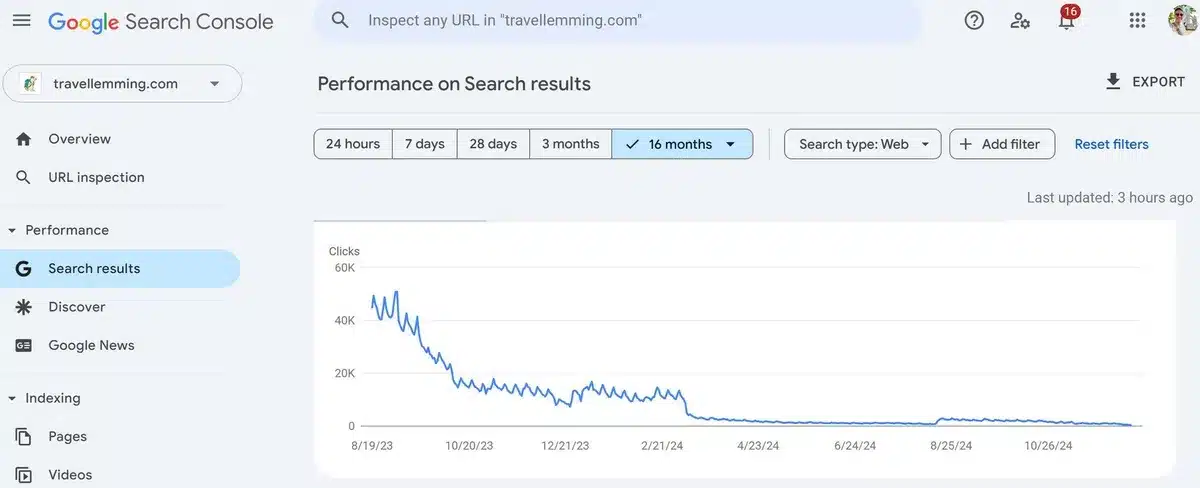
“[Google] just completely upended the whole ecosystem,” says Hake. He’s also had to deal with tactics like “parasite SEO” and AI-assisted plagiarism. In one case, reputable sites like the Miami Herald allegedly copied content from Travel Lemming, further eroding its visibility.
Parasite SEO is taking over travel.
This post is AI written & clearly spun in part from our own content. Zero EEAT. Promotes adult sites.
This parasite outranks Travel Lemming’s written by locals & 100% human guides.
Is this what “helpful” means to Google @searchliaison? pic.twitter.com/vjInOnrxEQ
— Nate Hake (@natejhake) December 3, 2023
Google Responds, But Creators Remain Skeptical
Google has made efforts to address concerns, including a March 2023 update targeting spam and a meeting with creators in October.
However, these steps have not reassured everyone. Gisele Navarro, managing editor of the air quality review site HouseFresh, describes her experience as disheartening.
HouseFresh’s traffic plummeted after Google’s Product Reviews Update, which was meant to promote genuine reviews. Yet, larger sites with less thorough testing processes continued to dominate search rankings.
Joshua Tyler, founder of Giant Freakin’ Robot, was similarly frustrated. After attending the October meeting, he criticized Google’s lack of accountability.
“Further questions were met with indifference,” he said, pointing out that Google seemed unaware of the broader impact its updates were having.
My Take: Google’s Responsibility
As someone who closely follows the tech world, I believe this moment is pivotal for creators and consumers. Google’s decisions have the power to shape the internet, but the company’s lack of transparency is troubling. If Google truly values quality content, it needs to work more openly with creators and ensure its algorithms are fair.
At the same time, the rise of alternatives like TikTok and AI tools such as ChatGPT shows that users are exploring other ways to find information. Google’s actions should focus on fairness and accessibility—not just maintaining its dominance.
What’s Next for Creators?
The battle between creators and Google’s algorithms is far from over. Many creators are diversifying their platforms, turning to YouTube, paid search engines, and direct audience engagement through newsletters and social media. While the future is uncertain, one thing is clear: adaptability will be key.
If you’re a creator, focus on building a loyal audience and producing authentic, high-value content. Diversify your traffic sources to reduce reliance on Google. While these steps won’t eliminate the challenges, they can help mitigate the risks.
Key Takeaways
- Google’s updates are drastically reducing traffic for smaller websites, forcing many to scale back or shut down.
- Efforts to combat spam are inadvertently disadvantaging legitimate, human-created work.
- Small site owners struggle with Google’s opaque ranking system and inconsistent updates.
- Practices like parasite SEO and AI plagiarism are making it harder for genuine creators to compete.
- Building direct audience relationships and diversifying platforms are crucial for surviving these changes.

Dileep Thekkethil
AuthorDileep Thekkethil is the Director of Marketing at Stan Ventures, where he applies over 15 years of SEO and digital marketing expertise to drive growth and authority. A former journalist with six years of experience, he combines strategic storytelling with technical know-how to help brands navigate the shift toward AI-driven search and generative engines. Dileep is a strong advocate for Google’s EEAT standards, regularly sharing real-world use cases and scenarios to demystify complex marketing trends. He is an avid gardener of tropical fruits, a motor enthusiast, and a dedicated caretaker of his pair of cockatiels.
