In an unprecedented anti-piracy campaign, copyright holders have submitted over 10 billion takedown requests to Google, asking for the removal of links suspected of sharing pirated content.
This staggering number showcases the relentless efforts of rights holders to curb piracy, but it also raises questions: can takedown requests alone keep pace with piracy? And how does Google decide which requests to act on?
Here’s a closer look at this milestone and what it means for the future of online content.

What’s Going On? Rightsholders Request, Google Reviews
Since the early 2000s, piracy has exploded online, especially through sites that let users share free, often illegal, content.
Copyright holders use the Digital Millennium Copyright Act (DMCA) to request that Google remove links leading to pirated material from search results.
That’s it? 🙂 New milestone -> Google Asked to Remove 10 Billion “Pirate” Search Results
“The company is now handling removal requests at a rate of roughly 2.5 billion per year; a new record. This represents more than 50 million takedown requests per week and roughly 5,000 every… pic.twitter.com/eUqmaVLIvi
— Glenn Gabe (@glenngabe) November 5, 2024
Over the years, these requests have skyrocketed, reflecting both the scale of piracy and the growing efforts to fight it.
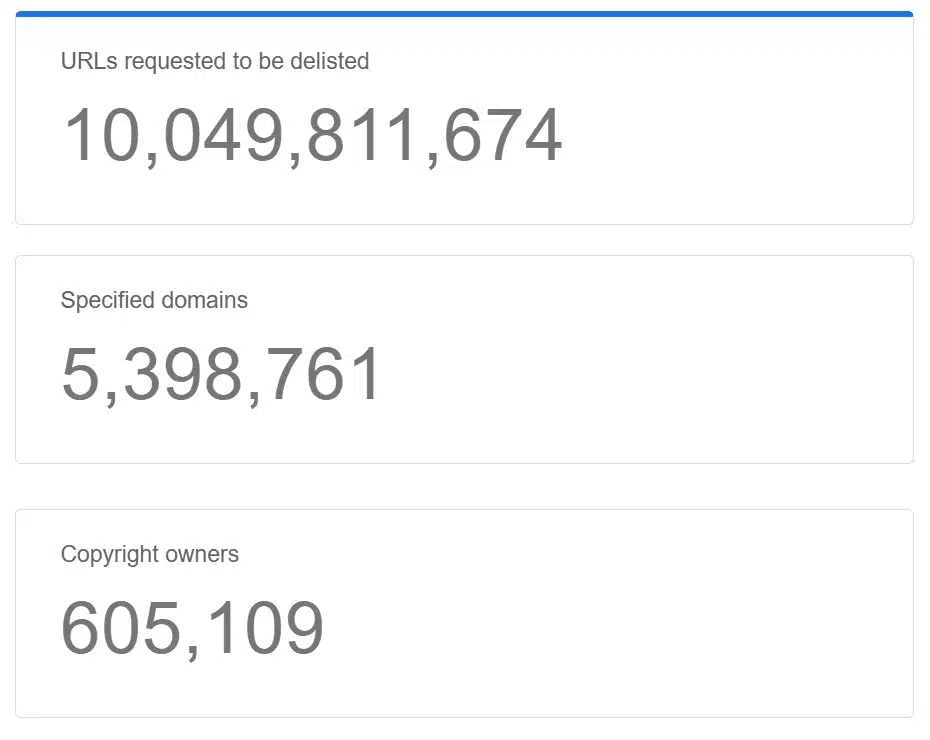
Over the years, these requests have skyrocketed, reflecting both the scale of piracy and the growing efforts to fight it.
But reaching 10 billion takedown requests doesn’t mean Google has removed 10 billion links. This figure only shows the number of URLs that copyright holders have flagged for potential removal.
What 10 Billion Takedown Requests Really Means
The 10 billion number represents all the links that rightsholders have reported, not just those Google has actually removed.
Google reviews each request and may reject some if they are duplicates, irrelevant, or submitted in error. For example, WhiteHouse.gov was flagged 27 times, but since there was no pirated content, Google left it alone.
Other links may not be in Google’s index, so they are flagged but don’t actually show up in search results.
This high volume of requests shows how serious rightsholders are about fighting piracy, but it also reflects the challenges Google faces in handling so many requests.
Why Are Requests Increasing?
Over time, rightsholders’ targets have shifted. Torrent sites like The Pirate Bay were once the main sources of pirated content, but today, many requests focus on streaming and file-hosting sites where users can find movies, music, and books.
Book piracy, in particular, has driven recent increases, with publishers accounting for more than half of takedown requests. Publishers are targeting sites like Z-Library and Anna’s Archive, which offer unauthorized e-books.
The Key Players in the Takedown Push
Some companies and organizations stand out for submitting the highest volume of requests. Anti-piracy firm Link-Busters alone accounts for about 1.5 billion flagged links, or nearly 15% of all requests.
Other top reporters, like the British Phonographic Industry (BPI), HarperCollins, and VIZ Media, also contribute significantly, collectively accounting for almost 40% of the 10 billion reported URLs.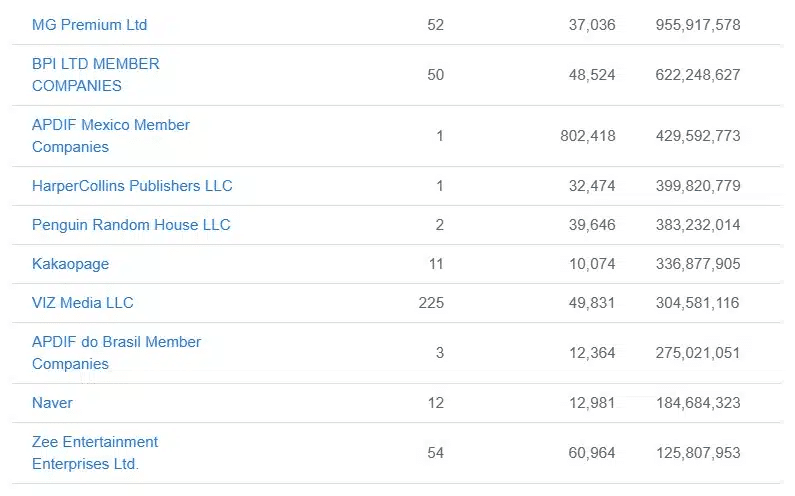
What This Means for Users
Google’s approach to handling takedown requests affects what users see in their search results. To reduce the need for takedown requests, Google has developed algorithms that automatically downrank known pirate sites, making them harder to find.
This means users are more likely to see legitimate sites at the top of search results and may have a harder time finding pirated content through Google.
Does This Actually Stop Piracy?
The short answer is – not entirely! While takedown requests make pirated content less accessible through Google, piracy remains a moving target.
As soon as one site or link is removed, another often appears to take its place. Rightsholders argue that the sheer volume of requests shows how challenging it is to fully eliminate piracy.
Rightsholders and tech platforms may need to explore new approaches to fighting piracy. For example, some suggest offering more affordable, accessible legal options, as studies show that people often turn to piracy due to cost or lack of availability.
More affordable options could reduce the demand for pirated material over time.
Practical Tips for Users
For users who want to access content legally and safely, here are some practical steps:
Use Legitimate Platforms: Subscribe to trusted streaming and download services to support content creators and get safe, quality content.
Be Cautious of Free Sites: Many sites offering “free” downloads contain malware.
Explore Public Resources: Libraries and educational sites offer legal access to e-books, movies, and more.
Verify Content Sources: If a site promises new releases for free, it’s likely not legitimate.
Report Piracy Sites: Many platforms encourage users to report suspicious sites to help fight piracy.
Key Takeaways
- Rightsholders have flagged over 10 billion links they say lead to pirated content.
- Not every flagged link is removed; some are duplicates, unindexed, or flagged by mistake.
- Publishers now file more takedown requests than music or film industries due to rising book piracy.

Dileep Thekkethil
AuthorDileep Thekkethil is the Director of Marketing at Stan Ventures, where he applies over 15 years of SEO and digital marketing expertise to drive growth and authority. A former journalist with six years of experience, he combines strategic storytelling with technical know-how to help brands navigate the shift toward AI-driven search and generative engines. Dileep is a strong advocate for Google’s EEAT standards, regularly sharing real-world use cases and scenarios to demystify complex marketing trends. He is an avid gardener of tropical fruits, a motor enthusiast, and a dedicated caretaker of his pair of cockatiels.