
If you’re still using Google’s Structured Data Files v7, your time is running out. Starting November 4, 2025, Google will cut off support for the legacy format, and any attempts to use it will fail outright.
So, why is Google shutting the door on SDF v7? And what happens if you miss the deadline? The answers might surprise you, not because the change is sudden, but because its impact could be bigger than you think.
The End of the Line for SDF v7
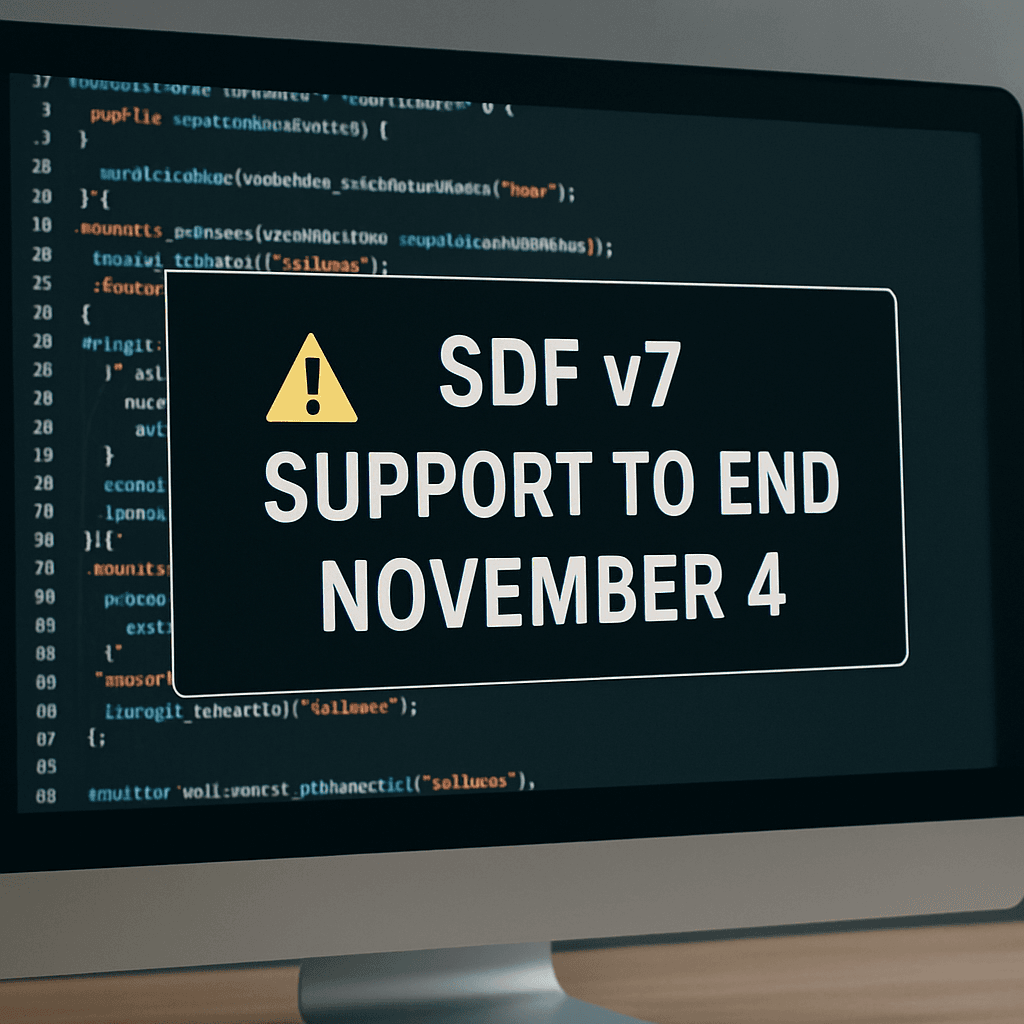
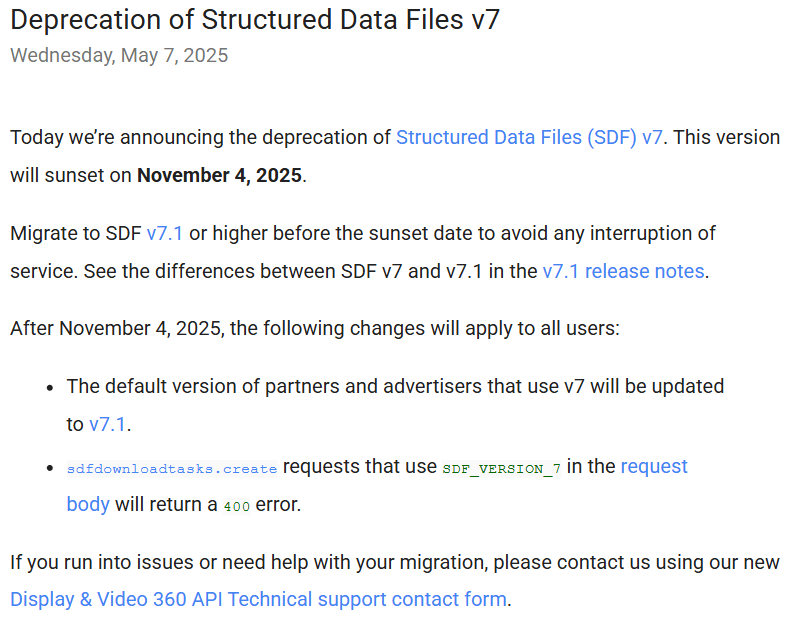
Google confirmed that SDF v7 will be deprecated on November 4. After that date, any API call that references the older version, specifically sdfdownloadtasks.create using SDF_VERSION_7, will return a 400 error.
Going forward, version 7.1 will become the default for all DV360 users.
This update affects how advertisers pull structured campaign data, which feeds everything from reporting dashboards to automated campaign updates.
For teams using this data to drive performance, a single break in the chain can cause days of delays. And if you’re really thinking, “We’ll fix it when it breaks,” that might be the wrong approach this time.
Why This Update Isn’t Just Routine
On paper, a version bump doesn’t sound dramatic. But SDFs are the connective tissue that supports real-time campaign decisions, budget pacing, ad placements, and more. Structured Data Files are how agencies scale campaigns across thousands of creatives and targeting settings.
The difference between v7 and v7.1 may look subtle in documentation, but it touches core mechanics.
Schema changes, field updates, and shifts in how DV360 interprets file formats can silently derail operations. The systems might not throw obvious red flags until data fails to import, or worse, imports incorrectly.
This isn’t just about keeping up with software versions. It’s about protecting campaign integrity in a platform where milliseconds and margins matter.
Advertisers on Alert
While some larger agencies began preparing for this months ago, many smaller players and in-house marketing teams haven’t made the leap yet.
Part of the hesitation comes from a lack of clarity. Google’s official announcement is short and technical. It outlines the facts but offers little context for those managing campaigns under pressure.
Others are caught in a cycle of firefighting. Deep system reviews often take a back seat when every day is focused on launching and optimizing campaigns. The November deadline brings that tension into sharp focus.
A campaign manager at a regional media firm summed it up like this: “We knew the update was coming, but the switch-off date makes it real.
What Needs to Change Before November 4
If you rely on SDFs in any capacity, it’s time to put the migration to v7.1 on your active to-do list. Start by reviewing Google’s v7.1 release notes. They provide a side-by-side comparison of key structural changes that could impact your data flows.
Next, audit your codebase. Look for hardcoded references to SDF_VERSION_7. These are the time bombs waiting to fail when the cutoff hits.
Update any scripts or automation pipelines accordingly and test them in a staging environment. Ensure the files process correctly, the data flows as expected, and reporting outputs remain consistent.
Google has also launched a Display & Video 360 API Technical Support form for questions, but don’t rely on last-minute help. The closer it gets to November, the more crowded that support channel will become.
Why This Version Change Deserves Your Full Attention
Structured, version-controlled APIs give the company tighter oversight and pave the way for faster iterations on their end. This means advertisers will face shorter support periods for legacy tools and more frequent cycles of change management. If your advertising operations are built on rigid systems or legacy code, this is the right time to rethink your foundations.
Steps You Should Take This Week
Waiting until Q4 to plan this change would be a mistake. Whether you manage one brand or dozens of clients, early action means fewer headaches later.
Here’s a quick roadmap to stay ahead:
- Identify Dependencies: Track every tool, script, or dashboard relying on SDF v7.
- Check Google’s Docs: Read the v7.1 release notes. Note any new or removed fields.
- Test Early and Often: Run mock requests with v7.1 and compare outputs. Look for mismatches.
- Update Your Teams: Make sure your developers, analysts, and campaign leads are aligned.
- Submit Questions Early: Use Google’s support form before the November crush.
Looking Past the Deadline
After November 4, the transition will be final with no fallback and exceptions. Google has made it crystal clear that legacy systems will no longer be accommodated without effort from advertisers.
This type of version control will likely become more common across the company’s platforms. Similar enforcement could hit other services like Google Ads, YouTube campaign tools, or GA4 integrations. If you’re not keeping up, you’re falling behind.
Advertisers who treat this as a one-time chore will survive the update. Those who treat it as a preview of what’s coming next will thrive.
Key Takeaways
- Google will deprecate SDF v7 on November 4, 2025.
- DV360 will switch to v7.1 by default after the cutoff.
- Any attempt to use v7 after the deadline will result in failure.

Dileep Thekkethil
AuthorDileep Thekkethil is the Director of Marketing at Stan Ventures, where he applies over 15 years of SEO and digital marketing expertise to drive growth and authority. A former journalist with six years of experience, he combines strategic storytelling with technical know-how to help brands navigate the shift toward AI-driven search and generative engines. Dileep is a strong advocate for Google’s EEAT standards, regularly sharing real-world use cases and scenarios to demystify complex marketing trends. He is an avid gardener of tropical fruits, a motor enthusiast, and a dedicated caretaker of his pair of cockatiels.
