
Your rankings look fine. Your impressions might even be up. Yet clicks keep sliding, and nobody on the team can say whether ChatGPT or Google’s AI Overviews ever mention your brand.
That blind spot is exactly what AI answer presence tracking fixes. Below, we compare six platforms that show where your brand appears in AI-generated answers, how it gets described and which competitors are recommended instead.
Key Takeaways
- AI responses have become an independent visibility channel, and tracking rankings alone fails to provide a complete overview.
- The strongest platforms track mentions, citations, sentiment, and voice share across various AI engines instead of depending on a single one.
- Engine coverage differs greatly between plans, so check what your level provides before buying.
- Teams that already manage SEO in a single tool typically benefit more from AI tracking that accompanies their keyword and backlink information.
- Begin with a targeted prompt collection, then broaden your scope as you identify areas where competitors excel.
Why AI Answer Tracking Matters Now
Search has not shrunk. It has split. Individuals continue to utilize Google, yet numerous users receive a thorough response from an AI system prior to encountering any blue link.
That changes what visibility means. A widely cited 2025 industry study covering more than 500 digital marketing topics found that the average AI search visitor converts at 4.4 times the rate of a traditional organic visitor.
The good news is that AI answers can be influenced. Academic research on generative engine optimization found that targeted content changes can lift a source’s visibility in AI responses by up to 40%. You can only act on that if you can measure where you stand.
How We Chose These Platforms
We reviewed each vendor’s own pricing pages, product pages, and documentation in October 2026. Every platform was judged on five points:
- AI engine coverage across Google AI Overviews, AI Mode, ChatGPT, Perplexity and Gemini
- Depth of prompt tracking and how often the data refreshes
- Competitor benchmarking, sentiment and citation analysis
- How well AI data connects to SEO and traffic reporting
- Pricing transparency and the cost of getting started
AI Answer Tracking Platforms at a Glance
| Platform | Best for | AI engines covered | Entry pricing |
| Semrush | Teams that want AI and SEO visibility in one place | Google AI Overviews, AI Mode, ChatGPT, Perplexity, Gemini | Free plan; AI Visibility toolkit from $99/mo |
| SISTRIX | Existing SISTRIX users and multi-country SEO teams | Google AI Overviews plus AI chatbot answers (beta) | From €119/mo with AI features currently included |
| Ahrefs Brand Radar | Ahrefs users who want large-scale benchmarking | AI Overviews, AI Mode, ChatGPT, Perplexity, Gemini, Copilot (Claude via Custom Prompts) | AI Visibility Index from $199/mo |
| Profound | Enterprise answer engine teams | Up to 9 engines on Enterprise | Free trial; custom Enterprise pricing |
| Peec AI | Lean teams that want clean daily reporting | Choice of 3 models per self-serve plan, more as add-ons | Starter plan with 50 prompts |
| Otterly.AI | Freelancers and small businesses | ChatGPT, AI Overviews, Perplexity, Copilot (AI Mode and Gemini as add-ons) | Lite plan with 15 prompts |
1. Semrush
Best for: Marketing teams and agencies seeking AI response monitoring alongside their SEO, content, and competitor information.
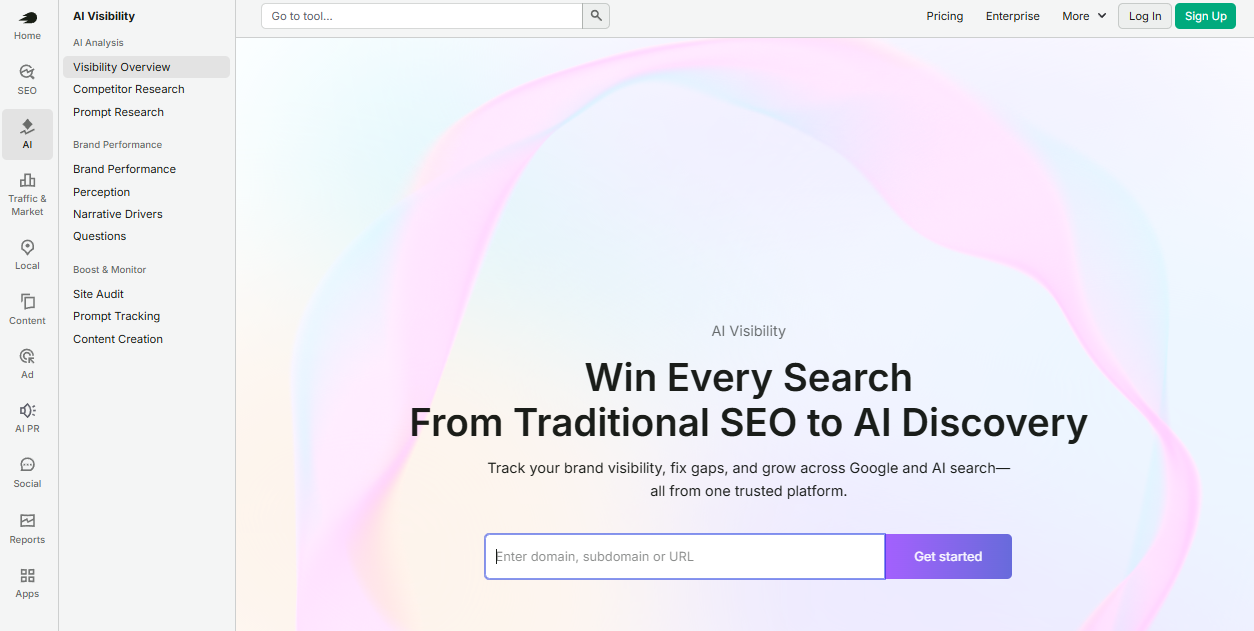
Semrush is a platform for search visibility that encompasses SEO, content, competitive intelligence, PPC, and AI visibility, integrating AI responses with all your search data. The AI Visibility toolkit reveals the frequency of a brand’s mentions and citations in AI responses, identifies the triggers for those mentions, and indicates where competitors excel.
Key strengths:
- Brand Performance reports monitor share of voice and sentiment involving ChatGPT, AI Mode, Perplexity, and Gemini, with updates provided weekly.
- Position Tracking tracks Google rankings, AI Overview displays, and AI prompt references every day in a single dashboard.
- Site Audit identifies blocked AI crawlers like OAI-SearchBot, PerplexityBot, and Claude-SearchBot, while the AI Visibility toolkit performs AI search evaluations on as many as 100 pages.
Bigger companies can elevate to Enterprise AIO, which offers unlimited prompt monitoring, personalized assistance, and tailored integrations.
Limitation: Engine coverage differs from report to report, and prompt allowances scale by plan, starting at 50 daily tracked prompts on the entry SEO and AI search bundle.
Pricing: Free plan available. The AI Visibility toolkit starts at $99/mo and SEO plans start at $139.95/mo, with current plans and pricing listed in full.
2. SISTRIX
Best for: Teams that already rely on SISTRIX for Google SEO, especially across several countries.
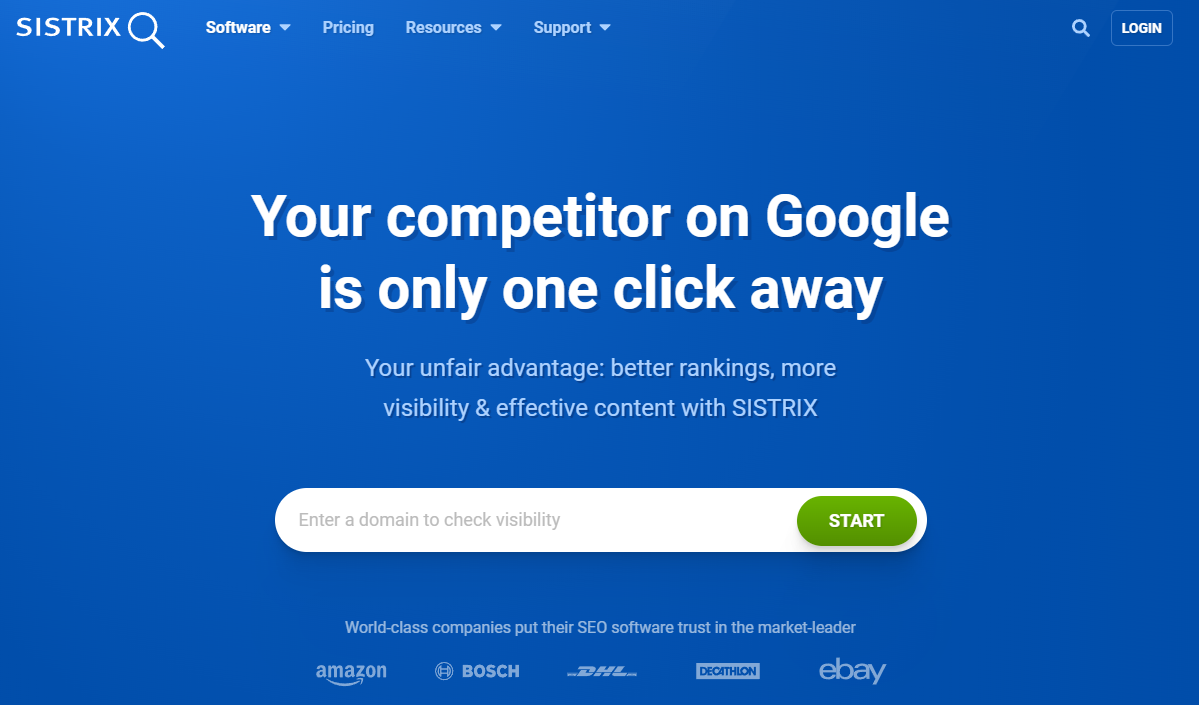
SISTRIX has folded AI analysis into its long-running SEO toolbox. Its AI Check shows the prompts in which a brand is mentioned or cited, with no project setup needed.
Key strengths:
- A sentiment score ranging from minus 100 to plus 100 indicates how AI systems discuss a brand, categorized by platform.
- The Recommendation Map shows the purchasing scenarios in which a brand is suggested and where solely competitors are present.
- Prompt Tracking monitors visibility for your own custom prompt sets.
Limitation: The AI features are still in beta, and SISTRIX notes it may price them separately in the future.
Pricing: From €119/mo plus taxes, with AI Check and Prompt Tracking currently included in every package.
3. Ahrefs Brand Radar
Best for: Existing Ahrefs customers who want to benchmark AI visibility at scale.
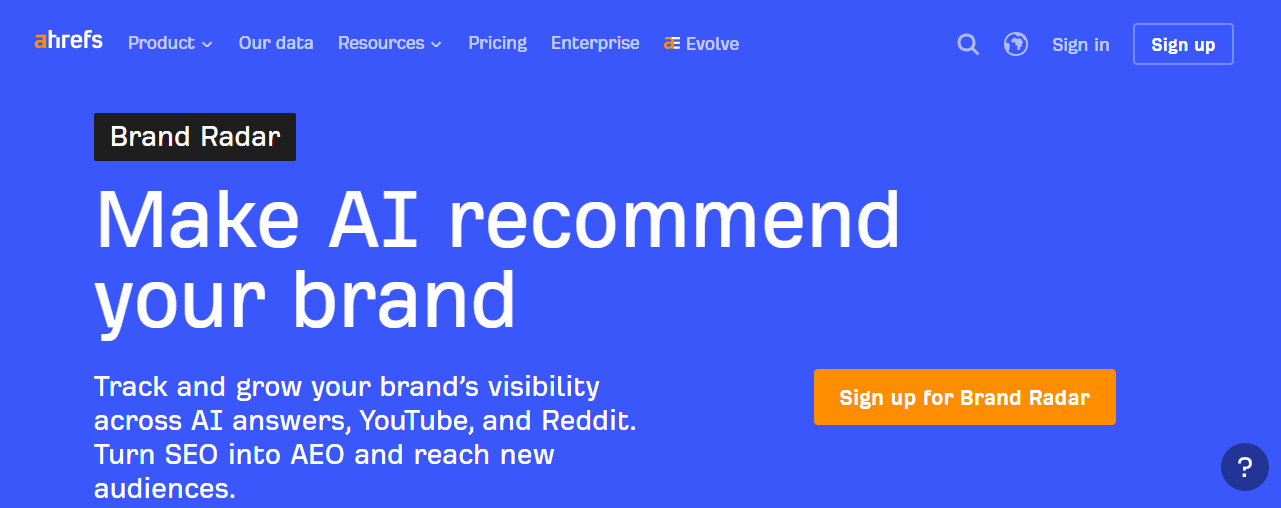
Brand Radar runs more than 470 million search-backed prompts through AI platforms and stores every response. That means you can check any brand’s AI visibility instantly, without waiting for data to build up.
Key strengths:
- The AI Visibility Index includes AI Overviews, AI Mode, ChatGPT, Perplexity, Gemini, and Copilot.
- Key metrics consist of Mentions, Citations, AI Share of Voice, and Estimated Impressions.
- Custom Prompts add Claude and track your own buyer questions as often as daily.
Limitation: Index question sets are re-tested monthly on a 90-day reporting window, so very recent shifts can take time to surface.
Pricing: The AI Visibility Index starts at $199/mo and Custom Prompts start at $50/mo.
4. Profound
Best for: Enterprise brands with dedicated answer engine optimization teams.
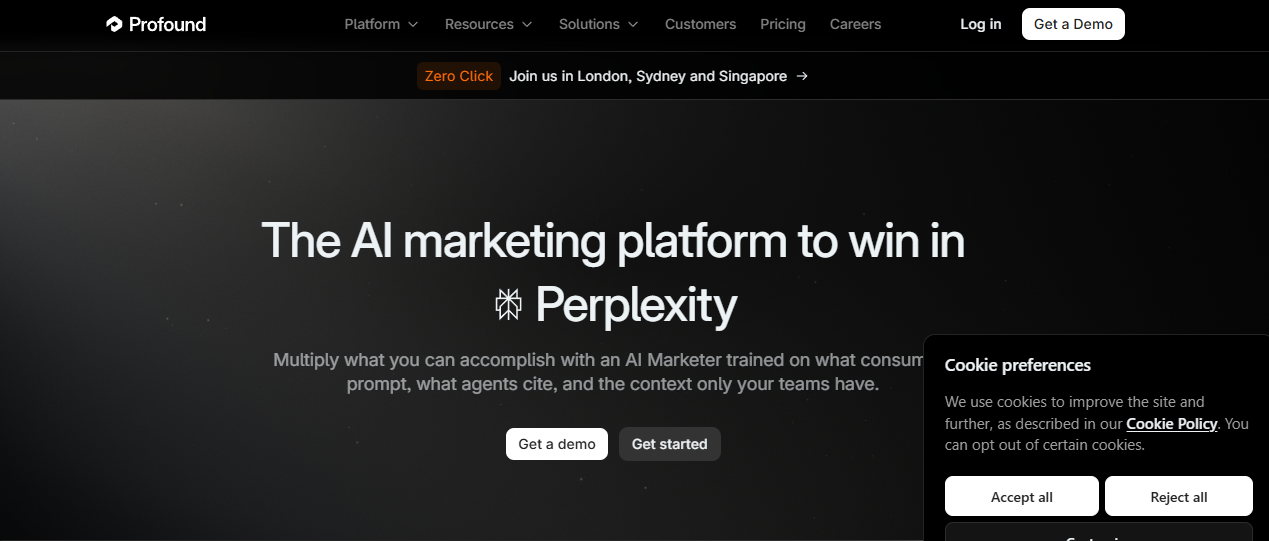
Profound is a standalone platform that tracks how brands and competitors appear across answer engines. It pairs monitoring with Profound Agents, which help with content generation and optimization.
Key strengths:
- Brands can test prompt tracking on a free trial before moving to a custom Enterprise plan.
- Enterprise plans track up to 9 answer engines and multiple companies.
- Enterprise also includes SSO/SAML and SOC 2 compliance for security-conscious teams.
Limitation: Brands cannot opt for a self-serve paid plan, so complete access requires a personalized Enterprise agreement.
Pricing: Complimentary trial, followed by tailored Enterprise pricing. Agencies have the option to self-serve at $399 per month for each client workspace.
5. Peec AI
Best for: Lean marketing teams that want clear daily reporting without a full SEO suite.
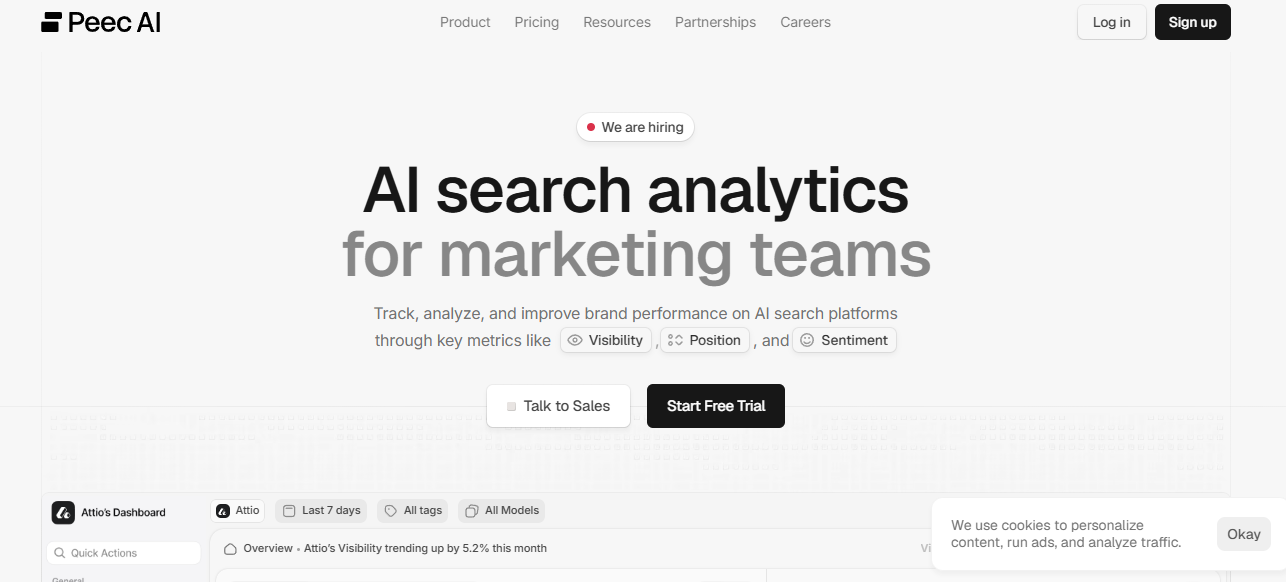
Peec AI focuses purely on AI search analytics. You pick the prompts and models, and it tracks visibility, position, sentiment and share of voice against competitors every day.
Key strengths:
- The Starter plan covers 50 prompts across 3 models of your choice, with unlimited users.
- Source analytics show which domains and URLs AI engines cite, plus gaps where sources name competitors but not you.
- A crawlability audit checks which of 40+ AI bots your robots.txt allows or blocks.
Limitation: Self-serve plans cap you at 3 models, and extra models are sold as add-ons.
Pricing: Self-serve plans scale by prompt volume, and annual billing saves 15%.
6. Otterly.AI
Best for: Freelancers, consultants and small businesses taking a first step into AI tracking.
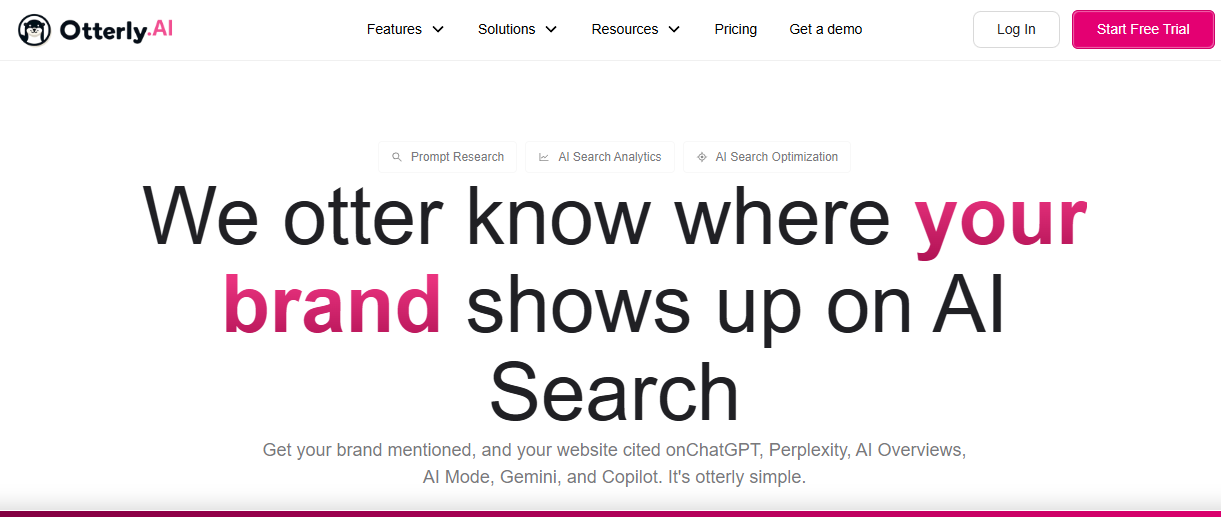
Otterly.AI keeps things simple. Every plan includes daily tracking, unlimited brand reports and an AI prompt research tool.
Key strengths:
- Base plans cover ChatGPT, Google AI Overviews, Perplexity and Microsoft Copilot.
- Google AI Mode and Gemini are available as paid add-ons.
- Standard and Premium users can add prompts in batches of 100.
Limitation: The Lite plan includes only 15 prompts, which fill up fast once you start tracking competitors.
Pricing: Lite (15 prompts), Standard (100 prompts) and Premium (400 prompts), plus custom enterprise plans.
How to Put AI Answer Tracking to Work
Choosing a platform is the simple part. These three habits transform data into decisions.
1. Watch how your presence develops
I keep track of a set of prompts that I decide on in advance. I check them on a regular schedule. Because AI responses change when models improve and new information arrives, looking at the trend is more useful, than looking at just one single case.
2. Find the prompts competitors own
Search for instances where competitors are mentioned, but you are not. Next, examine the sources the AI refers to for those responses, as they frequently indicate outreach and content possibilities.
3. Read visibility in context
Pair AI data with traffic, conversions and sentiment. Did AI platform referral visits alter following a launch, or did tone change after a series of reviews?
When the gaps link back to your own pages, a content structure that is AI-friendly, featuring clear headings and straightforward answers, significantly simplifies the citation process.
Which Platform Should You Choose?
If you want AI and SEO visibility in one workflow, the top pick on this list keeps both in a single platform. SISTRIX and Ahrefs users can start with the AI tools built into platforms they already know.
Enterprise teams with dedicated budgets will find depth in Profound. Smaller teams should look at Peec AI for polished reporting or Otterly.AI for a low-commitment start.
Final Thoughts
AI responses now influence purchasing choices before any click occurs. If you aren’t tracking your presence there, you are merely speculating.
Begin with the platforms your audience prefers, monitor a limited range of high-intent inquiries, and expand from that foundation. The brands that assess early will be the ones that learn most quickly.
FAQs
What is AI answer presence tracking?
It is the process of monitoring whether and how your brand appears in answers from AI platforms like ChatGPT, Gemini, Perplexity and Google AI Overviews.
Which AI platforms should I track first?
Start with ChatGPT and Google AI Overviews, since both reach very large audiences. Add Perplexity, Gemini or AI Mode based on where your customers search.
How many prompts should I track?
A focused set of 25 to 50 high-intent prompts covering your core products, comparisons and buying questions is a practical starting point. You can expand once patterns emerge.
Can I track AI Overviews for free?
To a degree. Some platforms include AI Overview tracking or a basic AI visibility score on free plans, but prompt tracking across chatbots usually needs a paid tier.
How often does AI answer data change?
Often. Answers can shift with model updates, fresh content and new citations, which is why most platforms refresh data daily or weekly.

Deepan Paul
AuthorDeepan Paul is a Team Lead of the Internal Marketing Department at Stan Ventures, with four years of experience helping brands recover, grow, and hold on to organic traffic across global B2B, B2C, and D2C markets. He's known as a ranking revival expert. When traffic drops, pages fall out of the index, or visibility disappears after an update, he finds the cause and fixes it. Today he runs Stan Ventures' own organic presence, and that goes well past Google. He tracks and grows how the brand shows up in AI Overviews and across AI tools like ChatGPT, Perplexity, and Gemini, where citations decide who gets mentioned and who doesn't. His work covers technical SEO, content strategy, indexing, and building growth systems that hold up when algorithms shift. He has managed international clients and led cross-functional teams, keeping every SEO decision tied to what the business actually needs. Outside of client work, Deepan trains SEO professionals, speaks at industry events, and contributes insights to digital marketing publications. His approach is simple: build systems that keep working, instead of chasing quick wins.
